

Michael Kolster – författare
Visar alla böcker från författaren Michael Kolster. Handla med fri frakt och snabb leverans.
2 produkter
2 produkter
267 kr
Skickas
_Paris Park Photographs_ features spectacular images from a dozen public parks and gardens in and near France's capital city. Exploring many of the same places that photographer Eugène Atget (1857–1927) made famous a century ago, Michael Kolster references the pleasures and pitfalls of wandering alone amongst trees and plants and sculpture, unkempt and formally designed places, tempered by the knowledge that the modern world with all its congestion is only a few short steps away. These intimate yet inherently expansive views of Paris’s parks invite closer scrutiny of the encounters awaiting us at the edges of the well-worn paths defining our daily lives.Few people venture into the frame of Kolster's photographs, but the promise of a renewed sense of hope and community resides in the details of his visual encounters and the moments of his heightened attention. Each picture speaks to us as a moment in time, even as the sequence suggests a choreography of place, one that can vary daily along with the changing moods and light of each park. Paris Park Photographs is presented in a bilingual English/French edition and concludes with an afterword by Michelle Kuo. Of note is how the book’s design is inspired by Walker Evans's 1938 classic work, American Photographs, making Kolster's book of immediate interest to photo and book collectors.
520 kr
Skickas inom 3-6 vardagar
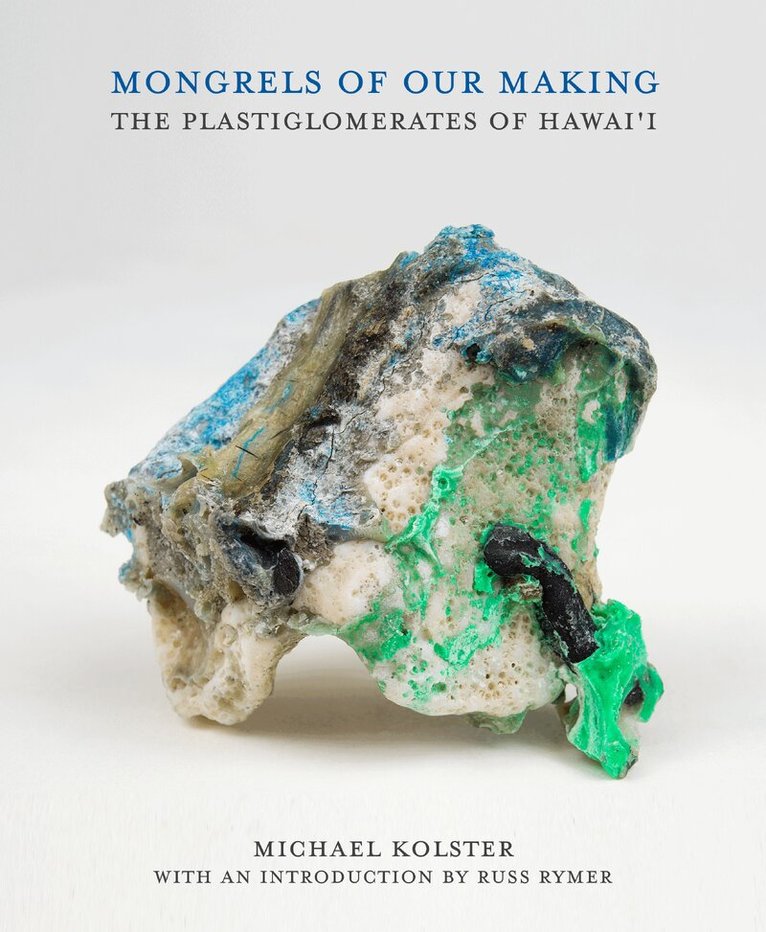
Hawaiʻi’s “Big Island” is a place created by fire, being formed entirely from volcanic activity. Currently, it is home to four active volcanoes. The Big Island is also, due to its position relative to the North Pacific trash gyre, home to large amounts of plastic debris that ocean currents deposit on its shores, particularly on its remote southeastern areas such as Kamilo Beach. Much effort has been made to remove this debris, with a fair amount of success, but the flow of trash onto the beaches continues unabated, and keeping these beaches clean a never-ending task. Does clearing the beaches of plastic waste, only to bury it elsewhere, actually help? As plastic washes up on an island so recently formed from volcanic activity, we are reminded that everything there, including all forms and traces of life, must have come from somewhere else. Photographer Michael Kolster became interested in the issue of plastic debris on Kamilo Beach through a paper from the Geological Society of America whose authors claimed that the plastic debris, when melted or otherwise combined with rocks on the beach, would probably enter the fossil record to become a horizon marker for the Anthropocene. Dubbed “plastiglomerates” by geologists, these hybrid “stones” are the product of humans burning plastic, whether intentionally or accidentally, that then melts and become fused with the naturally-occurring rocks that were created by volcanoes. These fusions of human and geological activity form a fossil-like record of present-day human activity that is likely to persist for thousands of millennia due to their prevalence, location, and composition. Wanting to see these plastiglomerates for himself, Kolster traveled to Hawaiʻi, where he photographed Kamilo Beach and its plastiglomerates. He also collected examples of plastiglomerates that he took back to his studio in Maine. Kolster’s photographs of the plastiglomerates, both in Hawai‘i and collected at home, show both the harsh reality and surprising beauty of plastic trash from the beaches of a Pacific paradise. While this trash can be viewed as both an eyesore and an insult to our ideas of what a tropical paradise like Hawai‘i should be, Kolster also shows how seeing plastic on the beach is equivalent to looking in the mirror: We need to look closer at our reflection before impulsively wiping it clean, only to have to do it over and over day after day, week after week, endlessly.