Michael Kulikowski - Böcker
Visar alla böcker från författaren Michael Kulikowski. Handla med fri frakt och snabb leverans.
9 produkter
9 produkter
318 kr
Skickas inom 7-10 vardagar
Rome's Gothic Wars is a concise introduction to research on the Roman Empire's relations with one of the most important barbarian groups of the ancient world. The book uses archaeological and historical evidence to look not just at the course of events, but at the social and political causes of conflict between the empire and its Gothic neighbours. In eight chapters, Michael Kulikowski traces the history of Romano-Gothic relations from their earliest stage in the third century, through the development of strong Gothic politics in the early fourth century, until the entry of many Goths into the empire in 376 and the catastrophic Gothic war that followed. The book closes with a detailed look at the career of Alaric, the powerful Gothic general who sacked the city of Rome in 410.
482 kr
Skickas inom 7-10 vardagar
Rome's Gothic Wars is a concise introduction to research on the Roman Empire's relations with one of the most important barbarian groups of the ancient world. The book uses archaeological and historical evidence to look not just at the course of events, but at the social and political causes of conflict between the empire and its Gothic neighbours. In eight chapters, Michael Kulikowski traces the history of Romano-Gothic relations from their earliest stage in the third century, through the development of strong Gothic politics in the early fourth century, until the entry of many Goths into the empire in 376 and the catastrophic Gothic war that followed. The book closes with a detailed look at the career of Alaric, the powerful Gothic general who sacked the city of Rome in 410.
365 kr
Skickas inom 3-6 vardagar
705 kr
Tillfälligt slut
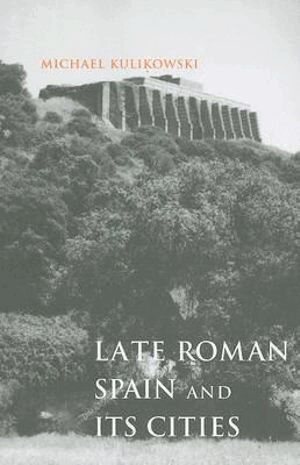
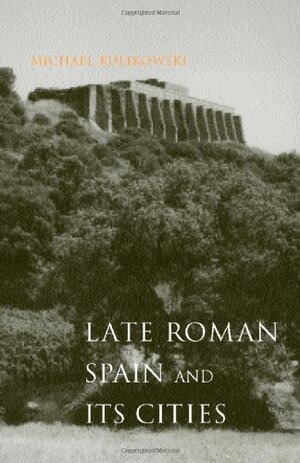
The history of Spain in late antiquity offers important insights into the dissolution of the western Roman empire and the emergence of medieval Europe. Nonetheless, scholarship on Spain in this period has lagged behind that on other Roman provinces. Michael Kulikowski draws on the most recent archeological and literary evidence to integrate late antique Spain into the broader history of the Roman empire, providing a definitive narrative and analytical account of the Iberian peninsula from A.D. 300 to 600. Kulikowski begins with a concise introduction to the early history of Roman Spain, and then turns to the Diocletianic reforms of 293 and their long-term implications for Roman administration and the political ambitions of post-Roman contenders. He goes on to examine the settlement of barbarian peoples in Spain, the end of Roman rule, and the imposition of Gothic power in the fifth and sixth centuries. In parallel to this narrative account, Kulikowski offers a wide-ranging thematic history, focusing on political power, Christianity, and urbanism. Kulikowski's portrait of late Roman Spain offers some surprising conclusions.With new archeological evidence and a fresh interpretation of well-known literary sources, Kulikowski contradicts earlier assertions of a catastrophic decline of urbanism, finding that the physical and social world of the Roman city continued well into the sixth century despite the decline of Roman power. This groundbreaking study will prompt further reassessments of the other Roman provinces and of medieval Spanish history.
552 kr
Skickas inom 11-20 vardagar
The history of Spain in late antiquity offers important insights into the dissolution of the western Roman empire and the emergence of medieval Europe. Nonetheless, scholarship on Spain in this period has lagged behind that on other Roman provinces. Michael Kulikowski draws on the most recent archeological and literary evidence to integrate late antique Spain into the broader history of the Roman empire, providing a definitive narrative and analytical account of the Iberian peninsula from A.D. 300 to 600. Kulikowski begins with a concise introduction to the early history of Roman Spain, and then turns to the Diocletianic reforms of 293 and their long-term implications for Roman administration and the political ambitions of post-Roman contenders. He goes on to examine the settlement of barbarian peoples in Spain, the end of Roman rule, and the imposition of Gothic power in the fifth and sixth centuries. In parallel to this narrative account, Kulikowski offers a wide-ranging thematic history, focusing on political power, Christianity, and urbanism. Kulikowski's portrait of late Roman Spain offers some surprising conclusions.With new archeological evidence and a fresh interpretation of well-known literary sources, Kulikowski contradicts earlier assertions of a catastrophic decline of urbanism, finding that the physical and social world of the Roman city continued well into the sixth century despite the decline of Roman power. This groundbreaking study will prompt further reassessments of the other Roman provinces and of medieval Spanish history.
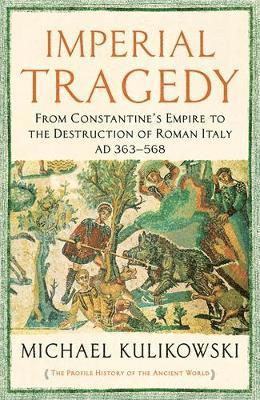
Imperial Tragedy
From Constantine’s Empire to the Destruction of Roman Italy AD 363-568
Häftad, Engelska, 2021
155 kr
Skickas inom 5-8 vardagar
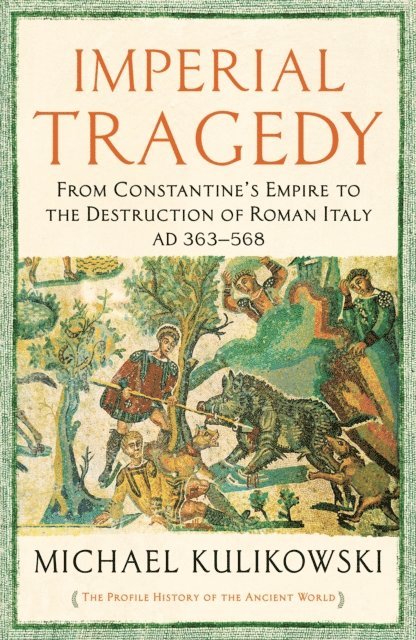
For centuries, Rome was one of the world's largest imperial powers, its influence spread across Europe, North Africa, and the Middle-East, its military force successfully fighting off attacks by the Parthians, Germans, Persians and Goths. Then came the definitive split, the Vandal sack of Rome, and the crumbling of the West from Empire into kingdoms first nominally under Imperial rule and then, one by one, beyond it.Imperial Tragedy tells the story of Rome's gradual collapse. Full of palace intrigue, religious conflicts and military history, as well as details of the shifts in social, religious and political structures, Imperial Tragedy contests the idea that Rome fell due to external invasions. Instead, it focuses on how the choices and conditions of those living within the empire led to its fall. For it was not a single catastrophic moment that broke the Empire but a creeping process; by the time people understood that Rome had fallen, the west of the Empire had long since broken the Imperial yoke.
183 kr
Skickas
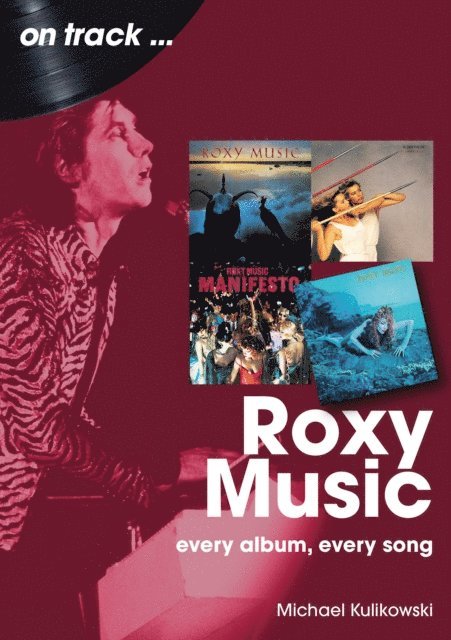
In ten short years, Roxy Music made two of the most experimental albums in popular music history and one of the most smoothly romantic. Conceived by Bryan Ferry at the turn of the 1970s, the band released its first album, Roxy Music, to wide acclaim in 1972 and swiftly followed up with the ground-breaking single 'Virginia Plain'. Ferry, Andy Mackay, and Phil Manzanera remained Roxy's core players over seven more albums, in three distinct phases. The debut and For Your Pleasure (1973) featured all manner of electronic weirdness from Brian Eno, while Stranded (1973), Country Life (1974), and Siren (1975) marked the peak of Ferry's songwriting and struck a delicate balance between edgy art and gorgeous craft. Finally, Manifesto (1979), Flesh + Blood (1980), and Avalon (1982), the last two without powerhouse founding drummer Paul Thompson, framed Ferry's tales of doomed romance within a sophisticated wash of sound that used the studio itself as an instrument.The members of Roxy Music have had long and distinguished careers outside the band, but nothing can surpass the eight albums they made together. This book tells the musical story of this most enigmatic of British bands.
163 kr
Skickas
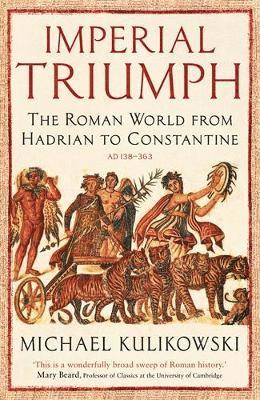
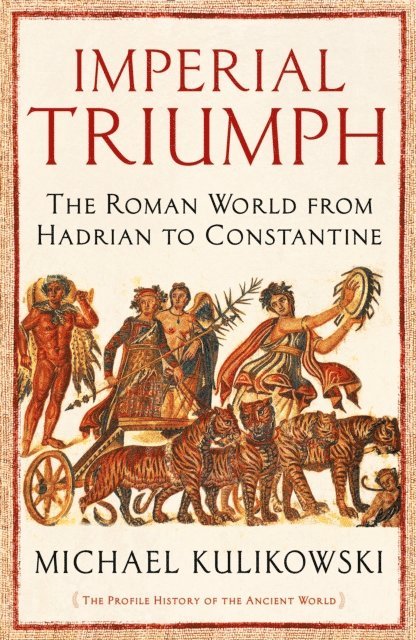
Imperial Triumph presents the history of Rome at the height of its imperial power. Beginning with the reign of Hadrian in Rome and ending with the death of Julian the Apostate on campaign in Persia, it offers an intimate account of the twists and often deadly turns of imperial politics in which successive emperors rose and fell with sometimes bewildering rapidity. Yet, despite this volatility, the Romans were able to see off successive attacks by Parthians, Germans, Persians and Goths and to extend and entrench their position as masters of Europe and the Mediterranean. This books shows how they managed to do it.Professor Michael Kulikowski describes the empire's cultural integration in the second century, the political crises of the third when Rome's Mediterranean world became subject to the larger forces of Eurasian history, and the remaking of Roman imperial institutions in the fourth century under Constantine and his son Constantius II. The Constantinian revolution, Professor Kulikowski argues, was the pivot on which imperial fortunes turned - and the beginning of the parting of ways between the eastern and western empires.This sweeping account of one of the world's greatest empires at its magnificent peak is incisive, authoritative and utterly gripping.
Mosaics of Time Volume II, the Latin Chronicle Traditions from the First Century BC to the Sixth Century AD
Inbunden, Engelska
2 309 kr
Kommande