Michael L. Galaty – författare
Visar alla böcker från författaren Michael L. Galaty. Handla med fri frakt och snabb leverans.
11 produkter
11 produkter
Inbunden, Engelska, 2004
1 105 kr
Skickas inom 10-15 vardagar
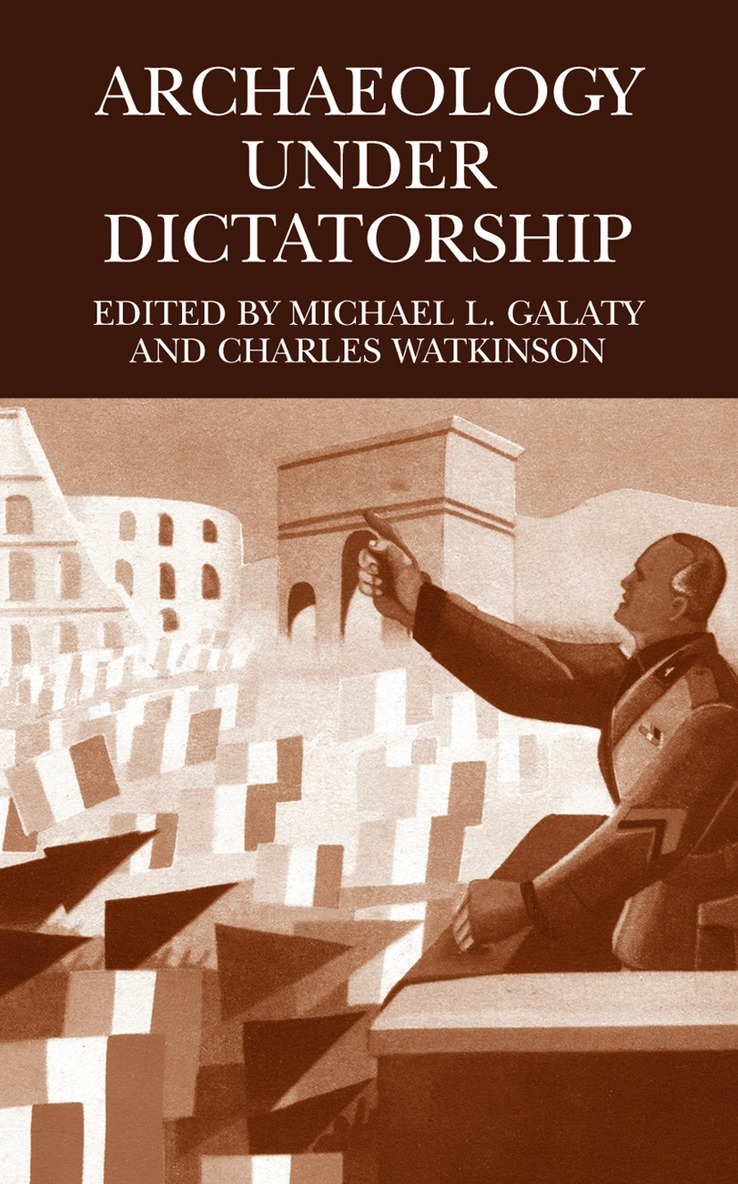
Archaeological knowledge is not created in a vacuum and our understanding of the past is profoundly affected by political ideologies. In fact, a relationship between politics and archaeology develops to some degree in every nation, regardless of social and economic circumstances.The connections between politics and archaeology become most visible, however, within a totalitarian dictatorship, when a dictator seeks to create and legitimize new state-supported ideologies. Any dictator may attempt to control and exploit the past, often by directly controlling archaeologists. The degree to which a nation's archaeological system may continue to be affected after the fall of the dictator depends upon both the previous regime's ideological position and its level of dependence upon archaeology, and the response of archaeologists to the regime, collectively and individually. Archaeology Under Dictatorship demonstrates that the study of archaeology as it evolved under modern dictatorships is today, more than ever, of critical importance. For example, in many European countries those who practiced archaeology under dictatorship are retiring or dying. In some places, their intellectual legacy is being pursued uncritically by a younger generation of archaeologists. Now is the time, therefore, to understand how archaeologists have supported, and sometimes subverted, dictatorial political ideologies. In studying archaeology as practiced under totalitarian dictatorship, that most harsh of political systems, light is shed on the issue of politics and archaeology generally.This volume aims to provide a theoretical basis for understanding the specific effects of totalitarian dictatorship upon the practice of archaeology, both during and after the dictator's reign. The nine essays explore experiences from every corner of the Mediterranean; from the heartlands of Italy, Spain and Greece, to the less well-known shores of Albania and Libya. With its wide-rangeof case-studies and strong theoretical orientation, this volume is a major advance in the study of the history and politics of archaeology. The Mediterranean focus will also make it thought-provoking reading for classical archaeologists and historians.
Häftad, Engelska, 2006
1 105 kr
Skickas inom 10-15 vardagar
Archaeological knowledge is not created in a vacuum and our understanding of the past is profoundly affected by political ideologies. In fact, a relationship between politics and archaeology develops to some degree in every nation, regardless of social and economic circumstances.The connections between politics and archaeology become most visible, however, within a totalitarian dictatorship, when a dictator seeks to create and legitimize new state-supported ideologies. Any dictator may attempt to control and exploit the past, often by directly controlling archaeologists. The degree to which a nation's archaeological system may continue to be affected after the fall of the dictator depends upon both the previous regime's ideological position and its level of dependence upon archaeology, and the response of archaeologists to the regime, collectively and individually. Archaeology Under Dictatorship demonstrates that the study of archaeology as it evolved under modern dictatorships is today, more than ever, of critical importance. For example, in many European countries those who practiced archaeology under dictatorship are retiring or dying. In some places, their intellectual legacy is being pursued uncritically by a younger generation of archaeologists. Now is the time, therefore, to understand how archaeologists have supported, and sometimes subverted, dictatorial political ideologies. In studying archaeology as practiced under totalitarian dictatorship, that most harsh of political systems, light is shed on the issue of politics and archaeology generally.This volume aims to provide a theoretical basis for understanding the specific effects of totalitarian dictatorship upon the practice of archaeology, both during and after the dictator's reign. The nine essays explore experiences from every corner of the Mediterranean; from the heartlands of Italy, Spain and Greece, to the less well-known shores of Albania and Libya. With its wide-rangeof case-studies and strong theoretical orientation, this volume is a major advance in the study of the history and politics of archaeology. The Mediterranean focus will also make it thought-provoking reading for classical archaeologists and historians.
Inbunden, Engelska, 2018
1 400 kr
Skickas inom 10-15 vardagar
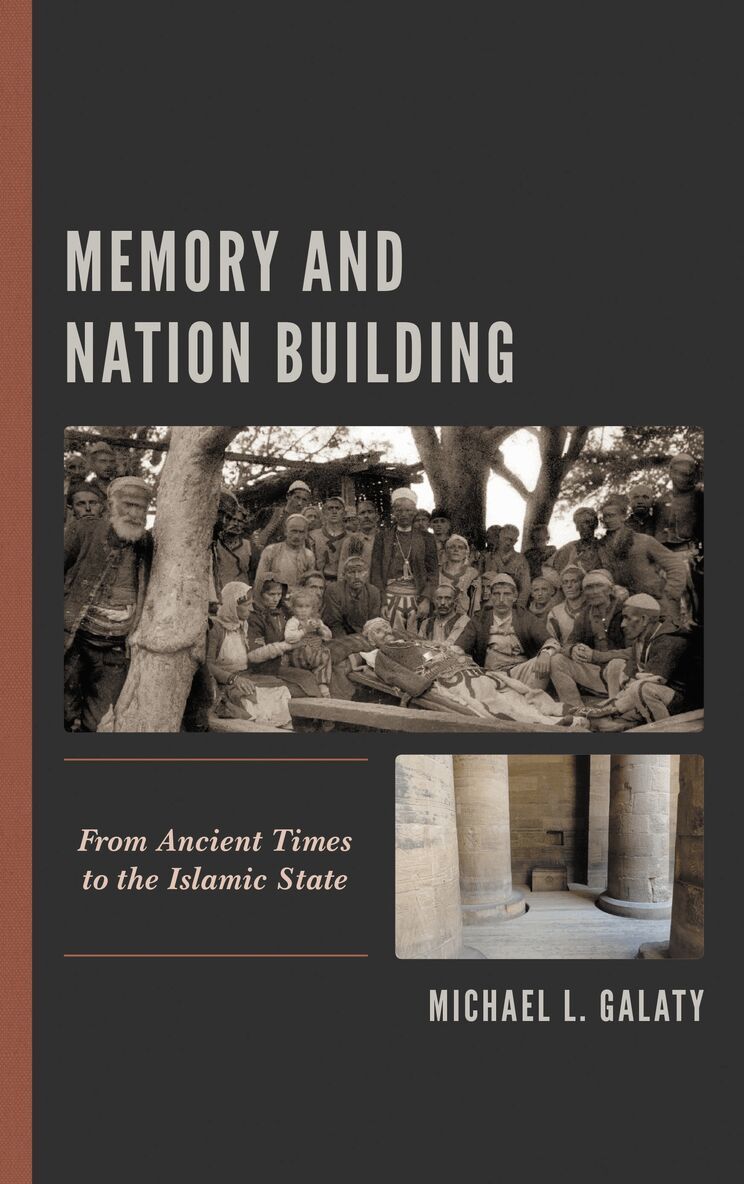
Memory and Nation Building addresses the complex topic of collective memory, first described by sociologist Maurice Halbwachs in the first half of the 20th century. Author Michael Galaty argues that the first states appropriated traditional collective memory systems in order to form. With this in mind, he compares three Mediterranean societies – Egypt, Greece, and Albania – each of which experienced very different trajectories of state formation. Galaty attributes these differences to varying responses to collective memory in all three places through time, with climaxes in the Ottoman period, during which all three were under Ottoman control. Egypt was characterized by deeply meaningful memory tropes concerning national unity, which spanned all of Egyptian history, while Greece experienced memory fragmentation, a condition exacerbated by periods of imperial conquest. Albania adapted and assimilated when faced with foreign domination, such that an indigenous Albanian state did not form until 1912.Galaty builds a diachronic model of state formation and its relationship to memory and political control. Memory and Nation Building culminates in an analysis of modern collective memory systems and resistance to those systems, which are often framed as conflicts over “heritage”. The formation and eventual fall of the short-lived Islamic State serves as an example of extreme memory work, with lessons for other modern nations.
Häftad, Engelska, 1999
566 kr
Skickas inom 5-8 vardagar
Häftad, Engelska, 2021
453 kr
Skickas inom 10-15 vardagar
Memory and Nation Building addresses the complex topic of collective memory, first described by sociologist Maurice Halbwachs in the first half of the 20th century. Author Michael Galaty argues that the first states appropriated traditional collective memory systems in order to form. With this in mind, he compares three Mediterranean societies – Egypt, Greece, and Albania – each of which experienced very different trajectories of state formation. Galaty attributes these differences to varying responses to collective memory in all three places through time, with climaxes in the Ottoman period, during which all three were under Ottoman control. Egypt was characterized by deeply meaningful memory tropes concerning national unity, which spanned all of Egyptian history, while Greece experienced memory fragmentation, a condition exacerbated by periods of imperial conquest. Albania adapted and assimilated when faced with foreign domination, such that an indigenous Albanian state did not form until 1912.Galaty builds a diachronic model of state formation and its relationship to memory and political control. Memory and Nation Building culminates in an analysis of modern collective memory systems and resistance to those systems, which are often framed as conflicts over “heritage”. The formation and eventual fall of the short-lived Islamic State serves as an example of extreme memory work, with lessons for other modern nations.
Del 60 - Monographs
Rethinking Mycenaean Palaces II
Revised and expanded second edition
Häftad, Engelska, 2007
483 kr
Skickas inom 5-8 vardagar
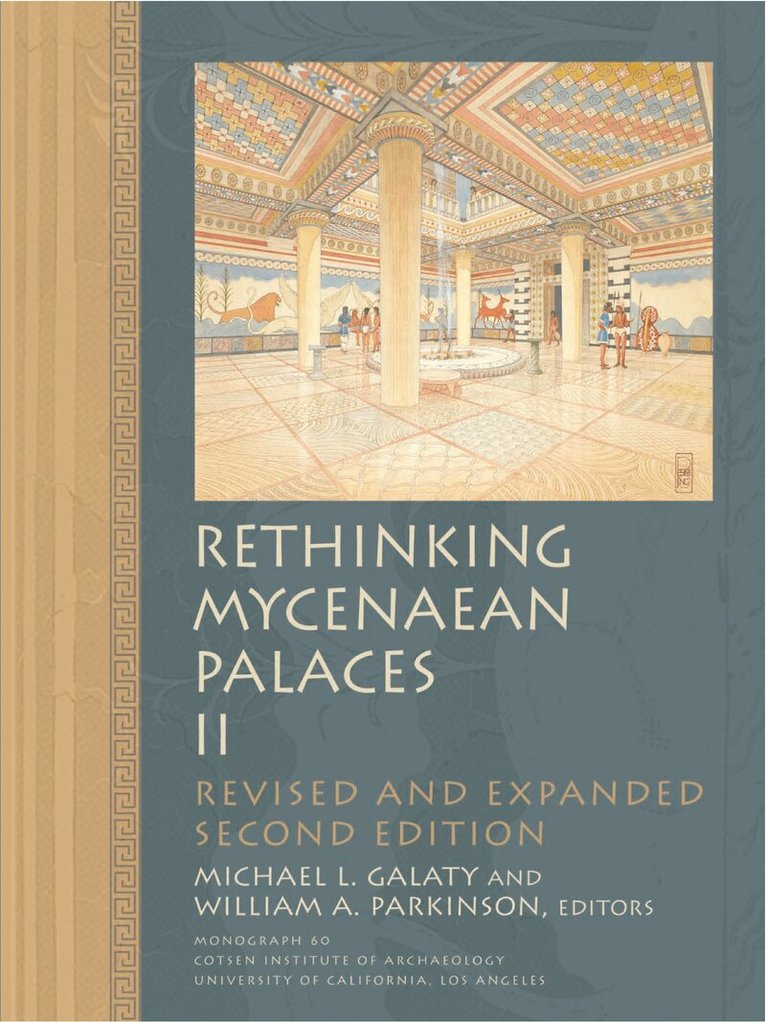
This revised and expanded edition of the classic 1999 edited book includes all the chapters from the original volume plus a new, updated, introduction and several new chapters. The current book is an up-to-date review of research into Mycenaean palatial systems with chapters by archaeologists and Linear B specialists that will be useful to scholars, instructors, and advanced students. This book aims to define more accurately the term"palace"in light of both recent archaeological research in the Aegean and current anthropological thinking on the structure and origin of early states. Regional centers do not exist as independent entities. They articulate with more extensive sociopolitical systems. The concept of palace needs to be incorporated into enhanced models of Mycenaean state organization, ones that more completely integrate primary centers with networks of regional settlement and economy.
Inbunden, Engelska, 2023
1 173 kr
Skickas inom 5-8 vardagar
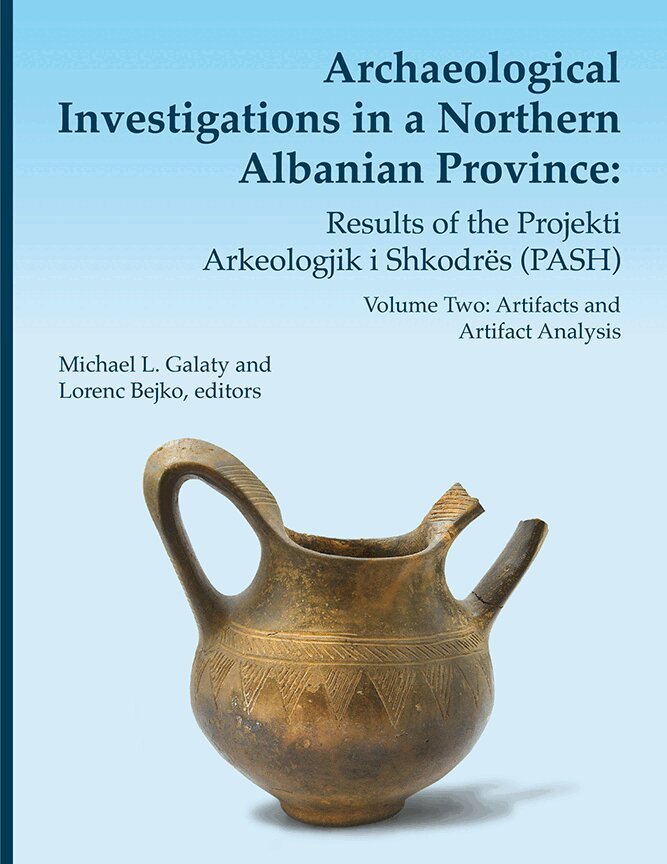
To date, very few northern Albanian archaeological sites have been surveyed and excavated. Situated beyond the reach, and allure, of the Classical Greek colonies of south-central Albania, the region has drawn less scholarly attention. But in various ways, northern Albania is just as important to the ongoing archaeological debates regarding the origins of inequality and the rise of social complexity.Some of the earliest and largest hill forts and tumuli (burial mounds) in Albania, dating to the Bronze and Iron Age, are located in Shkodër. Shkodër (Rozafa) Castle became the capital of the so-called Illyrian Kingdom, which was conquered by Rome in the early 3rd century BC. This research report, focused on the province of Shkodër, is based on five years of field and laboratory work and is the first synthetic archaeological treatment of this region.The results of the Projekti Arkeologjik i Shkodrës (or PASH) are presented here in two volumes. Volume 1 includes geological context, a literature review, historical background, and reports on the regional survey and test excavations at three settlements and three tumuli. In Volume 2, the authors describe the artifacts recovered through survey and excavation, including chipped stone, small finds, and pottery from the prehistoric, Classical, Roman, medieval, and post-medieval periods. They also present results of faunal, petrographic, chemical, carpological, and strontium isotope analyses of the artifacts. Extensive supporting data is available on the University of Michigan's Deep Blue data repository: https://doi.org/10.7302/xnpy-0e60These two volumes place northern Albania—and the Shkodër Province in particular—at the forefront of archaeological research in the Balkans.
Inbunden, Engelska, 2023
1 173 kr
Skickas inom 5-8 vardagar
To date, very few northern Albanian archaeological sites have been surveyed and excavated. Situated beyond the reach, and allure, of the Classical Greek colonies of south-central Albania, the region has drawn less scholarly attention. But in various ways, northern Albania is just as important to the ongoing archaeological debates regarding the origins of inequality and the rise of social complexity.Some of the earliest and largest hill forts and tumuli (burial mounds) in Albania, dating to the Bronze and Iron Age, are located in Shkodër. Shkodër (Rozafa) Castle became the capital of the so-called Illyrian Kingdom, which was conquered by Rome in the early 3rd century BC. This research report, focused on the province of Shkodër, is based on five years of field and laboratory work and is the first synthetic archaeological treatment of this region.The results of the Projekti Arkeologjik i Shkodrës (or PASH) are presented here in two volumes. Volume 1 includes geological context, a literature review, historical background, and reports on the regional survey and test excavations at three settlements and three tumuli. In Volume 2, the authors describe the artifacts recovered through survey and excavation, including chipped stone, small finds, and pottery from the prehistoric, Classical, Roman, medieval, and post-medieval periods. They also present results of faunal, petrographic, chemical, carpological, and strontium isotope analyses of the artifacts. Extensive supporting data is available on the University of Michigan's Deep Blue data repository: https://doi.org/10.7302/xnpy-0e60.These two volumes place northern Albania—and the Shkodër Province in particular—at the forefront of archaeological research in the Balkans.
Häftad, Engelska, 2025
554 kr
Skickas inom 5-8 vardagar
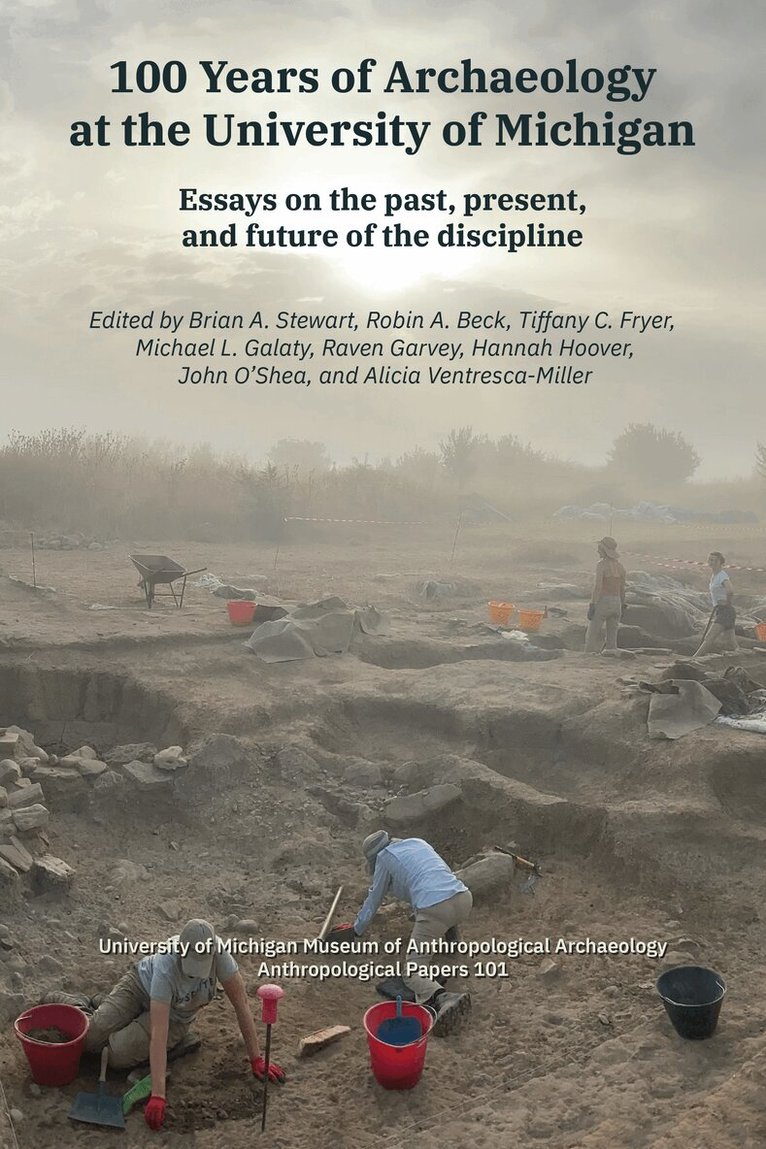
The University of Michigan has been at the forefront of archaeological research for more than 100 years, since 1922, when the Museum of Anthropology (now the Museum of Anthropological Archaeology) was established on the Ann Arbor campus. The goal of its curators for many decades was to create a research and teaching program that emphasized methodological rigor in the analysis of archaeological materials, attempting to solve grand questions about human behavior through fieldwork, collections, and laboratory work. About fifty years ago, the Museum's emphasis shifted to developing archaeological theory when a new generation of curators with processualist leanings made Ann Arbor a testing ground for the so-called New Archaeology. Now, archaeology stands at a crossroads. Some archaeologists refer to the death of archaeological theory. Others stake out opposed camps of generalists and particularists. At U-M, as at many other universities, the past decade has seen a new commitment to collaborative archaeology, working with descendant communities and acknowledging the discipline's roots in colonialism and extraction. In 2022, to celebrate a century of existence, the University of Michigan Museum of Anthropological Archaeology (UMMAA) hosted an international conference to explore possibilities for a middle way: an archaeology for the next 100 years, combining humanistic and scientific approaches, which allows for both agents and systems, description and explanation, science and heritage. This volume is meant to be a snapshot of that conference and this moment in the development of the discipline. Included are most of the papers and posters presented, as well as photographs of the panels and the proceedings.
Del 60 - Monographs
Rethinking Mycenaean Palaces II
Revised and expanded second edition
Inbunden, Engelska, 2007
759 kr
Tillfälligt slut
This revised and expanded edition of the classic 1999 edited book includes all the chapters from the original volume plus a new, updated, introduction and several new chapters. The current book is an up-to-date review of research into Mycenaean palatial systems with chapters by archaeologists and Linear B specialists that will be useful to scholars, instructors, and advanced students. This book aims to define more accurately the term"palace"in light of both recent archaeological research in the Aegean and current anthropological thinking on the structure and origin of early states. Regional centers do not exist as independent entities. They articulate with more extensive sociopolitical systems. The concept of palace needs to be incorporated into enhanced models of Mycenaean state organization, ones that more completely integrate primary centers with networks of regional settlement and economy.
Del 28 - Monumenta Archaeologica
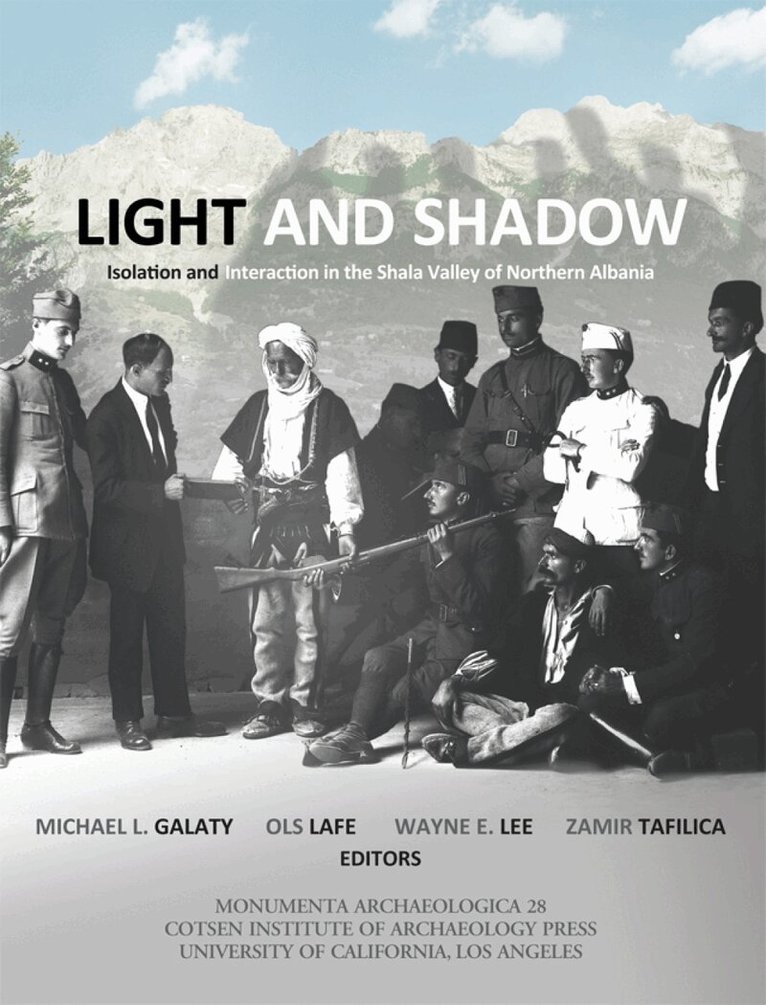
Light and Shadow
Isolation and Interaction in the Shala Valley of Northern Albania
Inbunden, Engelska, 2013
986 kr
Tillfälligt slut
Employing survey archaeology, excavation, ethnographic study, and multinational archival work, the Shala Valley Project uncovered the many powerful, creative ways whereby the men and women of Shala shaped their world: through dynamic, world-systemic relationships with the powers that surrounded but never fully conquered them. The Shala Valley Project presents the highlanders, the malesore, in the full complexity of their lives, while also unveiling a new, deeper history for the region--a history that reaches back to an unexpected fortified Iron Age site. Light and Shadow tells many stories. Archaeologists, historians, and students of tribes, of empires, of imperial-indigenous relations, of blood feud, of kinship, of the built landscape, of world-systems theory and sustainability science, and more, will find much here to digest. The people of Shala, to which Light and Shadow is dedicated, may serve as an example in our modern age, one in which persistent, tribal peoples still fight for their survival, and seek to preserve some degree of independence from capitalist economies bent on their incorporation.