William A. Parkinson - Böcker
Visar alla böcker från författaren William A. Parkinson. Handla med fri frakt och snabb leverans.
9 produkter
9 produkter
195 kr
Skickas inom 3-6 vardagar
861 kr
Skickas inom 5-8 vardagar
Del 60 - Monographs
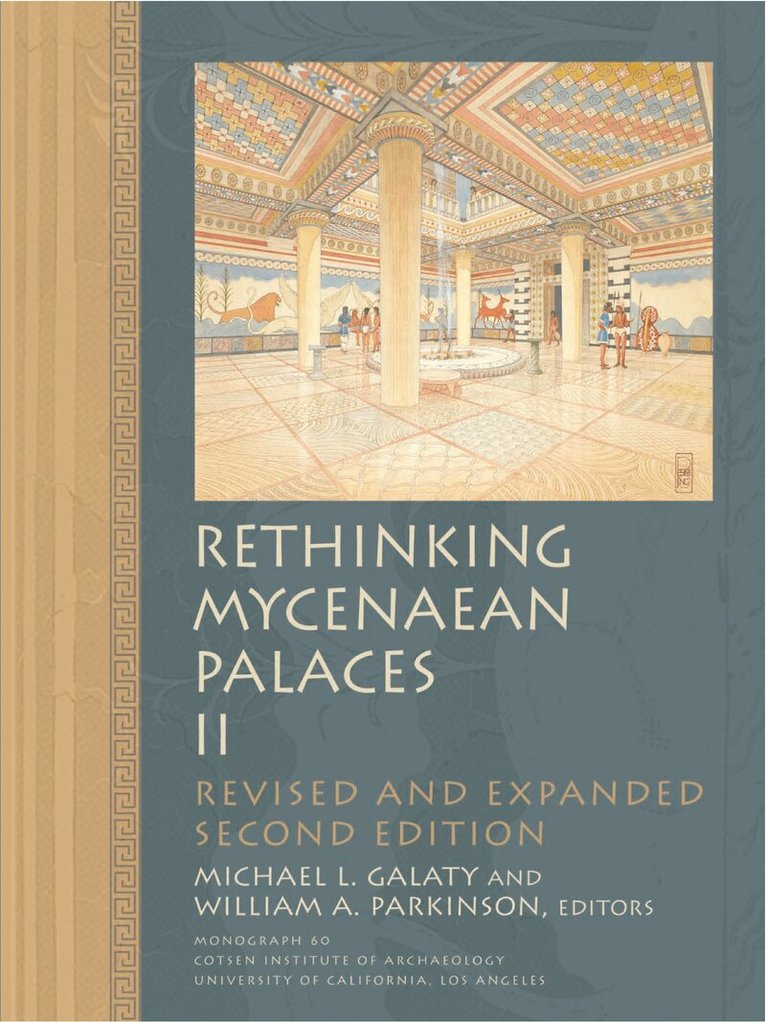
Rethinking Mycenaean Palaces II
Revised and expanded second edition
Häftad, Engelska, 2007
486 kr
Skickas inom 5-8 vardagar
This revised and expanded edition of the classic 1999 edited book includes all the chapters from the original volume plus a new, updated, introduction and several new chapters. The current book is an up-to-date review of research into Mycenaean palatial systems with chapters by archaeologists and Linear B specialists that will be useful to scholars, instructors, and advanced students. This book aims to define more accurately the term"palace"in light of both recent archaeological research in the Aegean and current anthropological thinking on the structure and origin of early states. Regional centers do not exist as independent entities. They articulate with more extensive sociopolitical systems. The concept of palace needs to be incorporated into enhanced models of Mycenaean state organization, ones that more completely integrate primary centers with networks of regional settlement and economy.
Del 60 - Monographs
Rethinking Mycenaean Palaces II
Revised and expanded second edition
Inbunden, Engelska, 2007
769 kr
Tillfälligt slut
This revised and expanded edition of the classic 1999 edited book includes all the chapters from the original volume plus a new, updated, introduction and several new chapters. The current book is an up-to-date review of research into Mycenaean palatial systems with chapters by archaeologists and Linear B specialists that will be useful to scholars, instructors, and advanced students. This book aims to define more accurately the term"palace"in light of both recent archaeological research in the Aegean and current anthropological thinking on the structure and origin of early states. Regional centers do not exist as independent entities. They articulate with more extensive sociopolitical systems. The concept of palace needs to be incorporated into enhanced models of Mycenaean state organization, ones that more completely integrate primary centers with networks of regional settlement and economy.
609 kr
Skickas inom 3-6 vardagar
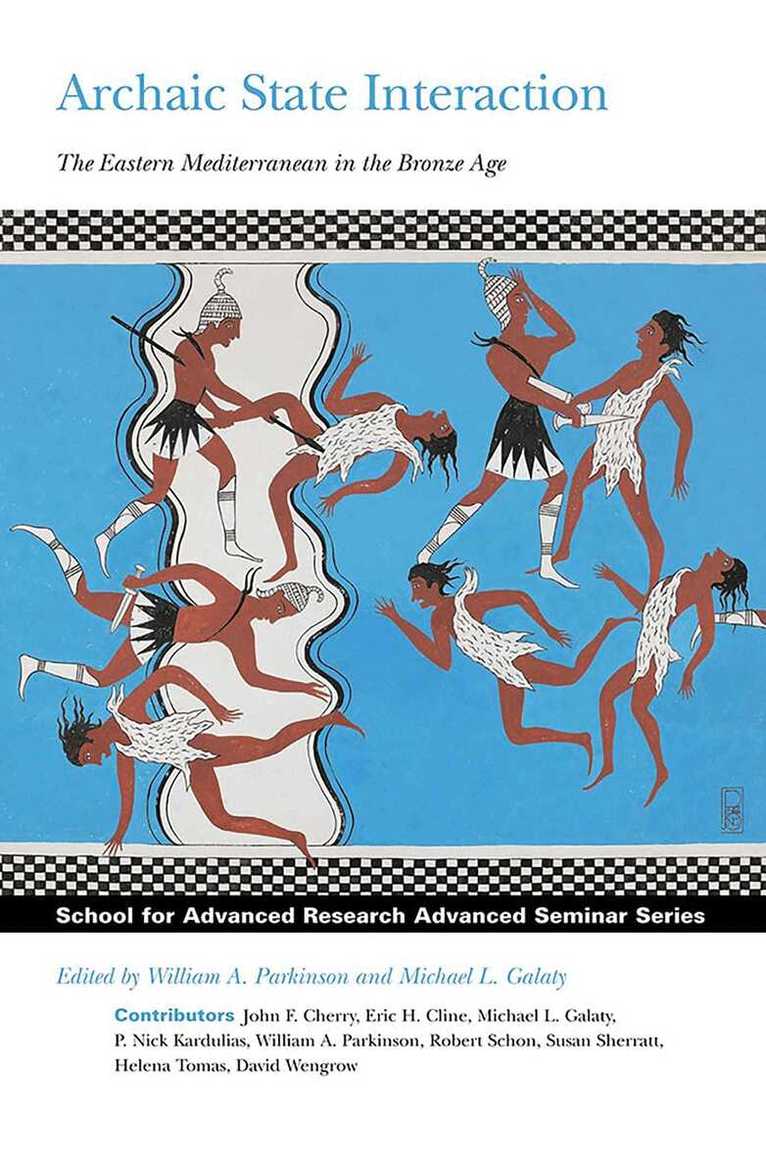
In current archaeological research the failure to find common ground between world-systems theory believers and their counterparts has resulted in a stagnation of theoretical development in regards to modeling how early state societies interacted with their neighbors. This book is an attempt to redress these issues. By shifting the theoretical focus away from questions of state evolution to state interaction, the authors develop anthropological models for understanding how ancient states interacted with one another and with societies of different scales of economic and political organization. One of their goals has been to identify a theoretical middle ground that is neither dogmatic nor dismissive. The result is an innovative approach to modeling social interaction that will be helpful in exploring the relationship between social processes that occur at different geographic scales and over different temporal durations. The scholars who participated in the SAR Advanced Seminar that resulted in this book used a particular geographic and temporal context as a case study for developing anthropological models of interaction that are cross-cultural in scope but still deal well with the idiosyncrasies of specific culture histories.
Del 46 - Monumenta Archaeologica
Bikeri
Two Early Copper-Age Villages on the Great Hungarian Plain
Inbunden, Engelska, 2022
1 674 kr
Skickas inom 5-8 vardagar
This edited book describes the multi-disciplinary research conducted by the Körös Regional Archaeological Project in southeastern Hungary from 2000-2007. Centred around two Early Copper Age Tiszapolgár culture villages in the Körös Region of the Great Hungarian Plain, Vészto-Bikeri and Körösladány-Bikeri, the research incorporated excavation, surface collection, geophysical survey and soil chemistry to investigate settlement layout and organization. The transition from the Neolithic period to the Copper Age in the northern Balkans and the Carpathian Basin was marked by significant changes in material culture, settlement layout and organization, and mortuary practices that indicate fundamental social transformations in the middle of the fifth millennium BC. Prior research into the Late Neolithic of the region focused almost exclusively on fortified 'tell' settlements. The Early Copper Age, by contrast, was known primarily from cemeteries such as the type site of Tiszapolgár-Basatanya. The Project’s results yielded the first extensive, systematically collected datasets from Early Copper Age settlements on the Great Hungarian Plain. The two adjacent villages at Bikeri, located only 70 m apart, were similar in size, and both were protected with fortifications. Relative and absolute dates demonstrate that they were occupied sequentially during the Early Copper Age, from ca. 4600-4200 cal B.C. The excavated assemblages from the sites are strikingly similar, suggesting that both were occupied by the same community. This process of settlement relocation after only a few generations breaks from the longer-lasting settlement pattern that are typical of the Late Neolithic.
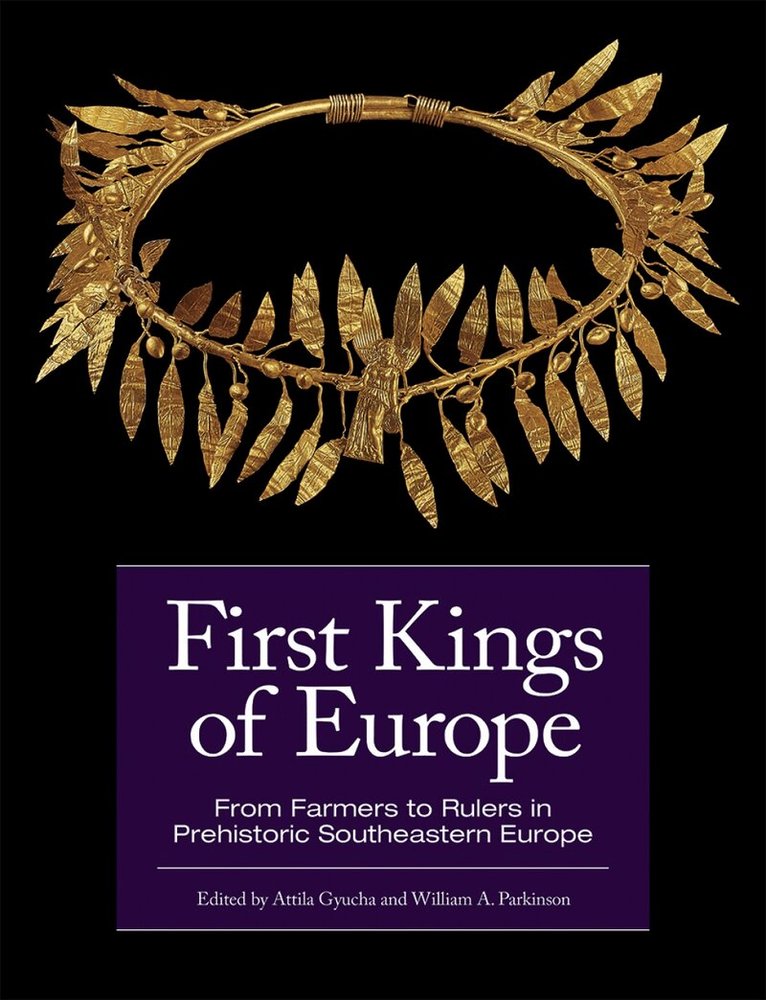
First Kings of Europe
From Farmers to Rulers in Prehistoric Southeastern Europe
Inbunden, Engelska, 2022
1 142 kr
Skickas inom 5-8 vardagar
A group of scholars analyse and interpret data and artifacts from the most important museum collections in central Europe and the Balkans, illustrating the evolution, beginning in the Copper Age, of political hierarchy in this region. Over a span of four millennia, early agricultural villages gave rise to Europe's first kingdoms and monarchies, the first complex state organisations.
643 kr
Skickas
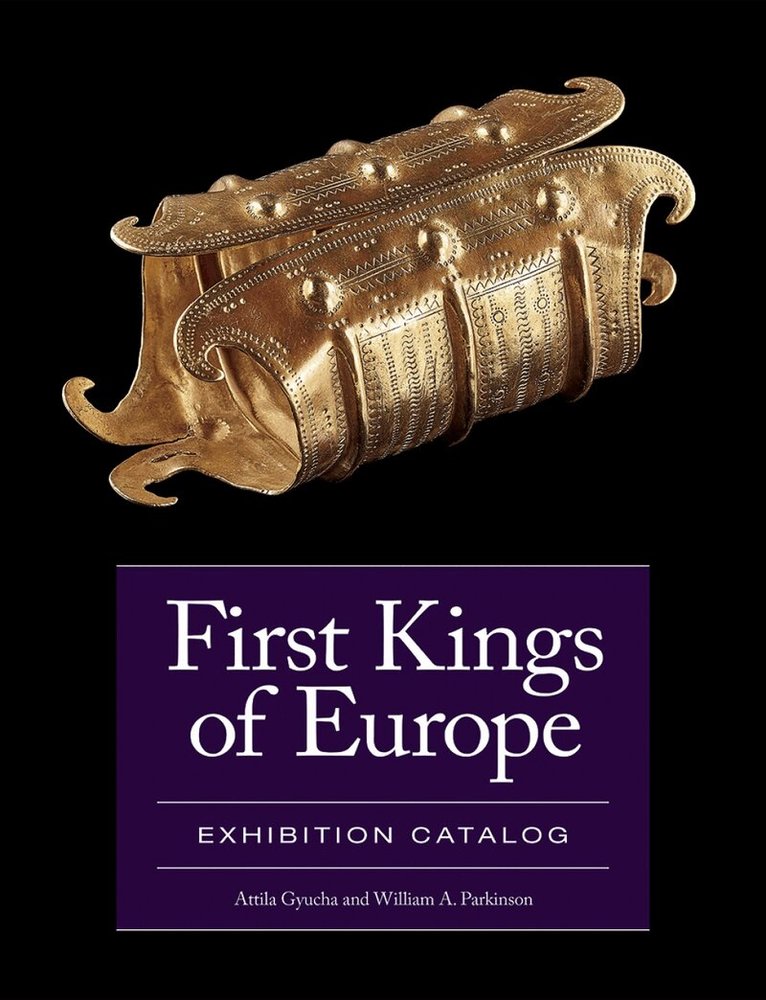
This catalogue accompanies an international exhibition, "First Kings of Europe," and another volume also published by the Cotsen Institute, First Kings of Europe: From Farmers to Rulers in Prehistoric Southeastern Europe, that examine the artifacts and cultures of this area from the Neolithic to the Iron Age.Over several millennia, early agricultural villages gave rise to tribal kingdoms and monarchies, replacing smaller, more egalitarian social structures with complex state organizations led by royal individuals invested with power. Several hundred objects and artifacts in the exhibition are portrayed in the catalog, accompanied by introductory text and detailed entries for each item. The spectacular and highly detailed color photographs introduce us to the gold and silver ornaments, bronze and iron weaponry, rich metal hoards and magnificent ceremonial vessels that are masterpieces from this period of history. Many of them have never left their countries of origin, making the two volumes documenting them an opportunity not to miss.
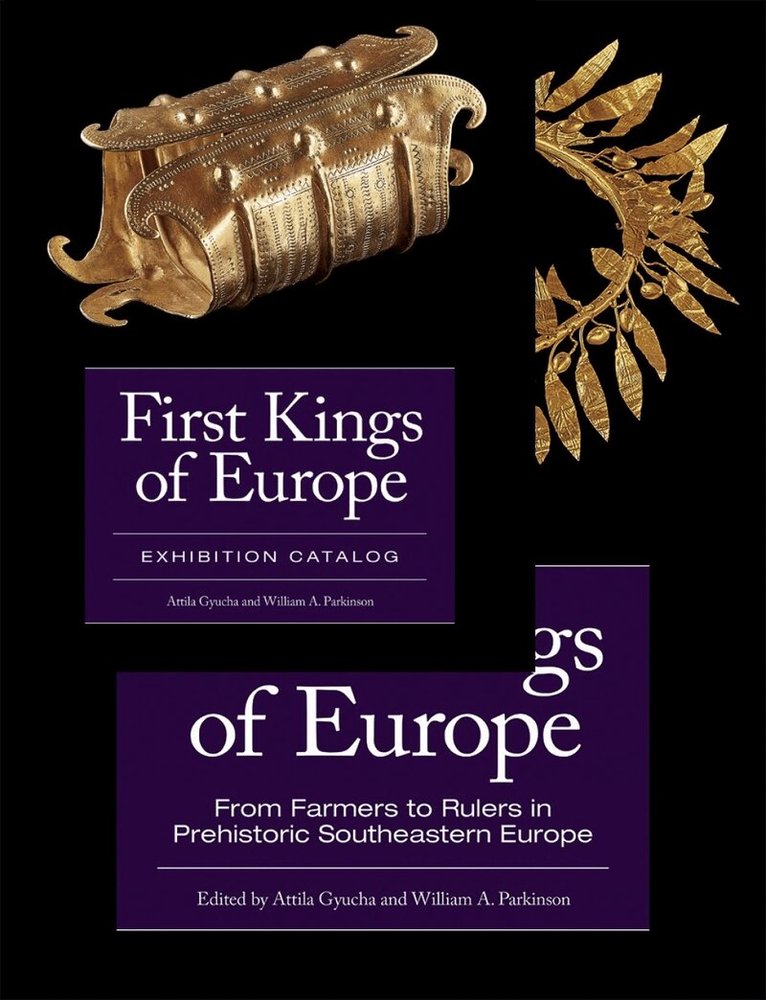
First Kings of Europe (2- volume set)
From Farmers to Rulers in Prehistoric Southeastern Europe, Essays AND Exhibition Catalogue
Inbunden, Engelska, 2023
1 524 kr
Skickas inom 5-8 vardagar
Contains the Essay volume and the Exhibition Catalogue volume, both wonderfully illustrated throughout, mostly in colour. Over several millennia, early agricultural villages gave rise to tribal kingdoms and monarchies, replacing smaller, more egalitarian social structures with complex state organizations led by royal individuals invested with power. Several hundred objects and artifacts in the exhibition are portrayed in the catalog, accompanied by introductory text and detailed entries for each item. The spectacular and highly detailed color photographs introduce us to the gold and silver ornaments, bronze and iron weaponry, rich metal hoards and magnificent ceremonial vessels that are masterpieces from this period of history. Many of them have never left their countries of origin, making the two volumes documenting them an opportunity not to miss. In the essay volume scholars synthesize archaeological data and present artifacts from the most important museum collections across south-eastern Europe to illustrate the evolution of political hierarchy, power and status in this region, from the Neolithic to the Iron age. The catalogue volume accompanies an international exhibition, "First Kings of Europe"