Attila Gyucha - Böcker
Visar alla böcker från författaren Attila Gyucha. Handla med fri frakt och snabb leverans.
7 produkter
7 produkter
Coming Together
Comparative Approaches to Population Aggregation and Early Urbanization
Häftad, Engelska, 2020
640 kr
Skickas inom 3-6 vardagar
Archaeologists, anthropologists, and classicists discuss how urbanization first emerged in strikingly different sociopolitical contexts in North America, Europe, and the Near East.The pursuit for universally applicable definitions of the terms "urban" and "city" has frequently distracted scholars from scrutinizing processes of how ancient nucleated settlements evolved and developed. Based on the premise that similar social dynamics to a great extent governed nucleation trajectories throughout human history, Coming Together focuses on both prehistoric aggregated and early urban settlements. Drawing from a variety of theoretical and methodological approaches, archaeologists, anthropologists, and classicists discuss how nucleation unfolded in strikingly different sociopolitical contexts in North America, Europe, and the Near East. The major themes of the volume are nucleation's origins, pathways to sustainability, and the transformative role of these sites in sociopolitical and cultural change.
Coming Together
Comparative Approaches to Population Aggregation and Early Urbanization
Inbunden, Engelska, 2019
1 150 kr
Tillfälligt slut
Archaeologists, anthropologists, and classicists discuss how urbanization first emerged in strikingly different sociopolitical contexts in North America, Europe, and the Near East.The pursuit for universally applicable definitions of the terms "urban" and "city" has frequently distracted scholars from scrutinizing processes of how ancient nucleated settlements evolved and developed. Based on the premise that similar social dynamics to a great extent governed nucleation trajectories throughout human history, Coming Together focuses on both prehistoric aggregated and early urban settlements. Drawing from a variety of theoretical and methodological approaches, archaeologists, anthropologists, and classicists discuss how nucleation unfolded in strikingly different sociopolitical contexts in North America, Europe, and the Near East. The major themes of the volume are nucleation's origins, pathways to sustainability, and the transformative role of these sites in sociopolitical and cultural change.
680 kr
Skickas
The Archaeology of Nucleation in the Old World explores the role of the built environment in expressing and shaping community organization and identity at prehistoric and historic nucleated settlements and early cities in the Old World. The spatial layout of large settlements results from the interaction of social, political, economic, and religious orders. Subsequent structural changes governed by the application, manipulation, and challenges of these orders yield a dynamic built environment which influences the processes of organization and identity formation. Taking advantage of advances in archaeological methods and theory that allow investigations of nucleated settlements to an extent and depth of detail that was previously impossible, the contributors to this volume address specific topics, such as how the built environment and location of activity zones help us to understand social configurations; how various scales of social units can be recognized and the resulting patterns interpreted; how collective actions contribute to settlement organization and community integrity; how changes in social relations are reflected in the development of the built environment; how cooperation and competition as well as measures to mitigate social and communication stress can be identified in the archaeological record; and how the built environment was used to express or manipulate identity.
Del 46 - Monumenta Archaeologica
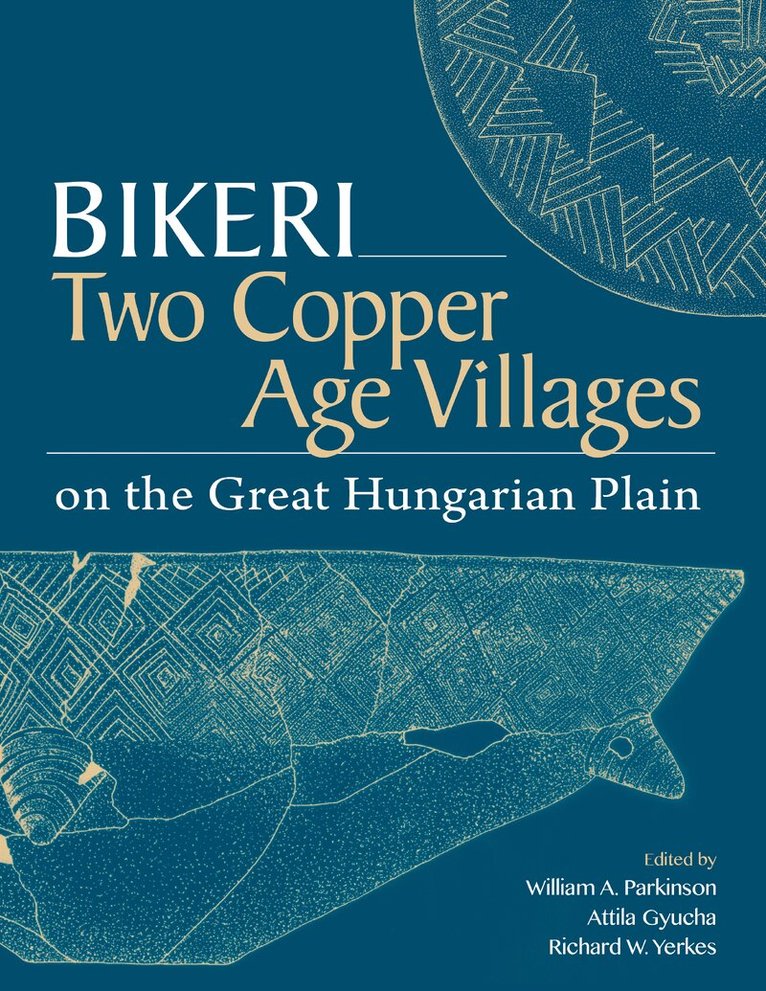
Bikeri
Two Early Copper-Age Villages on the Great Hungarian Plain
Inbunden, Engelska, 2022
1 674 kr
Skickas inom 5-8 vardagar
This edited book describes the multi-disciplinary research conducted by the Körös Regional Archaeological Project in southeastern Hungary from 2000-2007. Centred around two Early Copper Age Tiszapolgár culture villages in the Körös Region of the Great Hungarian Plain, Vészto-Bikeri and Körösladány-Bikeri, the research incorporated excavation, surface collection, geophysical survey and soil chemistry to investigate settlement layout and organization. The transition from the Neolithic period to the Copper Age in the northern Balkans and the Carpathian Basin was marked by significant changes in material culture, settlement layout and organization, and mortuary practices that indicate fundamental social transformations in the middle of the fifth millennium BC. Prior research into the Late Neolithic of the region focused almost exclusively on fortified 'tell' settlements. The Early Copper Age, by contrast, was known primarily from cemeteries such as the type site of Tiszapolgár-Basatanya. The Project’s results yielded the first extensive, systematically collected datasets from Early Copper Age settlements on the Great Hungarian Plain. The two adjacent villages at Bikeri, located only 70 m apart, were similar in size, and both were protected with fortifications. Relative and absolute dates demonstrate that they were occupied sequentially during the Early Copper Age, from ca. 4600-4200 cal B.C. The excavated assemblages from the sites are strikingly similar, suggesting that both were occupied by the same community. This process of settlement relocation after only a few generations breaks from the longer-lasting settlement pattern that are typical of the Late Neolithic.
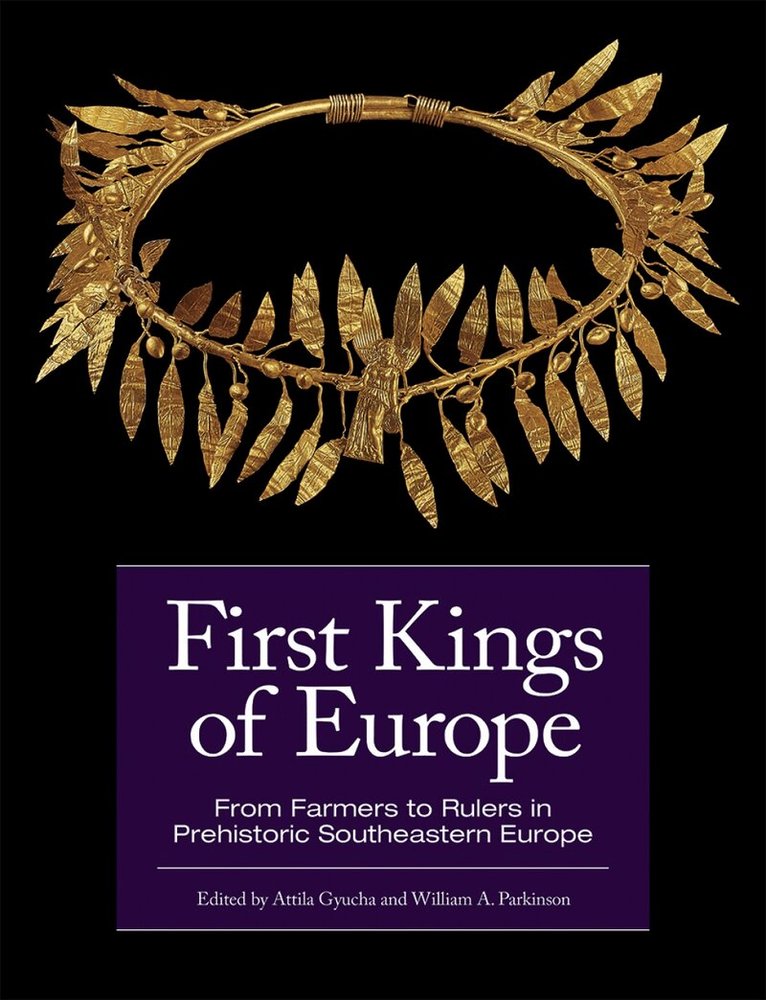
First Kings of Europe
From Farmers to Rulers in Prehistoric Southeastern Europe
Inbunden, Engelska, 2022
1 142 kr
Skickas inom 5-8 vardagar
A group of scholars analyse and interpret data and artifacts from the most important museum collections in central Europe and the Balkans, illustrating the evolution, beginning in the Copper Age, of political hierarchy in this region. Over a span of four millennia, early agricultural villages gave rise to Europe's first kingdoms and monarchies, the first complex state organisations.
643 kr
Skickas
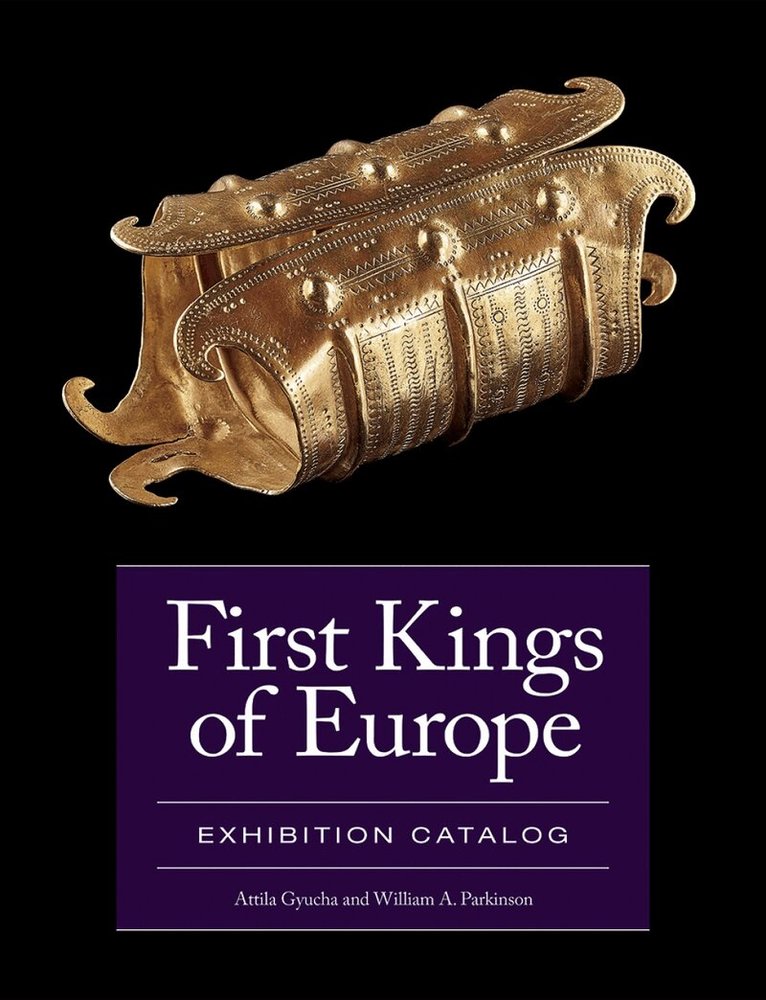
This catalogue accompanies an international exhibition, "First Kings of Europe," and another volume also published by the Cotsen Institute, First Kings of Europe: From Farmers to Rulers in Prehistoric Southeastern Europe, that examine the artifacts and cultures of this area from the Neolithic to the Iron Age.Over several millennia, early agricultural villages gave rise to tribal kingdoms and monarchies, replacing smaller, more egalitarian social structures with complex state organizations led by royal individuals invested with power. Several hundred objects and artifacts in the exhibition are portrayed in the catalog, accompanied by introductory text and detailed entries for each item. The spectacular and highly detailed color photographs introduce us to the gold and silver ornaments, bronze and iron weaponry, rich metal hoards and magnificent ceremonial vessels that are masterpieces from this period of history. Many of them have never left their countries of origin, making the two volumes documenting them an opportunity not to miss.
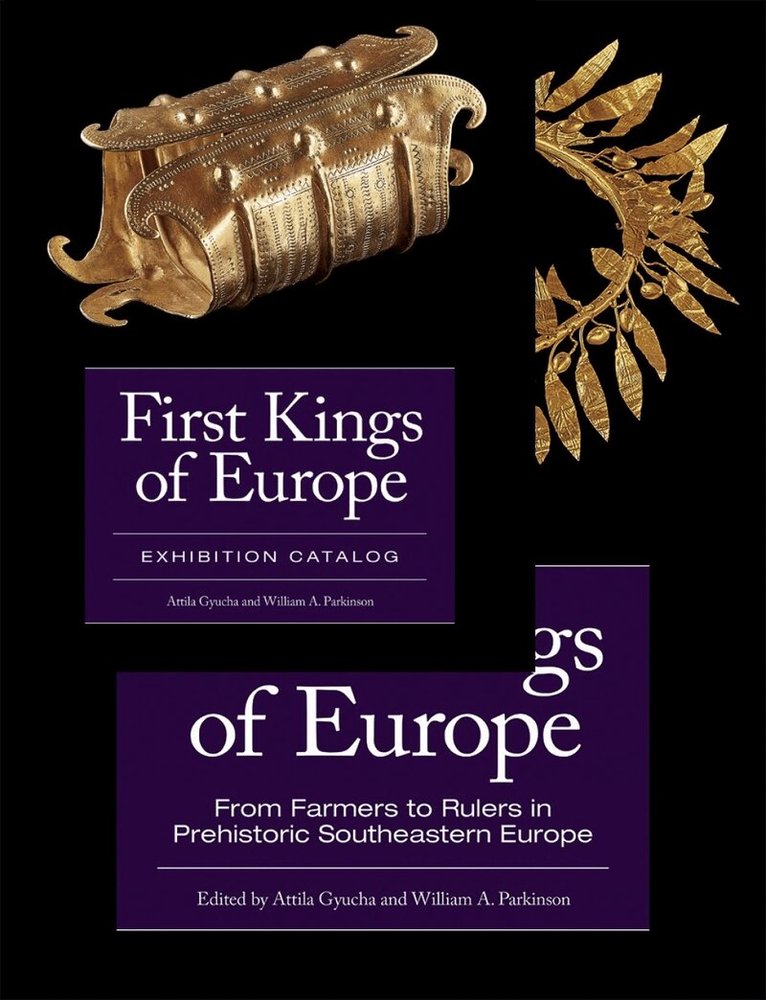
First Kings of Europe (2- volume set)
From Farmers to Rulers in Prehistoric Southeastern Europe, Essays AND Exhibition Catalogue
Inbunden, Engelska, 2023
1 524 kr
Skickas inom 5-8 vardagar
Contains the Essay volume and the Exhibition Catalogue volume, both wonderfully illustrated throughout, mostly in colour. Over several millennia, early agricultural villages gave rise to tribal kingdoms and monarchies, replacing smaller, more egalitarian social structures with complex state organizations led by royal individuals invested with power. Several hundred objects and artifacts in the exhibition are portrayed in the catalog, accompanied by introductory text and detailed entries for each item. The spectacular and highly detailed color photographs introduce us to the gold and silver ornaments, bronze and iron weaponry, rich metal hoards and magnificent ceremonial vessels that are masterpieces from this period of history. Many of them have never left their countries of origin, making the two volumes documenting them an opportunity not to miss. In the essay volume scholars synthesize archaeological data and present artifacts from the most important museum collections across south-eastern Europe to illustrate the evolution of political hierarchy, power and status in this region, from the Neolithic to the Iron age. The catalogue volume accompanies an international exhibition, "First Kings of Europe"