Michael Latzer – författare
Visar alla böcker från författaren Michael Latzer. Handla med fri frakt och snabb leverans.
11 produkter
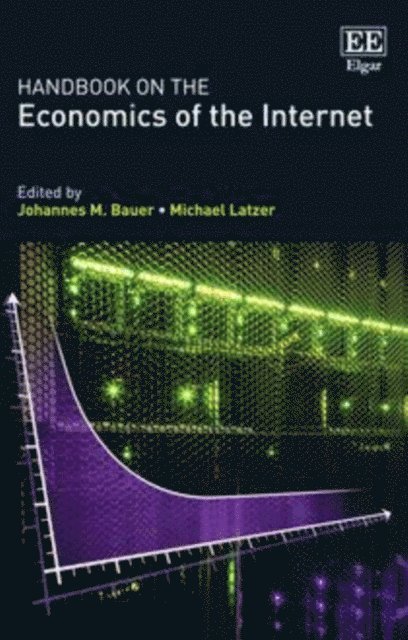
Handbook on the Economics of the Internet
Av Johannes M. Bauer, Michael Latzer
Inbunden, 2016
4787 kr
Lägg i varukorg
'Internet development dynamics are tackled in this Handbook by leading scholars representing mainstream, institutional, evolutionary economics and political economy perspectives. They show how complex markets for digital technologies and services are evolving. Crucially, they demonstrate why …
Handbook on the Economics of the Internet
Av Michael Latzer, Johannes M. Bauer
E-bok, 2016
805 kr
Lägg i varukorg
''Internet development dynamics are tackled in this Handbook by leading scholars representing mainstream, institutional, evolutionary economics and political economy perspectives. They show how complex markets for digital technologies and services are evolving. Crucially, they demonstrate why …
Handbook on the Economics of the Internet
Av Johannes M. Bauer, Michael Latzer
Häftad, 2017
924 kr
Lägg i varukorg
'Internet development dynamics are tackled in this Handbook by leading scholars representing mainstream, institutional, evolutionary economics and political economy perspectives. They show how complex markets for digital technologies and services are evolving. Crucially, they demonstrate why …
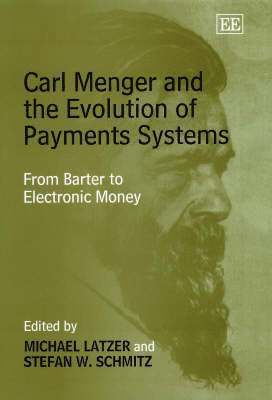
Carl Menger and the Evolution of Payments Systems
From Barter to Electronic Money
Av Michael Latzer, Stefan W. Schmitz
Inbunden, 2002
1891 kr
Lägg i varukorg
This book is unique in providing the first full English translation of Menger's seminal article Geld - one of the most influential papers on the origin of money. The editors aim to facilitate a broader and more detailed discussion of Menger's method, theory and findings with this translation and in …
Mediamatik — Die Konvergenz von Telekommunikation, Computer und Rundfunk
E-bok, 2013
492 kr
Lägg i varukorg
Mediamatik — Die Konvergenz von Telekommunikation, Computer und Rundfunk
Häftad, 1997
515 kr
Lägg i varukorg
Die telekommunikations- und medienpolitischen Debatten der 90er Jahre sind von Neologismen gepragt, von Variationen und Kombinationen der Schlagworte Informationhighway, Multimedia und Informationsgesellschaft. Hinter diesen diffusen und widerspruchlich gebrauchten Begriffen verbirgt sich ein …
Selbst- und Ko-Regulierung im Mediamatiksektor
Alternative Regulierungsformen zwischen Staat und Markt
Av Michael Latzer, Natascha Just m. fl.
Häftad, 2002
566 kr
Lägg i varukorg
Die traditionelle staatliche Steuerung im konvergenten Kommunikationssektor - der Mediamatik - ist in der Krise. In Folge verändert sich die Rolle des Staates, so auch die Aufgabenverteilung zwischen staatlichen und privaten Akteuren im Regulierungsnetzwerk. Von Wirtschaft und Politik werden …
Europäische Öffentlichkeit und medialer Wandel
Eine transdisziplinäre Perspektive
Av Wolfgang Langenbucher, Michael Latzer
Häftad, 2006
514 kr
Lägg i varukorg
Der Mangel an europäischer Öffentlichkeit ist eine demokratiepolitische Herausforderung und hemmt den europäischen Integrationsprozess. Öffentlichkeitsdefizite variieren medienspezifisch, sind Vermittlungs- und Kontrolldefizite, die auf die nationale Fixierung der Mediensysteme sowie auf …
Europäische Öffentlichkeit und medialer Wandel
Eine transdisziplinäre Perspektive
Av Michael Latzer, Wolfgang Langenbucher
E-bok, 2007
542 kr
Lägg i varukorg
Selbst- und Ko-Regulierung im Mediamatiksektor
Alternative Regulierungsformen zwischen Staat und Markt
Av Peter Slominski, Florian Saurwein m. fl.
E-bok, 2013
574 kr
Lägg i varukorg
State of Europe
Transformation of Statehood from a European Perspective
Av Sonja Puntscher Riekmann, Monika Mokre m. fl.
Häftad, 2007
398 kr
Tillfälligt slut
While globalization affects the sovereignty of every nation-state, European countries face special challenges due to the emergence of the European Union. "The State of Europe" explores the transformation of ideas of statehood in light of the EU's continued development, including rapidly changing …