Michael McGuire - Böcker
Visar alla böcker från författaren Michael McGuire. Handla med fri frakt och snabb leverans.
20 produkter
20 produkter
893 kr
Skickas inom 5-8 vardagar
Can evolutionary theory explain depression, anxiety, and other mental disorders? The authors re-examine this old question in light of current research and show that evolution may provide the essential framework for understanding both everyday human behavior and a range of mental disorders. Their discussion includes up-to-date research on emotions, moods, symptoms, and mental processing. The authors make a compelling case for the view that prominent features of mental disorders are simply adaptive responses to the environment and life's circumstances and that these responses can only be understood in the context of our long evolutionary past.
1 039 kr
Skickas inom 10-15 vardagar
McGuire and Anderson bring the findings of the behavioral biology of group cooperation to bear on the vexatious problem of healthcare reform. One of the few certainties that we have is that the approach of the last 50 years—arguments between advocates of government or private insurance—has led to intractable gridlock. It is thus necessary to ask whether the initial assumptions buried within this controversy might have fatal flaws. In the authors' views, they do. Our modern society would never tolerate funding of any other necessity or convenience by such clumsy methods. In short, McGuire and Anderson contend we must pay for healthcare the way we pay for food, housing, clothing, and transportation.McGuire and Anderson begin by examining the flaws embedded in each side of the current debate. They offer ten postulates around which any successful system must be devised, and identify the problems from the perspective of patients, professionals, and public and private insurance providers. Finally, they apply the knowledge of the biology of human behavior to the problem of enhancing group cooperation toward a self-correcting system, which avoids the current major pitfalls. A workable system, they contend, will be one that is compatible with human nature; not a perfect system, but better than we have, and more likely to work than competing theoretical constructs.
258 kr
Skickas inom 5-8 vardagar
451 kr
Skickas inom 5-8 vardagar
418 kr
Skickas inom 5-8 vardagar
234 kr
Skickas inom 5-8 vardagar
148 kr
Skickas inom 5-8 vardagar
280 kr
Skickas inom 5-8 vardagar
131 kr
Skickas inom 5-8 vardagar
314 kr
Skickas inom 3-6 vardagar
247 kr
Skickas inom 5-8 vardagar
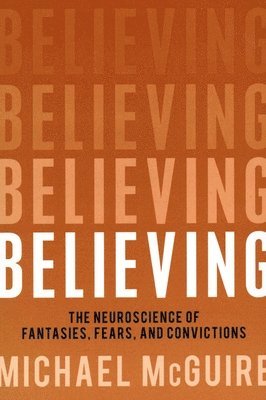
A new book about brain chemistry, neural systems, and the formation of beliefs from the scientist who brought to light serotonin's many crucial roles in human behavior. Beliefs: What are they? How have evolution and culture led to a brain that is seemingly committed to near endless belief creation? And once established, why are most beliefs so difficult to change?Believingoffers answers to these questions from the perspective of a leading neuroscientist and expert in brain-behavior research.Combining personal anecdotes and the latest research, Dr. McGuire takes the novel approach of focusing on the central and critical role of brain systems and the ways in which they interact with the environment to create and maintain beliefs. This approach yields some surprising and counterintuitive conclusions:·The brain is designed for belief creation and acceptance. ·It is biased in favor of its own beliefs and is highly insensitive to disconfirming evidence.·It prefers beliefs that are pleasurable and rewarding to those that are unfavorable. ·Beliefs are "afterthoughts" of unperceived brain activities; they don't cause behavior.·Our consciousness has minimal influence on the neural systems that create beliefs. Based on these observations, McGuire concludes that for the foreseeable future people will continue to hold a multitude of beliefs, many of them intransigent.
249 kr
Skickas inom 3-6 vardagar
203 kr
Skickas
403 kr
Skickas inom 5-8 vardagar
670 kr
Skickas inom 10-15 vardagar
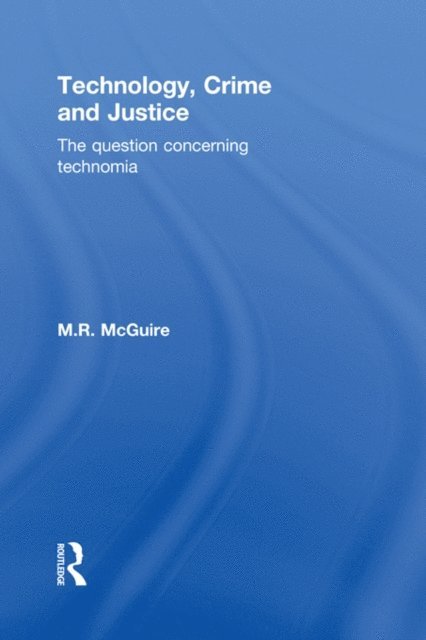
As technology comes to characterize our world in ever more comprehensive ways there are increasing questions about how the 'rights' and 'wrongs' of technological use can be adequately categorized. To date, the scope of such questions have been limited – focused upon specific technologies such as the internet, or bio-technology with little sense of any social or historical continuities in the way technology in general has been regulated.In this book, for the first time, the 'question of technology' and its relation to criminal justice is approached as a whole. Technology, Crime and Justice analyzes a range of technologies, (including information, communications, nuclear, biological, transport and weapons technologies, amongst many others) in order to pose three interrelated questions about their affects upon criminal justice and criminal opportunity: to what extent can they really be said to provide new criminal opportunity or to enhance existing ones? what are the key characteristics of the ways in which such technologies have been regulated? how does technology itself serve as a regulatory force – both in crime control and social control more widely? Technology, Crime and Justice considers the implications of contemporary technology for the practice of criminal justice and relates them to key historical precedents in the way technology has been interpreted and controlled. It outlines a new ‘social’ way of thinking about technology – in terms of its affects upon our bodies and what they can do, most obviously the ways in which social life and our ability to causally interact with the world is ‘extended’ in various ways. It poses the question – could anything like a ‘Technomia’ of technology be identified – a recognizable set of principles and sanctions which govern the way that it is produced and used, principles also consistent with our sense of justice?This book provides a key resource for students and scholars of both criminology and technology studies.
2 306 kr
Skickas inom 10-15 vardagar
As technology comes to characterize our world in ever more comprehensive ways there are increasing questions about how the 'rights' and 'wrongs' of technological use can be adequately categorized. To date, the scope of such questions have been limited – focused upon specific technologies such as the internet, or bio-technology with little sense of any social or historical continuities in the way technology in general has been regulated.In this book, for the first time, the 'question of technology' and its relation to criminal justice is approached as a whole. Technology, Crime and Justice analyzes a range of technologies, (including information, communications, nuclear, biological, transport and weapons technologies, amongst many others) in order to pose three interrelated questions about their affects upon criminal justice and criminal opportunity: to what extent can they really be said to provide new criminal opportunity or to enhance existing ones? what are the key characteristics of the ways in which such technologies have been regulated? how does technology itself serve as a regulatory force – both in crime control and social control more widely? Technology, Crime and Justice considers the implications of contemporary technology for the practice of criminal justice and relates them to key historical precedents in the way technology has been interpreted and controlled. It outlines a new ‘social’ way of thinking about technology – in terms of its affects upon our bodies and what they can do, most obviously the ways in which social life and our ability to causally interact with the world is ‘extended’ in various ways. It poses the question – could anything like a ‘Technomia’ of technology be identified – a recognizable set of principles and sanctions which govern the way that it is produced and used, principles also consistent with our sense of justice?This book provides a key resource for students and scholars of both criminology and technology studies.
900 kr
Skickas inom 10-15 vardagar
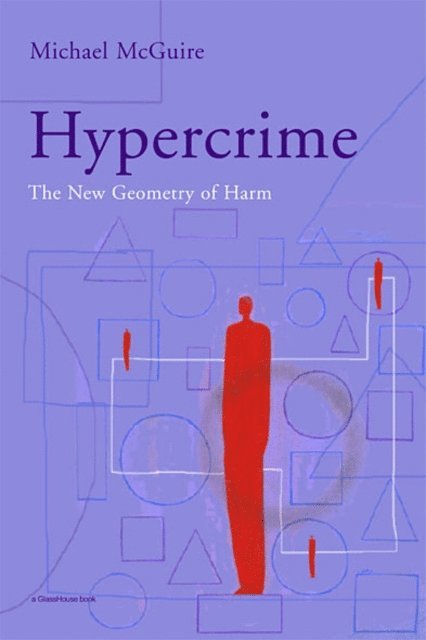
Hypercrime develops a new theoretical approach toward current reformulations in criminal behaviours, in particular the phenomenon of cybercrime. Emphasizing a spatialized conception of deviance, one that clarifies the continuities between crime in the traditional, physical context and developing spaces of interaction such as a 'cyberspace', this book analyzes criminal behaviours in terms of the destructions, degradations or incursions to a hierarchy of regions that define our social world. Each chapter outlines violations to the boundaries of each of these spaces - from those defined by our bodies or our property, to the more subtle borders of the local and global spaces we inhabit. By treating cybercrime as but one instance of various possible criminal virtualities, the book develops a general theoretical framework, as equally applicable to the, as yet unrealized, technologies of criminal behaviour of the next century, as it is to those which relate to contemporary computer networks. Cybercrime is thereby conceptualized as one of a variety of geometries of harm, merely the latest of many that have extended opportunities for illicit gain in the physical world. Hypercrime offers a radical critique of the narrow conceptions of cybercrime offered by current justice systems and challenges the governing presumptions about the nature of the threat posed by it.Runner-up for the British Society of Criminology Book Prize (2008).
2 577 kr
Skickas inom 10-15 vardagar
Hypercrime develops a new theoretical approach toward current reformulations in criminal behaviours, in particular the phenomenon of cybercrime. Emphasizing a spatialized conception of deviance, one that clarifies the continuities between crime in the traditional, physical context and developing spaces of interaction such as a 'cyberspace', this book analyzes criminal behaviours in terms of the destructions, degradations or incursions to a hierarchy of regions that define our social world. Each chapter outlines violations to the boundaries of each of these spaces - from those defined by our bodies or our property, to the more subtle borders of the local and global spaces we inhabit. By treating cybercrime as but one instance of various possible criminal virtualities, the book develops a general theoretical framework, as equally applicable to the, as yet unrealized, technologies of criminal behaviour of the next century, as it is to those which relate to contemporary computer networks. Cybercrime is thereby conceptualized as one of a variety of geometries of harm, merely the latest of many that have extended opportunities for illicit gain in the physical world. Hypercrime offers a radical critique of the narrow conceptions of cybercrime offered by current justice systems and challenges the governing presumptions about the nature of the threat posed by it.Runner-up for the British Society of Criminology Book Prize (2008).
125 kr
Skickas inom 5-8 vardagar
290 kr
Skickas inom 5-8 vardagar