Michael Meighan - Böcker
Visar alla böcker från författaren Michael Meighan. Handla med fri frakt och snabb leverans.
9 produkter
9 produkter
173 kr
Skickas
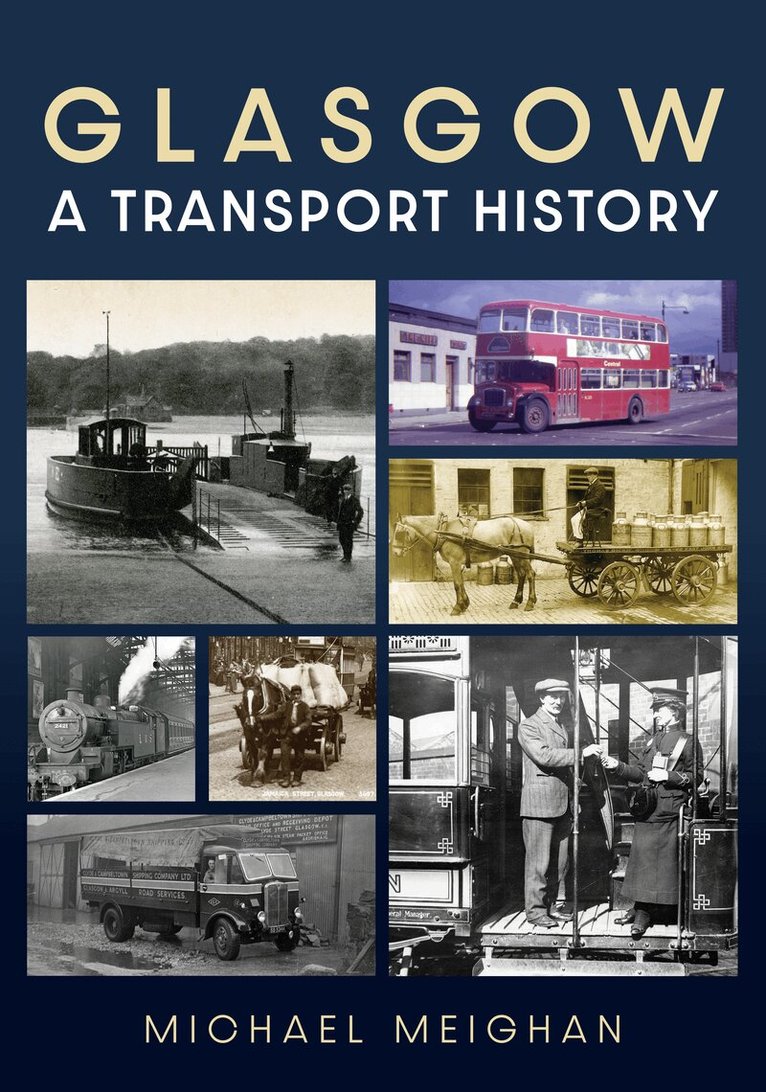
Like so many others, the author used to take for granted how as a boy he would be taken on a trolleybus or a tram to visit relatives or during the holidays he might travel on the steam train and a paddle steamer ‘doon the water’ to Dunoon, or some other Clyde Coast resort. Other days he might go on a school or Boy Scouts bus run. Looking back, it is evident that public transport in Glasgow has experienced vast change. The steam-powered railway gave way to the electric ‘Blue Train’ and the modern diesel. Old railways were lost and new routes took citizens from the new suburbs (or schemes) into the city. The paddle steamers disappeared from the Clyde, as did the ferries, along with the ships and the shipyards. Trams and trolleybuses gave way to modern buses. The horse and cart faded away to be replaced by ever larger petrol and then diesel lorries and vans. Having lived through many of these changes, the author marks the passing of the numerous modes of travel and transport with a nostalgic look back over more than 100 years of development, the story accompanied by evocative photographs of what has been lost today.So sit doon, and have a ‘wee deoch an dorus’ afore ye gang awa!
168 kr
Tillfälligt slut
Glasgow is a great city. Struck by the large number of Glaswegians who have contributed to this greatness but are no longer remembered, Michael Meighan set out to correct this by producing short biographies of a few of these great people, hugely famous in their time and now all but forgotten. This is Michael's personal selection, featuring names that he grew up with or whom his parents and their generation talked about. Some, like Tom Honeyman, have been exceptional leaders. Tom's quiet tenacity established a world-recognised art gallery through his persistence against bureaucratic barriers. Hugh Roberton founded the world-famous Orpheus Choir and Tommy Lipton founded an international tea company. And, of course, Matt McGinn and Lex McLean simply gave us a laugh. This book also reflects the Glaswegians' commitment to education. Time and time again Michael found that our great industrialists and inventors took advantage of new facilities such as Anderson's Institution and the world's first Mechanics Institute. Education was fostered and even in the poorer areas there were possibilities for those who wanted to pursue them. Through the stories of a few Glasgow heroes this book shows that it was Glasgow's people who 'Let Glasgow Flourish'.
214 kr
Skickas inom 11-20 vardagar
Until the 1960's The Clyde was synonymous with shipbuilding with many yards dotted on both sides of the river all the way from Glasgow to Greenock. Today they have all but gone, waterside apartments, exhibition centres and light industrial units taking their place. Scotland has many lost industries - from papermaking to gunpowder making as well as whaling, the motor industry, steel making, coal mining, shipbreaking and locomotive manufacture. Once, Scotland was a heavily industrialized country, making all sorts of industrial goods as well as food stuffs, cloth, coal, quarrying, paper, carpets and other goods. from jam to jute, from motor cars to aeroplanes, from sewing machines to ships, Scotland made them all. Nowadays the majority of industries found in Scotland at the turn of the twentieth century have gone, replaced by newer forms of manufacture - from the drilling of oil to the electronics industry. Michael Meighan takes us on a trip down memory lane, when Scotland was an industrial powerhouse, making goods for the Empire an Commonwealth as well as exporting to the world.
178 kr
Skickas inom 11-20 vardagar
Originally opened in August 1879, Central Station became a Glasgow landmark and one of Scotland's great buildings following a rebuild between 1901 and 1905 supervised by Caledonian Railway chief engineer Donald Matheson. The Edwardian ticket offices and information building still survive, as does the Central Hotel, while the glass-walled bridge which carries the station building over Argyle Street, known as the 'Hielenman's Umbrella', is one of the iconic views of the city. Generations of Glaswegians have used the station as a thoroughfare, while also taking in its hustle and bustle. Among the changes experienced by Glasgow, it has been a solid reminder of the city's industrial and commercial heritage. This great building has seen the rise of Glasgow's industrial age and has grown with it. It has also seen the decline in our industries but has risen again in splendid glory, reflecting a new-found confidence in the people of Glasgow.
173 kr
Skickas
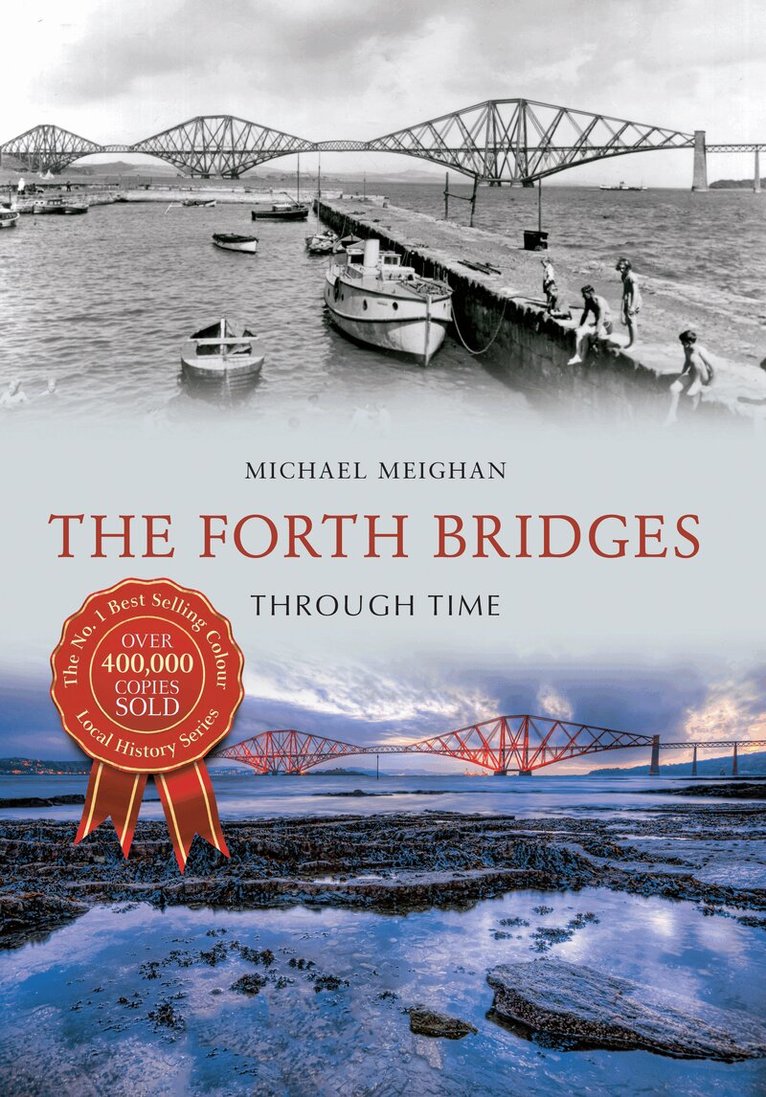
The River Forth is one of Scotland’s great waterways. It has a majestic history and heritage, part of which is the Forth bridges. Of these, the most iconic is the Forth Rail Bridge, which opened in 1890. But there is also the Kincardine Bridge, opened in 1936 and once the longest swing bridge in Europe, the Forth Road Bridge, opened in 1964, and the new Queensferry Crossing, due to be completed in 2016.In this book, Michael Meighan looks at all these bridges as well as the Clackmannanshire Bridge and the fords, ferries and smaller bridges which preceded these great crossings. The Forth crossings have a special place in the history and culture of Scotland, and in the hearts of all Scots, and Michael Meighan pays tribute to them in a wonderful mix of both old and new images.
214 kr
Skickas
Located on the banks of the River Clyde, Glasgow was once the second city of the Empire, producing ships, locomotives, cars and heavy engineering for the world. Its docks would see huge numbers of exports. But Glasgow is much more than this; it is a religious centre, with one of Scotland’s earliest churches, a centre for the Virginia tobacco trade, a home of designers and architects, inventors and entrepreneurs, artists and industrialists. It is that variety of talent, and the melting pot of immigrants and other Scots, sucked into the city at its peak that saw the phenomenal growth in wealth and culture that has left the city with a legacy of fine Victorian architecture, and it is its decline that has seen a legacy of remote council estates.However, Glasgow has risen again, and is truly a vibrant city, thanks to its self-promotion from Dr Michael Kelly’s ‘Glasgow’s Miles Better’ campaign to its use in gritty film and TV productions, as well as its ability to look at the past and preserve the best of the old, while producing some of the most startling modern architecture outside of London. Michael Meighan tells the story of Glasgow, from its drumlin days in the Ice Age to the growth of the Church, its industries, its people and the phenomenal expansion of the Victorian era and the legacy it has left us.
173 kr
Skickas
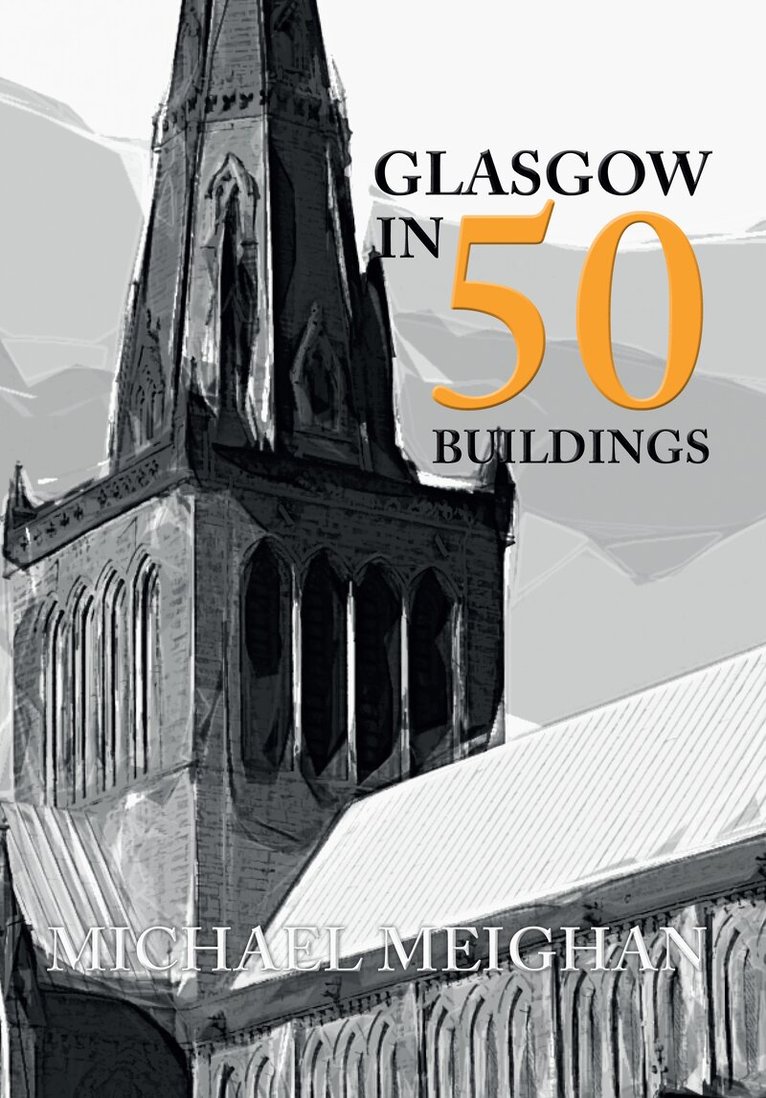
Glasgow has a long and rich history and the buildings housed within this architecturally impressive city tell its tale accordingly, from its sixth-century origins, to its current role as a vibrant and cosmopolitan centre of new industry and education.Glasgow in 50 Buildings explores the history of this wonderful city by presenting a selection of its greatest architectural treasures. From the medieval Provand’s Lordship to the contemporary Riverside Museum, this unique study celebrates Glasgow’s architectural heritage in a new and accessible way. Historian Michael Meighan guides the reader on a tour of the city’s historic buildings and modern structural marvels. The churches, theatres, commercial and public edifices of Glasgow’s rich industrial heritage are presented alongside the innovative buildings of a twenty-first-century city.Images are arranged chronologically to tell the story of Glasgow’s development through its most significant buildings. A specially designed map appears at the beginning of the volume to show where each building is located and the text is illustrated with colour photographs and archival images, showcasing the best of Glasgow’s heritage in fifty buildings.
178 kr
Skickas
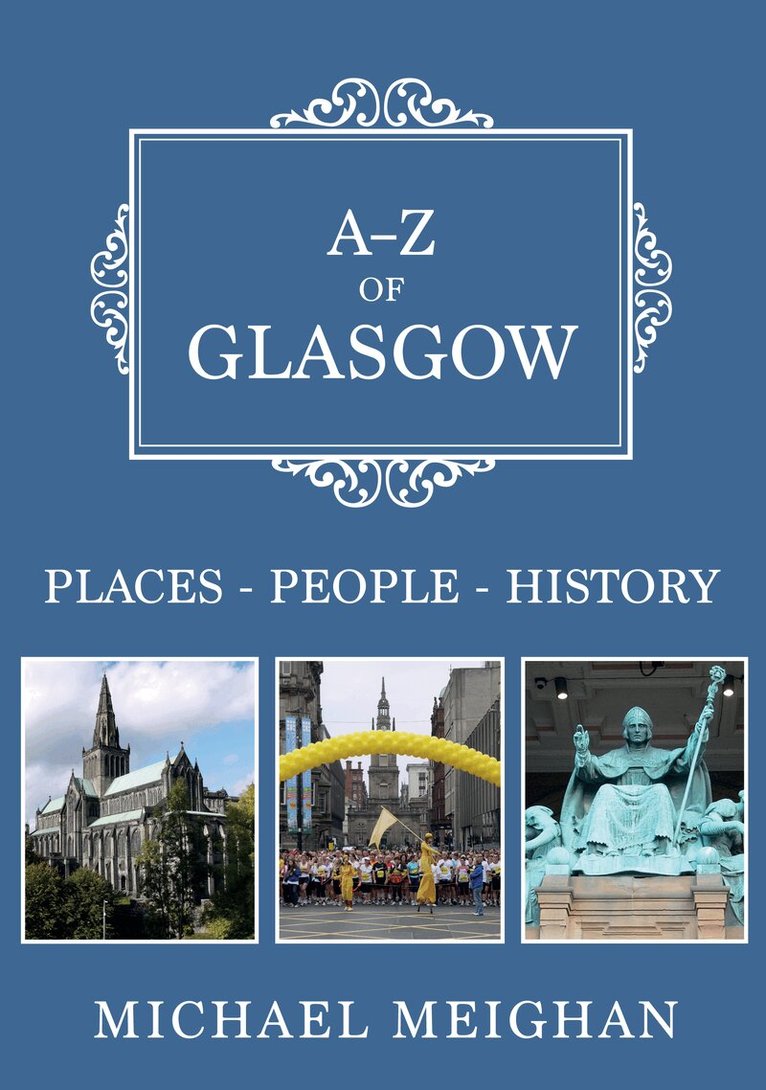
Glasgow was once the ‘second city of the Empire’, producing ships, locomotives, cars and heavy engineering for the world. It was also a religious centre, with one of Scotland’s earliest churches; a centre for the Virginia tobacco trade; a home of designers and architects, inventors and entrepreneurs, artists and industrialists. It is that variety of talent, and the melting pot of immigrants and other Scots sucked into the city at its peak, that saw the phenomenal growth in wealth and culture which has left the city with a legacy of fine Victorian architecture, and it is its post-war decline that has seen a legacy of remote council estates. Glasgow has risen again, and is today a successful post-industrial city, thanks in no small part to the hugely influential ‘Glasgow’s Miles Better’ campaign of the 1980s. Since then, it has demonstrated an ability to look at the past and preserve the best of the old, while producing some of the most startling modern architecture outside of London.Well-known Glasgow author and historian Michael Meighan takes the reader on a fascinating A–Z tour of the city’s history, exploring its lesser-known nooks and crannies, and along the way relating many a tale of the most interesting people and places. Fully illustrated with photographs from the past and present, the A–Z of Glasgow will appeal to residents and visitors alike.
173 kr
Skickas
Monuments are all around us. We walk or drive past them every day, yet we are often only vaguely aware of their existence. They are in cemeteries and parks; on busy streets and in lonely places; they stand by the sea or on the top of hills. Some are very obvious, such as the Scott Monument, and some are obscure and hidden. They commemorate many things: often the dead of history in wars at home and abroad and disasters, both recent and long past, but they also honour the achievements of our inventors, writers and explorers and our kings, queens, saints and martyrs. They appear as statues, as windows, as sculptures, as plaques and sometimes as buildings. Sometimes they take centre stage in the middle of city squares or on the summit of lonely mountains.In this book author Michael Meighan examines the stories behind the monuments and memorials of Scotland, and what they reveal about the history of the country: its most ancient monuments; wars and battles; heroes and villains; cultural figures, explorers and scientists; and disasters, both natural and otherwise. The monuments range from famous landmarks such as the Wallace Memorial at Stirling and the Wallace Monument in Aberdeen, the Scott Monument in Edinburgh, to memorials to Robert Burns, Mary, Queen of Scots and Bonnie Prince Charlie and the Jacobite Risings at Glenfinnan, Prestonpans and Culloden, which represent the shaping of Scotland. Other monuments range from Greyfriars Bobby, memorials to Saint Margaret of Scotland and the Commando Memorial in Lochaber and many more.