Michael O. Slobodchikoff – författare
Visar alla böcker från författaren Michael O. Slobodchikoff. Handla med fri frakt och snabb leverans.
22 produkter
22 produkter
Inbunden, Engelska, 2014
1 315 kr
Skickas inom 10-15 vardagar
This book examines Russia’s emergence after the collapse of the Soviet Union and its creation of a security architecture in the post-Soviet space. Many scholars argue that Russia is a coercive power in the region that forces states to act in only its own interests. While acknowledging Russia’s power this author argues that it is not able to merely force states to behave as it wants them to. Instead, Russia must use bilateral and multilateral cooperation to develop a security architecture that provides order, stability and predictable behavior for both Russia as the hegemon and the weaker powers in the region. By building this security architecture, Russia and the other states in the post-Soviet space are better able to achieve their strategic goals and provide for their own security. To achieve this, weaker states are able to press for certain concessions from Russia regarding how to structure bilateral relations as well as multilateral organizations. While Western politicians have argued that Russia has tried to reestablish the Soviet Union through coercive means, the reality is much more of a nuanced interaction among all of the states in the region, which ensures state sovereignty while allowing the weaker states to pursue their own interests. Using network analysis, this author shows how the regional structural architecture of cooperation was built and indicate how Russia is able to achieve order. This book also shows that there is a lack of order where states have refused to cooperate in building the structural architecture, which has led to conflict and territorial disputes.
Häftad, Engelska, 2016
599 kr
Skickas inom 10-15 vardagar
This book examines Russia’s emergence after the collapse of the Soviet Union and its creation of a security architecture in the post-Soviet space. Many scholars argue that Russia is a coercive power in the region that forces states to act in only its own interests. While acknowledging Russia’s power this author argues that it is not able to merely force states to behave as it wants them to. Instead, Russia must use bilateral and multilateral cooperation to develop a security architecture that provides order, stability and predictable behavior for both Russia as the hegemon and the weaker powers in the region. By building this security architecture, Russia and the other states in the post-Soviet space are better able to achieve their strategic goals and provide for their own security. To achieve this, weaker states are able to press for certain concessions from Russia regarding how to structure bilateral relations as well as multilateral organizations. While Western politicians have argued that Russia has tried to reestablish the Soviet Union through coercive means, the reality is much more of a nuanced interaction among all of the states in the region, which ensures state sovereignty while allowing the weaker states to pursue their own interests. Using network analysis, this author shows how the regional structural architecture of cooperation was built and indicate how Russia is able to achieve order. This book also shows that there is a lack of order where states have refused to cooperate in building the structural architecture, which has led to conflict and territorial disputes.
Inbunden, Engelska, 2015
1 246 kr
Skickas inom 10-15 vardagar
This book analyzes the power variations between political executives in semi-presidential regimes. It contrasts institutional, partisan, and extra-institutional explanations and identifies patterns of change for the power distribution between presidents and prime ministers. It provides an empirical analysis of selected case studies and demonstrates the necessity to understand power variations in a configurative perspective, exposing the limits of institutional design explanations. This study ultimately aims to contribute to both the literature on semi-presidentialism and to the literature on democratic regimes by providing a systematic assessment of these different configurations, in both mature and emerging democracies. To explore this phenomenon, this research tests the key factors of power variation proposed in the semi-presidential literature on the power relationship between presidents and prime ministers mainly in France’s Fifth Republic and post-1993 Ukraine, but also to a lesser extent in Finland, post-1993 Russia, and post-1990 Poland.
Häftad, Engelska, 2015
640 kr
Skickas inom 10-15 vardagar
Power inequalities and mistrust have characterized many interstate relationships. Yet most international relations theories do not take into account power and mistrust when explaining cooperation. While some scholars argue that power relations inhibit cooperation between states, other scholars expect interstate cooperation regardless of the power relations and level of trust. Strategic Cooperation: Overcoming the Barriers of Global Anarchy argues that although states benefit from cooperation, they are also wary of the power relations between states, making cooperation difficult. Successful and cooperative bilateral relationships are formed between strong and weak states that are power asymmetric and have mistrust of one another, but they are built in such as way as to overcome the problem of power asymmetry and mistrust.This book answers how and why states that are in power asymmetry and have mistrust of one another are able to build a cooperative bilateral relationship. It argues that states forge a relationship due to strategic needs such as economic or security needs. Slobodchikoff has developed a database composed of the whole population of bilateral treaties between Russia and each of the former Soviet republics, and examines all of these bilateral relationships. He finds that Russia indeed forged relationships with the former republics based on its strategic interests. However, despite Russia's strategic interests, it had to build a bilateral relationship that would address the issues of mistrust and power asymmetry between the states. To achieve this, Russia and the former Soviet republics created treaty networks, which served to legitimize as well as legalize the independent status of each of the former republics while also increasing the cost to Russia of violating any of the treaties. This book argues that strong treaty networks account for a more cooperative relationship between states, allowing both states to cooperate by alleviating the problems of mistrust and power asymmetry.
Häftad, Engelska, 2019
558 kr
Skickas inom 10-15 vardagar
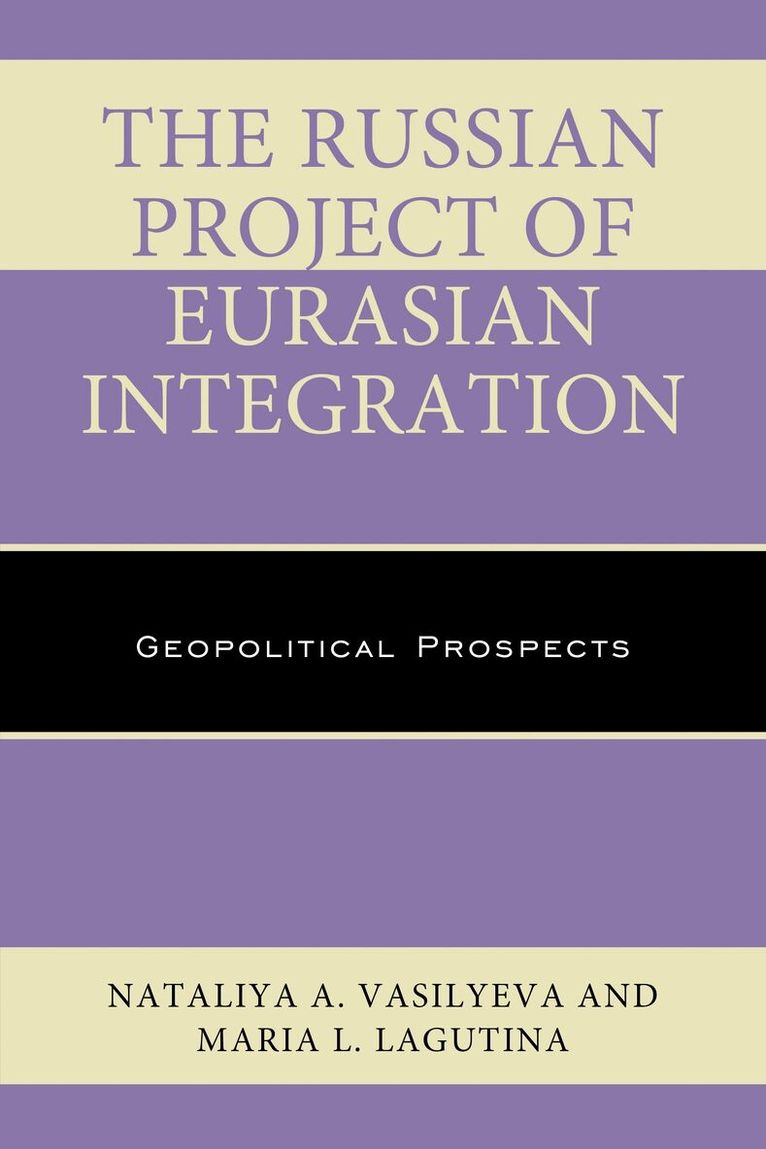
Modern trends in geopolitics have raised serious questions about the future global and regional architecture of the world system. In the case of the Eurasian Economic Union, these questions bring up important issues for debate: What is the Eurasian Economic Union? What theoretical concepts could be applied for modern Eurasian integration? Why is the Eurasian Economic Union forming? Most importantly, what prospects does this Union have in the framework of the modern geopolitical situation?This book explores the process of Eurasian integration in the modern global world. The creation of the Eurasian Economic Union has become a topical issue in modern Russian foreign policy. Neo-Eurasianist ideas can be viewed as a geopolitical basis and rationale for the Eurasian Economic Union that may constitute an integrational structure, consolidating the post-Soviet area and neighboring regions. This book argues that Eurasia is a region representing an organic integrity due to close mentality, common and centuries-long history, common language of international communication, a multitude of economic ties, and an identical level of technological development across all countries within the post-Soviet area. Yet, advancement of the Eurasian integration idea into practical implementation should have new objective suppositions as well. These are defined by the contemporary economic, political, and ethno-cultural processes in the post-Soviet space.
Inbunden, Engelska, 2018
1 522 kr
Skickas inom 10-15 vardagar
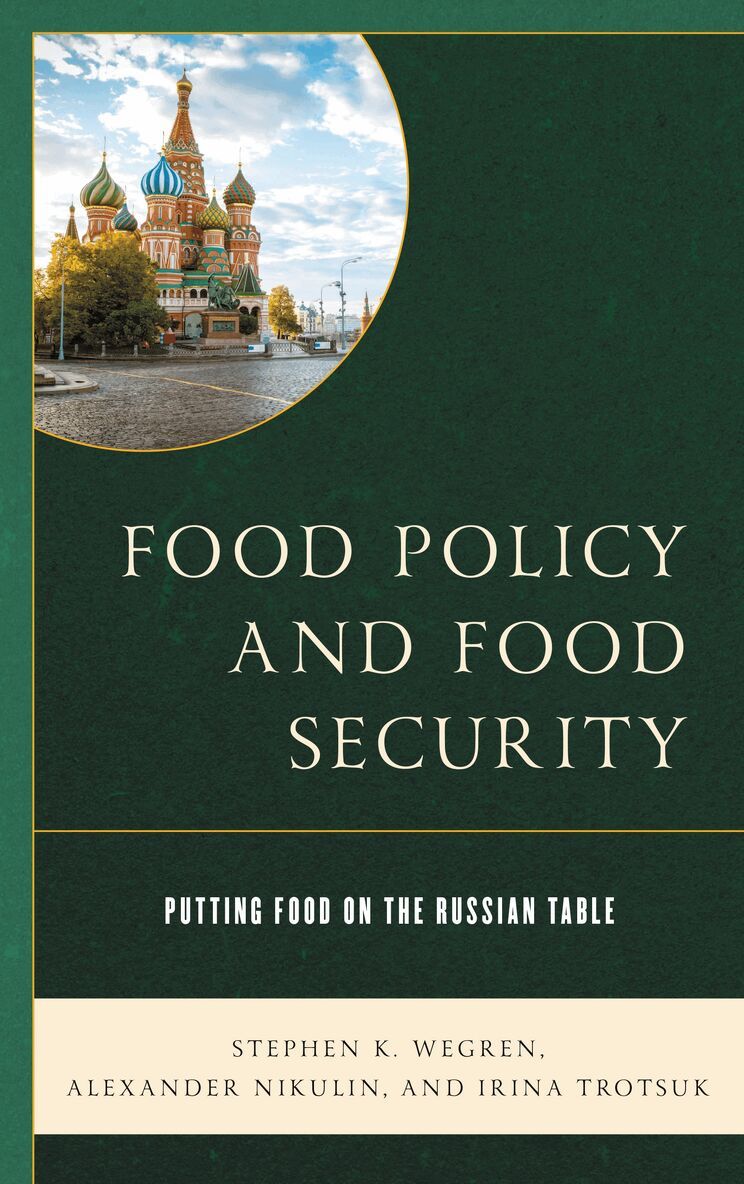
This book provides a comprehensive analysis of Russian food policy. Food policy is defined as the way government policy influences food production and distribution. Russia’s food policy is important for several reasons. The first and most obvious reason is that a dysfunctional food policy is symptomatic of larger political and societal problems. A failing food policy is often the precursor to political instability. Russian food policy is also important is due to the agricultural recovery since 2004 that has allowed Russia to become self-sufficient in grain production. Being food-sufficient in grain means that Russia is not drawing upon global grain supply. Even more important, Russia now produces surpluses and has become a global grain supplier. Moreover, the agricultural recovery has made the country food secure, traditionally defined as having enough food for a healthy life. An analysis of food policy reveals that the structure of food production has changed with the emergence of mega-farms called agroholdings that are horizontally and vertically integrated. Agroholdings represent a concentration of capital and land, with a small number of farms producing large percentages of total food output. The book explores alternatives to the industrial agricultural model by discussing different variants of sustainable agriculture.A final importance of Russian food policy concerns food trade. Russia has become more protectionist since 2012. The food embargo against Western nations (2014-2017) is one example, so too is import substitution that is a core component of food policy. The book demonstrates the politicalization of external food trade. Food trade and denial of access to the Russian market is used as an instrument of foreign policy to punish countries with whom Russia has disagreements. Current Russian policymakers have food resources to augment, support, and extend national interests abroad.Russia historically has cycled through periods of integration and isolation from the West. This book raises the question whether a new normal has arisen that is characterized by the permanent withdrawal from integration, as evidenced by its nationalist and protectionist food policy. The book is entirely original, rich in detail and broad in scope. It is based on field work, survey data, a wide reading of primary sources and the secondary literature, all of which are linked to important policy questions in development studies and food studies. It is destined to become a classic book on Russian food policy.
Häftad, Engelska, 2021
503 kr
Skickas inom 10-15 vardagar
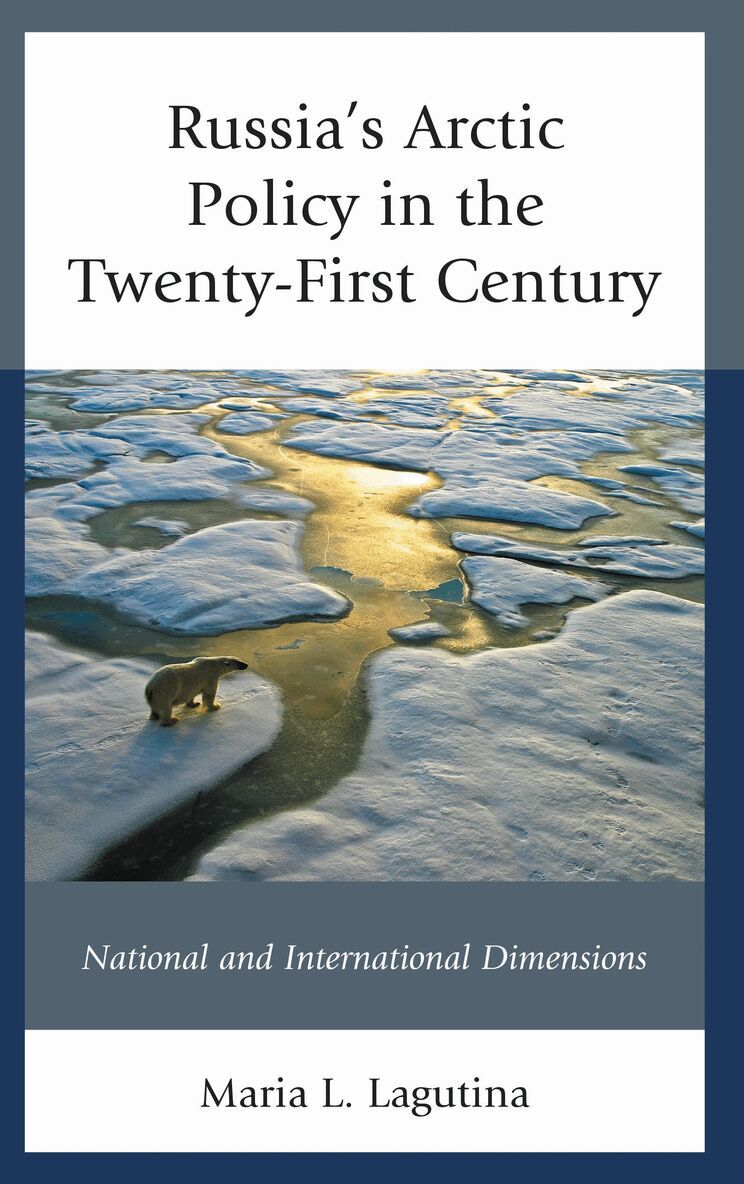
This book is devoted to the analysis of all aspects of the current Arctic policy of Russia, the main strategic interests of Russia and the basics of the current Russian Policy in the region taking into account new global trends. This monograph ambitions to compile in one comprehensive study domestic and international aspects of modern Russian Arctic policy, based mainly on Russian sources that allowed the author to reveal the specifics of Russian approach to modern Arctic issues. It raises a set of important research questions: What are the main interests of Russia in the modern Arctic? What areas are the priorities in the Russian Arctic policy? Who governs the Russian Arctic? How are decisions on the Arctic made in Russia? What kind of problems is faced the Russian Arctic in global epoch? How do bilateral and multilateral relations between Russia and other Arctic states impact regional developments in the Arctic? How is Russia dealing with non-Arctic states and non-state Arctic actors? How are Russia's domestic and foreign policy in the Arctic interrelated? How is Russia’s Arctic policy likely to evolve in the future, in a changing global context? The book argues that nowadays the Arctic vector is one of the main priorities for Russia’s domestic and foreign policies and, undoubtedly, Russia’s future is connected with development of the Arctic – a region occupying a large part of the country’s territory. On the one hand, the main purpose of the current Arctic policy of Russia is the ‘re-development’ and modernization of the Arctic zone of the Russian Federation (AZRF) after the period of following the breakup of the USSR that was detrimental to the Russian Arctic policies. Moreover, today the ‘re-development’ of the Arctic is the most important prerequisite of the restoration of Russia’s great power status. On the other hand, it is obvious that current Russia’s Arctic strategy should be duly adapted to the new global realities – not only the ones formed in the wake of the breakup of the USSR and the end of the Cold War, but also to the latest developments as ‘globalization’.
Häftad, Engelska, 2023
448 kr
Skickas inom 10-15 vardagar
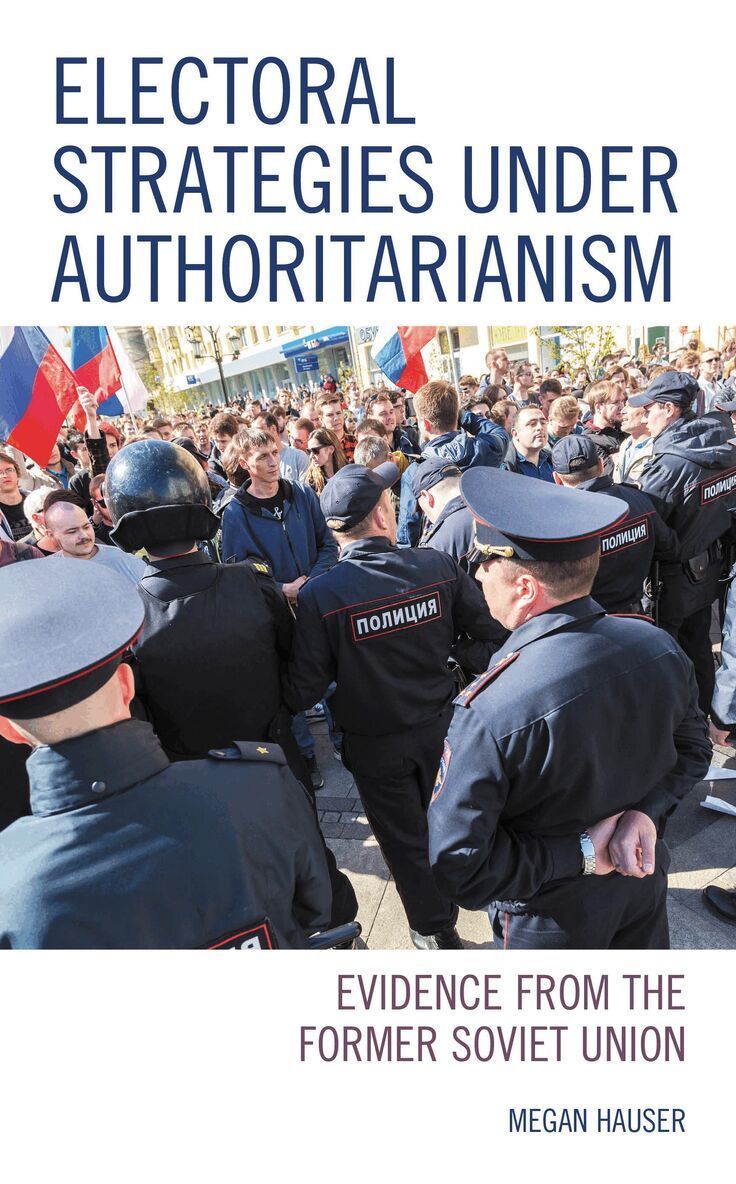
This book explores the types of electoral strategies used in non-democratic countries. It focuses on manipulation by the government as well as efforts to push back against the regime by opposition forces. Relying on data and case studies from the former Soviet Union, it finds that these actors view elections as tools to achieve various goals either in the short-term or the long term. More specifically, parties and candidates will sometimes engage in self-defeating or unnecessary behavior in the short-term if they think it will serve a long term purpose. This book examines different ways that governments seek to sway the election to their favor, as well as under what conditions opposition actors may unite or boycott the election altogether. The conclusions of this book reveal that elections even in authoritarian settings matter for political decision making, but that they may not be serving democratic functions.
Inbunden, Engelska, 2018
1 178 kr
Skickas inom 10-15 vardagar
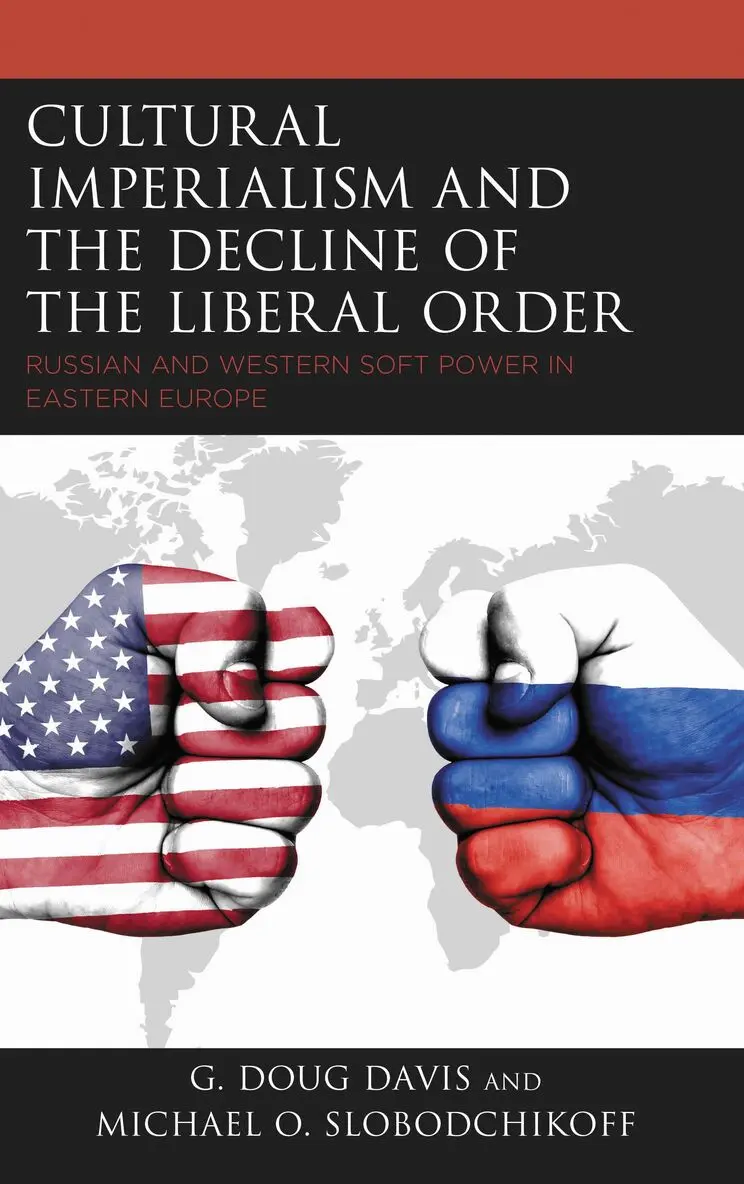
The end of the Cold War heralded in a new era for liberalism. Eastern European states adopted democracy and capitalism to gain acceptance by the West. Yet, a mere two decades later, liberalism was in crisis. The rise of illiberal democracies and nationalist movements in the second decade of the twenty-first century have left scholars baffled. How could this happen? Dr's. Davis and Slobodchikoff show that the decline of the liberal order lies within its own ideology: as it champions freedom, liberalism requires its adherents to give up their cultural traditions and adopt the global ethos to be legitimate. Through a systematic analysis of Western and Russian soft power in Poland and Serbia, the authors explain the decline of liberalism and the battle over the balance of power in Eastern Europe.
Häftad, Engelska, 2020
530 kr
Skickas inom 10-15 vardagar
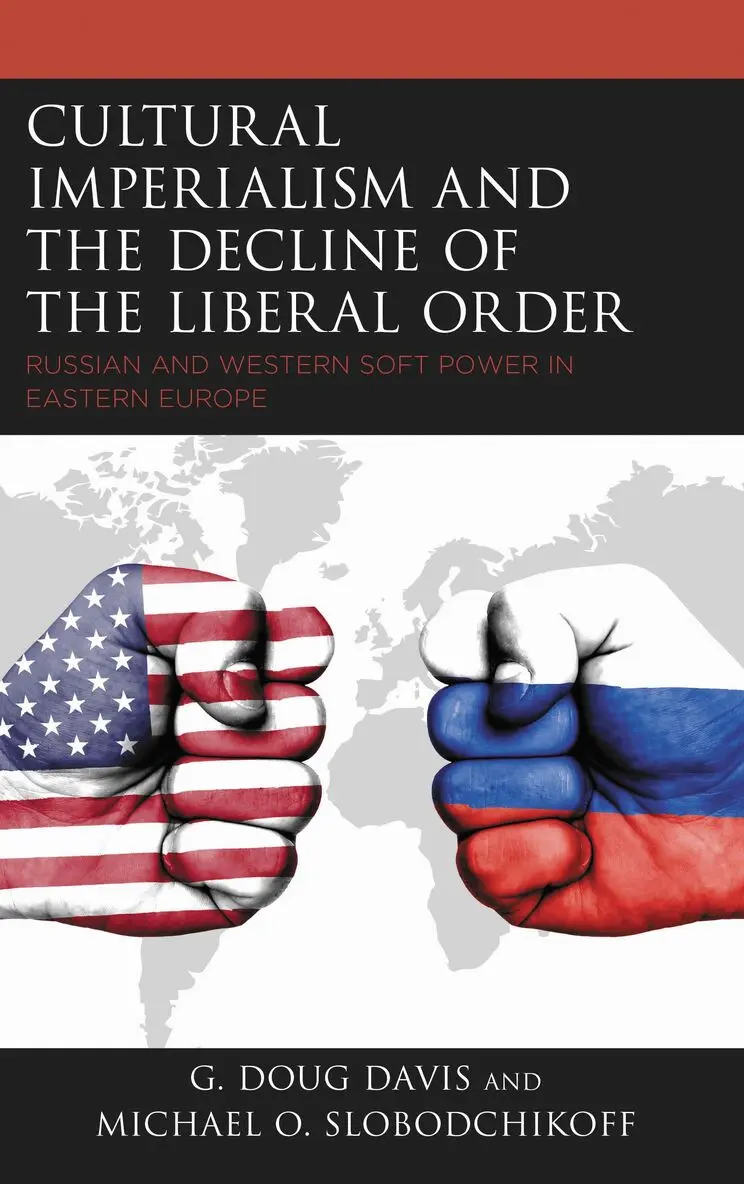
The end of the Cold War heralded in a new era for liberalism. Eastern European states adopted democracy and capitalism to gain acceptance by the West. Yet, a mere two decades later, liberalism was in crisis. The rise of illiberal democracies and nationalist movements in the second decade of the twenty-first century have left scholars baffled. How could this happen? Dr's. Davis and Slobodchikoff show that the decline of the liberal order lies within its own ideology: as it champions freedom, liberalism requires its adherents to give up their cultural traditions and adopt the global ethos to be legitimate. Through a systematic analysis of Western and Russian soft power in Poland and Serbia, the authors explain the decline of liberalism and the battle over the balance of power in Eastern Europe.
Inbunden, Engelska, 2024
902 kr
Skickas inom 10-15 vardagar
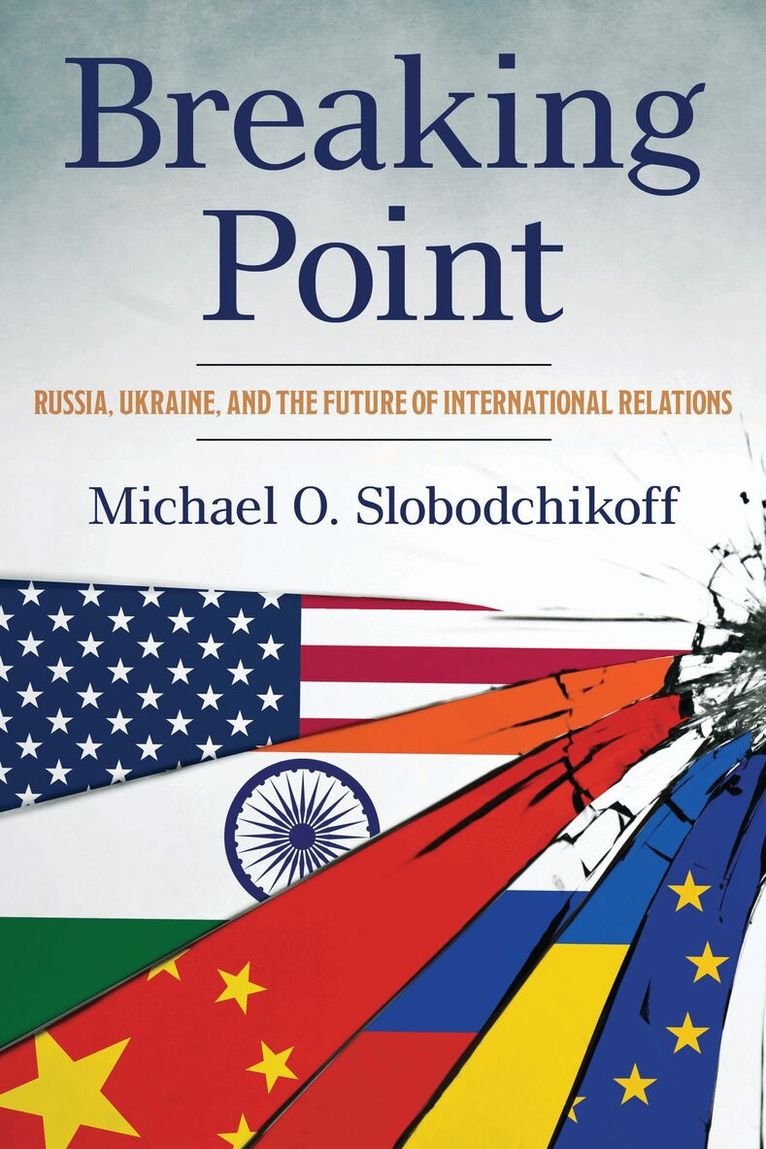
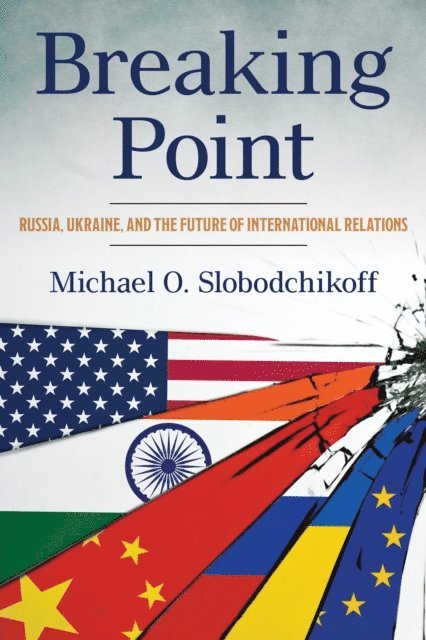
The post-Cold War order established by the United States of America is currently at a crossroads. No longer is the liberal order and United States hegemonic power a given. Moscow and Beijing have both begun their challenges to the United States. While long dissatisfied with US hegemony, in February, 2022, Russian President Vladimir Putin ordered the invasion of Ukraine by the Russian military.The response by the United States and its allies was swift and unprecedented. Wave after wave of sanctions were levied against Moscow, and NATO member states began to provide military support to Kyiv in trying to maintain its independence from Moscow. The first major war on the European continent since World War II was to have a profound global effect on relations with other countries. First, there was a significant demographic impact as migrants left Ukraine either to the West or to Russia. Further, as men were prevented from leaving Ukraine due to mandatory conscription, the refugees were overwhelmingly made up of either old people, or women with children. Russia also was not spared from a huge demographic crisis. Not only has it lost an enormous amount of young men to the war, but it also instituted forced conscription, leading to many men fleeing the country.Initially Washington described the invasion of Ukraine as a war between democracy and autocracy, with Kyiv being on the front lines of this new war. However, the real situation was much more complicated than a simple framing of the conflict. While Kyiv enjoyed overwhelming support from the United States and its NATO allies, other democracies globally were a lot warier of supporting Ukraine. Countries like India, Turkey, Hungary, South Africa, Brazil, and other democracies began a strategy of hedging. Publicly, they urged caution in the conflict stating that while Moscow possessed legitimate security concerns, that the conflict had to be resolved peacefully.The hedging strategy employed by much of the world confused Washington, however, the United States found its attention torn between two continents. The war in Ukraine was its main concern, however, a newly resurgent China threatened to begin its own war against Taiwan. Washington could ill afford a diplomatic blitz to force hedging states to support its policies in Kyiv. Moscow, on the other hand, recognized that it stood to gain from Washington’s focus. It began to bolster its diplomatic efforts to woo those hedging countries into not aligning with the United States. Further, the alliance between Moscow and Beijing deepened during this period. In other words, a period of tremendous uncertainty about the future of the global order was born.In this book, we examine the aftermath of Moscow’s invasion and its implications on the global order. In this edited volume, we first examine the regional effects of the invasion. We then examine Moscow’s relations with other states globally, and argue that while it is not possible to predict who will win the war in Ukraine, that the war has had a profound impact on both Russia’s relations with the world as well as on the United States’ global relations.
Häftad, Engelska, 2024
341 kr
Skickas
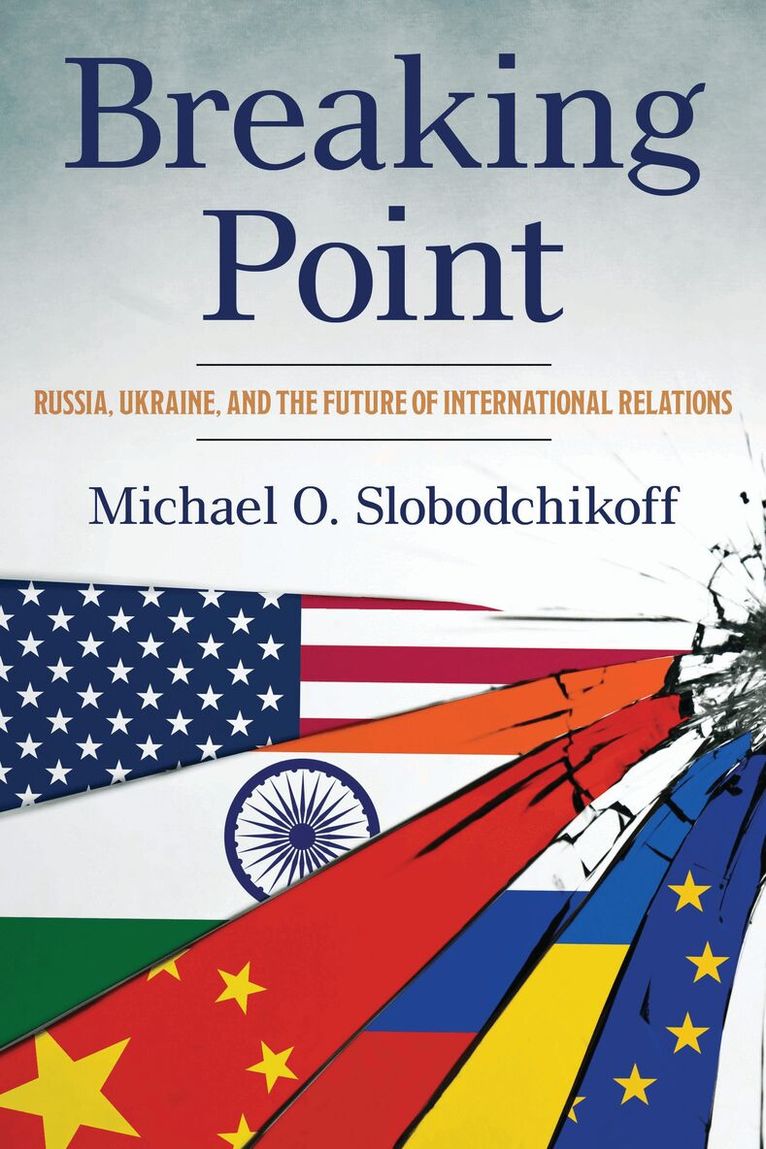
The post-Cold War order established by the United States of America is currently at a crossroads. No longer is the liberal order and United States hegemonic power a given. Moscow and Beijing have both begun their challenges to the United States. While long dissatisfied with US hegemony, in February, 2022, Russian President Vladimir Putin ordered the invasion of Ukraine by the Russian military.The response by the United States and its allies was swift and unprecedented. Wave after wave of sanctions were levied against Moscow, and NATO member states began to provide military support to Kyiv in trying to maintain its independence from Moscow. The first major war on the European continent since World War II was to have a profound global effect on relations with other countries. First, there was a significant demographic impact as migrants left Ukraine either to the West or to Russia. Further, as men were prevented from leaving Ukraine due to mandatory conscription, the refugees were overwhelmingly made up of either old people, or women with children. Russia also was not spared from a huge demographic crisis. Not only has it lost an enormous amount of young men to the war, but it also instituted forced conscription, leading to many men fleeing the country.Initially Washington described the invasion of Ukraine as a war between democracy and autocracy, with Kyiv being on the front lines of this new war. However, the real situation was much more complicated than a simple framing of the conflict. While Kyiv enjoyed overwhelming support from the United States and its NATO allies, other democracies globally were a lot warier of supporting Ukraine. Countries like India, Turkey, Hungary, South Africa, Brazil, and other democracies began a strategy of hedging. Publicly, they urged caution in the conflict stating that while Moscow possessed legitimate security concerns, that the conflict had to be resolved peacefully.The hedging strategy employed by much of the world confused Washington, however, the United States found its attention torn between two continents. The war in Ukraine was its main concern, however, a newly resurgent China threatened to begin its own war against Taiwan. Washington could ill afford a diplomatic blitz to force hedging states to support its policies in Kyiv. Moscow, on the other hand, recognized that it stood to gain from Washington’s focus. It began to bolster its diplomatic efforts to woo those hedging countries into not aligning with the United States. Further, the alliance between Moscow and Beijing deepened during this period. In other words, a period of tremendous uncertainty about the future of the global order was born.In this book, we examine the aftermath of Moscow’s invasion and its implications on the global order. In this edited volume, we first examine the regional effects of the invasion. We then examine Moscow’s relations with other states globally, and argue that while it is not possible to predict who will win the war in Ukraine, that the war has had a profound impact on both Russia’s relations with the world as well as on the United States’ global relations.
E-bok
Engelska, 2024376 kr
Läs direkt efter köp
The post-Cold War order established by the United States of America is currently at a crossroads. No longer is the liberal order and United States hegemonic power a given. Moscow and Beijing have both begun their challenges to the United States. While long dissatisfied with US hegemony, in February, 2022, Russian President Vladimir Putin ordered the invasion of Ukraine by the Russian military.The response by the United States and its allies was swift and unprecedented. Wave after wave of sanctions were levied against Moscow, and NATO member states began to provide military support to Kyiv in trying to maintain its independence from Moscow. The first major war on the European continent since World War II was to have a profound global effect on relations with other countries. First, there was a significant demographic impact as migrants left Ukraine either to the West or to Russia. Further, as men were prevented from leaving Ukraine due to mandatory conscription, the refugees were overwhelmingly made up of either old people, or women with children. Russia also was not spared from a huge demographic crisis. Not only has it lost an enormous amount of young men to the war, but it also instituted forced conscription, leading to many men fleeing the country.Initially Washington described the invasion of Ukraine as a war between democracy and autocracy, with Kyiv being on the front lines of this new war. However, the real situation was much more complicated than a simple framing of the conflict. While Kyiv enjoyed overwhelming support from the United States and its NATO allies, other democracies globally were a lot warier of supporting Ukraine. Countries like India, Turkey, Hungary, South Africa, Brazil, and other democracies began a strategy of hedging. Publicly, they urged caution in the conflict stating that while Moscow possessed legitimate security concerns, that the conflict had to be resolved peacefully.The hedging strategy employed by much of the world confused Washington, however, the United States found its attention torn between two continents. The war in Ukraine was its main concern, however, a newly resurgent China threatened to begin its own war against Taiwan. Washington could ill afford a diplomatic blitz to force hedging states to support its policies in Kyiv. Moscow, on the other hand, recognized that it stood to gain from Washington’s focus. It began to bolster its diplomatic efforts to woo those hedging countries into not aligning with the United States. Further, the alliance between Moscow and Beijing deepened during this period. In other words, a period of tremendous uncertainty about the future of the global order was born.In this book, we examine the aftermath of Moscow’s invasion and its implications on the global order. In this edited volume, we first examine the regional effects of the invasion. We then examine Moscow’s relations with other states globally, and argue that while it is not possible to predict who will win the war in Ukraine, that the war has had a profound impact on both Russia’s relations with the world as well as on the United States’ global relations.
Häftad, Engelska, 2021
374 kr
Skickas inom 5-8 vardagar
The post–Cold War order established by the United States is at a crossroads: no longer is the liberal order and U.S. hegemonic power a given. The Challenge to NATO is a concise review of the North Atlantic Treaty Organization (NATO), its relationship with the United States, and its implications for global security.Despite seeing its seventieth anniversary in 2019, NATO faces both external and internal threats to its continued survival. This volume examines the organization’s past, its current regional operations, and future threats facing the Atlantic Alliance, with contributions by well-known academics, former central figures within NATO, and diplomats directly involved in NATO operations. In this volume, Michael O. Slobodchikoff, G. Doug Davis, and Brandon Stewart bring together differing perspectives and orientations to provide a complete understanding of the future of the Atlantic Alliance.
E-bok
Engelska, 2021309 kr
Läs direkt efter köp
The post–Cold War order established by the United States is at a crossroads: no longer is the liberal order and U.S. hegemonic power a given. The Challenge to NATO is a concise review of the North Atlantic Treaty Organization (NATO), its relationship with the United States, and its implications for global security.Despite seeing its seventieth anniversary in 2019, NATO faces both external and internal threats to its continued survival. This volume examines the organization’s past, its current regional operations, and future threats facing the Atlantic Alliance, with contributions by well-known academics, former central figures within NATO, and diplomats directly involved in NATO operations. In this volume, Michael O. Slobodchikoff, G. Doug Davis, and Brandon Stewart bring together differing perspectives and orientations to provide a complete understanding of the future of the Atlantic Alliance.
E-bok
PDF, Engelska, 2021306 kr
Läs direkt efter köp
The post–Cold War order established by the United States is at a crossroads: no longer is the liberal order and U.S. hegemonic power a given. The Challenge to NATO is a concise review of the North Atlantic Treaty Organization (NATO), its relationship with the United States, and its implications for global security.Despite seeing its seventieth anniversary in 2019, NATO faces both external and internal threats to its continued survival. This volume examines the organization’s past, its current regional operations, and future threats facing the Atlantic Alliance, with contributions by well-known academics, former central figures within NATO, and diplomats directly involved in NATO operations. In this volume, Michael O. Slobodchikoff, G. Doug Davis, and Brandon Stewart bring together differing perspectives and orientations to provide a complete understanding of the future of the Atlantic Alliance.
Inbunden, Engelska, 2023
1 384 kr
Skickas inom 10-15 vardagar
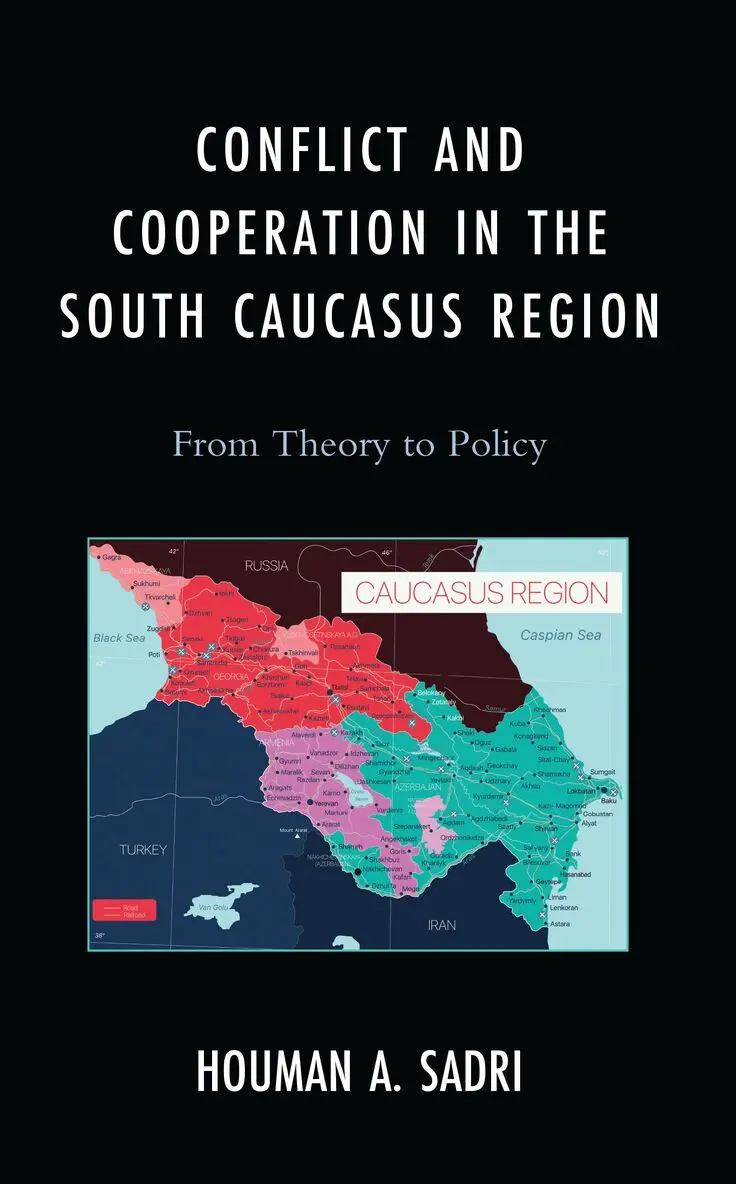
Conflict and Cooperation in the South Caucasus Region: From Theory to Policy combines IR theory and policy in a readable format. Houman A. Sadri discusses the distinctive challenges of the South Caucasus region and offers a survey of relevant IR theories. Armenia, Azerbaijan, and Georgia are covered in-depth since independence These former Soviet republics have experienced major conflicts and cooperation since independence in the early 1990s. The 2008 Russian invasion of Georgia and the Armenian-Azeri Wars captured headlines and affected markets, but the completion of energy pipelines exposed the complexity of cooperation in connecting the regional and global political economy. Conflict and Cooperation in the South Caucasus Region has three major purposes :1) To provide a survey of the major developments of the Caucasus States, 2) To analyze the application of IR prominent theories, and 3) To offer practical policy options for policymakers seeking to understand the South Caucasus region.What does the remainder of the 21st Century hold for Armenia, Azerbaijan, and Georgian? Where are the main sources of threats? How can these threats be effectively dealt with?
Inbunden, Engelska, 2024
1 315 kr
Skickas inom 10-15 vardagar
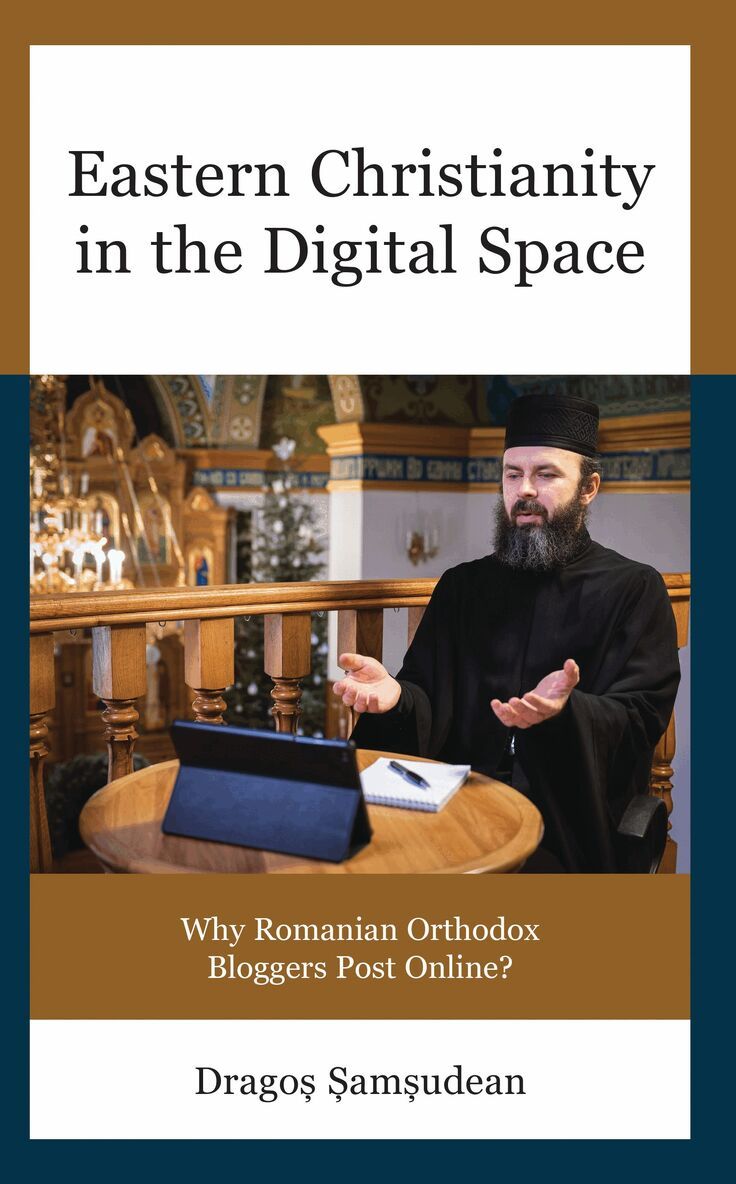
Existing through the ordeals of the Communist regimes of the last century and then facing the expansion of the Internet and the digitalization of the present one, East-European Orthodoxy seeks to re-establish itself on the geopolitical and religious map of today's world. Drago?-Ioan ?am?udean argues that, within this context, new religious actors such as Ortho-bloggers, manifest themselves in the digital environment of blogs and social media, driven not only by spiritual and religious motivations but also by political, economic and institutional ones. Caught between the inabilities of the Orthodox Church to offer them a safe religious online framework to express themselves and their various personal and socio-political aspirations, Orthodox bloggers become religious influencers, theologians, but also promoters of disinformation and misinformation. ?am?udean chose Romania as a case study on Ortho-bloggers motivations, based on four characteristics of this state: the majority Orthodox population, a well-developed internet infrastructure, a local Orthodox Church active online and offline as well as the Geopolitical position of Romania, at the intersection of the clash between civilizations and cultures.
Inbunden, Engelska, 2026
1 246 kr
Skickas inom 10-15 vardagar
The 2022 Russian invasion of Ukraine represents for Putin what the crossing of the Rubicon represented for Julius Caesar in 49 BC. After making this decision, Moscow can never go back. With this critical choice, one of the most significant since the end of World War II, Russia has decided to accelerate the course of history. In its attack against Ukraine, Putin’s Russia confirmed its role as a revisionist power and challenger of the international order, deciding to operate outside the rules set in the post-1945 and post-1991 world system. The arrival point of the historic process will have two possible consequences for the international system: either the confirmation of the hegemonic role of the US-led West or the advent of a centrifugal multipolar world. War in the Borderland: Four Ways to Interpret the Conflict in Ukraine examines the reasons why the Russian-Ukrainian war broke out, highlighting four possible interpretations. Specifically, by examining the domains of geopolitics, geostrategy, geoeconomics, and ideology, the book aims to determine how these variables played an important role in the outbreak of this gruesome conflict.
Inbunden, Engelska, 2025
1 109 kr
Skickas inom 10-15 vardagar
As Russia challenges the US-led Global Order, Moscow had to create its own version of regional order. From the ashes of the Soviet Union, Moscow had to rebuild its relations with each of the former Soviet states. To do so, Russia had to overcome both mistrust and power asymmetry. While some of the states have chosen not to cooperate with Russia, other states have chosen to cooperate with Russia to create a regional architecture and order. Many argue that Russia is a coercive power in the region that forces other states to act in only its own interests. While recognizing Russia’s power Michael O. Slobodchikoff maintains that it is not able to simply force states to behave as it wants them to. Instead, Russia must use bilateral and multilateral cooperation for both Russia as the hegemon and the weaker powers in the region. Russia has been successful at creating regional order. While it has worked to achieve global multipolarity, it has built regional unipolarity, putting its global strategy at odds with its regional goals.
Häftad, Engelska, 2027
380 kr
Kommande
As Russia challenges the US-led Global Order, Moscow had to create its own version of regional order. From the ashes of the Soviet Union, Moscow had to rebuild its relations with each of the former Soviet states. To do so, Russia had to overcome both mistrust and power asymmetry. While some of the states have chosen not to cooperate with Russia, other states have chosen to cooperate with Russia to create a regional architecture and order. Many argue that Russia is a coercive power in the region that forces other states to act in only its own interests. While recognizing Russia’s power Michael O. Slobodchikoff maintains that it is not able to simply force states to behave as it wants them to. Instead, Russia must use bilateral and multilateral cooperation for both Russia as the hegemon and the weaker powers in the region. Russia has been successful at creating regional order. While it has worked to achieve global multipolarity, it has built regional unipolarity, putting its global strategy at odds with its regional goals.
Inbunden, Engelska, 2027
1 566 kr
Kommande
In an increasingly complex world, the decisions of American presidents can shape the course of global events—but those decisions are only as good as the intelligence behind them. Presidential Daily Intelligence Briefs: The Ability to Predict Conflict in the Middle East and the World pulls back the curtain on the secretive world of U.S. intelligence to reveal how leaders are briefed, how threats are assessed, and why critical warnings are sometimes missed.Drawing on declassified Presidential Daily Briefs and historical case studies from the Cold War to the War on Terror, the book uncovers a striking reality: the intelligence has correctly predicted only about half of major global conflicts. It excels when focused on great power rivalry, yet repeatedly fails to anticipate revolutions, civil wars, and emerging threats—often with devastating consequences.Blending rigorous analysis with gripping real-world examples, Presidential Daily Intelligence Briefs exposes the hidden biases, institutional blind spots, and human judgments that shape intelligence at the highest levels. It reveals not only how intelligence works, but why it sometimes doesn’t—and what that means for America’s future.