Michael O'Dell – författare
Visar alla böcker från författaren Michael O'Dell. Handla med fri frakt och snabb leverans.
4 produkter
4 produkter
Häftad, Engelska, 2024
114 kr
Skickas inom 7-10 vardagar
Create stunning works of mosaic art with stickers! This distinctive poly-art paint-by-sticker book with perforated pages features a collection of 10 highly detailed geometric designs of creatures from the animal kingdom including fox, lion, hummingbird, and owl. Each meticulous design is an adaptation of the work of multimedia artist and founder of Legit Kits, Michael O'Dell. Legit Kits produces a line of beautiful quilt top kits featuring a broad spectrum of colourful laser-cut fabrics. Your art will come to life as you place the sticker on its corresponding numbered shape on the design. Interesting facts about each animal are shared throughout.
Häftad, Engelska, 2025
525 kr
Skickas inom 5-8 vardagar
The How and Why of Laboratory Schools: Innovations and Success Stories in Teacher Preparation and Student Learning is an eagerly anticipated exploration crafted by esteemed researchers and practitioners from some of the foremost Laboratory Schools across the United States and internationally. These institutions, also recognized as demonstration schools or university-affiliated schools, play pivotal roles in the landscape of education, serving as bastions of innovation, research, and professional development. At their core, Laboratory Schools are multifaceted entities, assuming key responsibilities such as teacher training and professional development, serving as hubs for research and innovation, embodying models of best practices, fostering collaboration within university communities, shaping curriculum development and evaluation, and championing inclusion and special education. Their impact reverberates throughout the educational sphere, shaping the future of teaching, learning, and educational policies.The How and Why of Laboratory Schools serves as a beacon in the realm of education literature, offering an array of accessible examples that inspire and enlighten researchers, practitioners, and policymakers alike. With a global perspective, this volume provides a comprehensive snapshot of both the research and practice within Laboratory Schools worldwide, featuring exemplary models not only from the United States but also from various international settings. Spanning an variety of topics including demonstration schools, teacher preparation, innovative pedagogy and curriculum, early childhood education, elementary and primary education, middle and secondary education, STEM-focused initiatives, promotion of democracy, establishment of research laboratories, support for diverse learners, preservice teacher education, collaboration models, and the role of teachers as researchers, this book encompasses the diverse facets of Laboratory Schools' contributions to education.Moreover, the book serves as a blueprint for the development of new Laboratory Schools, offering insights into various models, funding mechanisms, and strategies for integration into university research and teacher training programs. By showcasing successful examples and providing practical guidance, this book empowers educational institutions to embark on the journey of establishing their own school, enriching both their local communities and the broader educational landscape.Beyond the present, this book also articulates a compelling case for the future of Laboratory Schools, highlighting their potential to continually innovate, adapt, and lead educational transformation in the years to come. Through its insightful analyses and compelling narratives, The How and Why of Laboratory Schools heralds a future where Laboratory Schools remain at the forefront of educational excellence and innovation, not only domestically but also on the international stage.Perfect for courses such as: Comparative Education; Education Reform; Professional Development Models; School Improvement; Foundations in Education; Early Childhood Education
Häftad, Engelska, 2026
430 kr
Kommande
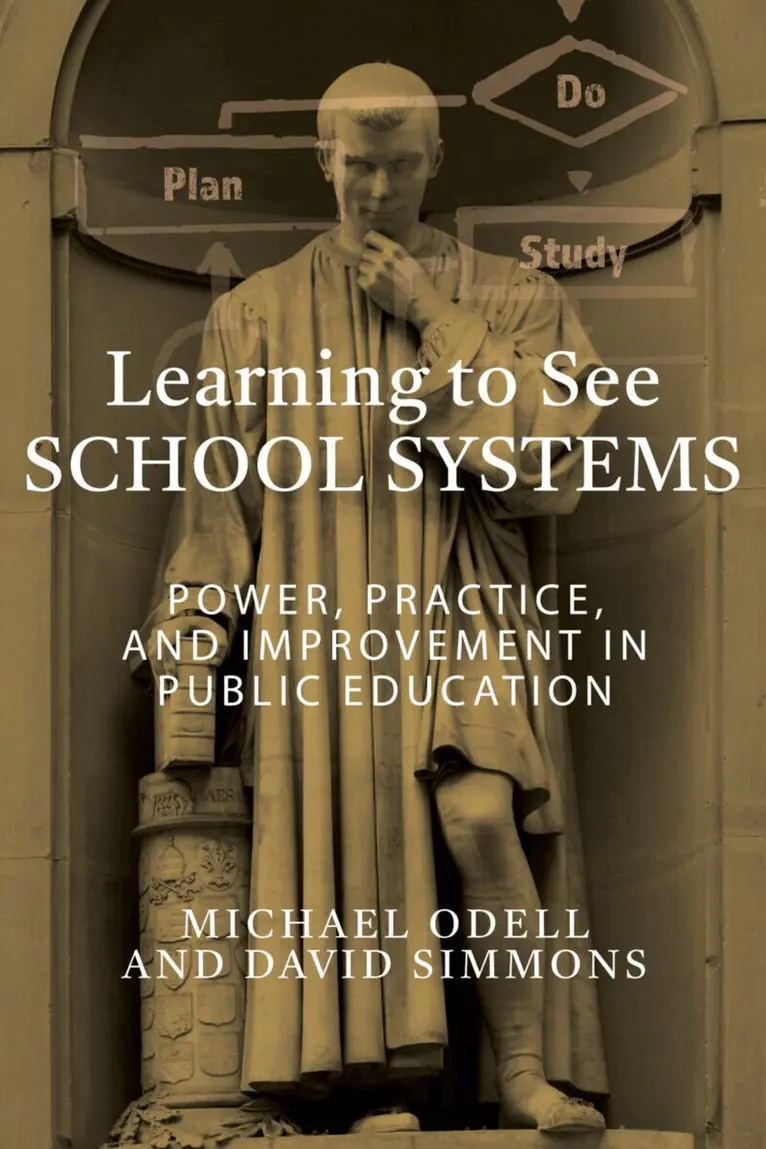
Learning to See School Systems: Power, Practice, and Improvement in Public Education is a volume dedicated to the goal of improving school systems. In 1513, Niccolò Machiavelli wrote The Prince to help rulers understand the realities of power. Five hundred years later, Dr. Michael R. L. Odell — educator, researcher, and amused observer of Texas school systems — offers a modern reflection for those who lead the nation's classrooms and districts. Learning to See School Systems is both satire and system map: a handbook for anyone attempting to lead improvement in institutions designed to resist it gracefully. Across twelve chapters, it reveals how public education mirrors the politics of Florence—ambition, reform, accountability, and fortune disguised as data. Each chapter blends humor with hard truth: board relations as diplomacy, improvement plans as rituals, dashboards as illusion, crises as curriculum. Beneath the wit lies a serious purpose—to help educators see their districts as living systems, governed by patterns that Improvement Science now names but Machiavelli already understood. For teachers, principals, superintendents, and school board members alike, Learning to See School Systems is a mirror of modern schooling—ironic, affectionate, and uncomfortably accurate. Read it for laughter. Keep it for survival. Share it with anyone about to lead their first staff meeting. "He who governs schools must learn to rule hearts that believe themselves ungoverned." — from Learning to See School Systems Perfect for courses such as: School Improvement and Reform; School Policy; Organizational Leadership and Change
Häftad, Engelska, 2026
430 kr
Kommande
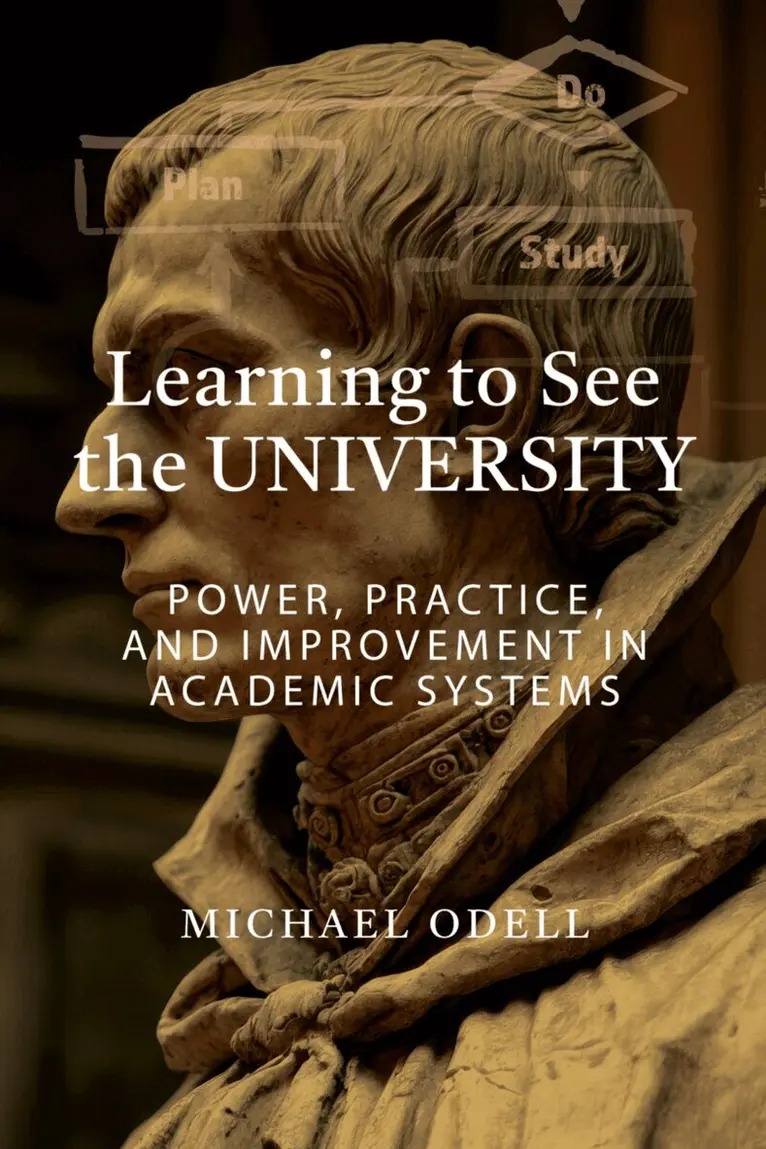
Learning to See the University: Power, Practice, and Improvement in Academic Systems is a sharp and reflective exploration of power, policy, and survival in modern higher education. Written in the spirit of Niccolò Machiavelli's The Prince, the book translates political realism into the everyday governance of universities, where authority operates through committees, budgets, rankings, accreditation, and carefully managed narratives rather than formal command. Neither parody nor exposé, Learning to See the University offers a clear-eyed account of how universities function beneath the language of shared governance and collegiality. Drawing on systems thinking and Improvement Science, it explains why reforms stall, why innovation must often appear as continuity, and why leadership in higher education is shaped more by timing, incentives, and legitimacy than by vision alone. Structured as a modern adaptation of Machiavelli, each chapter reimagines concepts such as virtù, fortuna, fear, reputation, and loyalty within the academic ecosystem. Departments emerge as semi-sovereign fiefdoms, committees as instruments of stability, rankings as tools of perception, and crises as catalysts for change. The tone is accessible, wry, and reflective. Humor provides distance without cynicism, allowing readers to recognize familiar institutional patterns while gaining clarity rather than frustration. New administrators will find a survival guide; experienced leaders will recognize a mirror. Intended for provosts, deans, department chairs, and graduate students in higher education leadership, Learning to See the University is suited for doctoral programs, leadership seminars, and administrative retreats. Ultimately, it is not a guide to manipulation, but an argument for realism with conscience—and for leading universities with wisdom, restraint, and integrity. Perfect for courses such as: Higher Education Leadership; College and University Administration; Higher Education Policy and Politics; Institutional Research and Effectiveness; Strategic Planning in Higher Education; Change and Innovation in Higher Education; Finance and Budgeting in Higher Education; Higher Education Law and Ethics; Leadership Theory in Education; Organizational Theory in Education; Systems Thinking and Improvement in Higher Education