
Michael Petry – författare
Visar alla böcker från författaren Michael Petry. Handla med fri frakt och snabb leverans.
5 produkter
5 produkter
Inbunden, Engelska, 2024
433 kr
Skickas inom 5-8 vardagar
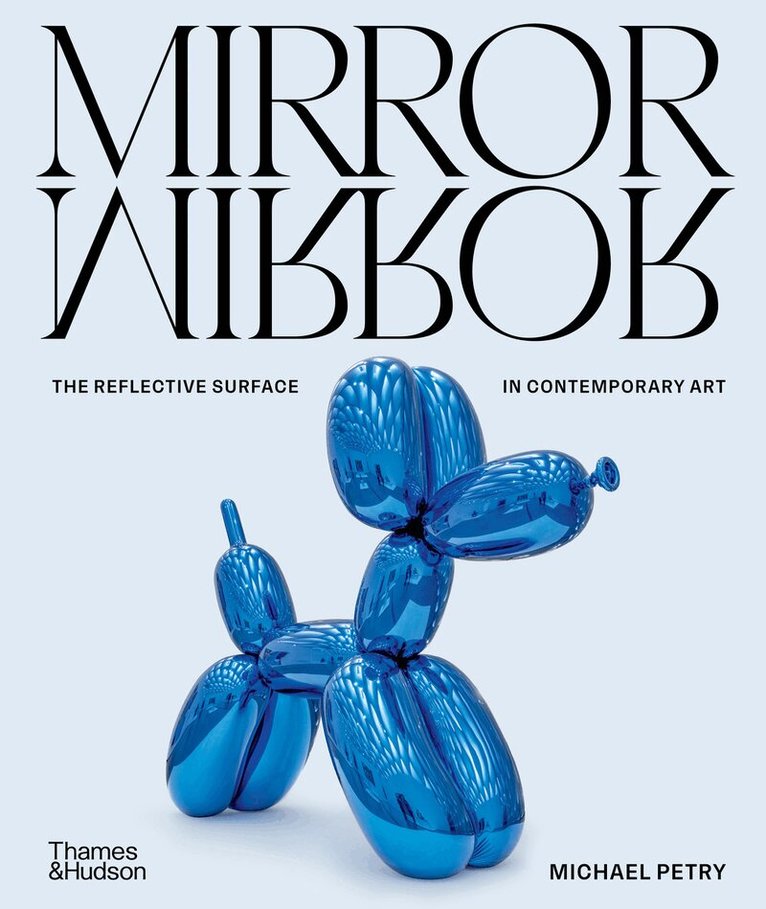
A dazzling and intriguing exploration of the use, as a medium, of mirrors and reflective surfaces in contemporary art worldwide. From the art of Cindy Sherman to Anish Kapoor, from Yayoi Kusama to Tracey Emin, MirrorMirror presents an intriguing and gloriously illustrated global survey of 'reflective' work by more than 150 artists across media, nationalities, genders and locations. The extraordinary range of works featured in MirrorMirror invites us to ponder and reflect upon the nature of reality and our place within the world. A fascination with mirrors and reflective surfaces is a common theme among artists of the past. Michael Petry's thought-provoking introduction begins with Jan van Eyck's celebrated Arnolfini Portrait (1434), one of the first paintings to feature a significant mirror. Petry references key works by the great masters – from Diego Velazquez's The Rokeby Venus, to Edouard Manet’s complex painting A Bar at the Folies-Bergere (1882) and Claude Cahun's Reflected Image in Mirror, Checked Jacket (1928), a seminal photograph for those whose gaze is often upon themselves. Present-day practitioners are no less intrigued, revisiting historical concerns and approaches for contemporary circumstances, often working with modern technologies and materials, from stainless steel to vinyl and from polished obsidian to sunglass lenses. Petry presents Jeff Koons's Balloon sculptures, Subodh Gupta's stainless-steel life-sized trees and Not Vital’s mirror architecture, and also documents works that use actual mirrors, including pieces by Gavin Turk and Alicja Kwade, and the large-scale, spectacular installations of Doug Aitken, Teresita Fernandez, Olafur Eliasson and Sarah Sze. Special consideration is given to selfies and the way in which the mobile phone now operates as a modern-day mirror to the self. In all these works, the concept of reflection, the notion of creating an alternative space or of opening up space within the frame of the viewer’s interaction with the artwork, have a root in the past. The multitude of artworks in MirrorMirror – from monumental installations to the slightest selfie – capture how mirrors appeal to more than just human vanity but are objects of magic, transformation and power.
Häftad, Engelska, 2012
196 kr
Skickas inom 5-8 vardagar
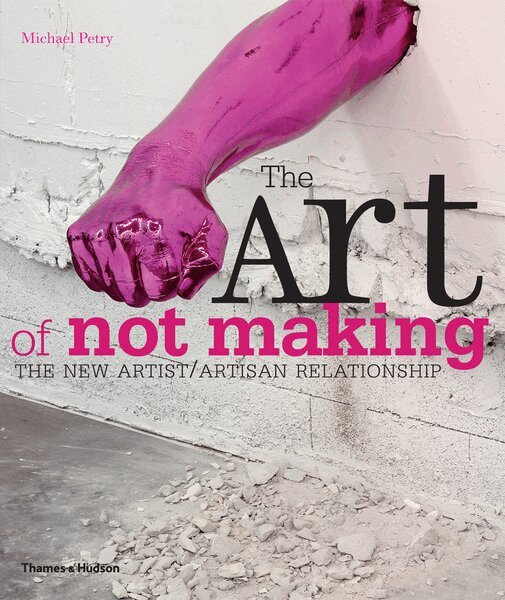
Can an artist claim that an object is a work of art if it has been made for him or her by someone else? If so, who is the ‘author’ of such a work? And just what is the difference between a work of art and a work of craft? New in paperback, the first book to highlight and explore the way artists collaborate with artisans and craftspeople to realise their work. The Art of Not Making tackles explores the concepts of authorship, artistic originality, skill, craftsmanship and the creative act, and highlighting the vital role that skills from craft and industrial production play in creating some of today’s most innovative and highly sought-after works of art. The book analyses hundreds of artworks by the most important international artists, including Chris Burden, Louise Bourgeois, Matthew Barney, Grayson Perry, Mona Hatoum, Ai Weiwei, Daniel Buren, Carsten Höller, Mark Wallinger, Kiki Smith, Fred Wilson, Pae White, Tony Cragg, Roni Horn, Liam Gillick, Sherrie Levine, Ugo Rondionone, Subodh Gupta, Kara Walker and Maurizio Cattelan. ‘Enjoyable … Petry clearly knows his stuff’- Art Quarterly ‘Timely...Petry has identified a significant art world trend’ - The Art Newspaper ‘Glorious’ - Harper's Bazaar ‘A handsome volume...provides pause for thought, and should be commended for drawing attention to the ideas of collaboration’ - Ceramic Review ‘Refreshingly fun to read and look at’ - State of Art ‘The arguments presented in this glossy erudite art book are bold, intriguing ... beautiful’ - GT (Gay Times)
Häftad, Engelska, 2016
442 kr
Skickas inom 5-8 vardagar
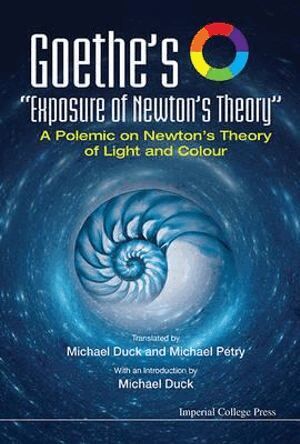
Johann Wolfgang von Goethe, although best known for his literary work, was also a keen and outspoken natural scientist. In the second polemic part of Zur Farbenlehre (Theory of Colours), for example, Goethe attacked Isaac Newton's ground-breaking revelation that light is heterogeneous and not immutable, as was previously thought.This polemic was unanimously rejected by the physicists of the day, and has often been omitted from compendia of Goethe's works. Indeed, although Goethe repeated all of Newton's key experiments, he was never able to achieve the same results. Many reasons have been proposed for this, ranging from the psychological — such as a blind hatred of Newtonism, self-deceit and paranoid psychosis — to accusations of incapability — Goethe simply did not understand the experiments. Yet Goethe was never to be dissuaded from this passionate conviction.This translation of Goethe's polemic, published for the first time in English, makes it clear that Goethe did understand the thrust of Newton's logic. It demonstrates that Goethe's resistance to Newton's theory stemmed from something quite different; his pantheism — the belief in the spiritual nature of light. This prevented him from allowing himself to think of light in physical terms and accepting that it is anything other than simple, immutable, and unknowable.This important new translation will be useful to natural scientists, historians, philosophers and theologians alike and will delight anyone hoping to add a further layer of nuance to Goethe's complex portrait.
Inbunden, Engelska, 2016
1 401 kr
Skickas inom 5-8 vardagar
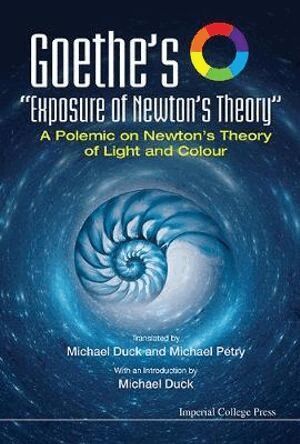
Johann Wolfgang von Goethe, although best known for his literary work, was also a keen and outspoken natural scientist. In the second polemic part of Zur Farbenlehre (Theory of Colours), for example, Goethe attacked Isaac Newton's ground-breaking revelation that light is heterogeneous and not immutable, as was previously thought.This polemic was unanimously rejected by the physicists of the day, and has often been omitted from compendia of Goethe's works. Indeed, although Goethe repeated all of Newton's key experiments, he was never able to achieve the same results. Many reasons have been proposed for this, ranging from the psychological — such as a blind hatred of Newtonism, self-deceit and paranoid psychosis — to accusations of incapability — Goethe simply did not understand the experiments. Yet Goethe was never to be dissuaded from this passionate conviction.This translation of Goethe's polemic, published for the first time in English, makes it clear that Goethe did understand the thrust of Newton's logic. It demonstrates that Goethe's resistance to Newton's theory stemmed from something quite different; his pantheism — the belief in the spiritual nature of light. This prevented him from allowing himself to think of light in physical terms and accepting that it is anything other than simple, immutable, and unknowable.This important new translation will be useful to natural scientists, historians, philosophers and theologians alike and will delight anyone hoping to add a further layer of nuance to Goethe's complex portrait.

Inbunden, Tyska
1 034 kr
Tillfälligt slut