Michael Potegal – författare
Visar alla böcker från författaren Michael Potegal. Handla med fri frakt och snabb leverans.
3 produkter
3 produkter
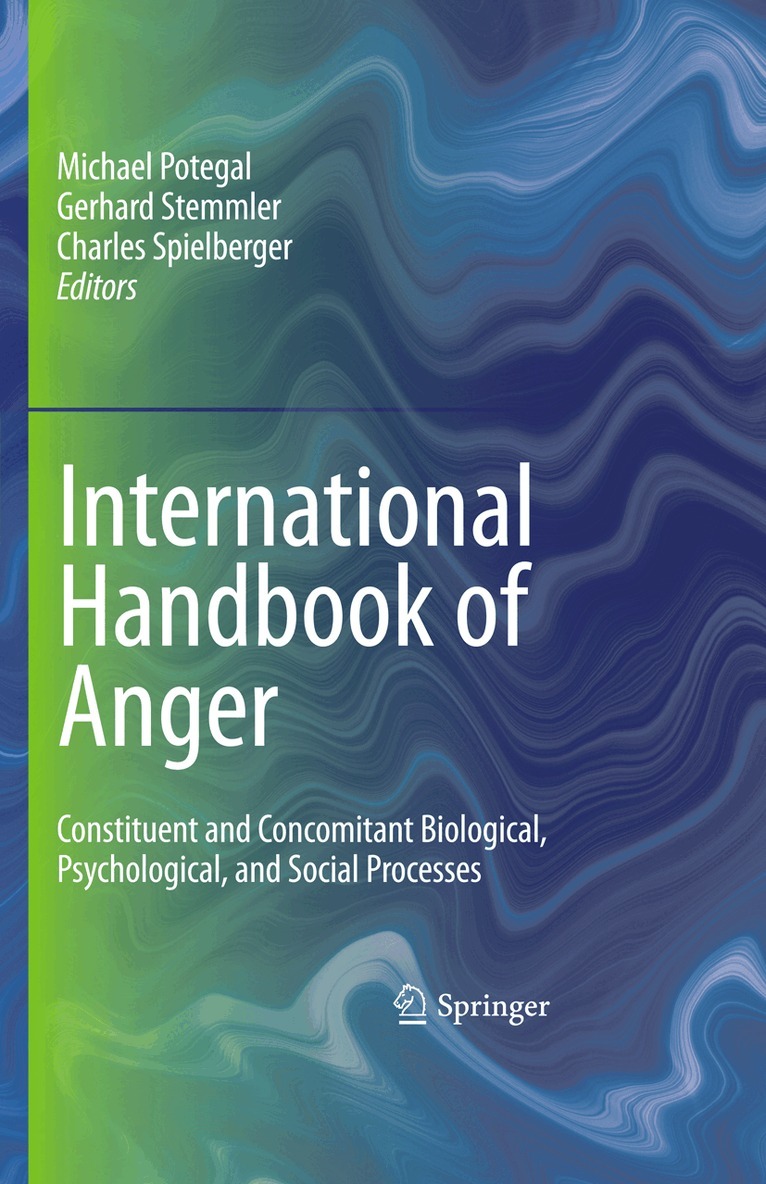
International Handbook of Anger
Constituent and Concomitant Biological, Psychological, and Social Processes
Inbunden, Engelska, 2010
3 266 kr
Skickas inom 10-15 vardagar
From the individual rage-driven violence of domestic abuse to the destructive causes and lasting consequences of large scale ethnic and political conflict, anger and its effects are ubiquitous in human life, and are the focus of intense study across many scientific disciplines: fields as varied as affective neuroscience, health science, psychology, psychophysiology, and sociology have all contributed to recent advances in the understanding of anger. The editors of the International Handbook of Anger bring these major contributions together for a unique portrayal of the many aspects of anger—evolutionary and biological bases, behavioral processes and effects, physiological concomitants, clinical aspects, and role in the larger social picture—with coverage that is both wide-ranging and integrative. State-of-the-art findings by highly regarded experts are organized for maximum utility, with extensive cross-referencing between chapters and editors’ introductory commentary linking the book’s sections.A sampling of the coverage in the Handbook:Historical views and roles of anger in Western and nonwestern cultures.Current genetic, neurological, neurochemical, and psychophysiological perspectives.Cross-cultural expressions: facial, vocal, and linguistic.Affective, motivational, and cognitive processes in anger.Gender differences in anger triggers, experience, and behavior.Anger in development and across the lifespan: Infancy, childhood and adulthood Assessing anger, hostility, and anger control. Clinical aspects: psychopathology, anger and chronic pain, "Type A" behavior and cardiovascular health.Anger in family, small-group, and large-group conflict.The International Handbook of Anger presents a wealth of deep and detailedknowledge relevant to clinical and health psychology, social work, family studies, and anger management, among other fields. Its depth and breadth of coverage will make it a definitive volume informing research and practice in the years ahead.
2 053 kr
Skickas inom 10-15 vardagar
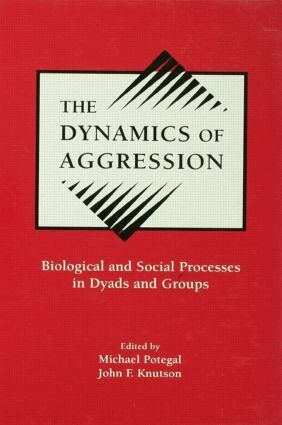
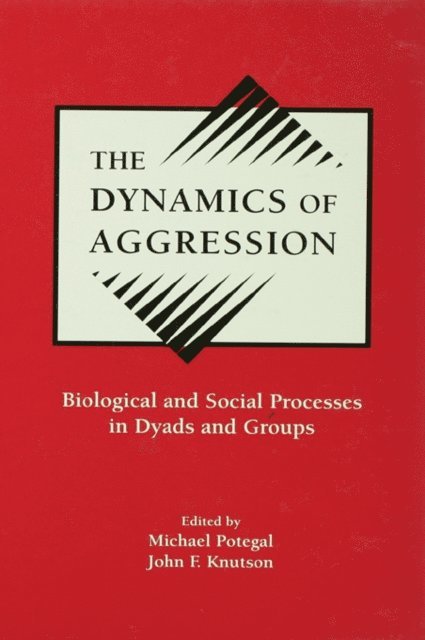
Aggression usually involves a sequence of behaviors, reflecting escalations and de-escalations in the form or intensity of the actions taken, which play out over time. This book provides a context in which social and biological research on the aggressive behaviors of human and non-human subjects, interacting in dyads or groups, can be compared and integrated. Implicit in this juxtaposition is the major question of whether general principles governing the dynamics of aggression within and between episodes may be discerned. Aggressive behavior is described at different levels of analysis in humans and a number of other animal species. Three basic views of aggression dynamics become apparent:* The economic interpretation: Aggression will be escalated when it pays one of the combatants to do so or, more generally, when the potential benefits outweigh the risks. Decisions to escalate or de-escalate are part of a calculated "strategy", in one or another sense. This interpretation is formalized within game theoretic models as applied to animal conflicts and to international conflicts, within the chapters of this text.* The psychological process interpretation: Emphasis is placed on psychological/physiological processes within the individual. The chapters stress the importance of acute emotional states of anger and aggressive arousal and argue the role of peripheral sympathetic activation, while proposing a central neural mechanism. Children escalating their tantrums, adult humans and animals of other species intensifying their interpersonal conflicts, national leaders going to a war footing all appear to suffer a narrowing of attention and progressive failure of cognitive function under the intensifying stress of conflict. Perhaps these changes in attention, sensory and cognitive functions, and risk taking reflect a "commitment to aggression" which is necessary for organisms to engage in potentially dangerous and painful encounters.* The emergent process interpretation: Escalation emerges in a spontaneous and dynamic way as the actions of one participant elicit reactions from the other(s).
707 kr
Skickas inom 10-15 vardagar
Aggression usually involves a sequence of behaviors, reflecting escalations and de-escalations in the form or intensity of the actions taken, which play out over time. This book provides a context in which social and biological research on the aggressive behaviors of human and non-human subjects, interacting in dyads or groups, can be compared and integrated. Implicit in this juxtaposition is the major question of whether general principles governing the dynamics of aggression within and between episodes may be discerned. Aggressive behavior is described at different levels of analysis in humans and a number of other animal species. Three basic views of aggression dynamics become apparent:* The economic interpretation: Aggression will be escalated when it pays one of the combatants to do so or, more generally, when the potential benefits outweigh the risks. Decisions to escalate or de-escalate are part of a calculated "strategy", in one or another sense. This interpretation is formalized within game theoretic models as applied to animal conflicts and to international conflicts, within the chapters of this text.* The psychological process interpretation: Emphasis is placed on psychological/physiological processes within the individual. The chapters stress the importance of acute emotional states of anger and aggressive arousal and argue the role of peripheral sympathetic activation, while proposing a central neural mechanism. Children escalating their tantrums, adult humans and animals of other species intensifying their interpersonal conflicts, national leaders going to a war footing all appear to suffer a narrowing of attention and progressive failure of cognitive function under the intensifying stress of conflict. Perhaps these changes in attention, sensory and cognitive functions, and risk taking reflect a "commitment to aggression" which is necessary for organisms to engage in potentially dangerous and painful encounters.* The emergent process interpretation: Escalation emerges in a spontaneous and dynamic way as the actions of one participant elicit reactions from the other(s).