Michael Prichard - Böcker
Visar alla böcker från författaren Michael Prichard. Handla med fri frakt och snabb leverans.
2 produkter
2 produkter
466 kr
Skickas inom 5-8 vardagar
This book provides an alternative means of discussing the development and significance of managers and management in universities and colleges. It is particularly concerned with the way 'managing' involves the development of different ways of talking, acting and relating to people at work. Yet this is often difficult, and variably successful, as it confronts often strong professional and occupational work identities and cultures. The book provides a detailed look at the 'manager' in contemporary further and higher education in Britain as post-compulsory education has been required to operate on a more commercial basis, and universities and colleges are increasingly regarded as small to medium sized enterprises.It draws upon interviews with more than 70 senior post-holders. It explores, for example, the work of the traditional university vice-chancellor who came to see himself as the new chief executive, schooled himself in the works of international management gurus Henry Mintzberg and Tom Peters, and engaged his 3000 staff in the virtues of 'thriving on chaos'. The result, as one seasoned higher education observer has noted, was '18 months of misery' for university personnel. It tells the story of the professor of material science who came to see himself as small businessman responsible for maintaining a #2 million a year departmental turnover. But at the same time he considered this new identity to be constantly hamstrung by the bureaucratic centralism of his university. It tells the stories of senior women administrators who, empowered by their appointment as managers, challenged the deeply embedded paternalism of their senior academic colleagues. And it tells the stories of numerous heads of department and sections repositioned as managers in the 'new marketized further education' who have struggled to re-imagine students as funding units, and colleagues as 'their staff'.Craig Prichard provides a highly nuanced, theoretically sophisticated, and critically informed account of the repositioning of senior university and college academics as managers. This is important reading for those interested in post-compulsory education, public sector management, and the sociology of work and education; and, of course, for university and college managers themselves.
880 kr
Skickas inom 7-10 vardagar
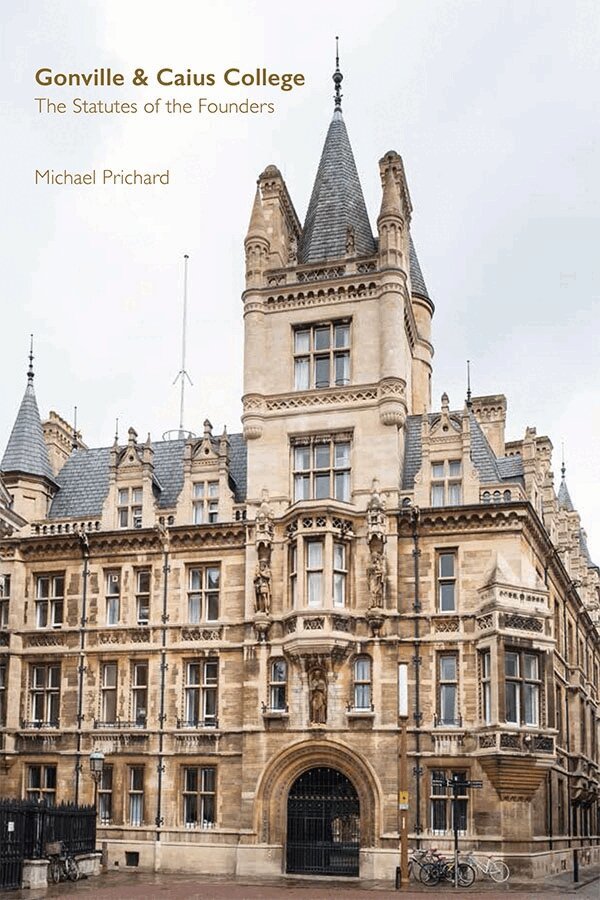
Edition and translation of important documents, providing an account of the foundation of a Cambridge college.Gonville & Caius College is exceptional among Oxford and Cambridge colleges in having had three separate founders at different times: Edmund Gonville, William Bateman and John Caius. The statutes made by those founders are also exceptional, for they have two unique features: first, the statutes of the last founder did not supersede those of the second founder but took effect concurrently with them for over three hundred years; and, second, the longest setof the three founders' statutes was formulated by someone - John Caius - who was not only a founder but had himself been a fellow of the college for which he was drawing up his statutes and was Master of that college during the years in which he was formulating the final draft of those statutes. As a result, Caius' statutes are remarkable for the unique detail of their provisions and their exceptional character. For both these reasons John Caius' statutesdeserve greater attention than they have been given.In addition to an edition and translation of the three founders' statutes, the book also contains an account of the circumstances in which they were formulated and the very different characters of the founders who made them. There then follows an examination of five topics on which the statutes of the last founder either led to bitter disputes and litigation during the later three centuries or elsewere simply ignored or tacitly evaded by common consent, particularly the hitherto neglected subjects of stipends and dividends.