Michael Schuldiner - Böcker
Visar alla böcker från författaren Michael Schuldiner. Handla med fri frakt och snabb leverans.
2 produkter
2 produkter
930 kr
Skickas inom 10-15 vardagar
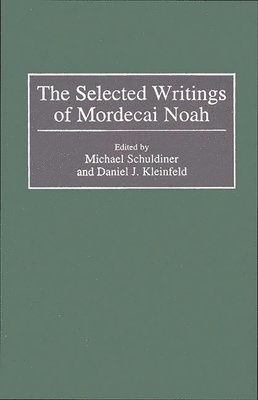
Mordecai Noah, whose writings span from the 1800s to the 1840s, is the first important Jewish writer to appear on the American scene. In his own time, he was ranked with Washington Irving and James Fenimore Cooper as among the finest writers of the day. Noah is primarily known today as the visionary who proposed a Jewish homeland, to be called Ararat in upstate New York. But Noah also had a political career which was equally colorful. As American Consul to Tunis, Noah's plan to rescue American sailors held by the Barbary states nearly led to his own imprisonment and death. As Sheriff of New York, Noah freed all debtors when Yellow Fever broke out in the prisons, thereby becoming liable for a small fortune.This volume is the first modern selection of Noah's writings and includes not only some of Noah's better known works such as She Would Be a Soldier (1819), one of the most admired plays of its day, and Discourse on the Restoration of the Jews (1845), Noah's early plea for the establishment of a Jewish homeland in the Middle East. This volume also includes the first complete modern edition of the Ararat proclamation and speech (1825), detailing Noah's utopian scheme for a Jewish homeland in New York; also printed for the first time since its original publication is Noah's recently discovered tract, Address…to Aid in the Erection of the Temple at Jerusalem (1849). Schuldiner and Kleinfeld provide discussions of Noah's life and context for his writings as well as a selected bibliography of key writings by and about Mordecai Noah.
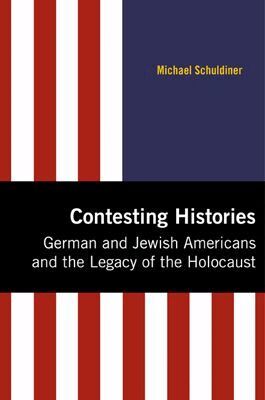
Contesting Histories
German and Jewish Americans and the Legacy of the Holocaust
Inbunden, Engelska, 2011
388 kr
Skickas inom 3-6 vardagar
""Starting with popular objections to America’s entry into World War I and ending with recent academic debates between Christopher Browning and Daniel Goldhagen over the legacy and meaning of the Holocaust, Schuldiner provides readers with a longer historical context and a deeper study of the Holocaust’s reception and place in American historiography.He examines how events from World War I, the 1920s and 1930s, and World War II came to color America’s understanding (or lack thereof) of the Holocaust in the U.S. in both the German American and Jewish American communities. He looks at the anti-German sentiment in the U.S. during World War I; confrontations between German American isolationists and Jewish American interventionists in the 1930s and 1940s; boycotts of German goods in the U.S. and counterboycotts of Jewish American businesses in Nazi Germany; pressure on Hollywood movie studios from appeasement-oriented members of Congress to avoid antagonising Hitler; and the U.S. State Department’s resistance to allowing sanctuary for Jews seeking to immigrate.Regarding events after 1945, Schuldiner studies the debates over the erection of the United States Holocaust Memorial Museum in Washington, D.C., “The Battle of Bitburg” (President Reagan’s visit to a German military cemetery), and the recent bitter discussions on the questions, “Were all Germans willing executioners of their Jewish countrymen, or were the German people historically and culturally predisposed to support the final solution?” This longitudinal approach provides a needed corrective to the evolving American understanding about the sources and legacies of the Holocaust.