
Michael T. Brannick – författare
Visar alla böcker från författaren Michael T. Brannick. Handla med fri frakt och snabb leverans.
3 produkter
3 produkter
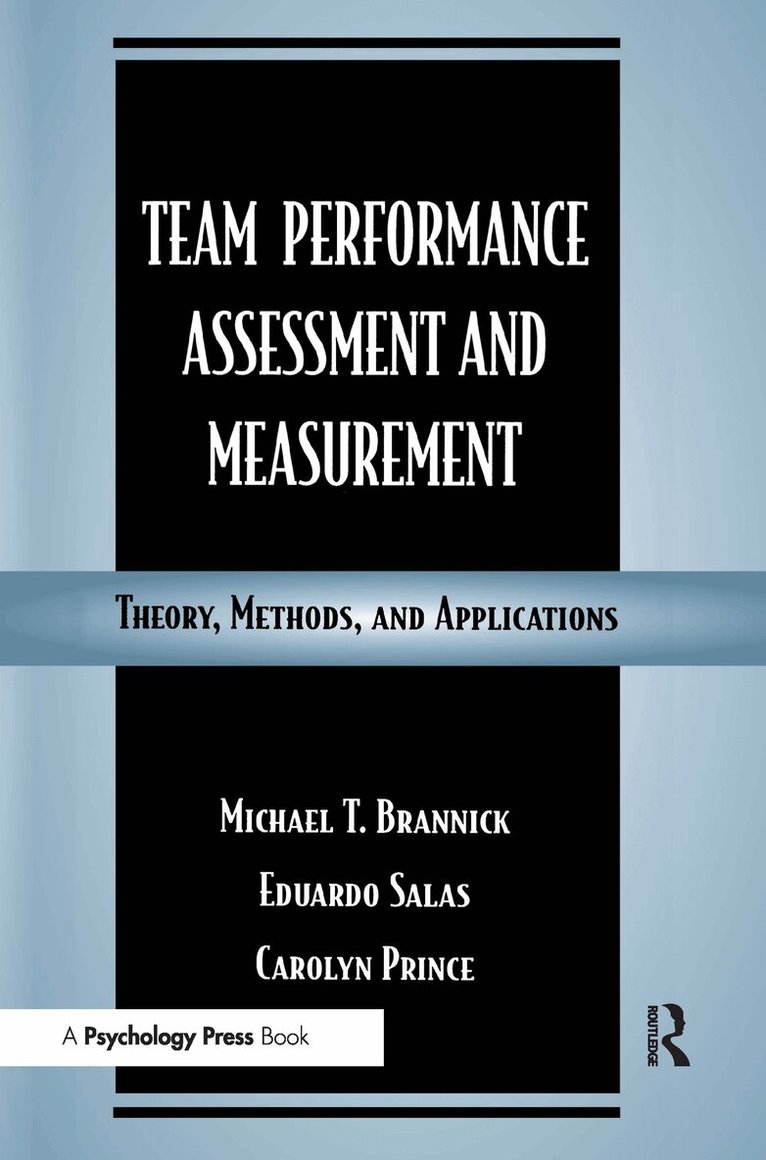
Inbunden, Engelska, 1997
2 078 kr
Skickas inom 10-15 vardagar
This book began at a conference on team performance measurement held at the University of South Florida. Several participants at the conference felt that a book on team performance measurement would be of interest to a broader audience, and they began looking for authors in diverse disciplines. Some of the chapters in this book closely follow material presented at the conference. Many others report work that was done subsequently or was done by authors not present at the conference. The result is a book rich in its diversity of approaches to measurement and which contains illustrations of many different teams. This book is the first of its kind to bring together a collection of scholars and practitioners focusing solely on the problem of team performance measurement. Although much has been written about team and group effectiveness, little theoretical and empirical progress has been made in the measurement of team processes and outcomes. The book represents a major step forward both theoretically and empirically. Section 1 provides a rich theoretical basis for measurement, including designing measures to be used in team training, measures of shared mental models, and measures of team workload. Section 2 addresses methodological developments and issues, including the design and validation of simulations, surveys, and observer checklists. It also deals with issues such as the consistency of team performance and task and level of analysis issues. Section 3 provides applications and illustrations of team performance measures in such teams as nuclear power control room operators, theater technical crews, and aircraft cockpit crews. Section 4 offers guidance for anyone interested in developing their own measures of team performance. There are both theoretical and practical reasons for the current interest in teams. Psychological research interest in groups and teams has returned and is now a thriving area. Self-managed work groups and semi-autonomous work groups have become increasingly common in industry, so there is an increased interest in team functioning from a practical standpoint. This volume's purpose is to describe recent advances in the measurement of team performance, both process and outcome. Several of the chapters provide recommendations on how, when, and why to measure aspects of teams. In addition to describing what is currently known, the book also discusses what remains to be known and what needs to be done next. The book is intended primarily for those interested in research about team processes and outcomes--researchers and academics who possess a basic understanding of statistics and psychometrics. The bulk of research reported has applied aims which provide much practical information, such as how to design simulations, rating forms, and dimensions of team performance useful for feedback to many kinds of teams. In addition, there are examples from several different kinds of teams, including aircrews, nuclear power plant operators, hospital workers, ship combat information center groups, and theater technicians. Therefore the book should be useful to people who want to design measures to evaluate teams.
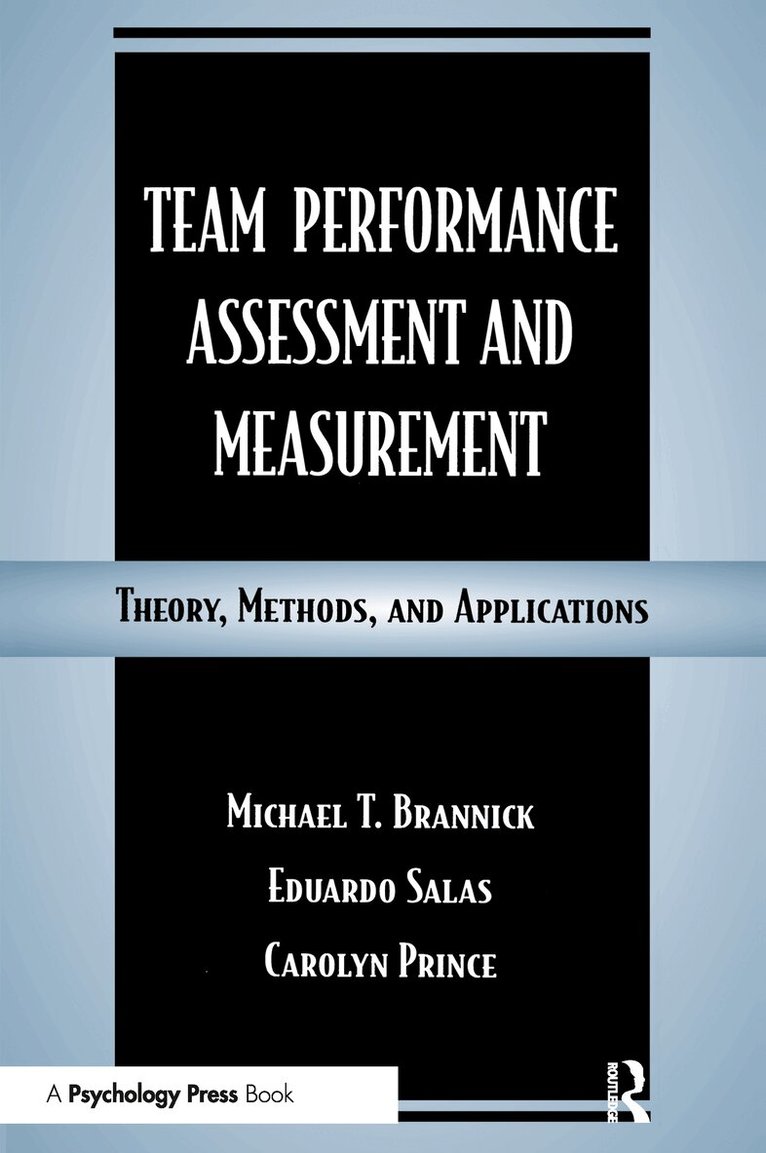
Häftad, Engelska, 1997
808 kr
Skickas inom 10-15 vardagar
This book began at a conference on team performance measurement held at the University of South Florida. Several participants at the conference felt that a book on team performance measurement would be of interest to a broader audience, and they began looking for authors in diverse disciplines. Some of the chapters in this book closely follow material presented at the conference. Many others report work that was done subsequently or was done by authors not present at the conference. The result is a book rich in its diversity of approaches to measurement and which contains illustrations of many different teams. This book is the first of its kind to bring together a collection of scholars and practitioners focusing solely on the problem of team performance measurement. Although much has been written about team and group effectiveness, little theoretical and empirical progress has been made in the measurement of team processes and outcomes. The book represents a major step forward both theoretically and empirically. Section 1 provides a rich theoretical basis for measurement, including designing measures to be used in team training, measures of shared mental models, and measures of team workload. Section 2 addresses methodological developments and issues, including the design and validation of simulations, surveys, and observer checklists. It also deals with issues such as the consistency of team performance and task and level of analysis issues. Section 3 provides applications and illustrations of team performance measures in such teams as nuclear power control room operators, theater technical crews, and aircraft cockpit crews. Section 4 offers guidance for anyone interested in developing their own measures of team performance. There are both theoretical and practical reasons for the current interest in teams. Psychological research interest in groups and teams has returned and is now a thriving area. Self-managed work groups and semi-autonomous work groups have become increasingly common in industry, so there is an increased interest in team functioning from a practical standpoint. This volume's purpose is to describe recent advances in the measurement of team performance, both process and outcome. Several of the chapters provide recommendations on how, when, and why to measure aspects of teams. In addition to describing what is currently known, the book also discusses what remains to be known and what needs to be done next. The book is intended primarily for those interested in research about team processes and outcomes--researchers and academics who possess a basic understanding of statistics and psychometrics. The bulk of research reported has applied aims which provide much practical information, such as how to design simulations, rating forms, and dimensions of team performance useful for feedback to many kinds of teams. In addition, there are examples from several different kinds of teams, including aircrews, nuclear power plant operators, hospital workers, ship combat information center groups, and theater technicians. Therefore the book should be useful to people who want to design measures to evaluate teams.
Häftad, Engelska, 2019
1 779 kr
Skickas inom 5-8 vardagar
Job and Work Analysis: Methods, Research, and Applications for Human Resource Management provides students and professionals alike with an in-depth exploration of job analysis. Job analysis encompasses a wide range of crucial topics that help us understand what people do at work and why. This one-of-a-kind text expertly unpacks the best job analysis methods and then illustrates how to apply these methods to solve some of the most common workplace problems. Readers will learn the best practices for helping people work smarter, improving hiring and training, making jobs safer, and providing a satisfying work environment. The new Third Edition includes new references, the latest research findings, and expanded discussions of competency models, teams, and O*NET.