
Michael T. Ricker – författare
Visar alla böcker från författaren Michael T. Ricker. Handla med fri frakt och snabb leverans.
2 produkter
2 produkter
538 kr
Skickas inom 11-20 vardagar
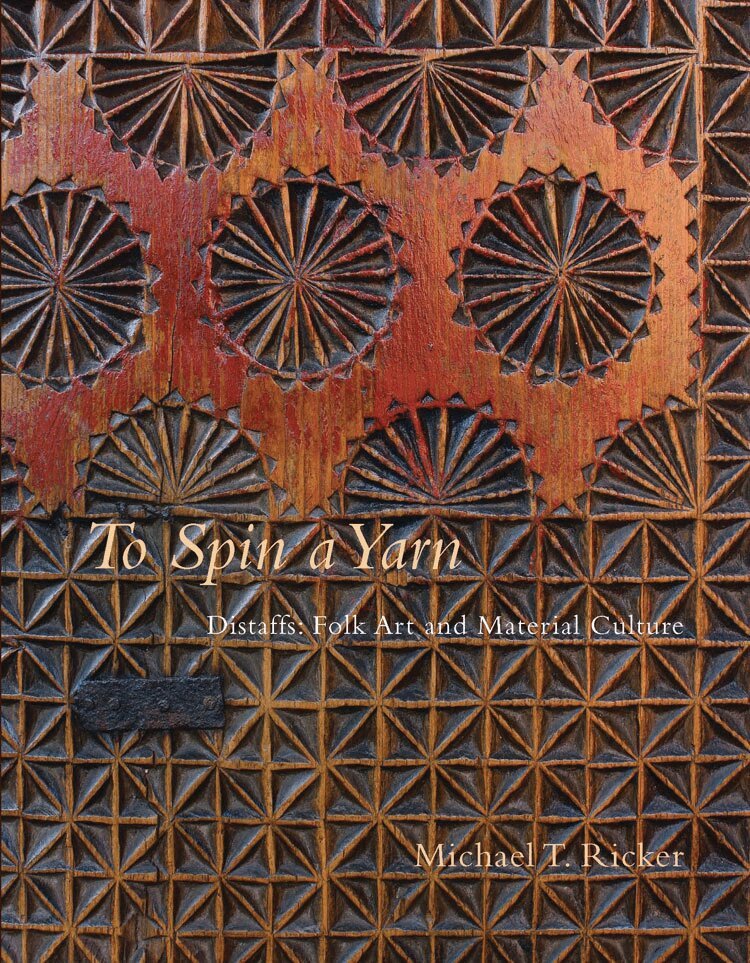
Distaffs are simple tools for spinning fiber, forming part of world cultures for millennia. In certain cultures, distaffs evolved over centuries from plain sticks to surprisingly ornate sculptures. They eventually became important cultural objects, with almost ritualistic significance.During a heyday lasting from the mid 18th century to the early 20th century, distaff production soared. This production was ultimately quashed by the progress of the Industrial Revolution and subsequent availability of ready-made fabric. Distaff use continued, but primarily to honor tradition and create special textiles of cultural and familial importance, rather than make clothes for daily wear.
440 kr
Skickas inom 11-20 vardagar
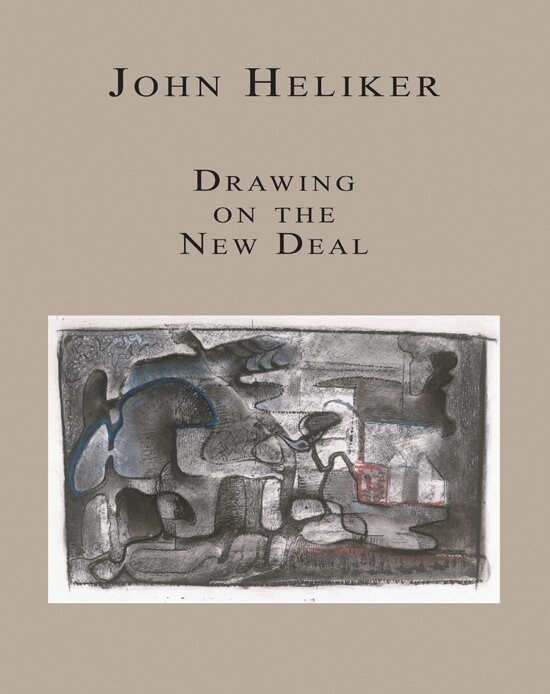
John Heliker: Drawing on the New Deal marks the rediscovery of a remarkable and largely unknown body of early work by an eminent American artist. Heliker (1909-2000) developed a highly personal and expressive approach to drawing during the WPA years. His early drawings compare to his Social Realist contemporaries Ben Shahn and Philip Evergood. Heliker shared in their political activism and produced many anti-fascist cartoons for The New Masses, some represented here. During WWII and the immediate Postwar years, Heliker earned critical acclaim for his bold experimentations with biomorphic and architectonic abstractions. By the late 1950s and in subsequent decades, his style became more muted, and he achieved a tonalist manner of great poignancy. Heliker developed a nuanced, impressionistic painting style in response to abstract expressionism - an approach that characterized his mature style.Heliker earned the Prix de Rome, a Guggenheim fellowship, and three Ford Foundation purchase prizes, among other honors, including a full scale retrospective at the Whitney Museum of American Art (1968). He was connected with the abstract expressionist Philip Guston, who became a life-long friend. Heliker taught at Columbia University (1947-74) and later at the Art Students League of New York (1975-78). He co-founded the New York Studio School in 1965 (with fellow artists Philip Guston, Leland Bell and Mercedes Matter).Heliker was also associated with the composers: Carl Ruggles, John Cage, and Lou Harrison.He also created mask design for the dancer and choreographer, Merce Cunningham.