Michael V. Namorato - Böcker
Visar alla böcker från författaren Michael V. Namorato. Handla med fri frakt och snabb leverans.
3 produkter
3 produkter
1 039 kr
Skickas inom 10-15 vardagar
As a member of Roosevelt's brain trust, chairman of New York City's Planning Commission, and governor of Puerto Rico, Rexford G. Tugwell was a public figure frequently stereotyped by historians who saw in him what they wanted to see. Namorato's clear and thorough examination of Tugwell's life is the first complete biography of this prominent political figure. The volume opens with an investigation into Tugwell's early years and then discusses his experiences during World War I, the years from 1920 to 1932 which Tugwell spent as an economics professor at Columbia University, Tugwell's brain trust role, and his New Deal years from 1932 to 1936. The author also examines Tugwell's term as chairman of the NYCPC and as governor of Puerto Rico from 1937 through 1946. Namorato's portrayal provides a fresh and balanced view of this unique statesman.
378 kr
Skickas inom 10-15 vardagar
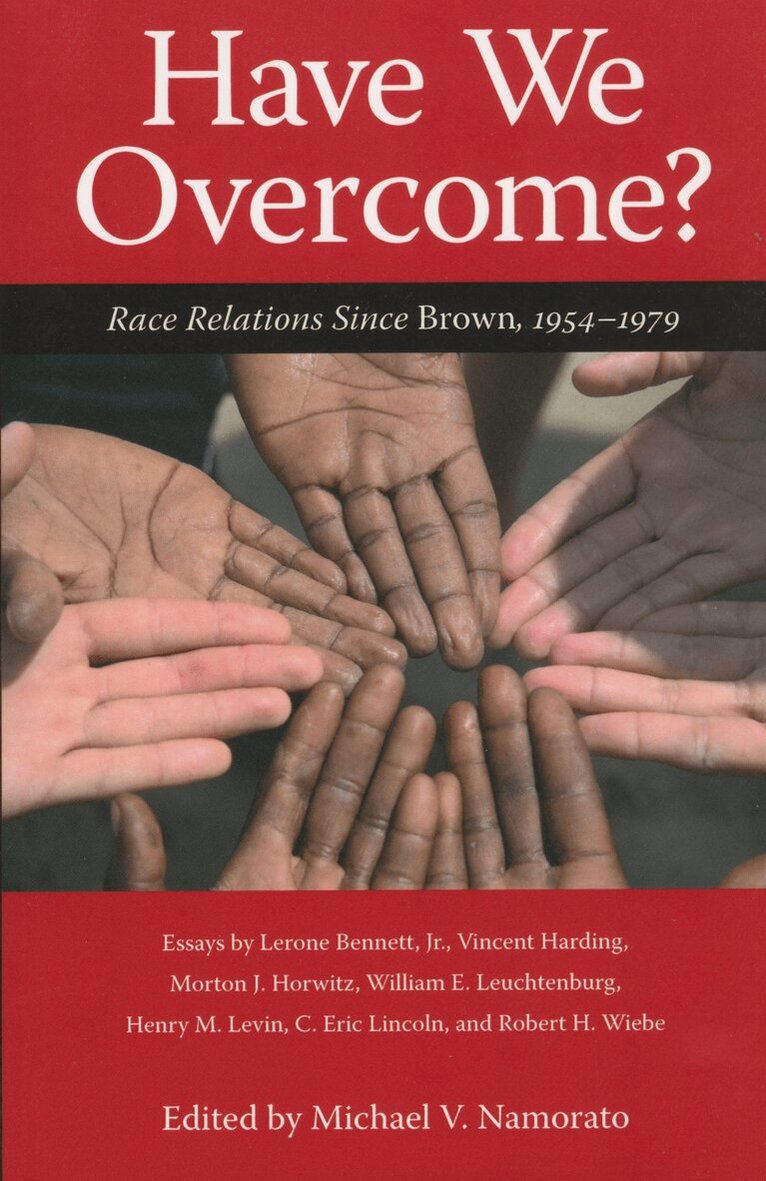
Have We Overcome? Race Relations Since Brown, 1954-1979 Edited by Michael V. Namorato Essays by Lerone Bennett, Jr., Vincent Harding, Morton J. Horwitz, William E. Leuchtenburg, Henry M. Levin, C. Eric Lincoln, and Robert H. Wiebe On May 17, 1954, the United States Supreme Court rendered the first of two historic decisions in Brown v. Board of Education of Topeka. One year later, the conclusion to a second case demanded that integration proceed "with all deliberate speed." These two verdicts affected American life far beyond the schools and proved the beginning of the end to the segregated South. The essays in Have We Overcome? Race Relations Since Brown, 1954-1979, delivered by major scholars just after America's bicentennial and on the twenty-fifth anniversary of the Brown decision, endeavor to answer that question and determine what strides have been made and what remains to be overcome. This book is the final volume in a three-part investigation which begins with What Was Freedom's Price? and includes The Age of Segregation: Race Relations in the South, 1890-1945. All three are available again in paperback from University Press of Mississippi. Michael V.Namorato is a professor of history at the University of Mississippi.
422 kr
Skickas inom 10-15 vardagar
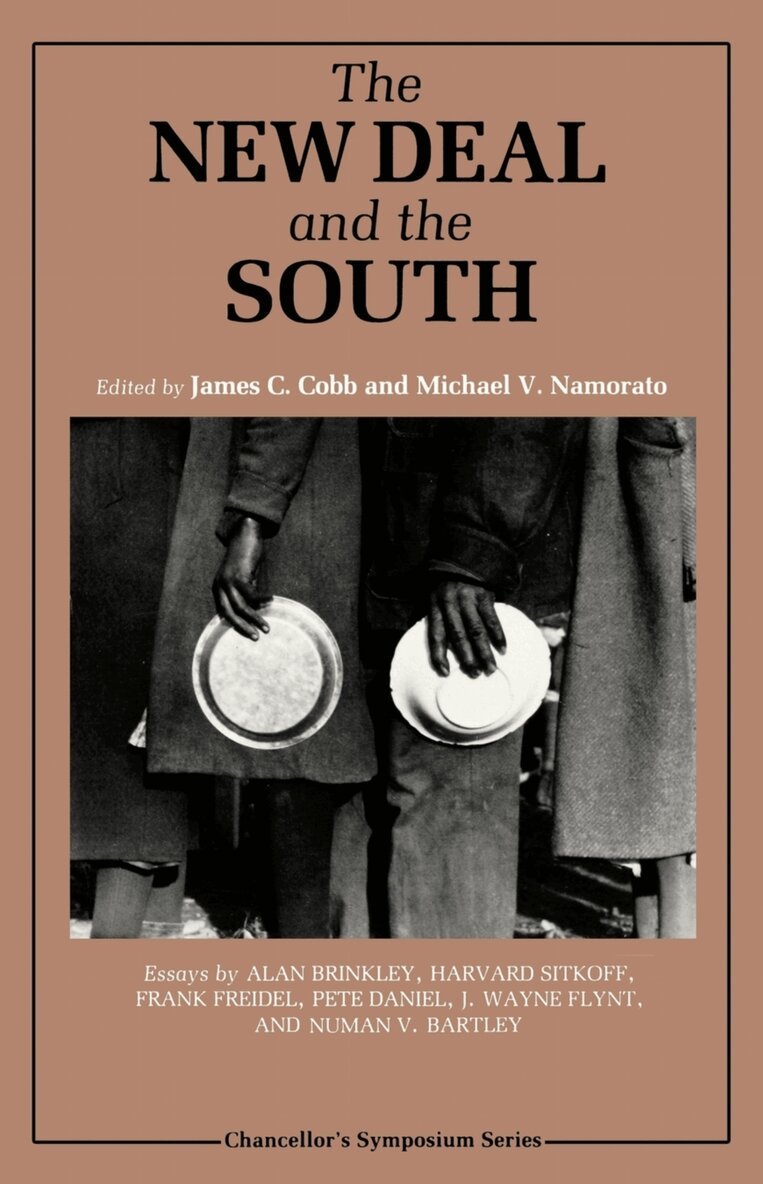
With essays by Alan Brinkley, Harvard Sitkoff, Frank Freidel, Pete Daniel, J. Wayne Flynt, and Numan V. BartleyThe New Deal and the South represents the first comprehensive treatment of the impact of the Roosevelt recovery program on the South. In essays dealing with the New Deal's overall effect on the South, its influence on southern agriculture, labor, blacks, and politics, and its significance as a turning point in the region's history, the contributors provide readers with an opportunity to develop a more complete understanding of an era which a number of historians now mark as the period in which the New South actually began to become new.Each of the essays in this collection was presented at the Ninth Annual Chancellor's Symposium on Southern History, held in October 1983, at the University of Mississippi. In the introductory essay, Frank Freidel identifies the New Deal period as one of the most important phases in the modernization of the South, one which linked the wishful thinking of the New South era to the much-publicized contemporary Sunbelt South. Pete Daniel describes the New Deal's role in the mechanization, consolidation, and corporatization of southern agriculture, a phenomenon that swept thousands of southerners from the land and paved the way for an all-out crusade to industrialize the region. In his analysis of the New Deal's impact on southern labor, Wayne Flynt assesses what the New Deal did and did not mean for southern industrial workers. Alan Brinkley stresses the tensions induced in southern politics during the New Deal era, particularly those caused by the Democratic Party's increased responsiveness to blacks and organized labor. Harvard Sitkoff, in surveying the New Deal's impact on black southerners, cites the limited nature of that impact but points to the seeds of future progress sown by the Roosevelt Administration and its policies. In the concluding essay Numan V. Bartley emphasizes the collapse of a paternalistic labor system and the shift of power from small town to urban elites and suggests that the years 1935–1945 may soon be seen as the ""crucial decade"" in southern history.The New Deal and the South provides both the serious student and the general reader with an up-to-date assessment of one of the most critical transitional periods in southern history.