Michael W. Flamm - Böcker
Visar alla böcker från författaren Michael W. Flamm. Handla med fri frakt och snabb leverans.
7 produkter
7 produkter
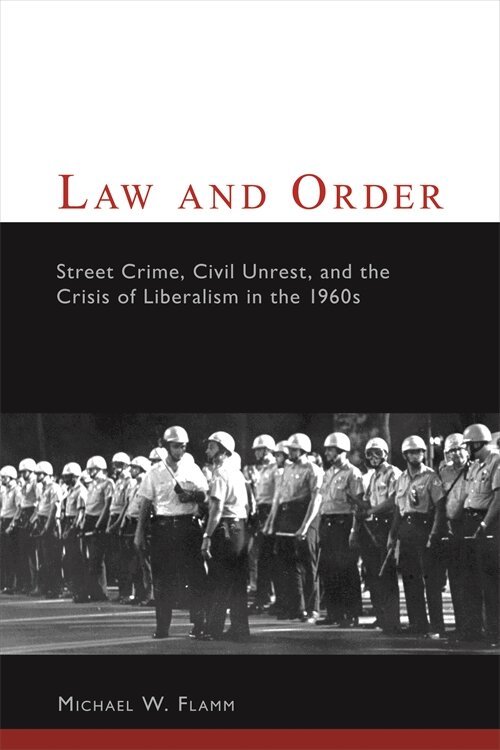
Law and Order
Street Crime, Civil Unrest, and the Crisis of Liberalism in the 1960s
Häftad, Engelska, 2007
282 kr
Skickas inom 7-10 vardagar
Law and Order offers a valuable new study of the political and social history of the 1960s. It presents a sophisticated account of how the issues of street crime and civil unrest enhanced the popularity of conservatives, eroded the credibility of liberals, and transformed the landscape of American politics. Ultimately, the legacy of law and order was a political world in which the grand ambitions of the Great Society gave way to grim expectations. In the mid-1960s, amid a pervasive sense that American society was coming apart at the seams, a new issue known as law and order emerged at the forefront of national politics. First introduced by Barry Goldwater in his ill-fated run for president in 1964, it eventually punished Lyndon Johnson and the Democrats and propelled Richard Nixon and the Republicans to the White House in 1968. In this thought-provoking study, Michael Flamm examines how conservatives successfully blamed liberals for the rapid rise in street crime and then skillfully used law and order to link the understandable fears of white voters to growing unease about changing moral values, the civil rights movement, urban disorder, and antiwar protests.Flamm documents how conservatives constructed a persuasive message that argued that the civil rights movement had contributed to racial unrest and the Great Society had rewarded rather than punished the perpetrators of violence. The president should, conservatives also contended, promote respect for law and order and contempt for those who violated it, regardless of cause. Liberals, Flamm argues, were by contrast unable to craft a compelling message for anxious voters. Instead, liberals either ignored the crime crisis, claimed that law and order was a racist ruse, or maintained that social programs would solve the "root causes" of civil disorder, which by 1968 seemed increasingly unlikely and contributed to a loss of faith in the ability of the government to do what it was above all sworn to do-protect personal security and private property.
1 177 kr
Skickas inom 10-15 vardagar
The conventional interpretation of the 1960s emphasizes how liberal, even radical, the decade was. It was, after all, the age of mass protests against the Vietnam War and social movements on behalf of civil rights and women's rights. It was also an era when the counterculture challenged many of the values and beliefs held by morally traditional Americans. But a newer interpretation stresses how truly polarized the 1960s were. It portrays how radicals, liberals, and conservatives repeatedly clashed in ideological combat for the hearts and minds of Americans. Millions in the center and on the right contested the counterculture, defended the Vietnam War, and opposed civil rights.Debating the 1960s explores the decade through the arguments and controversies between radicals, liberals, and conservatives. The focus is on four main areas of contention: social welfare, civil rights, foreign relations, and social order. The book also examines the emergence of the New Left and the modern conservative movement. Finally, it assesses the enduring importance of the 1960s on contemporary American politics and society. Combining analytical essays and historical documents, the book highlights the polarization of the decade by focusing on the political, social, and cultural debates that divided the nation then and now.
447 kr
Skickas inom 10-15 vardagar
The conventional interpretation of the 1960s emphasizes how liberal, even radical, the decade was. It was, after all, the age of mass protests against the Vietnam War and social movements on behalf of civil rights and women's rights. It was also an era when the counterculture challenged many of the values and beliefs held by morally traditional Americans. But a newer interpretation stresses how truly polarized the 1960s were. It portrays how radicals, liberals, and conservatives repeatedly clashed in ideological combat for the hearts and minds of Americans. Millions in the center and on the right contested the counterculture, defended the Vietnam War, and opposed civil rights.Debating the 1960s explores the decade through the arguments and controversies between radicals, liberals, and conservatives. The focus is on four main areas of contention: social welfare, civil rights, foreign relations, and social order. The book also examines the emergence of the New Left and the modern conservative movement. Finally, it assesses the enduring importance of the 1960s on contemporary American politics and society. Combining analytical essays and historical documents, the book highlights the polarization of the decade by focusing on the political, social, and cultural debates that divided the nation then and now.
901 kr
Skickas inom 10-15 vardagar
The presidency of Ronald Reagan has become a Rorschach Test for politicians and citizens alike. While many conservatives see the Reagan era of the 1980s as the high-water mark for their movement and a time of national recovery from the difficulties of the 1970s, many liberals maintain that the rosy Reagan legacy is based largely on myth, and that in fact his eight years as president caused serious harm to the country. John Ehrman and Michael W. Flamm give due attention to the lasting controversies surrounding the Reagan record and provide a balanced view of the fortieth president's foreign and domestic policies. Students are encouraged to draw their own conclusions by reading key primary documents.
447 kr
Skickas inom 10-15 vardagar
The presidency of Ronald Reagan has become a Rorschach Test for politicians and citizens alike. While many conservatives see the Reagan era of the 1980s as the high-water mark for their movement and a time of national recovery from the difficulties of the 1970s, many liberals maintain that the rosy Reagan legacy is based largely on myth, and that in fact his eight years as president caused serious harm to the country. John Ehrman and Michael W. Flamm give due attention to the lasting controversies surrounding the Reagan record and provide a balanced view of the fortieth president's foreign and domestic policies. Students are encouraged to draw their own conclusions by reading key primary documents.
378 kr
Skickas inom 10-15 vardagar
On the morning of July 16, 1964, a white police officer in New York City shot and killed a black teenager, James Powell, across the street from the high school where he was attending summer classes. Two nights later, a peaceful demonstration in Central Harlem degenerated into violent protests. During the next week, thousands of rioters looted stores from Brooklyn to Rochester and pelted police with bottles and rocks. In the symbolic and historic heart of black America, the Harlem Riot of 1964, as most called it, highlighted a new dynamic in the racial politics of the nation. The first "long, hot summer" of the Sixties had arrived.In this gripping narrative of a pivotal moment, Michael W. Flamm draws on personal interviews and delves into the archives to move briskly from the streets of New York, where black activists like Bayard Rustin tried in vain to restore peace, to the corridors of the White House, where President Lyndon Johnson struggled to contain the fallout from the crisis and defeat Republican challenger Barry Goldwater, who had made "crime in the streets" a centerpiece of his campaign. Recognizing the threat to his political future and the fragile alliance of black and white liberals, Johnson promised that the War on Poverty would address the "root causes" of urban disorder. A year later, he also launched the War on Crime, which widened the federal role in law enforcement and set the stage for the War on Drugs.Today James Powell is forgotten amid the impassioned debates over the militarization of policing and the harmful impact of mass incarceration on minority communities. But his death was a catalyst for the riots in New York, which in turn foreshadowed future explosions and influenced the political climate for the crime and drug policies of recent decades. In the Heat of the Summer spotlights the extraordinary drama of a single week when peaceful protests and violent unrest intersected, the freedom struggle reached a crossroads, and the politics of law and order led to demands for a War on Crime.
1 216 kr
Skickas inom 10-15 vardagar
On the morning of July 16, 1964, a white police officer in New York City shot and killed a black teenager, James Powell, across the street from the high school where he was attending summer classes. Two nights later, a peaceful demonstration in Central Harlem degenerated into violent protests. During the next week, thousands of rioters looted stores from Brooklyn to Rochester and pelted police with bottles and rocks. In the symbolic and historic heart of black America, the Harlem Riot of 1964, as most called it, highlighted a new dynamic in the racial politics of the nation. The first "long, hot summer" of the Sixties had arrived.In this gripping narrative of a pivotal moment, Michael W. Flamm draws on personal interviews and delves into the archives to move briskly from the streets of New York, where black activists like Bayard Rustin tried in vain to restore peace, to the corridors of the White House, where President Lyndon Johnson struggled to contain the fallout from the crisis and defeat Republican challenger Barry Goldwater, who had made "crime in the streets" a centerpiece of his campaign. Recognizing the threat to his political future and the fragile alliance of black and white liberals, Johnson promised that the War on Poverty would address the "root causes" of urban disorder. A year later, he also launched the War on Crime, which widened the federal role in law enforcement and set the stage for the War on Drugs.Today James Powell is forgotten amid the impassioned debates over the militarization of policing and the harmful impact of mass incarceration on minority communities. But his death was a catalyst for the riots in New York, which in turn foreshadowed future explosions and influenced the political climate for the crime and drug policies of recent decades. In the Heat of the Summer spotlights the extraordinary drama of a single week when peaceful protests and violent unrest intersected, the freedom struggle reached a crossroads, and the politics of law and order led to demands for a War on Crime.