Michael W. Pratt - Böcker
Visar alla böcker från författaren Michael W. Pratt. Handla med fri frakt och snabb leverans.
4 produkter
4 produkter
1 429 kr
Skickas inom 5-8 vardagar
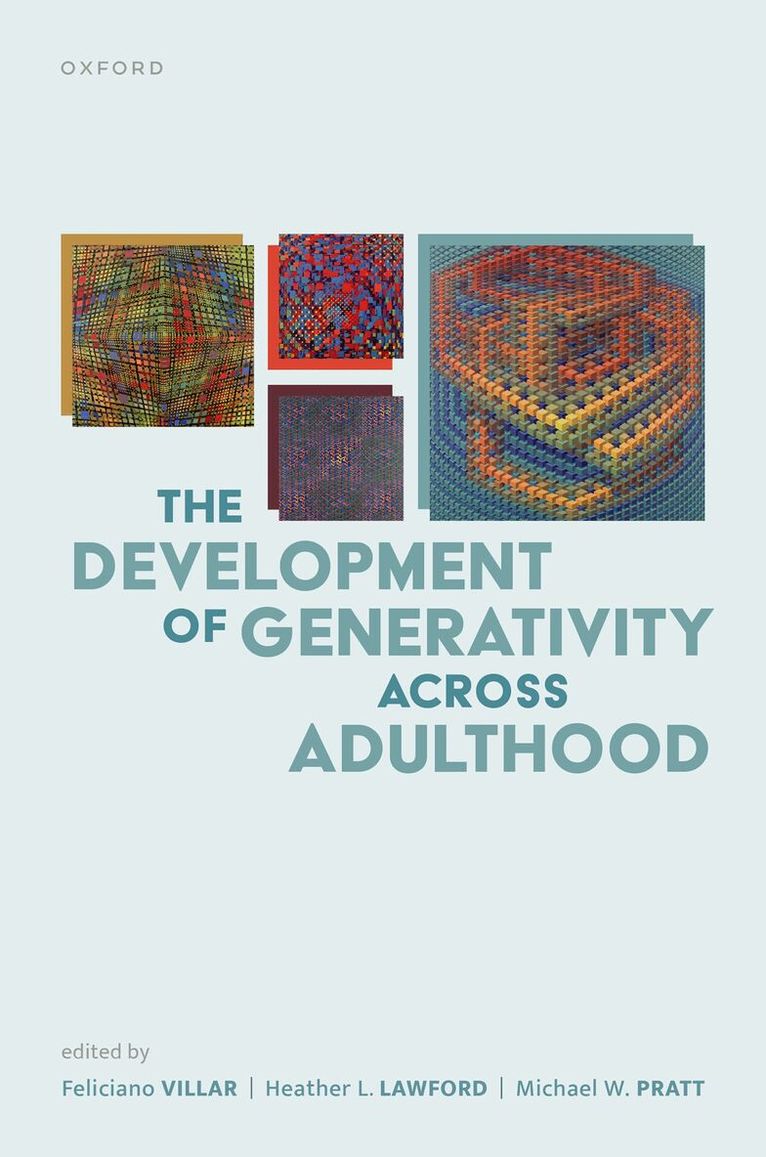
This volume brings together experts in generativity and related fields to provide a compelling overview of contemporary research and theory on this topic. Generativity refers to a concern for - or acting towards - the benefit of future generations as a legacy of the self; it has implications for outcomes at the individual, relational and social, and broader societal levels. Understanding the role and expressions of generativity at various stages of our lives is important to our sense of well-being and purpose, and it impacts our parenting, caregiving, and social relationships, as well as having implications for our activities and experiences in the workforce, and in voluntary activities in our communities and the wider society. The chapters in this volume explore the meaning and impact of generativity across development and across life contexts and roles. They address generativity within a particular area or life domain, or period of the lifespan, and outline key methods and findings, as well as theoretical issues and applied implications. The volume represents the first comprehensive exploration of generativity from early to late adulthood; it offers a broad international perspective and will inform research into generativity across multiple cultures.
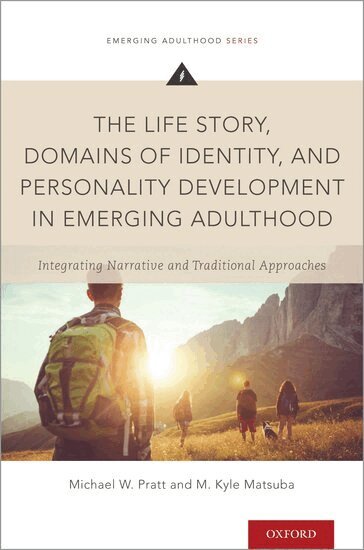
The Life Story, Domains of Identity, and Personality Development in Emerging Adulthood
Integrating Narrative and Traditional Approaches
Häftad, Engelska, 2018
1 047 kr
Skickas inom 5-8 vardagar
The Life Story, Domains of Identity, and Personality Development in Emerging Adulthood focuses on individuals' formulations of the unique episodes and events of their lives that give one meaning and a sense of personal identity. This book brings the growing research on narrative study and the life story into focus by drawing from the existing research on personality development during emerging adulthood.In this book, authors Michael W. Pratt and M. Kyle Matsuba present a series of chapters exploring how one's life story manifests across the many components of their developing identity, including their religion, morality, vocation, society, and the relationships they have with their parents, peers, and romantic partners. Taking their cue from Erik Erikson's model of adolescent and adult development, the authors show readers exactly how a life story approach can illuminate the distinctive features of an individual's personality and development during this formative phase of life.Organized around a set of life contexts where personality is manifested (i.e. adjustment, personal ideology, close relationships, occupation, and civic life), this book draws on the authors' own longitudinal research on the development of the life story in emerging adulthood. Throughout the book, they incorporate fascinating case studies and historical examples (e.g., Darwin, Pope Francis, Martin Luther King, Jr., Jane Fonda) of individuals' unique development during this period of life in order to better illustrate the application of this approach to understanding the whole person in context.
1 968 kr
Skickas inom 10-15 vardagar
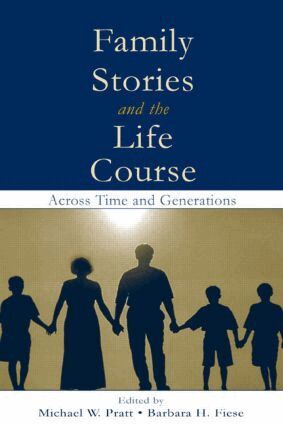
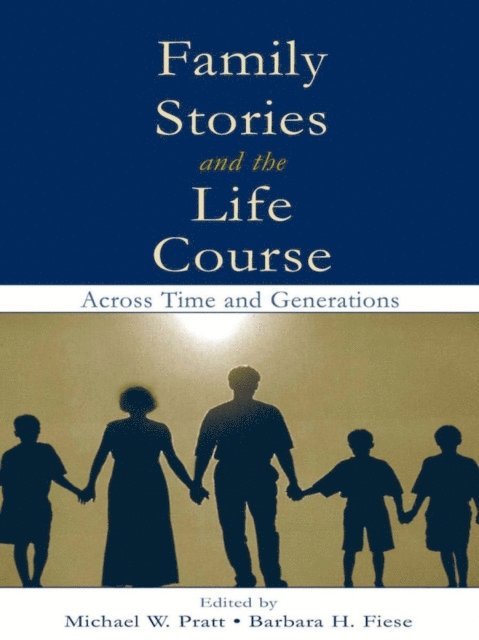
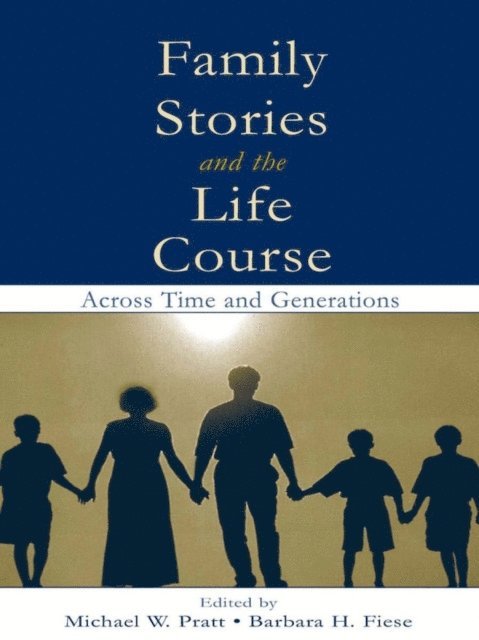
This edited book draws from work that focuses on the act of telling family stories, as well as their content and structure. The process of telling family stories is linked to central aspects of development, including language acquisition, affect regulation, and family interaction patterns. This book extends across traditional developmental psychology, personality theory, and family studies. Drawing broadly on the epigenetic framework for individual development articulated by Erik Erikson, as well as on conceptions of the family life cycle, the editors bring together contemporary examples of psychological research on family stories and their implications for development and change at different points in the life course. The book is divided into sections that focus on family stories at different points in the life cycle, from early childhood and the beginnings of narrative skill, through adolescence, young adulthood, midlife, and then mature adulthood and its intergenerational meaning. During each of these periods of the life cycle, research focusing on individual development within an Eriksonian framework of ego strengths and virtues is highlighted. The dynamic role of family stories is also featured here, with work exploring the links between family process, intergenerational attachment, and storytelling. Sociocultural theories that emphasize how such development is situated in the wider cultural context are also featured in several chapters. This broad lifespan developmental focus serves to integrate the exciting diversity of this work and foster further questions and research in the emerging field of family narrative. The book is intended primarily for researchers and advanced-level students in the fields of developmental and personality psychology, as well as those in family studies and in gerontology. It may also be of interest to those in the helping professions who are concerned with family therapy and family issues, and may--due to its content and illustrative material--have appeal to a wider market of the lay public. The chapters are written in a readily accessible style and the analyses are presented in a fairly non-technical way. Because family stories are charted across the lifespan, it would be a suitable companion book to a more traditional lifespan textbook in certain courses.
815 kr
Skickas inom 10-15 vardagar
This edited book draws from work that focuses on the act of telling family stories, as well as their content and structure. The process of telling family stories is linked to central aspects of development, including language acquisition, affect regulation, and family interaction patterns. This book extends across traditional developmental psychology, personality theory, and family studies. Drawing broadly on the epigenetic framework for individual development articulated by Erik Erikson, as well as on conceptions of the family life cycle, the editors bring together contemporary examples of psychological research on family stories and their implications for development and change at different points in the life course. The book is divided into sections that focus on family stories at different points in the life cycle, from early childhood and the beginnings of narrative skill, through adolescence, young adulthood, midlife, and then mature adulthood and its intergenerational meaning. During each of these periods of the life cycle, research focusing on individual development within an Eriksonian framework of ego strengths and virtues is highlighted. The dynamic role of family stories is also featured here, with work exploring the links between family process, intergenerational attachment, and storytelling. Sociocultural theories that emphasize how such development is situated in the wider cultural context are also featured in several chapters. This broad lifespan developmental focus serves to integrate the exciting diversity of this work and foster further questions and research in the emerging field of family narrative. The book is intended primarily for researchers and advanced-level students in the fields of developmental and personality psychology, as well as those in family studies and in gerontology. It may also be of interest to those in the helping professions who are concerned with family therapy and family issues, and may--due to its content and illustrative material--have appeal to a wider market of the lay public. The chapters are written in a readily accessible style and the analyses are presented in a fairly non-technical way. Because family stories are charted across the lifespan, it would be a suitable companion book to a more traditional lifespan textbook in certain courses.