Michael Weinman - Böcker
Visar alla böcker från författaren Michael Weinman. Handla med fri frakt och snabb leverans.
8 produkter
8 produkter
1 964 kr
Skickas inom 10-15 vardagar
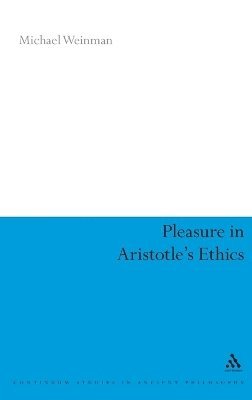
"Pleasure in Aristotle's Ethics" provides an innovative and crucially important account of the role of pleasure and desire in Aristotle's ethics. Michael Weinman seeks to overcome common impasses in the mainstream interpretation of Aristotle's ethical philosophy through the careful study of Aristotle's account of pleasure in the human, but not merely human, good, thus presenting a new way in which we can improve our understanding of Aristotle's ethics. Weinman asserts that we should read Aristotle's ethical arguments in the light of his views on the cosmos (the living whole we call nature) and the never-changing principles informing that living whole. Weinman shows that what, above all else, emerges from this new re-reading of the ethical writings is a new understanding of human desire as the natural stretching ourselves toward pleasure, which is the good, and which is the good by nature. These lessons will demonstrate why we must understand the virtues as unified, why the good described in "Nicomachean Ethics" is both a human and greater-than-human good, and why the reasoning and desiring parts of the soul must be understood as companions.The necessary but as yet unrealised account of pleasure this book advances is integral to improving our understanding of Aristotle's ethics. This fascinating book will be of interest to anyone with an interest in Aristotle's ethical theory and in particular his "Nicomachean Ethics".
1 053 kr
Skickas
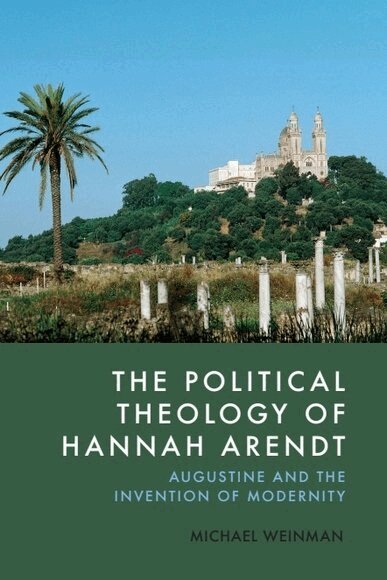
The Political Theology of Hannah Arendt clarifies how to understand Arendt's arguments about freedom, collective action, and the problem of evil as political theological, rather than political theoretical or philosophical. To achieve this, Weinman offers a comparative reading of Arendt's engagement with Augustine, from her 1929 dissertation through to The Life of the Mind, which she was working on when she died in 1975. Weinman's innovation is to not only read both works together, but to also read them in light of Arendt's discussion of Augustine in key passages taken from all her works written in the decades between them. Arendt's attempt to reconcile liberal commitments with the Augustinian tradition makes clear why Arendt and not Carl Schmitt ought to be read as offering the preeminent response to Max Weber's theory of modernity as inescapably secular, the result of irreversible processes of disenchantment.
239 kr
Kommande
The Political Theology of Hannah Arendt clarifies how to understand Arendt’s arguments about freedom, collective action, and the problem of evil as political theological, rather than political theoretical or philosophical. To achieve this, Weinman offers a comparative reading of Arendt’s engagement with Augustine, from her 1929 dissertation through to The Life of the Mind, which she was working on when she died in 1975. Weinman’s innovation is to not only read both works together, but to also read them in light of Arendt’s discussion of Augustine in key passages taken from all her works written in the decades between them. Arendt’s attempt to reconcile liberal commitments with the Augustinian tradition makes clear why Arendt—and not Carl Schmitt—ought to be read as offering the preeminent response to Max Weber’s theory of modernity as inescapably secular, the result of irreversible processes of disenchantment.
1 057 kr
Tillfälligt slut
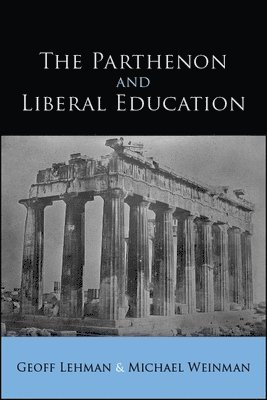
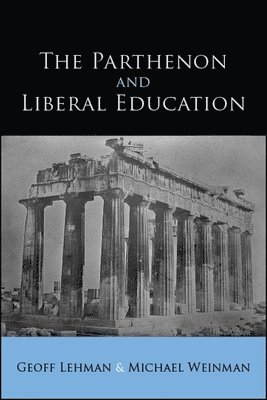
Discusses the importance of the early history of Greek mathematics to education and civic life through a study of the Parthenon and dialogues of Plato.The Parthenon and Liberal Education seeks to restore the study of mathematics to its original place of prominence in the liberal arts. To build this case, Geoff Lehman and Michael Weinman turn to Philolaus, a near contemporary of Socrates. The authors demonstrate the influence of his work involving number theory, astronomy, and harmonics on Plato's Republic and Timaeus, and outline its resonance with the program of study in the early Academy and with the architecture of the Parthenon. Lehman and Weinman argue that the Parthenon can be seen as the foremost embodiment of the practical working through of mathematical knowledge in its time, serving as a mediator between the early reception of Ancient Near-Eastern mathematical ideas and their integration into Greek thought as a form of liberal education, as the latter came to be defined by Plato and his followers. With its Doric architecture characterized by symmetria (commensurability) and harmonia (harmony; joining together), concepts explored contemporaneously by Philolaus, the Parthenon engages dialectical thought in ways that are of enduring relevance for the project of liberal education.
566 kr
Skickas inom 3-6 vardagar
Discusses the importance of the early history of Greek mathematics to education and civic life through a study of the Parthenon and dialogues of Plato.The Parthenon and Liberal Education seeks to restore the study of mathematics to its original place of prominence in the liberal arts. To build this case, Geoff Lehman and Michael Weinman turn to Philolaus, a near contemporary of Socrates. The authors demonstrate the influence of his work involving number theory, astronomy, and harmonics on Plato's Republic and Timaeus, and outline its resonance with the program of study in the early Academy and with the architecture of the Parthenon. Lehman and Weinman argue that the Parthenon can be seen as the foremost embodiment of the practical working through of mathematical knowledge in its time, serving as a mediator between the early reception of Ancient Near-Eastern mathematical ideas and their integration into Greek thought as a form of liberal education, as the latter came to be defined by Plato and his followers. With its Doric architecture characterized by symmetria (commensurability) and harmonia (harmony; joining together), concepts explored contemporaneously by Philolaus, the Parthenon engages dialectical thought in ways that are of enduring relevance for the project of liberal education.
1 111 kr
Skickas
Offers a new perspective on Arendt as a political thinker as well as a political actorProvides succinct, critical summaries of Arendt's major works and how they have been readShares insights into the main controversies of Arendt's lifetime and their resolutionPresents an overview of interpretive approaches to Arendt's work and its relevance todayHannah Arendt has been classified as a critical theorist, a phenomenologist, an anti-feminist, a feminist ally, a democratic theorist, a republican theorist, a Heidegerrian, and a nostalgic Hellenophile. This book responds to these perspectives in two ways. First, we recognize that one can legitimately derive all these positionings from one or another of her writings; second, we insist nevertheless and precisely because all these approaches play some role in her work that her readers ought to follow her own claim that she 'does not belong to any club'. Instead, we introduce her works as exercises in political thinking, treating her as a dialogue partner, whose judgments and opinions remain open for reflection and discussion.
251 kr
Skickas
Hannah Arendt has been classified as a critical theorist, a phenomenologist, an anti-feminist, a feminist ally, a democratic theorist, a republican theorist, a Heidegerrian, and a nostalgic Hellenophile. This book responds to these perspectives in two ways. First, we recognize that one can legitimately derive all these positionings from one or another of her writings; second, we insist nevertheless and precisely because all these approaches play some role in her work that her readers ought to follow her own claim that she 'does not belong to any club'. Instead, we introduce her works as exercises in political thinking, treating her as a dialogue partner, whose judgments and opinions remain open for reflection and discussion.
1 911 kr
Skickas inom 5-8 vardagar
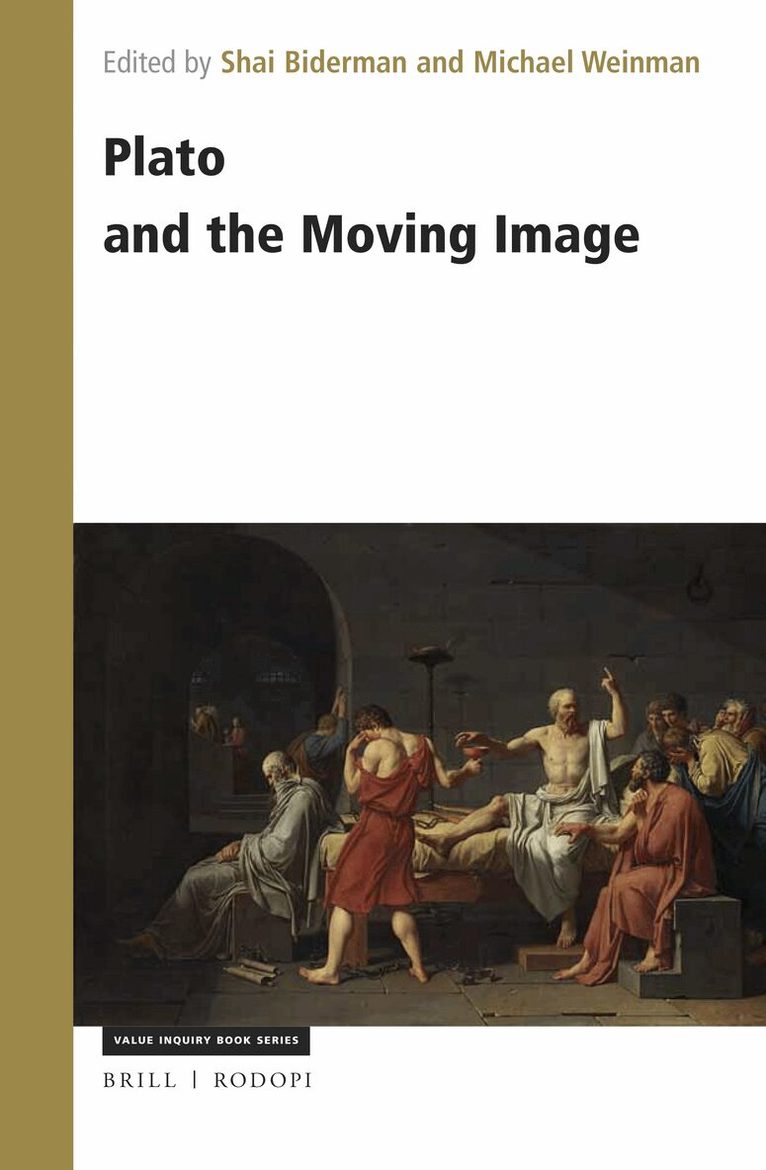
This book shows how and why debates in the philosophy of film can be advanced through the study of the role of images in Plato’s dialogues, and, conversely, why Plato studies stands to benefit from a consideration of recent debates in the philosophy of film. Contributions range from a reading of Phaedo as a ghost story to thinking about climate change documentaries through Plato’s account of pleonexia. They suggest how philosophical aesthetics can be reoriented by attending anew to Plato’s deployment of images, particularly images that move. They also show how Plato’s deployment of images is integral to his practice as a literary artist.Contributors are Shai Biderman, David Calhoun, Michael Forest, Jorge Tomas Garcia, Abraham Jacob Greenstine, Paul A. Kottman, Danielle A. Layne, David McNeill, Erik W. Schmidt, Timothy Secret, Adrian Switzer, and Michael Weinman.