Shai Biderman - Böcker
Visar alla böcker från författaren Shai Biderman. Handla med fri frakt och snabb leverans.
4 produkter
4 produkter
974 kr
Skickas inom 7-10 vardagar
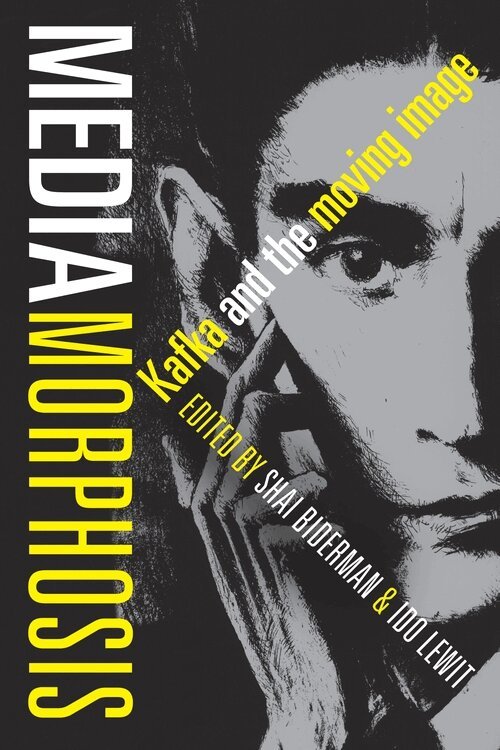
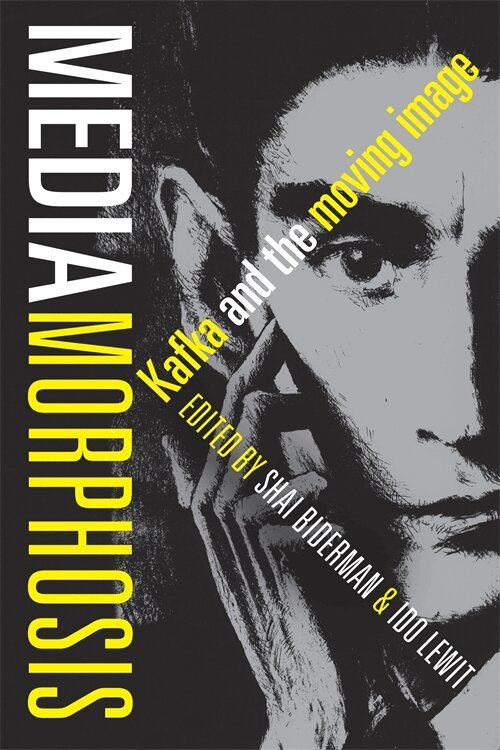
The idea of a visual manifestation of the work of Franz Kafka was denied by many-first and foremost by Kafka himself, who famously urged his publisher to avoid an image of an insect on the cover of Metamorphosis. Be that as it may, it is unlikely that such a central progenitor of twentieth-century art and thought as Kafka can be fully understood without reference to the revolutionary artistic medium of his century: cinema. Mediamorphosis compiles articles by some of today's leading forces in the scholarship of Kafka as well as film studies to provide a thorough investigation of the reciprocal relations between Kafka's work and the cinematic medium. The volume approaches the theoretical integration of Kafka and cinema via such issues as the cinematic qualities in Kafka's prose and the possibility of a visual manifestation of the Kafkaesque.Alongside these debates, the book investigates the capacity of cinema to incorporate and express the unique qualities of a Kafkaesque world through an analysis of cinematic adaptations of Kafka's prose, such as Michael Haneke's The Castle (1997) and Straub-Huillet's Class Relations (1984), as well as films that carry a more subtle relation to Kafka's oeuvre, such as the cinematic works of David Cronenberg, the films of the Coen brothers, Chris Marker's "film-essay," Charlie Chaplin's tramp, and others.
302 kr
Skickas inom 7-10 vardagar
The idea of a visual manifestation of the work of Franz Kafka was denied by many-first and foremost by Kafka himself, who famously urged his publisher to avoid an image of an insect on the cover of Metamorphosis. Be that as it may, it is unlikely that such a central progenitor of twentieth-century art and thought as Kafka can be fully understood without reference to the revolutionary artistic medium of his century: cinema. Mediamorphosis compiles articles by some of today's leading forces in the scholarship of Kafka as well as film studies to provide a thorough investigation of the reciprocal relations between Kafka's work and the cinematic medium. The volume approaches the theoretical integration of Kafka and cinema via such issues as the cinematic qualities in Kafka's prose and the possibility of a visual manifestation of the Kafkaesque.Alongside these debates, the book investigates the capacity of cinema to incorporate and express the unique qualities of a Kafkaesque world through an analysis of cinematic adaptations of Kafka's prose, such as Michael Haneke's The Castle (1997) and Straub-Huillet's Class Relations (1984), as well as films that carry a more subtle relation to Kafka's oeuvre, such as the cinematic works of David Cronenberg, the films of the Coen brothers, Chris Marker's "film-essay," Charlie Chaplin's tramp, and others.
749 kr
Skickas inom 3-6 vardagar
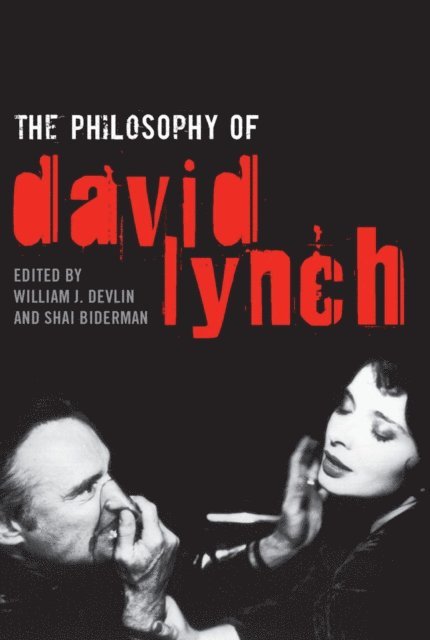
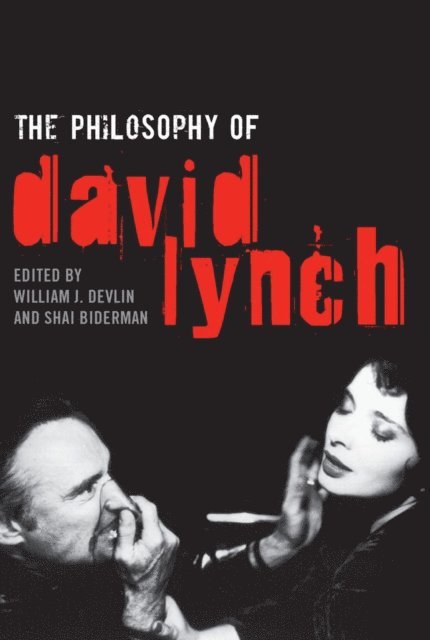
From his cult classic television series Twin Peaks to his most recent film Inland Empire (2006), David Lynch is best known for his unorthodox narrative style. An award-winning director, producer, and writer, Lynch distorts and disrupts traditional storylines and offers viewers a surreal, often nightmarish perspective. His unique approach to filmmaking has made his work familiar to critics and audiences worldwide, and he earned Academy Award nominations for Best Director for The Elephant Man (1980), Blue Velvet (1986), and Mulholland Drive (2001).Lynch creates a new reality for both characters and audience by focusing on the individual and embracing existentialism. In The Philosophy of David Lynch, editors William J. Devlin and Shai Biderman have compiled an impressive list of contributors to explore the philosophy at the core of the filmmaker's work. Lynch is examined as a postmodern artist, and the themes of darkness, logic, and time are discussed in depth. Other prominent issues in Lynch's films, such as Bad faith and freedom, ethics, politics, and religion, are also considered. Investigating myriad aspects of Lynch's influential and innovative work, The Philosophy of David Lynch provides a fascinating look at the philosophical underpinnings of the famous cult director.
1 911 kr
Skickas inom 5-8 vardagar
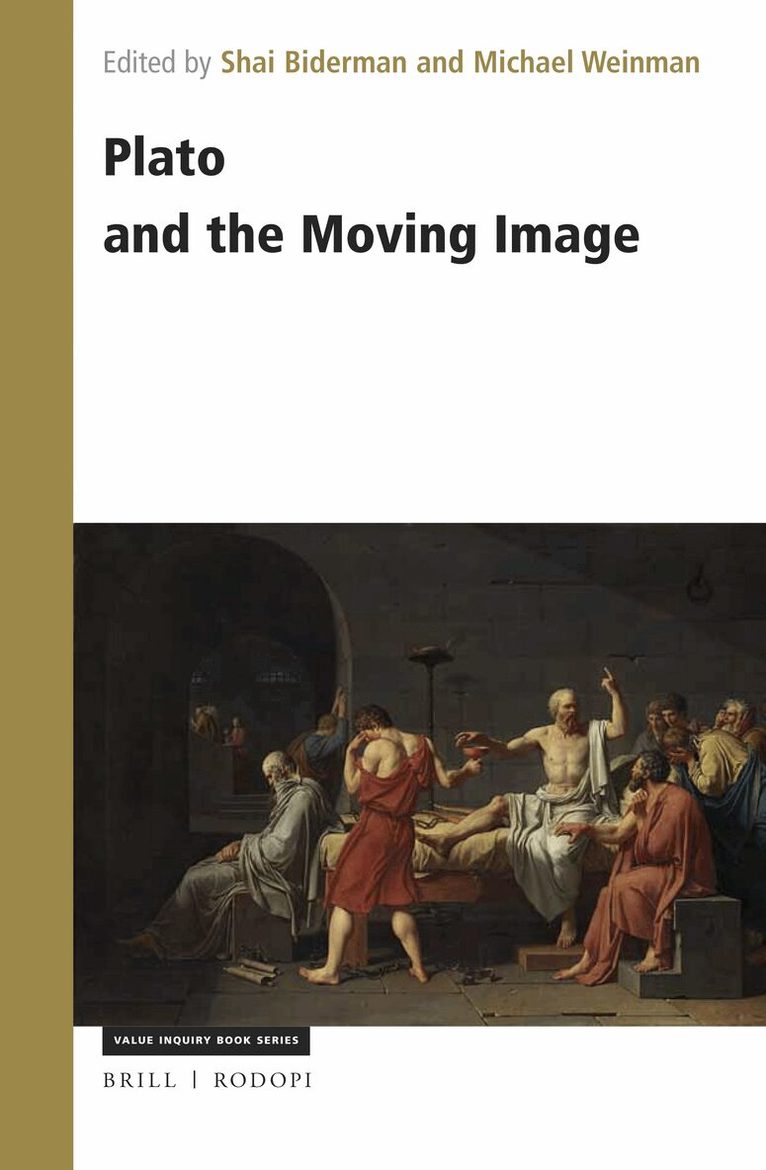
This book shows how and why debates in the philosophy of film can be advanced through the study of the role of images in Plato’s dialogues, and, conversely, why Plato studies stands to benefit from a consideration of recent debates in the philosophy of film. Contributions range from a reading of Phaedo as a ghost story to thinking about climate change documentaries through Plato’s account of pleonexia. They suggest how philosophical aesthetics can be reoriented by attending anew to Plato’s deployment of images, particularly images that move. They also show how Plato’s deployment of images is integral to his practice as a literary artist.Contributors are Shai Biderman, David Calhoun, Michael Forest, Jorge Tomas Garcia, Abraham Jacob Greenstine, Paul A. Kottman, Danielle A. Layne, David McNeill, Erik W. Schmidt, Timothy Secret, Adrian Switzer, and Michael Weinman.