Michaeline A. Crichlow - Böcker
Visar alla böcker från författaren Michaeline A. Crichlow. Handla med fri frakt och snabb leverans.
6 produkter
6 produkter
1 531 kr
Skickas inom 5-8 vardagar
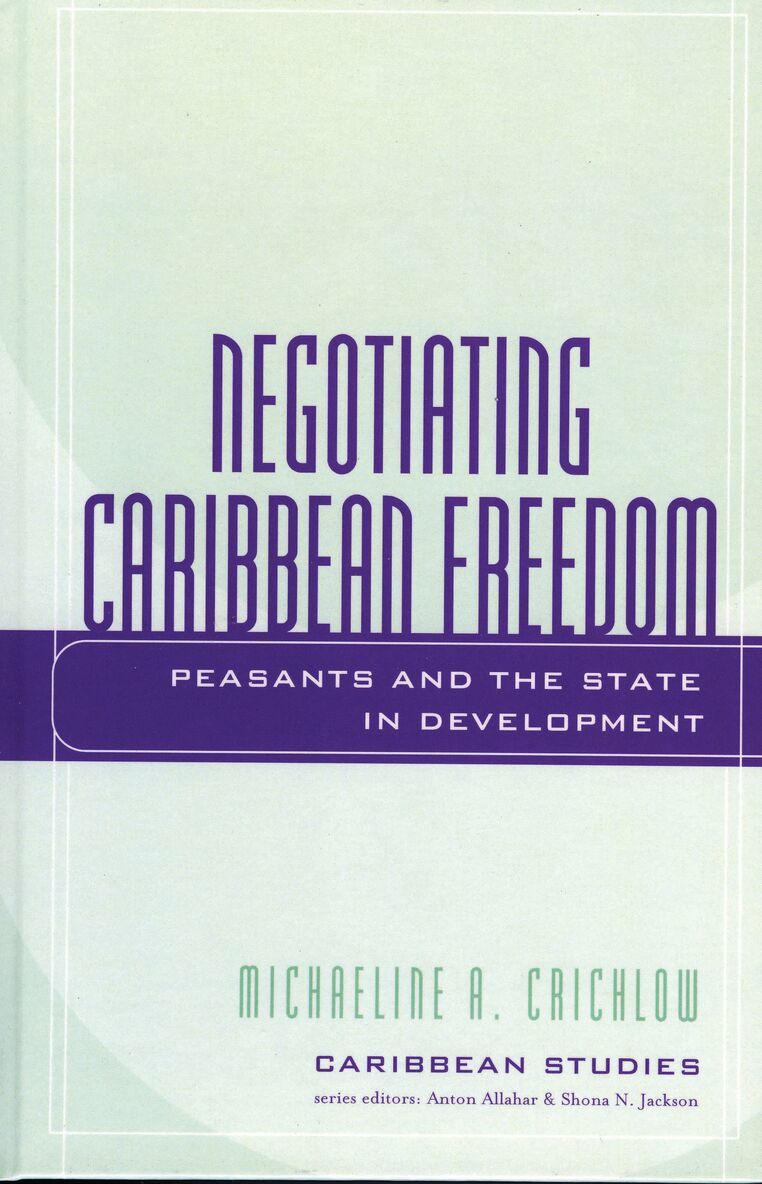
Michaeline A. Crichlow extends the contemporary critique of development projects by examining the political and discursive relationship of the state to the land-based working people, or "smallholders," in modern Jamaica. The first book of its kind, Negotiating Caribbean Freedom does for Jamaican historiography and sociology what Akhil Gupta's PostColonial Developments did for studies of India. Michaeline A. Crichlow gives us an incredibly nuanced discussion of how development dominates the lives of the subsistance peasantry, not through force, but through the instrumentalization of social relationships that were once ends in themselves. For example, what were once effective agricultural practices—embedded in the every day lives of smallholders all over the island—have, in the interest of serving international captial, been bureaucratized to the point that they are untenable to support the livelihoods of smallholders. Not content to measure the success or failure of development to deliver on its promises, she discloses both the continuities and differences between development projects of very different political regimes and helps to establish why smallholders support development projects even when those projects fail to address their needs.
701 kr
Skickas inom 5-8 vardagar
Michaeline A. Crichlow extends the contemporary critique of development projects by examining the political and discursive relationship of the state to the land-based working people, or "smallholders," in modern Jamaica. The first book of its kind, Negotiating Caribbean Freedom does for Jamaican historiography and sociology what Akhil Gupta's PostColonial Developments did for studies of India. Michaeline A. Crichlow gives us an incredibly nuanced discussion of how development dominates the lives of the subsistance peasantry, not through force, but through the instrumentalization of social relationships that were once ends in themselves. For example, what were once effective agricultural practices—embedded in the every day lives of smallholders all over the island—have, in the interest of serving international captial, been bureaucratized to the point that they are untenable to support the livelihoods of smallholders. Not content to measure the success or failure of development to deliver on its promises, she discloses both the continuities and differences between development projects of very different political regimes and helps to establish why smallholders support development projects even when those projects fail to address their needs.
2 151 kr
Skickas inom 10-15 vardagar
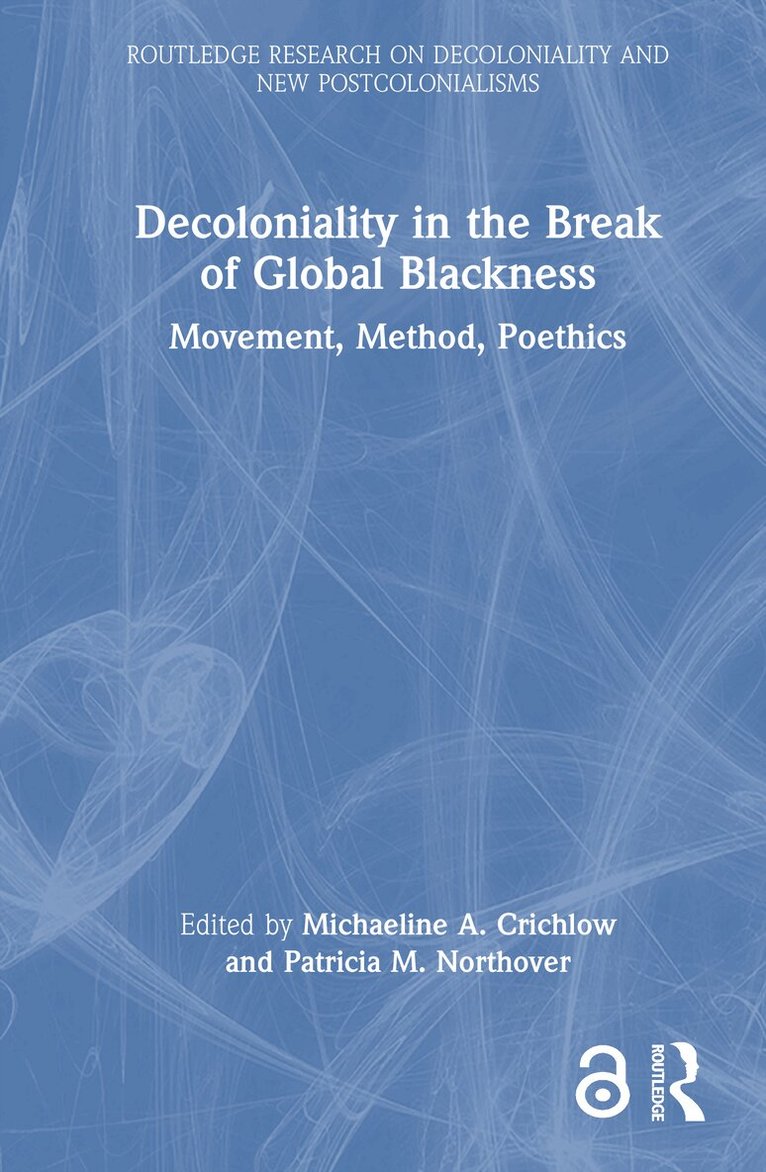
This book, contextualized by the violence of globalization, investigates the fungible, fugitive, and untenable experiences of Black being and time through a decolonial poethics of global*Blackness. In so doing it introduces innovative readings of coloniality/decoloniality by threading its meaning and movement through the “problem” of Blackness.It argues that global*Blackness is the complexly entangled other side of decoloniality, as movement, method, and poethics for radical new worlds. The essays explore this through inter/transdisciplinary, creative, and decolonial standpoints, whether from prison abolitionist demands to Afrofuturist imaginaries, or by seeing through Black mirrors. It emphasizes the paradoxical characteristics of global*Blackness—its spectral quality of being in and out of modernity's self-narrative—to provide a way of dwelling with global Blackness as a force that is neither “properly” constituted by corporeality nor thinkable in ontological terms determined by modern power.The book will be of interest to academics, researchers, and students in the fields of social sciences, cultural studies, postcolonial studies as well as cultural practitioners, art educators, artists, cultural activists, and those institutions that seek to decolonize imaginaries, thought, practices, and methods. Given its diverse offerings, it will also be of interest to upper-level undergraduates, graduate students, and academics.The Open Access version of this book, available at http://www.taylorfrancis.com, has been made available under a Creative Commons [Attribution-Non Commercial-No Derivatives (CC BY-NC-ND)] 4.0 license.
594 kr
Skickas inom 10-15 vardagar
This book, contextualized by the violence of globalization, investigates the fungible, fugitive, and untenable experiences of Black being and time through a decolonial poethics of global*Blackness. In so doing it introduces innovative readings of coloniality/decoloniality by threading its meaning and movement through the “problem” of Blackness.It argues that global*Blackness is the complexly entangled other side of decoloniality, as movement, method, and poethics for radical new worlds. The essays explore this through inter/transdisciplinary, creative, and decolonial standpoints, whether from prison abolitionist demands to Afrofuturist imaginaries, or by seeing through Black mirrors. It emphasizes the paradoxical characteristics of global*Blackness—its spectral quality of being in and out of modernity's self-narrative—to provide a way of dwelling with global Blackness as a force that is neither “properly” constituted by corporeality nor thinkable in ontological terms determined by modern power.The book will be of interest to academics, researchers, and students in the fields of social sciences, cultural studies, postcolonial studies as well as cultural practitioners, art educators, artists, cultural activists, and those institutions that seek to decolonize imaginaries, thought, practices, and methods. Given its diverse offerings, it will also be of interest to upper-level undergraduates, graduate students, and academics.The Open Access version of this book, available at http://www.taylorfrancis.com, has been made available under a Creative Commons [Attribution-Non Commercial-No Derivatives (CC BY-NC-ND)] 4.0 license.
611 kr
Skickas inom 3-6 vardagar
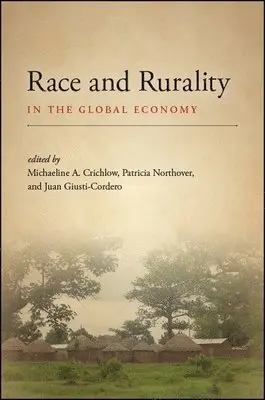
Essays that examine globalization's effects with an emphasis on the interplay of race and rurality as it occurs across diverse geographies and peoples.Issues of migration, environment, rurality, and the visceral "politics of place" and "space" have occupied center stage in recent electoral political struggles in the United States and Europe, suffused by an antiglobalization discourse that has come to resonate with Euro-American peoples. Race and Rurality in the Global Economy suggests that this present fractious global politics begs for closer attention to be paid to the deep-rooted conditions and outcomes of globalization and development. From multiple viewpoints the contributors to this volume propose ways of understanding the ongoing processes of globalization that configure peoples and places via a politics of rurality in a capitalist world economy, and through an optics of raciality that intersects with class, gender, identity, land, and environment. In tackling the dynamics of space and place, their essays address matters such as the heightened risks and multiple states of insecurity in the global economy; the new logics of expulsion and primitive accumulation dynamics shaping a new "savage sorting"; patterns of resistance and transformation in the face of globalization's political and environmental changes; the steady decline in the livelihoods of people of color globally and their deepened vulnerabilities; and the complex reconstitution of systemic and lived racialization within these processes. This book is an invitation to ask whether our dystopia in present politics can be disentangled from the deepening sense of "white fragility" in the context of the historical power of globalization's raced effects.This book is freely available in an open access edition thanks to Knowledge Unlatched-an initiative that provides libraries and institutions with a centralized platform to support OA collections and from leading publishing houses and OA initiatives. Learn more at the Knowledge Unlatched website at https://www.knowledgeunlatched.org/.
1 172 kr
Skickas inom 5-8 vardagar
Essays that examine globalization's effects with an emphasis on the interplay of race and rurality as it occurs across diverse geographies and peoples.Issues of migration, environment, rurality, and the visceral "politics of place" and "space" have occupied center stage in recent electoral political struggles in the United States and Europe, suffused by an antiglobalization discourse that has come to resonate with Euro-American peoples. Race and Rurality in the Global Economy suggests that this present fractious global politics begs for closer attention to be paid to the deep-rooted conditions and outcomes of globalization and development. From multiple viewpoints the contributors to this volume propose ways of understanding the ongoing processes of globalization that configure peoples and places via a politics of rurality in a capitalist world economy, and through an optics of raciality that intersects with class, gender, identity, land, and environment. In tackling the dynamics of space and place, their essays address matters such as the heightened risks and multiple states of insecurity in the global economy; the new logics of expulsion and primitive accumulation dynamics shaping a new "savage sorting"; patterns of resistance and transformation in the face of globalization's political and environmental changes; the steady decline in the livelihoods of people of color globally and their deepened vulnerabilities; and the complex reconstitution of systemic and lived racialization within these processes. This book is an invitation to ask whether our dystopia in present politics can be disentangled from the deepening sense of "white fragility" in the context of the historical power of globalization's raced effects.This book is freely available in an open access edition thanks to Knowledge Unlatched-an initiative that provides libraries and institutions with a centralized platform to support OA collections and from leading publishing houses and OA initiatives. Learn more at the Knowledge Unlatched website at https://www.knowledgeunlatched.org/.