Michal Shamir - Böcker
Visar alla böcker från författaren Michal Shamir. Handla med fri frakt och snabb leverans.
20 produkter
20 produkter
1 301 kr
Skickas inom 10-15 vardagar
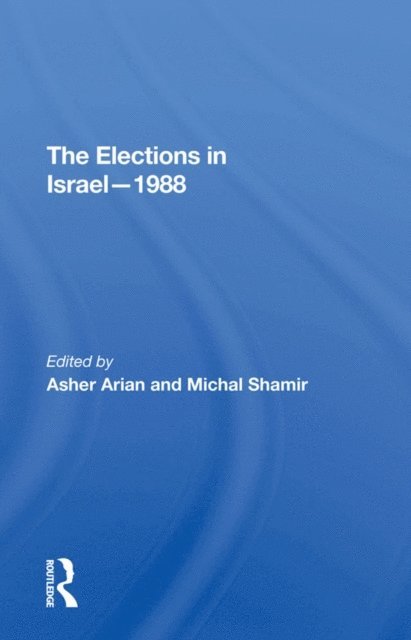
Forty years after becoming an independent state, Israel is still involved in deadly strife with many of its Arab neighbors and with the Palestinians under its military control. The protracted Arab-Israeli conflict is one of the most fundamental features of the Israeli experience; it overshadows economic and social decisions, and often sets the poli
538 kr
Skickas inom 10-15 vardagar
Forty years after becoming an independent state, Israel is still involved in deadly strife with many of its Arab neighbors and with the Palestinians under its military control. The protracted Arab-Israeli conflict is one of the most fundamental features of the Israeli experience; it overshadows economic and social decisions, and often sets the poli
565 kr
Skickas inom 10-15 vardagar
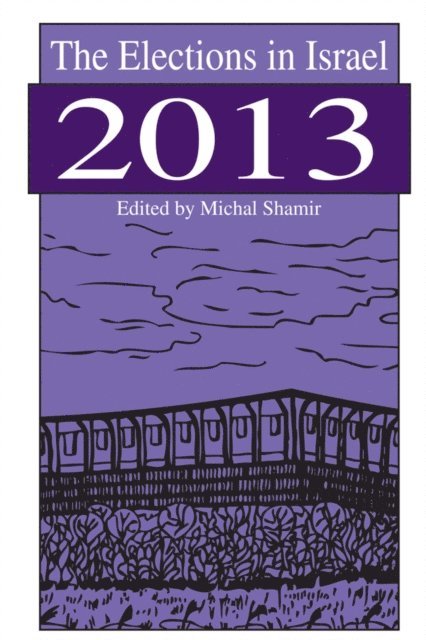
The elections for Israel's nineteenth Knesset were held on January 22, 2013. This volume offers an in-depth analysis of Israel's 2013 elections from various perspectives. It presents an up-to-date picture of the complexity of Israeli democracy, and its challenges, achievements, and failures.The chapters in this collection shed light on different facets of Israeli democracy. Yaron Ezrahi provides a sceptical perspective on prospects for democracy. Gayil Talshir explains the party system's slowness to respond to citizen demands and to social movements. Michal Shamir and Keren Weinshall-Margel explore the politics of the right to be elected to the Knesset. Nir Atmor and Chen Friedberg highlight the decline in participation in Knesset elections in the Periphery versus the Center. Assaf Shapira and Gideon Rahat reveal the complexity of inter-party democracy. Dganit Ofek analyses the stability of government coalitions. Gal Levy examines Mizrahi Jews and the Shas Party. Mtanes Shihadeh discusses the voting patterns of Israeli Arabs. Asher Cohen focuses on religious Zionism and the success of the renewed Jewish Home Party. Michal Shamir and Einat Gedalya-Lavy document a gender gap in voting.Elections in Israel 2013 analyses the give-and-take between the public and its leaders that is at the heart of elections. In doing so, it illuminates the role of elections in providing representation for different groups in Israeli society and in giving voice to their political choices.
620 kr
Skickas inom 10-15 vardagar
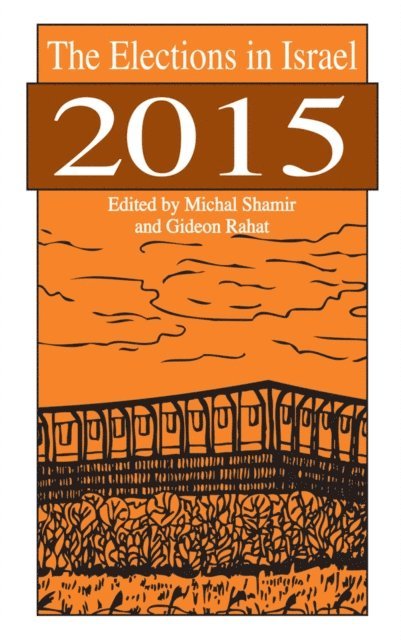
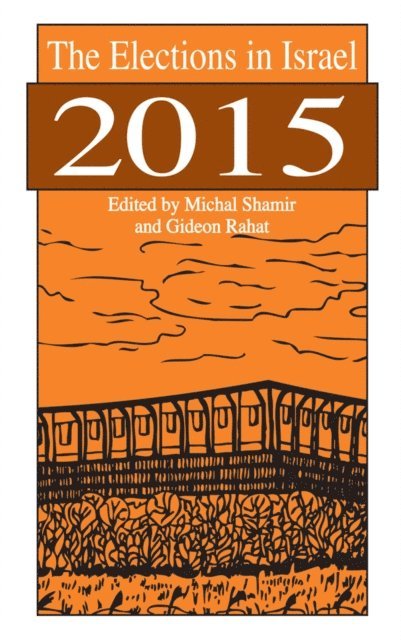
The newest volume in the Elections in Israel series focuses on the twentieth Knesset elections held in March 2015 following the collapse of the third Netanyahu government. Prime Minister Benjamin Netanyahu’s main opposition party, the Zionist Camp, ran a negative personalized election campaign, assuming that Israelis had grown tired of him. Netanyahu, however, achieved a surprising and dramatic victory by enhancing and radicalizing the same identity politics strategies that helped him win in 1996. The Elections in Israel 2015 dissects these and other campaigns, from the perspective of the voters, the media and opinion polls, the political parties, and electoral competition. Several contributors delve into the Left and Arab fear mongering Likud campaign, which produced strategic identity voting. Other contributions analyze in-depth the Israeli party and electoral systems, highlighting the exceptional decline of the mainstream parties and the adoption of a higher electoral threshold. Providing a close analysis of electoral competition, legitimacy struggles, stability and change in the voting behavior of various groups, partisanship, personalization and political polarization, this volume is a crucial record of Israeli political history.
2 098 kr
Skickas inom 10-15 vardagar
The Elections in Israel--2003 brings together leading Israeli and North American social scientists and their state-of-the-art, in-depth analysis of the 2003 Israeli national elections. These elections returned Ariel Sharon and the Likud to power amid one of the bloodiest rounds of conflict between Israel and the Palestinians and a severe economic downturn in Israel. Contributors analyze the electoral behavior of the voters as a whole and various subgroups, highlighting social cleavages and identity, as well as issues and other strategic considerations. Three chapters analyze in detail the Arab, the national-religious, and the "Russian" vote. The 2003 elections saw Israel's return to the family of parliamentary nations after it experimented with the direct election of the prime minister from 1996 through 2001. The impact of the adoption and repeal of this unique Israeli system of government is another major topic covered in this volume, and several contributions explore the impact of these changes upon the electorate, the party system, and party financing. Other unusual features of the 2003 elections were the low turnout levels among Jewish and Arab voters; political moves to disqualify Arab candidates and lists from running for office, which were overruled by the Supreme Court of Israel; the collapse of the left, the spectacular showing of the centrist Shinui party, and the dominant status of the Likud in the Knesset and in Israeli politics. Through its focus on the 2003 elections, this volume also illuminates developments and changes in Israeli society and politics. Many of these developments--multiculturalism, changes in social stratification, the growing role of the judiciary and of the media, and political reforms--characterize other Western democracies as well, and these are discussed from a comparative perspective. The Elections in Israel--2003 will be of particular interest to those concerned with politics in Israel as well as those concerned with comparative politics and elections in general.
1 301 kr
Skickas inom 10-15 vardagar
Several dramatic events preceded the elections to the Seventeenth Knesset on March 28, 2006, beginning with the unilateral withdrawal from Gaza in August 2005 and its attendant and unprecedented removal of Jewish settlements and settlers, followed by major shifts among and within the various political parties. Most dramatic was the split in Likud when Prime Minister Ariel Sharon decided to form a new party, Kadima, leading to the breakup of the Likud party that Sharon had formed in 1973. This volume charts the 2006 elections.
402 kr
Tillfälligt slut
As the momentum toward peace in the Middle East surges and wanes, the intensity of politics in Israel takes on added relevance. There can be little doubt that the historic Israel-PLO peace accord could not have occurred were it not for the turnabout elections of 1992. This volume, the seventh in a series begun in 1969, carries on the tradition of offering in-depth analyses of the major issues, actors, and parties involved in Israeli politics.Leading social scientists from Israeli and North American universities and research institutes, using different methods and coming from diverse intellectual traditions, address questions such as whether the elections were a referendum on the return of the Territories; what roles the PLO and the United States played in the election results; how technological changes in political communications, packaging of candidates, and opinion polls affected the results; what contributions such groups as women, Arabs, and members of various religions made to the change in government; and whether the political reforms instituted before the elections resulted from changes in the mood of the electorate or brought about changes in Israel's policy. Contributors to the volume include Majid Al-Haj, Gideon Doron, Aaron Fein, Hillel Frisch, Tamar Hermann, Hanna Herzog, Barry Kay, Jonathan Mendilow, Barry Rubin, Ron Shachar, Gabriel Weimann, Aaron Willis, Gadi Wolfsfeld, and Yael Yishai.
402 kr
Tillfälligt slut
Leading American and Israeli social scientists discuss the precedent-setting events of Israel's 1996 elections.Leading social scientists from Israeli and American universities, using different methods and representing diverse intellectual traditions, address the precedent-setting events of Israel's 1996 elections. The contributors discuss the meaning of collective identity, the role of religion and nationalism in modern Israel, the political behavior of Israeli Arabs, the secrets of success of the immigrant party. Also discussed are issues such as the impact of the direct election law on party organization, primaries and coalition-formation calculations, the repeated electoral failure of Shimon Peres, and the role of the media in the election campaign.The 1996 elections in Israel represented a "first" in Israeli politics in many ways. For the first time Israelis directly elected their prime minister and, in simultaneous but separate elections, they elected their 120-member Knesset (parliament). Also, it was the first time that elections were held after the mutual recognition of Israel and the Palestine Liberation Organization following the Oslo accords and it was the first election held after the assassination of Prime Minister Yitzhak Rubin.The political parties made widespread use of primaries in 1996, and hundreds of thousands of new immigrants from the former Soviet Union cast their first ballots. The large support for a party supported by former-Soviet immigrants highlighted the emergence of sectarian interests. This was also expressed in the surge for the two Arab parties from five seats in 1992 to nine seats in 1996, and for the three Jewish religious parties whose combined representation grew from 16 to 23 seats.
1 057 kr
Tillfälligt slut
Considers the impact of the 1999 Israeli elections.This volume highlights Israel's 1999 elections, in which the prime-ministerial race between incumbent Benjamin Netanyahu and Ehud Barak ended with Barak winning by the biggest landslide ever in Israel. Although some observers interpreted these results as a fundamental shift in public opinion, there is little evidence to support this. The book shows how old patterns funneled into a new system of voting produced the 1999 results, where a weak candidate (Barak) bested a wounded prime minister (Netanyahu) abandoned by most of his political allies. Leading social scientists from Israeli and American universities, using a variety of approaches and coming from diverse intellectual traditions, address topics including the emergence of political blocs, strategic voting, and split ticket voting. In addition to major party performance, special interest parties-who did better than ever in 1999-are also discussed, such as the haredi, ultra-orthodox, non-Zionist Shas, the anti-haredi secular Shinui, two parties appealing to former Soviet émigrés and Arab parties.
402 kr
Tillfälligt slut
Considers the impact of the 1999 Israeli elections.This volume highlights Israel's 1999 elections, in which the prime-ministerial race between incumbent Benjamin Netanyahu and Ehud Barak ended with Barak winning by the biggest landslide ever in Israel. Although some observers interpreted these results as a fundamental shift in public opinion, there is little evidence to support this. The book shows how old patterns funneled into a new system of voting produced the 1999 results, where a weak candidate (Barak) bested a wounded prime minister (Netanyahu) abandoned by most of his political allies. Leading social scientists from Israeli and American universities, using a variety of approaches and coming from diverse intellectual traditions, address topics including the emergence of political blocs, strategic voting, and split ticket voting. In addition to major party performance, special interest parties-who did better than ever in 1999-are also discussed, such as the haredi, ultra-orthodox, non-Zionist Shas, the anti-haredi secular Shinui, two parties appealing to former Soviet émigrés and Arab parties.
1 895 kr
Skickas inom 10-15 vardagar
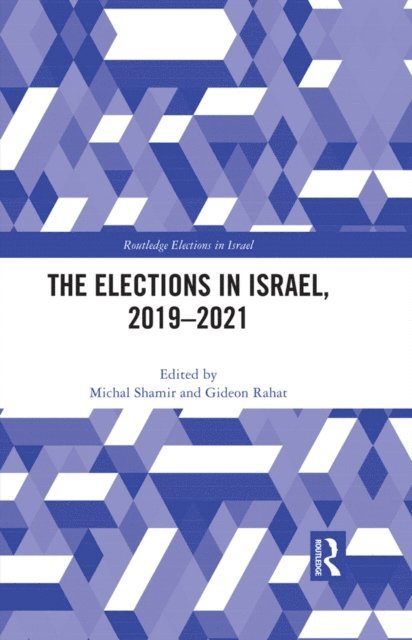
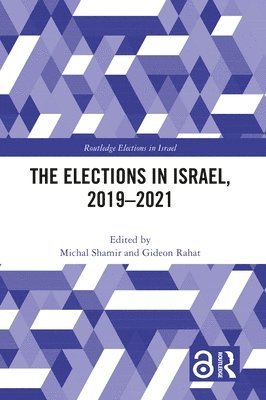
The 16th book in The Elections in Israel series, this book covers an extraordinary political event of having four national elections in two years, which were much (but not all) about one person, "King Bibi."Analyzing Israel’s national elections from 2019 to 2021, this book argues the four elections became, to a large extent, a referendum on Benjamin Netanyahu, the incumbent prime minister and head of the Likud party, facing investigations, a hearing, and indictment on charges of bribery, fraud, and breach of trust. Thus, the first part of the book is dedicated to political personalization and to Netanyahu himself. The second part of the volume covers the traditional actors in parliamentary elections: voters, parties, and the mass media. The book relies on empirical analysis, including extensive use of the Israel National Election Studies data; on theoretical rigor; and on the contextualization of the elections from comparative and long-term perspectives.The book should interest students and researchers of Israeli politics and society, electoral studies, and the crisis of democracy more generally. Many chapters will be of interest to political science, communications and sociology students and scholars who study themes that are prominent on the academic and public agenda including political personalization and personalized politics, populism, party decline, and democratic backsliding. Chapter 8 of this book is freely available as a downloadable Open Access PDF at http://www.taylorfrancis.com under a Creative Commons [Attribution-Non Commercial-No Derivatives (CC-BY-NC-ND)] 4.0 license.
579 kr
Skickas inom 10-15 vardagar
The 16th book in The Elections in Israel series, this book covers an extraordinary political event of having four national elections in two years, which were much (but not all) about one person, "King Bibi."Analyzing Israel’s national elections from 2019 to 2021, this book argues the four elections became, to a large extent, a referendum on Benjamin Netanyahu, the incumbent prime minister and head of the Likud party, facing investigations, a hearing, and indictment on charges of bribery, fraud, and breach of trust. Thus, the first part of the book is dedicated to political personalization and to Netanyahu himself. The second part of the volume covers the traditional actors in parliamentary elections: voters, parties, and the mass media. The book relies on empirical analysis, including extensive use of the Israel National Election Studies data; on theoretical rigor; and on the contextualization of the elections from comparative and long-term perspectives.The book should interest students and researchers of Israeli politics and society, electoral studies, and the crisis of democracy more generally. Many chapters will be of interest to political science, communications and sociology students and scholars who study themes that are prominent on the academic and public agenda including political personalization and personalized politics, populism, party decline, and democratic backsliding. Chapter 8 of this book is freely available as a downloadable Open Access PDF at http://www.taylorfrancis.com under a Creative Commons [Attribution-Non Commercial-No Derivatives (CC-BY-NC-ND)] 4.0 license.
2 098 kr
Skickas inom 10-15 vardagar
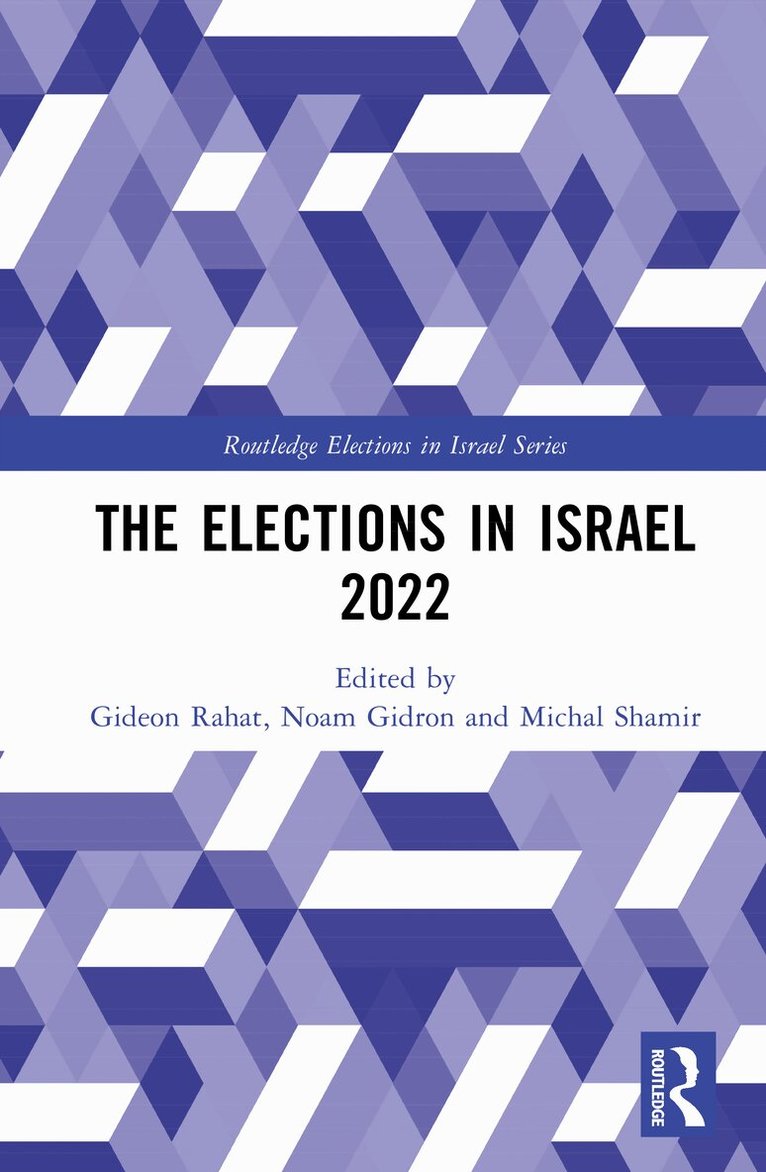
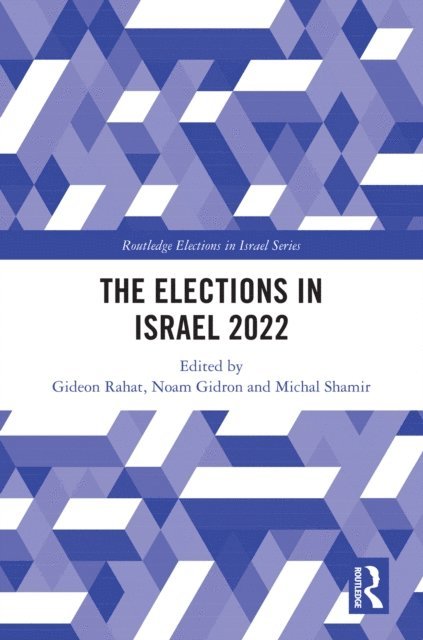
The 2022 Israeli elections stand out as a turning point in the country’s political history. Following a period of unprecedented political instability, the right-wing government formed following the elections—Benjamin Netanyahu's sixth government—was the most radical in Israel’s history.This book examines the 2022 Israeli elections through various theoretical perspectives and diverse research designs and data sources. The first part scrutinizes various aspects of Israeli democracy related to the elections. These include ideological and affective polarization, cleavages, voter turnout, involvement of citizens and civil organizations in election campaigns and the nature of the government that was established following the elections. The second part of the book presents studies of parties that participated in the elections: those that declined (Labor), those that ascended (Religious Zionism and Otzma Yehudit), and those that ascertained their power (United Torah Judaism and Shas). A valuable addition to the Elections in Israel series, the book—written by leading scholars of Israeli politics and society—touches on key themes, including political personalization, polarization, populism, the radical right, party decline and adaptation and democratic backsliding.The book will be of particular interest to students and researchers of Israeli politics and society—especially relating to the events of 2023 and the war in Gaza—as well as to social scientists interested in these political phenomena and their effects on democratic countries worldwide.
675 kr
Kommande
The 2022 Israeli elections stand out as a turning point in the country’s political history. Following a period of unprecedented political instability, the right-wing government formed following the elections—Benjamin Netanyahu's sixth government—was the most radical in Israel’s history.This book examines the 2022 Israeli elections through various theoretical perspectives and diverse research designs and data sources. The first part scrutinizes various aspects of Israeli democracy related to the elections. These include ideological and affective polarization, cleavages, voter turnout, involvement of citizens and civil organizations in election campaigns and the nature of the government that was established following the elections. The second part of the book presents studies of parties that participated in the elections: those that declined (Labor), those that ascended (Religious Zionism and Otzma Yehudit), and those that ascertained their power (United Torah Judaism and Shas). A valuable addition to the Elections in Israel series, the book—written by leading scholars of Israeli politics and society—touches on key themes, including political personalization, polarization, populism, the radical right, party decline and adaptation and democratic backsliding.The book will be of particular interest to students and researchers of Israeli politics and society—especially relating to the events of 2023 and the war in Gaza—as well as to social scientists interested in these political phenomena and their effects on democratic countries worldwide.
674 kr
Skickas inom 10-15 vardagar
The Elections in Israel--2003 brings together leading Israeli and North American social scientists and their state-of-the-art, in-depth analysis of the 2003 Israeli national elections. These elections returned Ariel Sharon and the Likud to power amid one of the bloodiest rounds of conflict between Israel and the Palestinians and a severe economic downturn in Israel. Contributors analyze the electoral behavior of the voters as a whole and various subgroups, highlighting social cleavages and identity, as well as issues and other strategic considerations. Three chapters analyze in detail the Arab, the national-religious, and the "Russian" vote. The 2003 elections saw Israel's return to the family of parliamentary nations after it experimented with the direct election of the prime minister from 1996 through 2001. The impact of the adoption and repeal of this unique Israeli system of government is another major topic covered in this volume, and several contributions explore the impact of these changes upon the electorate, the party system, and party financing. Other unusual features of the 2003 elections were the low turnout levels among Jewish and Arab voters; political moves to disqualify Arab candidates and lists from running for office, which were overruled by the Supreme Court of Israel; the collapse of the left, the spectacular showing of the centrist Shinui party, and the dominant status of the Likud in the Knesset and in Israeli politics. Through its focus on the 2003 elections, this volume also illuminates developments and changes in Israeli society and politics. Many of these developments--multiculturalism, changes in social stratification, the growing role of the judiciary and of the media, and political reforms--characterize other Western democracies as well, and these are discussed from a comparative perspective. The Elections in Israel--2003 will be of particular interest to those concerned with politics in Israel as well as those concerned with comparative politics and elections in general.
443 kr
Skickas inom 10-15 vardagar
Several dramatic events preceded the elections to the Seventeenth Knesset on March 28, 2006, beginning with the unilateral withdrawal from Gaza in August 2005 and its attendant and unprecedented removal of Jewish settlements and settlers, followed by major shifts among and within the various political parties. Most dramatic was the split in Likud when Prime Minister Ariel Sharon decided to form a new party, Kadima, leading to the breakup of the Likud party that Sharon had formed in 1973. This volume charts the 2006 elections.
688 kr
Skickas inom 10-15 vardagar
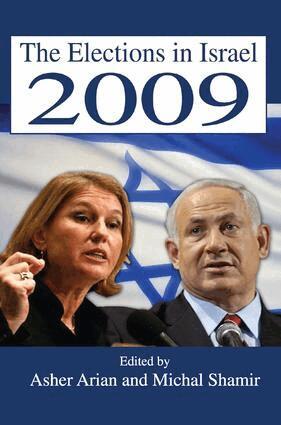
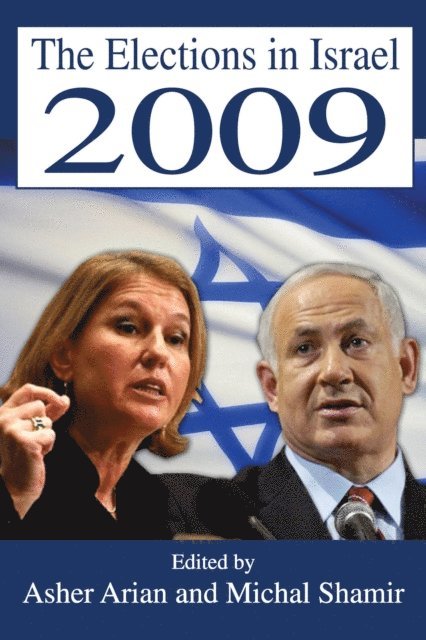
The elections to the 18th Knesset (legislature of Israel) were held on February 10, 2009, almost three years after the elections to the 17th Knesset and approximately twenty months before the original date set for them to be held. The elections are best understood in the context of the wars that were at each end of Ehud Olmert's government tenure, corruption scandals involving the prime minister, and the failure of Tzipi Livni, the newly elected head of the ruling center party, Kadima to form a new coalition following Olmert's resignation.The election campaign of 2009 began with the resignation of Ehud Olmert in the shadow of his corruption scandals and issues of integrity and clean government. This was followed by the world financial crisis, which directed attention towards the economic dimension and performance of the candidates. On the face of it, the campaign was cut short when military action began in Gaza. Still, the election was on the minds of candidates, and the question of who can best ensure security prevailed in the campaign. It becamepersonalized and focused on the candidates: the two candidates who had once headed the government and aspired to return, Benjamin Netanyahu and Ehud Barak, and the chairperson of Kadima, Tzipi Livni, who was running for the first time as head of a party.The Elections in Israel 2009 will be of particular interest to those concerned with comparative politics and elections in an open society. This volume is the latest in the series begun in 1969.
2 068 kr
Skickas inom 10-15 vardagar
The elections to the 18th Knesset (legislature of Israel) were held on February 10, 2009, almost three years after the elections to the 17th Knesset and approximately twenty months before the original date set for them to be held. The elections are best understood in the context of the wars that were at each end of Ehud Olmert's government tenure, corruption scandals involving the prime minister, and the failure of Tzipi Livni, the newly elected head of the ruling center party, Kadima to form a new coalition following Olmert's resignation.The election campaign of 2009 began with the resignation of Ehud Olmert in the shadow of his corruption scandals and issues of integrity and clean government. This was followed by the world financial crisis, which directed attention towards the economic dimension and performance of the candidates. On the face of it, the campaign was cut short when military action began in Gaza. Still, the election was on the minds of candidates, and the question of who can best ensure security prevailed in the campaign. It becamepersonalized and focused on the candidates: the two candidates who had once headed the government and aspired to return, Benjamin Netanyahu and Ehud Barak, and the chairperson of Kadima, Tzipi Livni, who was running for the first time as head of a party.The Elections in Israel 2009 will be of particular interest to those concerned with comparative politics and elections in an open society. This volume is the latest in the series begun in 1969.
2 098 kr
Skickas inom 10-15 vardagar
The elections for Israel's nineteenth Knesset were held on January 22, 2013. This volume offers an in-depth analysis of Israel's 2013 elections from various perspectives. It presents an up-to-date picture of the complexity of Israeli democracy, and its challenges, achievements, and failures.The chapters in this collection shed light on different facets of Israeli democracy. Yaron Ezrahi provides a sceptical perspective on prospects for democracy. Gayil Talshir explains the party system's slowness to respond to citizen demands and to social movements. Michal Shamir and Keren Weinshall-Margel explore the politics of the right to be elected to the Knesset. Nir Atmor and Chen Friedberg highlight the decline in participation in Knesset elections in the Periphery versus the Center. Assaf Shapira and Gideon Rahat reveal the complexity of inter-party democracy. Dganit Ofek analyses the stability of government coalitions. Gal Levy examines Mizrahi Jews and the Shas Party. Mtanes Shihadeh discusses the voting patterns of Israeli Arabs. Asher Cohen focuses on religious Zionism and the success of the renewed Jewish Home Party. Michal Shamir and Einat Gedalya-Lavy document a gender gap in voting.Elections in Israel 2013 analyses the give-and-take between the public and its leaders that is at the heart of elections. In doing so, it illuminates the role of elections in providing representation for different groups in Israeli society and in giving voice to their political choices.
2 160 kr
Skickas inom 10-15 vardagar
The newest volume in the Elections in Israel series focuses on the twentieth Knesset elections held in March 2015 following the collapse of the third Netanyahu government. Prime Minister Benjamin Netanyahu’s main opposition party, the Zionist Camp, ran a negative personalized election campaign, assuming that Israelis had grown tired of him. Netanyahu, however, achieved a surprising and dramatic victory by enhancing and radicalizing the same identity politics strategies that helped him win in 1996. The Elections in Israel 2015 dissects these and other campaigns, from the perspective of the voters, the media and opinion polls, the political parties, and electoral competition. Several contributors delve into the Left and Arab fear mongering Likud campaign, which produced strategic identity voting. Other contributions analyze in-depth the Israeli party and electoral systems, highlighting the exceptional decline of the mainstream parties and the adoption of a higher electoral threshold. Providing a close analysis of electoral competition, legitimacy struggles, stability and change in the voting behavior of various groups, partisanship, personalization and political polarization, this volume is a crucial record of Israeli political history.