Michel Fabre - Böcker
Visar alla böcker från författaren Michel Fabre. Handla med fri frakt och snabb leverans.
12 produkter
12 produkter
643 kr
Skickas inom 7-10 vardagar
Widely acclaimed for its comprehensive and sensitive picture of one of America's most renowned writers, The Unfinished Quest of Richard Wright received the Anisfield-Wolf Award on Race Relations when it was first published. This first paperback edition contains a new preface and bibliographic essay, updating changes in the author's approach to his subject and discussing works published on Wright since 1973.
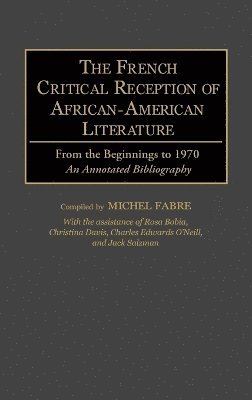
French Critical Reception of African-American Literature
From the Beginnings to 1970 An Annotated Bibliography
Inbunden, Engelska, 1995
1 007 kr
Skickas inom 10-15 vardagar
The first real reviewing of African-American literature in France began in 1844, when audiences welcomed the romantic dramas of Victor Sejour. With the passing of time, African-American works have become increasingly known in France, where they are now translated almost as soon as they come out in the United States. This bibliography charts the French critical response to African-American literature from the 19th century to 1970.The bulk of the items selected were published between 1900 and 1970, and all were printed in French. The selection has been limited to responses to the works of creative writers, along with some important and influential autobiographical writings. Entries are arranged in chronological sections, and then alphabetically within each section. Annotations summarize the critical views expressed in the work cited. As a whole, the bibliography is a valuable guide to changing French critical attitudes toward African-American literature and is an index to the growing popularity of African-American literature in France.
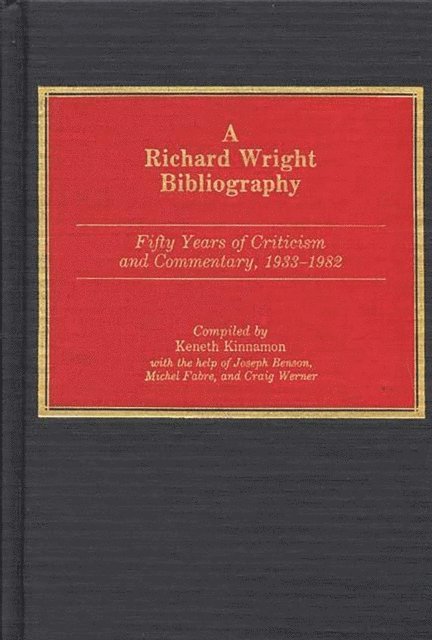
Richard Wright Bibliography
Fifty Years of Criticism and Commentary, 1933-1982
Inbunden, Engelska, 1988
863 kr
Skickas inom 10-15 vardagar
Any future biographical work on Richard Wright will find this bibliography a necessity; academic or public libraries supporting a program of black culture will find it invaluable; and it belongs in any library supporting American literature studies. Richard Wright has truly been well served. ChoiceThe most comprehensive bibliography ever compiled for an American writer, this book contains 13,117 annotated items pertaining to Richard Wright. It includes almost all published mentions of the author or his work in every language in which those mentions appear. Sources listed include books, articles, reviews, notes, news items, publishers' catalogs, promotional materials, book jackets, dissertations and theses, encyclopedias, biographical dictionaries, handbooks and study guides, library reports, best seller charts, the Index Translationum, playbills and advertisements, editorials, radio transcripts, and published letters and interviews. The bibliography is arranged chronologically by year. Each entry includes bibliographical information, an annotation by the authors, and information about all reprintings, partial or full. The index is unusually complete and contains the titles of Wright's works, real and fictional characters in the works, entries relating to significant places and events in the author's life, important literary terminology, and much additional information.
853 kr
Skickas inom 10-15 vardagar
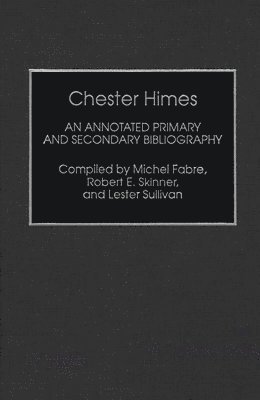
A contemporary of Richard Wright, James Baldwin, and Ralph Ellison, Chester Himes wrote with perhaps more angry fire than his celebrated colleagues about black protagonists doomed by white racisim and self-hate. Among his writings is a series of hard-boiled detective novels featuring black detectives and a host of Harlem hustlers. The acclaimed Harlem series and much of his later work were written in France where Himes lived as an American expatriate from 1953 until his death in 1984. Exhaustively researched and well constructed, this comprehensive bibliography clears up mysteries and dispels misconceptions about the extent of Himes's work and its critical reception.The primary bibliography identifies all United States, French, and British first and second editions of Himes's novels, the first appearances in periodicals of his short stories, his collected fiction, and his magazine and book-length nonfiction pieces. It includes manuscript materials and a filmography of adaptations of his novels. The annotated secondary bibliography provides a key to the biographical and critical work produced about Himes in the United States, Britain, and France since the late 1940s. Chronologically organized, it is indexed by author and by titles of the relevant Himes's works. The volume's introduction outlines Himes's life and career, discusses gaps in his writing history, and attempts to provide a more realistic picture of his critical reception in the United States based on an analysis of the secondary bibliography rather than on previous views influenced by Himes's own negative perceptions. A chronology of Himes's career is also included, and the volume's preface explains the organization of the bibliography and how to use it. This work will be of special value to university libraries offering programs in popular culture, American literature, and African American studies as well as to individual scholars and researchers in these fields and scholars and collectors interested particularly in Himes and his works.
333 kr
Skickas inom 10-15 vardagar
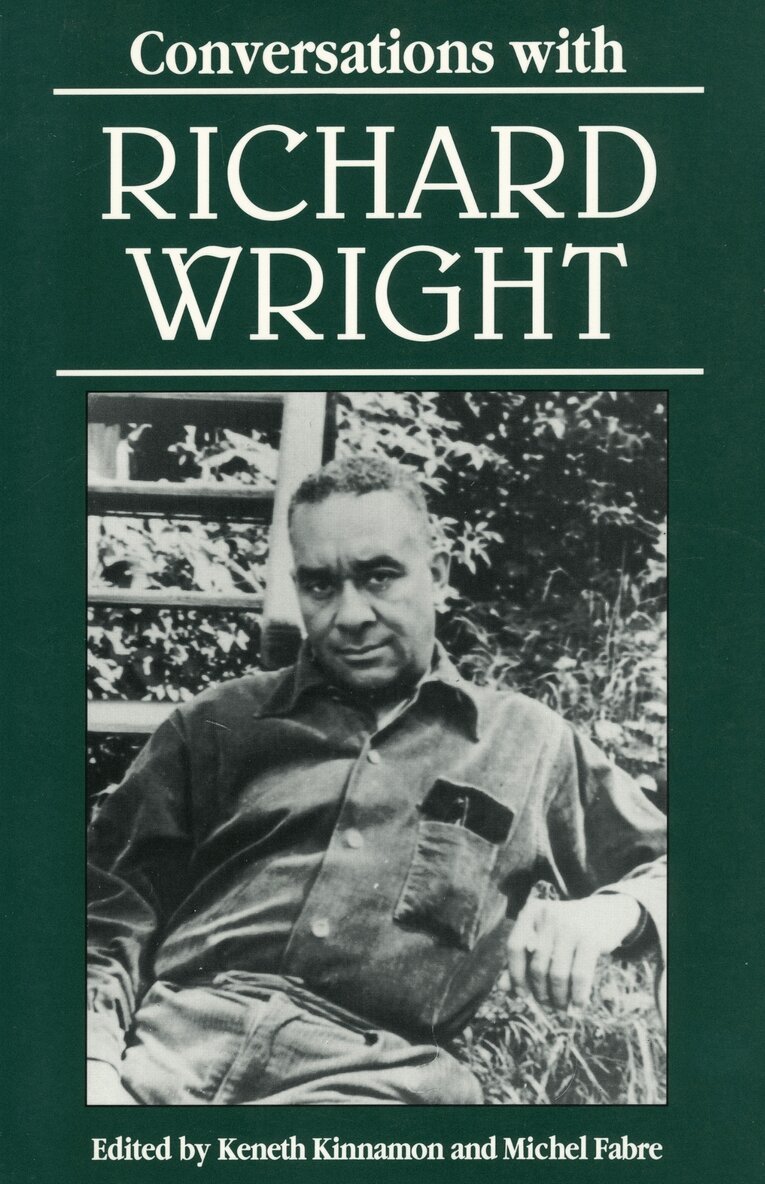
For more than two decades Richard Wright was interviewed by the American and foreign press, first as the author of Uncle Tom's Children (1938), Native Son (1940), and Black Boy (1945), next as a famous expatriate recently arrived and lionized in postwar Paris, and finally as the seasoned writer of a dozen books. At the end of his life the young man from Mississippi had become a well-traveled intellectual deeply interested in the social and political as well as literary and racial issues of the Old, the New, and the Third World.Conversations with Richard Wright collects some fifty interviews, many of which are little known in the United States because they appeared in non-English European periodicals and newspapers. This collection reveals a serious, often didactic Wright, giving voice to his inarticulate brothers and sisters as he reveals his racially representative colonialism. Most of his interviewers were white men, and he was always trying to make them listen. European issues also claimed his attention as he struggled to reconcile Marxism, Freudianism, and existentialism to the political realities from 1945 to his death in 1960.
361 kr
Skickas inom 10-15 vardagar
299 kr
Skickas inom 10-15 vardagar
Richard Wright, the Mississippi-born black writer, saw himself as ""an outsider between two cultures,"" a man searching. In these twelve essays written over the last two decades Michel Fabre, Wright's biographer, follows Wright's search in an investigation of the novelist's life and career. Although the essays were not originally intended as a collection, their organization her underscores Wright's literary and intellectual development.The essays range in time from a bibliographical study of Wright's first scanty personal library to his interest at the end of his life in Negritude and African writing. Other essays probe his first use of the Gothic and his subsequent first efforts at ""naturalistic"" fiction, in which he moved away from the ideology of the American Communist Party, to which he belonged for some ten years after 1933, to more personal modes of self-expression. Also explored within these pieces are Wright's use of the psychological approach, his interest in the link between sex and racism, and his obsessive exploration of the unconscious determinants in so-called criminal behavior. One essay examines Wright's poetry from the days when he wrote ideological poems published in New Masses and other radical magazines, to his later composition of blues, to his final mastery of the Japanese poetic form of haiku.Included is an interview with Simone De Beauvoir, who discusses her friendship with Wright, and in an essay never before published, Fabre explores the relationship of Wright--""as much as soon of Mississippi as is William Faulkner""--not only to the South but to his illiterate sharecropper father and Wright's use of both as negative metaphors in his work. Fabre also delves into Wright's view of his past and his use of it in an ideological construction that asserts, in the best Afro-American literary tradition, the development of a Promethean will towards education and literacy.The final essays address Wright's career and intellectual development during the last sixteen years of his life, spent as an American expatriate in Paris. A final essay focuses on Wright's turn at the end of his life to nofiction and his introduction of African readers to the complexities of the racial situation in the United States and the aims of the Civil Rights Movement then taking place in the U.S.
299 kr
Skickas inom 10-15 vardagar
This bibliography of Richard Wright's library and reading serves as a key to understanding the development, philosophies, and aesthetics of this great writer and provides accurate information for the study of intertextuality in his works. Richard Wright, born in Mississippi in 1908, was largely self-taught. His only formal schooling was high school. As he recounts in Black Boy, he used a white friend's library card at the Memphis Public Library, where blacks were not allowed. That books were almost ""living companions"" for Wright is easily understandable. Through books and, later, through relationships with writers, he broadened his perspectives, his understanding of society, and the very craft of writing. In the history of Richard Wright, perhaps more than with other writers, a knowledge of what he actually read, and of what authors he preferred, is essential in explaining his intellectual development. Michel Fabre, Wright's biographer and foremost Wright scholar, details the volumes in Wright's library and the facts of Wright's reading habits. This listing of books that formed and influenced him includes second-hand books he bought while living in extreme poverty in Chicago, some borrowed books never returned, books purchased in New York and Paris, books Wright deemed required reading for a growing novelist, gift books, and others in a comprehensive list on such subjects as contemporary American literature, classic European works, criminology, psychiatry, and social sciences. In compiling this listing Fabre goes beyond the actual contents of Wright's library, for he includes also titles drawn from references in Wright's works and from accounts of people who knew him and his reading habits. Included also is an appendix that collects for the first time reviews written by Wright, his prefaces, forewords, and blurbs. They show his appreciation of diverse genres and styles, although his ideological commitment remained the same. In them one sees Wright as an author ready to help younger writers, black and white, American and French.
1 258 kr
Skickas inom 5-8 vardagar
276 kr
Skickas inom 10-15 vardagar
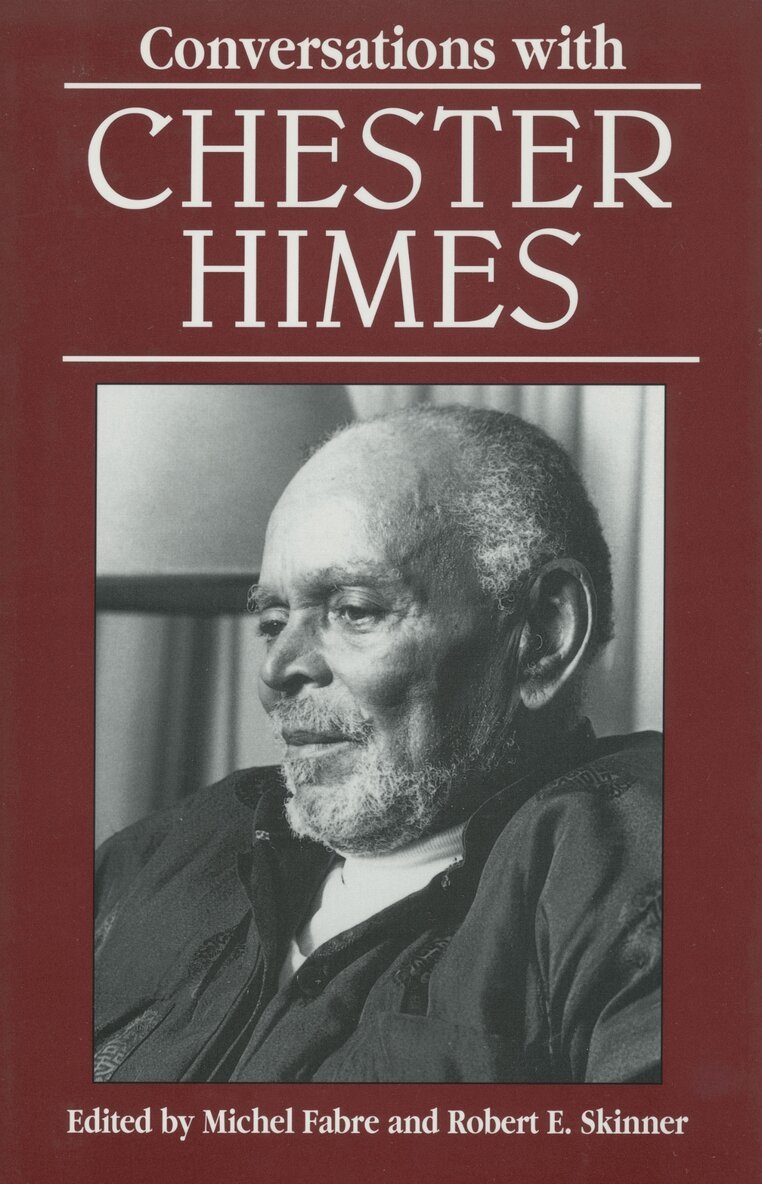
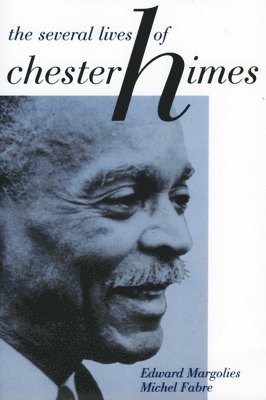
A fascinating blend of hatred and tenderness, of hard-boiled realism and generous idealism colors the writings of Chester Himes. How did this gifted son of the respectable southern black family become a juvenile delinquent? How did he acquire self-esteem and a new sense of identity by writing short stories while in the Ohio state penitentiary? Chester Himes (1909-1984) had literary genius. Yet in his native country, he is recalled more as the author of successful detective novels (Cotton Comes to Harlem) than as a practitioner of the art of fiction. The genesis of his books is his own autobiography. In If He Hollers, Let Him Go and in the fratricidal shootout of his black detectives Grave Digger and Coffin Ed in Plan B he was an unsparing witness to our changing times. His painful experiences in American indelibly marked his fiction, which is filled with reflections on his difficult relationships, especially with women--his fair-complexioned mother, his African-American first wife Jean, his many white lovers, and finally his English wife Leslie. His career was beset by controversy, and he left America to live on the Left Bank in the colony of expatriates and as a colleague of Richard Wright. Eventually, he settled in Spain. Drawn from his letters, notebooks, memoirs, and his fiction, this straightforward account of Hime's varied, episodic life attempts to trace the origins of his significant literary gift. It details the socioeconomic, familial, and cultural background which fed his ambivalent views on race in America. Hime's Deep South childhood, his adolescence in the Midwest, his young manhood in prison (1928-1936), his years as a menial laborer, his struggles as an author in California and New York City, and finally his glory days as an expatriate and celebrity in France and Spain are plumbed deeply for their effects upon his works. This is the bittersweet story of a man who found salvation in writing. Edward Margolies is Professor Emeritus, English, and American Studies, College of Staten Island, City University of New York. Michel Fabre is Professor Emeritus, American Studies, Universite de la Sorbonne.
353 kr
Skickas inom 5-8 vardagar
323 kr
Skickas inom 5-8 vardagar