Michel Janssen - Böcker
Visar alla böcker från författaren Michel Janssen. Handla med fri frakt och snabb leverans.
11 produkter
11 produkter
1 249 kr
Skickas inom 5-8 vardagar
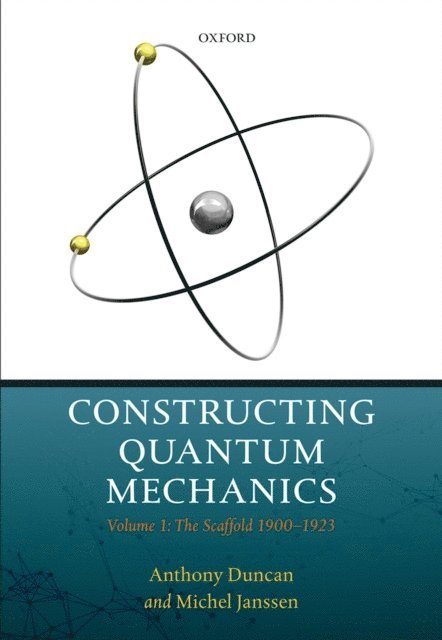
Constructing Quantum Mechanics is the first of two volumes on the genesis of quantum mechanics. This volume traces the early contributions by Planck, Einstein, and Bohr, all showing the need for drastic changes to the physics of their day. It examines the efforts by Sommerfeld and others to develop a new theory, now known as the old quantum theory. After some striking successes, this theory ran into serious difficulties and ended up serving as the scaffold on which the arch of modern quantum mechanics was built. This volume breaks new ground, both in its treatment of the work of Sommerfeld and his associates, and by offering new perspectives on classic papers by Planck, Einstein, Bohr, and others. Paying close attention to both primary and secondary sources, Constructing Quantum Mechanics provides an in-depth analysis of the heroic struggle to come to terms with the wealth of mostly spectroscopic data that eventually gave us modern quantum mechanics.
1 183 kr
Skickas inom 5-8 vardagar
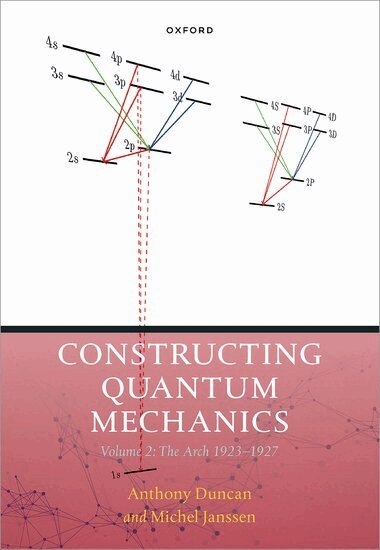
This is the second of two volumes on the genesis of quantum mechanics in the first quarter of the 20th century. It covers the period 1923-1927. After covering some of the difficulties the old quantum theory had run into by the early 1920s as well as the discovery of the exclusion principle and electron spin, it traces the emergence of two forms of the new quantum mechanics, matrix mechanics and wave mechanics, in the years 1923-27. It then shows how the new theory took care of some of the failures of the old theory and put its successes on a more solid basis. Finally, it shows how in 1927 the two forms of the new theory were unified, first through statistical transformation theory, then through the Hilbert space formalism. This volume provides a detailed analysis of the classic papers by Heisenberg, Born, Jordan, Dirac, De Broglie, Einstein, Schrödinger, von Neumann and other authors. Drawing on the correspondence of these and other physicists, their later reminiscences and the extensive secondary literature on the “quantum revolution”, this volume places these papers in the context of the discussions out of which modern quantum mechanics emerged. It argues that the genesis of modern quantum mechanics can be seen as the construction of an arch on a scaffold provided by the old quantum theory, discarded once the arch could support itself.
460 kr
Skickas inom 7-10 vardagar
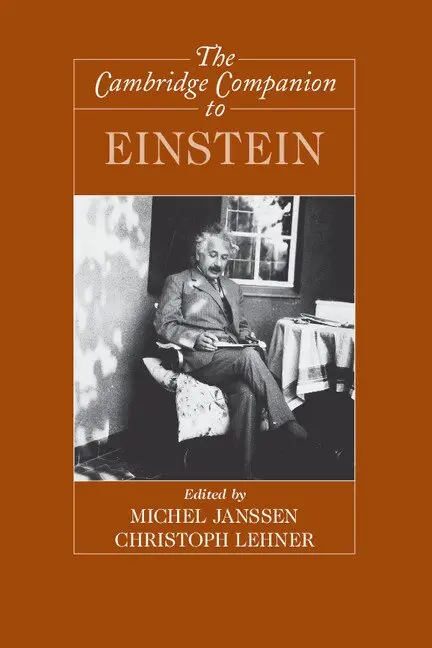
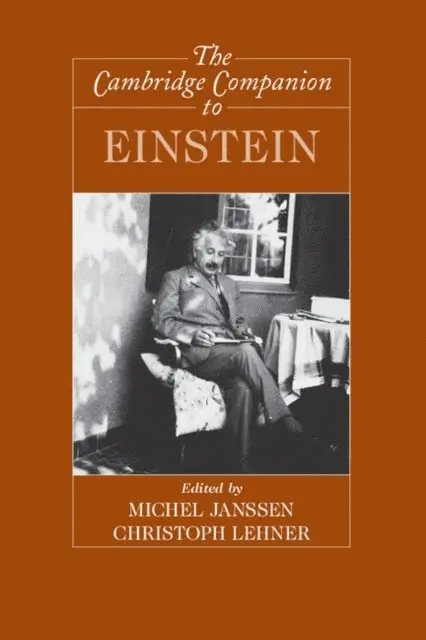
This volume is the first systematic presentation of the work of Albert Einstein, comprising fourteen essays by leading historians and philosophers of science that introduce readers to his work. Following an introduction that places Einstein's work in the context of his life and times, the book opens with essays on the papers of Einstein's 'miracle year', 1905, covering Brownian motion, light quanta, and special relativity, as well as his contributions to early quantum theory and the opposition to his light quantum hypothesis. Further essays relate Einstein's path to the general theory of relativity (1915) and the beginnings of two fields it spawned, relativistic cosmology and gravitational waves. Essays on Einstein's later years examine his unified field theory program and his critique of quantum mechanics. The closing essays explore the relation between Einstein's work and twentieth-century philosophy, as well as his political writings.
1 442 kr
Skickas inom 7-10 vardagar
This volume is the first systematic presentation of the work of Albert Einstein, comprising fourteen essays by leading historians and philosophers of science that introduce readers to his work. Following an introduction that places Einstein's work in the context of his life and times, the book opens with essays on the papers of Einstein's 'miracle year', 1905, covering Brownian motion, light quanta, and special relativity, as well as his contributions to early quantum theory and the opposition to his light quantum hypothesis. Further essays relate Einstein's path to the general theory of relativity (1915) and the beginnings of two fields it spawned, relativistic cosmology and gravitational waves. Essays on Einstein's later years examine his unified field theory program and his critique of quantum mechanics. The closing essays explore the relation between Einstein's work and twentieth-century philosophy, as well as his political writings.
Collected Papers of Albert Einstein, Volume 8
The Berlin Years: Correspondence, 1914-1918
Inbunden, Tyska, 1998
1 668 kr
Skickas inom 7-10 vardagar
This volume opens in spring 1914 when Einstein takes up a research professorship at the Prussian Academy of Sciences in Berlin and closes with the collapse of the German Empire four and one-half years later. A good portion of the documentation, which comprises more than 675 letters, has only recently been discovered by the editors. The letters touch on all aspects of Einstein's activities and shed new light on his inner life, while enriching our understanding of his published papers, presented in volumes 6 and 7 of this series. The breakup of Einstein's first marriage and the divorce are presented here for the first time in all their complexity. New material shows Einstein maintaining a strong sense of moral urgency throughout the war. The scientific correspondence documents Einstein's struggle to find satisfactory field equations for his new gravitational theory--the general theory of relativity--and his continued discussion with leading physicists and mathematicians about the implications and further development of the theory.
Collected Papers of Albert Einstein, Volume 7
The Berlin Years: Writings, 1918-1921
Inbunden, Tyska, 2002
1 807 kr
Skickas inom 7-10 vardagar
In the spring of 1919, two British solar eclipse expeditions confirmed the correctness of general relativity theory and propelled Albert Einstein to instant celebrity. Before this major turning point, the majority of Einstein's writings published in this volume dealt with the clarification of general relativistic problems, such as the status of the metric field, the character of gravitational waves, the problem of energy-momentum conservation, and questions of cosmology, such as the nature and size of the universe and the distribution of matter within it. After his rise to international fame, Einstein's publications changed markedly. He faced an increasing demand for popular articles and lectures on relativity, its development and meaning. He also felt compelled to respond to a host of commentators, ranging from skeptical physicists to philosophers trying to reconcile his revolutionary theory with their views. For the first time, he also responded in print to outspoken anti-relativists, some of them fueled by cultural conservatism and, frequently, anti-Semitism.Einstein used his newly won fame to lend prestige to political causes, especially to the reconciliation among European nations and to Zionism. In the early years of Weimar Germany, Einstein spoke out vigorously for the young republic, emphasizing the rights of the individual. He agonized over the misery of the Central Europeans in the grip of starvation and economic collapse, praised the support of individuals and groups such as the Quakers, and championed the cause of Eastern European Jews. His rejection of assimilation, combined with a fierce defense of the right of Jews to higher education, led Einstein to campaign for the establishment of a university in Palestine, the land which he conceived of as a cultural center for all Jews.
1 792 kr
Skickas inom 10-15 vardagar
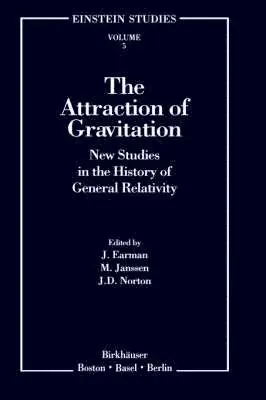
Devoted to the history of general relativity, this text provides reviews from scholars all over the world. Many of the papers originated at the Third International Conference on the History of General Relativity, held at the University of Pittsburgh in the summer of 1991. Topics covered include: disputes with Einstein; the empirical basis of general relativity; variational principles in general relativity; the reception and development of general relativity; and cosmology and general relativity.
Del 340 - Boston Studies in the Philosophy and History of Science
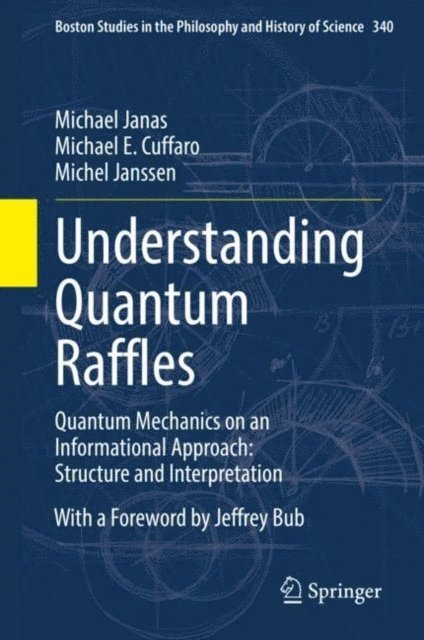
Understanding Quantum Raffles
Quantum Mechanics on an Informational Approach: Structure and Interpretation
Inbunden, Engelska, 2021
1 173 kr
Skickas inom 10-15 vardagar
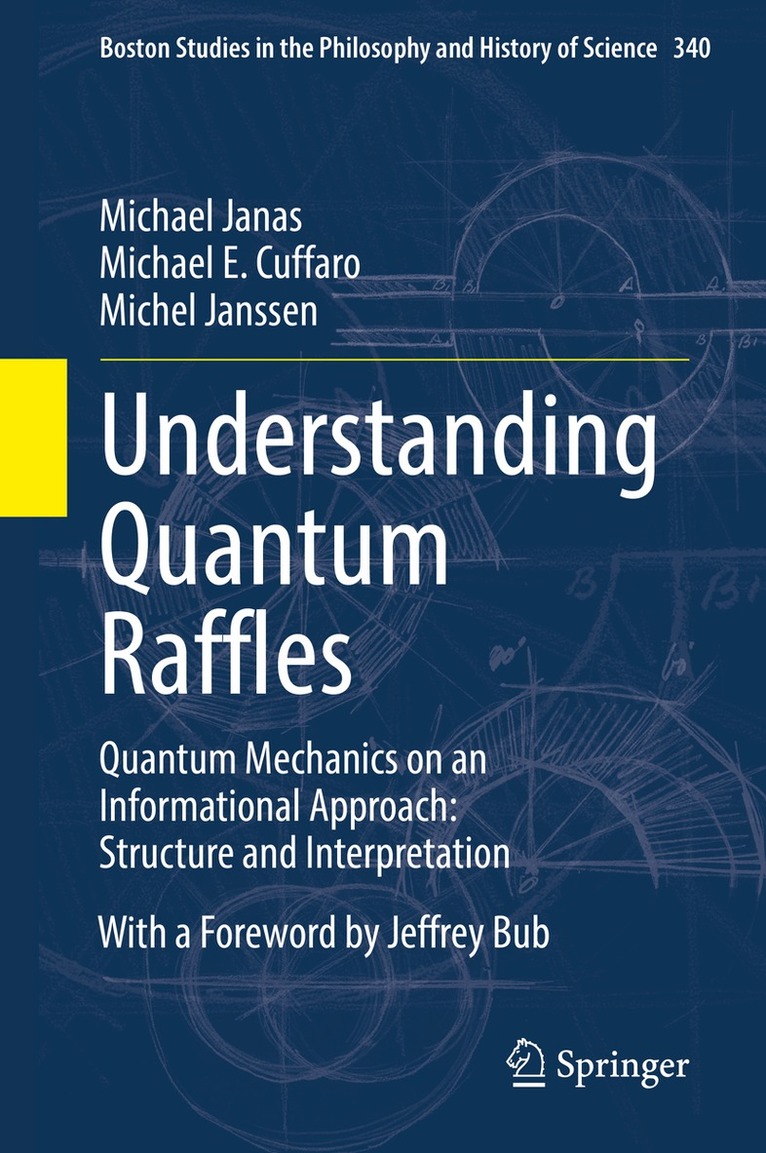
This book offers a thorough technical elaboration and philosophical defense of an objectivist informational interpretation of quantum mechanics according to which its novel content is located in its kinematical framework, that is, in how the theory describes systems independently of the specifics of their dynamics. It will be of interest to researchers and students in the philosophy of physics and in theoretical physics with an interest in the foundations of quantum mechanics. Additionally, parts of the book may be used as the basis for courses introducing non-physics majors to quantum mechanics, or for self-study by those outside of the university with an interest in quantum mechanics.With a Foreword by Jeffrey Bub. --“Understanding Quantum Raffles is a wonderful book for both the specialists and those with curious minds. The elegance and the simplicity with which the 'three Mikes' explain some of the deepest aspects of quantum mechanics on the basis of probabilities and correlations are dazzling and delightful. The same elegance and simplicity also make the book ideal for any engaged reader who ever wondered what is so special about quantum mechanics. In our age of new quantum technologies, this is something anyone should read.” (Guido Bacciagaluppi, author of Quantum Theory at the Crossroads) “This book makes a sustained argument for an informational interpretation of quantum theory, blending an elegant mathematical characterisation of quantum correlations with incisive historical and philosophical analysis. A must-read for those interested in quantum foundations, and also a fertile source of teaching inspiration for quantum theory.” (Leah Henderson, Department of Theoretical Philosophy, University of Groningen)“This is one of the most fascinating and accessible presentations of the informational approach to quantum mechanics. What has so far been mostly restrictedto the theoretical physics community is here masterfully explained for a broader audience even without a physics background. Scholars, students, and laypeople alike will appreciate the clear, vivid, and yet deep discussion of what raffle tickets and correlation elliptopes can tell us about the physics and philosophy of the quantum world.” (Markus Müller, Institute for Quantum Optics and Quantum Information, Vienna)
Del 340 - Boston Studies in the Philosophy and History of Science
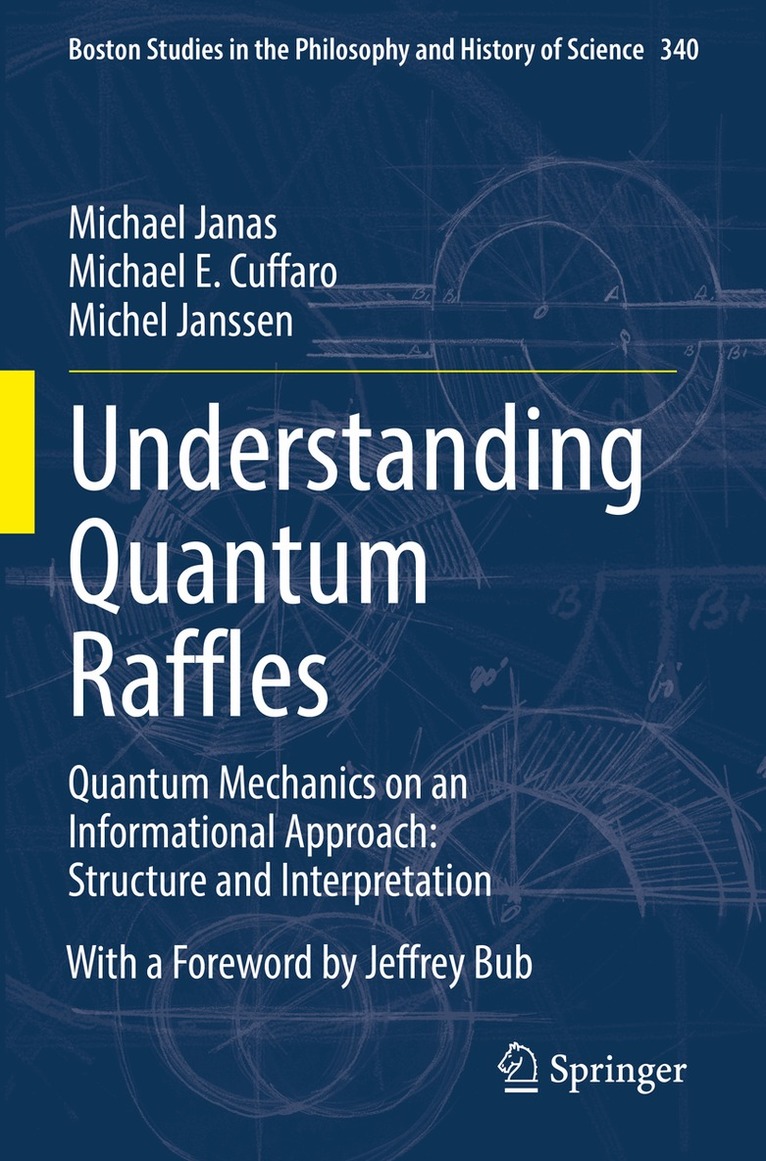
Understanding Quantum Raffles
Quantum Mechanics on an Informational Approach: Structure and Interpretation
Häftad, Engelska, 2022
1 173 kr
Skickas inom 10-15 vardagar
This book offers a thorough technical elaboration and philosophical defense of an objectivist informational interpretation of quantum mechanics according to which its novel content is located in its kinematical framework, that is, in how the theory describes systems independently of the specifics of their dynamics. It will be of interest to researchers and students in the philosophy of physics and in theoretical physics with an interest in the foundations of quantum mechanics. Additionally, parts of the book may be used as the basis for courses introducing non-physics majors to quantum mechanics, or for self-study by those outside of the university with an interest in quantum mechanics.With a Foreword by Jeffrey Bub. --“Understanding Quantum Raffles is a wonderful book for both the specialists and those with curious minds. The elegance and the simplicity with which the 'three Mikes' explain some of the deepest aspects of quantum mechanics on the basis of probabilities and correlations are dazzling and delightful. The same elegance and simplicity also make the book ideal for any engaged reader who ever wondered what is so special about quantum mechanics. In our age of new quantum technologies, this is something anyone should read.” (Guido Bacciagaluppi, author of Quantum Theory at the Crossroads) “This book makes a sustained argument for an informational interpretation of quantum theory, blending an elegant mathematical characterisation of quantum correlations with incisive historical and philosophical analysis. A must-read for those interested in quantum foundations, and also a fertile source of teaching inspiration for quantum theory.” (Leah Henderson, Department of Theoretical Philosophy, University of Groningen)“This is one of the most fascinating and accessible presentations of the informational approach to quantum mechanics. What has so far been mostly restrictedto the theoretical physics community is here masterfully explained for a broader audience even without a physics background. Scholars, students, and laypeople alike will appreciate the clear, vivid, and yet deep discussion of what raffle tickets and correlation elliptopes can tell us about the physics and philosophy of the quantum world.” (Markus Müller, Institute for Quantum Optics and Quantum Information, Vienna)
1 582 kr
Skickas inom 10-15 vardagar
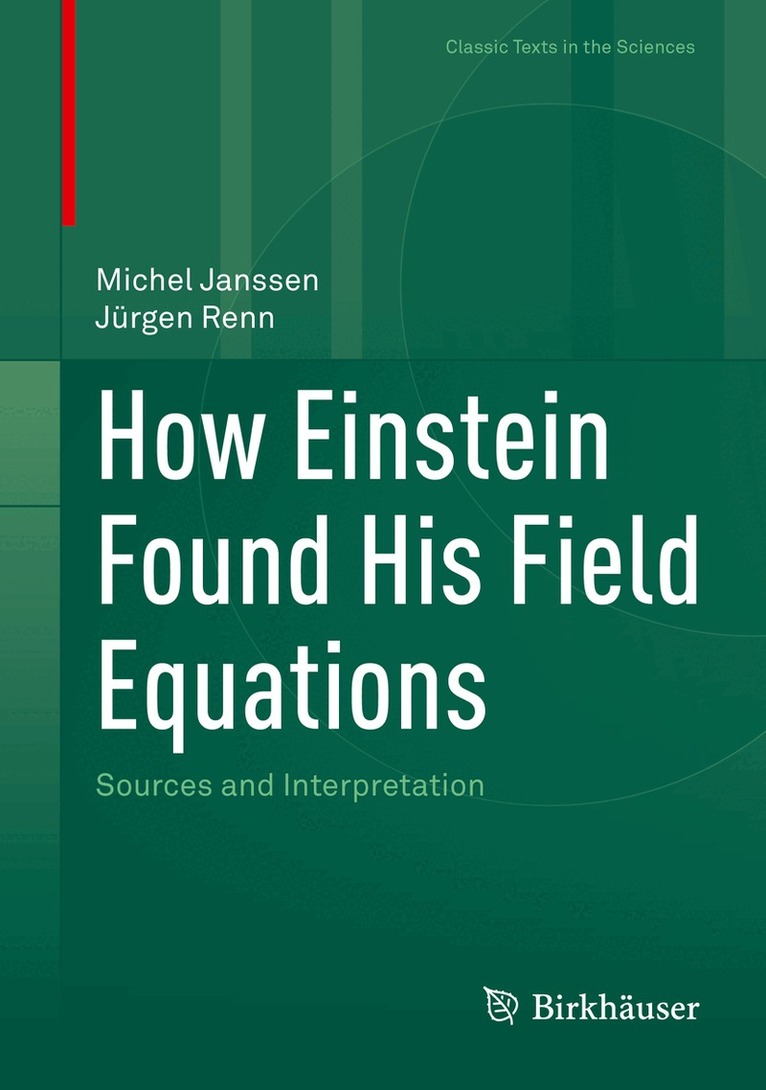
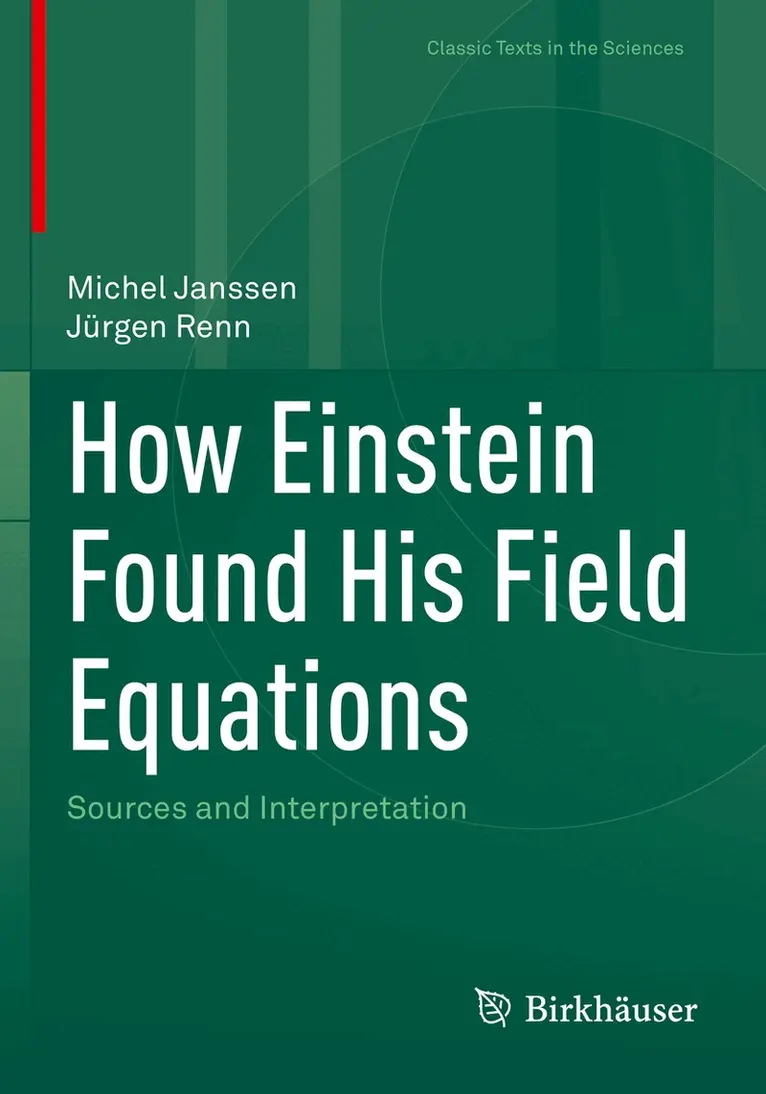
Einstein's field equations of gravitation are a core element of his general theory of relativity. In four short communications to the Prussian Academy of Sciences in Berlin in November 1015, we can follow the final steps toward these equations and the resulting theory's spectacular success in accounting for the anomalous motion of Mercury's perihelion. This source book provides an expert guide to these four groundbreaking papers. Following an introductory essay placing these papers in the context of the development of Einstein's theory, it presents and analyzes, in addition to the four papers of November 1915, a careful selection of (critical excerpts from) papers, letters, and manuscripts documenting the path that early on led Einstein to the field equations of the first November 1915 paper, but then took a turn away from them only to lead back to them in the end. Drawing on extensive research at the Einstein Papers Project and the Max Planck Institute for History of Science, this volume traces the intricate interplay between considerations of physics and considerations of mathematics that guided Einstein along this path. It thus presents a concise yet authoritative account of how Einstein found his field equations, affording readers who are prepared to immerse themselves in these intricacies a unique glimpse of Einstein at work at the height of his creative prowess. Highlights of this journey in Einstein's footsteps include the crucial pages (with detailed annotation) from the Zurich Notebook, the record of Einstein's early search for field equation with his mathematician friend Marcel Grossmann, and the Einstein-Besso manuscript, documenting Einstein's attempts with his friend and confidant Michele Besso to explain the Mercury anomaly on the basis of the equations that he and Grossmann had eventually settled on in the Zurich Notebook.
1 173 kr
Skickas inom 5-8 vardagar
Einstein's field equations of gravitation are a core element of his general theory of relativity. In four short communications to the Prussian Academy of Sciences in Berlin in November 1015, we can follow the final steps toward these equations and the resulting theory's spectacular success in accounting for the anomalous motion of Mercury's perihelion. This source book provides an expert guide to these four groundbreaking papers. Following an introductory essay placing these papers in the context of the development of Einstein's theory, it presents and analyzes, in addition to the four papers of November 1915, a careful selection of (critical excerpts from) papers, letters, and manuscripts documenting the path that early on led Einstein to the field equations of the first November 1915 paper, but then took a turn away from them only to lead back to them in the end. Drawing on extensive research at the Einstein Papers Project and the Max Planck Institute for History of Science, this volume traces the intricate interplay between considerations of physics and considerations of mathematics that guided Einstein along this path. It thus presents a concise yet authoritative account of how Einstein found his field equations, affording readers who are prepared to immerse themselves in these intricacies a unique glimpse of Einstein at work at the height of his creative prowess. Highlights of this journey in Einstein's footsteps include the crucial pages (with detailed annotation) from the Zurich Notebook, the record of Einstein's early search for field equation with his mathematician friend Marcel Grossmann, and the Einstein-Besso manuscript, documenting Einstein's attempts with his friend and confidant Michele Besso to explain the Mercury anomaly on the basis of the equations that he and Grossmann had eventually settled on in the Zurich Notebook.