Michael E. Cuffaro - Böcker
Visar alla böcker från författaren Michael E. Cuffaro. Handla med fri frakt och snabb leverans.
5 produkter
5 produkter
1 254 kr
Kommande
Scientific and philosophical inquiry often assumes that systems can be studied in isolation, yet real-world systems are never truly closed. They constantly interact with their environment, exchanging energy, information, and matter. This openness challenges fundamental assumptions about determinism, causality, and emergence, raising profound questions about how we model, explain, and understand the world.This book brings together leading philosophers and scientists to explore the implications of open systems across physics, metaphysics, and methodology. How do interactions shape the behaviour of physical systems? What are the consequences of idealizing real systems as closed? How does openness affect our understanding of fundamental theories, such as quantum mechanics and statistical physics? And what does it mean for the broader philosophical concepts of reduction, explanation, and emergence?At the heart of this volume lies the recognition that open systems require a shift in perspective-one that acknowledges the limits of traditional approaches and embraces new ways of thinking about complex, dynamic systems. Through interdisciplinary contributions, the book offers fresh insights into topics such as non-unitary evolution in quantum mechanics, the role of decoherence in the quantum-to-classical transition, and the challenges of modeling open systems in scientific practice.Written for scholars and students in philosophy and physics, as well as anyone interested in the foundations of science, Open Systems: Physics, Metaphysics, and Methodology invites readers to rethink fundamental concepts in light of the inherent openness of the systems that shape our world.
1 245 kr
Skickas inom 7-10 vardagar
Although computation and the science of physical systems would appear to be unrelated, there are a number of ways in which computational and physical concepts can be brought together in ways that illuminate both. This volume examines fundamental questions which connect scholars from both disciplines: is the universe a computer? Can a universal computing machine simulate every physical process? What is the source of the computational power of quantum computers? Are computational approaches to solving physical problems and paradoxes always fruitful? Contributors from multiple perspectives reflecting the diversity of thought regarding these interconnections address many of the most important developments and debates within this exciting area of research. Both a reference to the state of the art and a valuable and accessible entry to interdisciplinary work, the volume will interest researchers and students working in physics, computer science, and philosophy of science and mathematics.
428 kr
Skickas inom 7-10 vardagar
Although computation and the science of physical systems would appear to be unrelated, there are a number of ways in which computational and physical concepts can be brought together in ways that illuminate both. This volume examines fundamental questions which connect scholars from both disciplines: is the universe a computer? Can a universal computing machine simulate every physical process? What is the source of the computational power of quantum computers? Are computational approaches to solving physical problems and paradoxes always fruitful? Contributors from multiple perspectives reflecting the diversity of thought regarding these interconnections address many of the most important developments and debates within this exciting area of research. Both a reference to the state of the art and a valuable and accessible entry to interdisciplinary work, the volume will interest researchers and students working in physics, computer science, and philosophy of science and mathematics.
Del 340 - Boston Studies in the Philosophy and History of Science
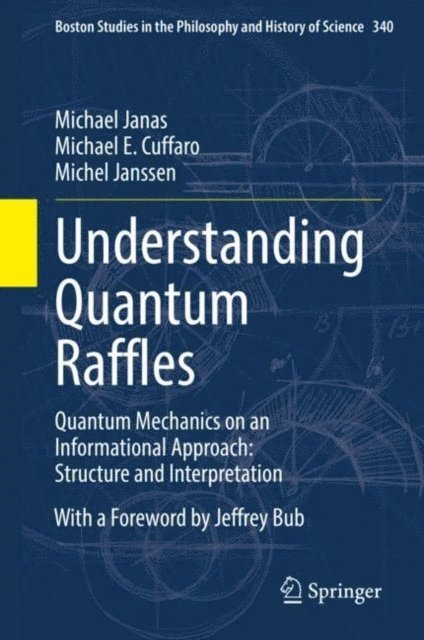
Understanding Quantum Raffles
Quantum Mechanics on an Informational Approach: Structure and Interpretation
Inbunden, Engelska, 2021
1 179 kr
Skickas inom 10-15 vardagar
This book offers a thorough technical elaboration and philosophical defense of an objectivist informational interpretation of quantum mechanics according to which its novel content is located in its kinematical framework, that is, in how the theory describes systems independently of the specifics of their dynamics. It will be of interest to researchers and students in the philosophy of physics and in theoretical physics with an interest in the foundations of quantum mechanics. Additionally, parts of the book may be used as the basis for courses introducing non-physics majors to quantum mechanics, or for self-study by those outside of the university with an interest in quantum mechanics.With a Foreword by Jeffrey Bub. --“Understanding Quantum Raffles is a wonderful book for both the specialists and those with curious minds. The elegance and the simplicity with which the 'three Mikes' explain some of the deepest aspects of quantum mechanics on the basis of probabilities and correlations are dazzling and delightful. The same elegance and simplicity also make the book ideal for any engaged reader who ever wondered what is so special about quantum mechanics. In our age of new quantum technologies, this is something anyone should read.” (Guido Bacciagaluppi, author of Quantum Theory at the Crossroads) “This book makes a sustained argument for an informational interpretation of quantum theory, blending an elegant mathematical characterisation of quantum correlations with incisive historical and philosophical analysis. A must-read for those interested in quantum foundations, and also a fertile source of teaching inspiration for quantum theory.” (Leah Henderson, Department of Theoretical Philosophy, University of Groningen)“This is one of the most fascinating and accessible presentations of the informational approach to quantum mechanics. What has so far been mostly restrictedto the theoretical physics community is here masterfully explained for a broader audience even without a physics background. Scholars, students, and laypeople alike will appreciate the clear, vivid, and yet deep discussion of what raffle tickets and correlation elliptopes can tell us about the physics and philosophy of the quantum world.” (Markus Müller, Institute for Quantum Optics and Quantum Information, Vienna)
Del 340 - Boston Studies in the Philosophy and History of Science
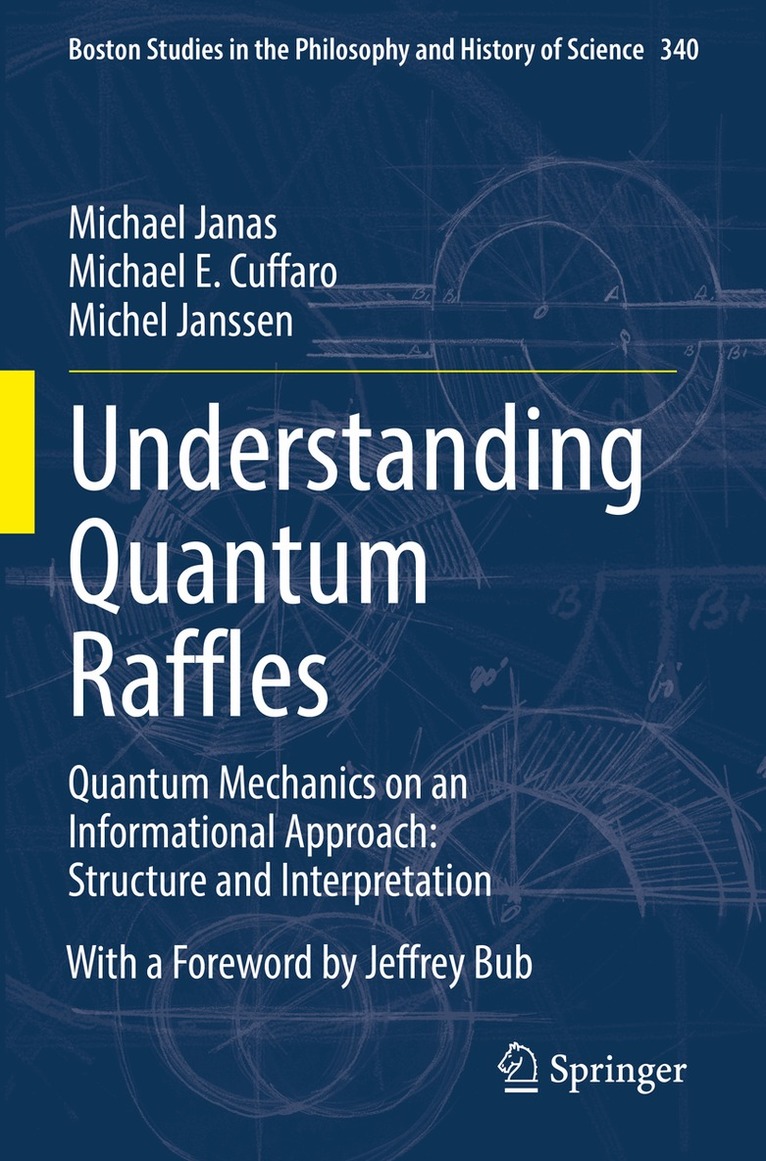
Understanding Quantum Raffles
Quantum Mechanics on an Informational Approach: Structure and Interpretation
Häftad, Engelska, 2022
1 179 kr
Skickas inom 10-15 vardagar
This book offers a thorough technical elaboration and philosophical defense of an objectivist informational interpretation of quantum mechanics according to which its novel content is located in its kinematical framework, that is, in how the theory describes systems independently of the specifics of their dynamics. It will be of interest to researchers and students in the philosophy of physics and in theoretical physics with an interest in the foundations of quantum mechanics. Additionally, parts of the book may be used as the basis for courses introducing non-physics majors to quantum mechanics, or for self-study by those outside of the university with an interest in quantum mechanics.With a Foreword by Jeffrey Bub. --“Understanding Quantum Raffles is a wonderful book for both the specialists and those with curious minds. The elegance and the simplicity with which the 'three Mikes' explain some of the deepest aspects of quantum mechanics on the basis of probabilities and correlations are dazzling and delightful. The same elegance and simplicity also make the book ideal for any engaged reader who ever wondered what is so special about quantum mechanics. In our age of new quantum technologies, this is something anyone should read.” (Guido Bacciagaluppi, author of Quantum Theory at the Crossroads) “This book makes a sustained argument for an informational interpretation of quantum theory, blending an elegant mathematical characterisation of quantum correlations with incisive historical and philosophical analysis. A must-read for those interested in quantum foundations, and also a fertile source of teaching inspiration for quantum theory.” (Leah Henderson, Department of Theoretical Philosophy, University of Groningen)“This is one of the most fascinating and accessible presentations of the informational approach to quantum mechanics. What has so far been mostly restrictedto the theoretical physics community is here masterfully explained for a broader audience even without a physics background. Scholars, students, and laypeople alike will appreciate the clear, vivid, and yet deep discussion of what raffle tickets and correlation elliptopes can tell us about the physics and philosophy of the quantum world.” (Markus Müller, Institute for Quantum Optics and Quantum Information, Vienna)