Michele Mioni – författare
Visar alla böcker från författaren Michele Mioni. Handla med fri frakt och snabb leverans.
5 produkter
The Cold War and Welfare State Development in Industrialized Countries
Av Klaus Petersen, Herbert Obinger m. fl.
Inbunden, 2026
1789 kr
Lägg i varukorg
Since the Second World War, the Cold War and the welfare state have been among the largest historical shifts. This book examines the relationship between the two to uncover the impact of international context on social policy developments.The Cold War and Welfare State Development in Industrialized …
Caring for the Socially Marginalised in Interwar Europe, 1919–1939
The Mixed Economy of Welfare
Av Michele Mioni, Stefano Petrungaro
Inbunden, 2024
1474 kr
Lägg i varukorg
This book investigates the mixed economy of welfare that assisted socially marginalised people in interwar Europe, namely the state, local authorities, and a combination of voluntary and informal actors. While literature has traditionally emphasised the key role of the state, the cooperation …
Caring for the Socially Marginalised in Interwar Europe, 1919-1939
The Mixed Economy of Welfare
Av Stefano Petrungaro, Michele Mioni
E-bok, 2024
1806 kr
Lägg i varukorg
This book investigates the mixed economy of welfare that assisted socially marginalised people in interwar Europe, namely the state, local authorities, and a combination of voluntary and informal actors. While literature has traditionally emphasised the key role of the state, the cooperation …
Caring for the Socially Marginalised in Interwar Europe, 1919–1939
The Mixed Economy of Welfare
Av Michele Mioni, Stefano Petrungaro
Häftad, 2025
1474 kr
Lägg i varukorg
This book investigates the mixed economy of welfare that assisted socially marginalised people in interwar Europe, namely the state, local authorities, and a combination of voluntary and informal actors. While literature has traditionally emphasised the key role of the state, the cooperation …
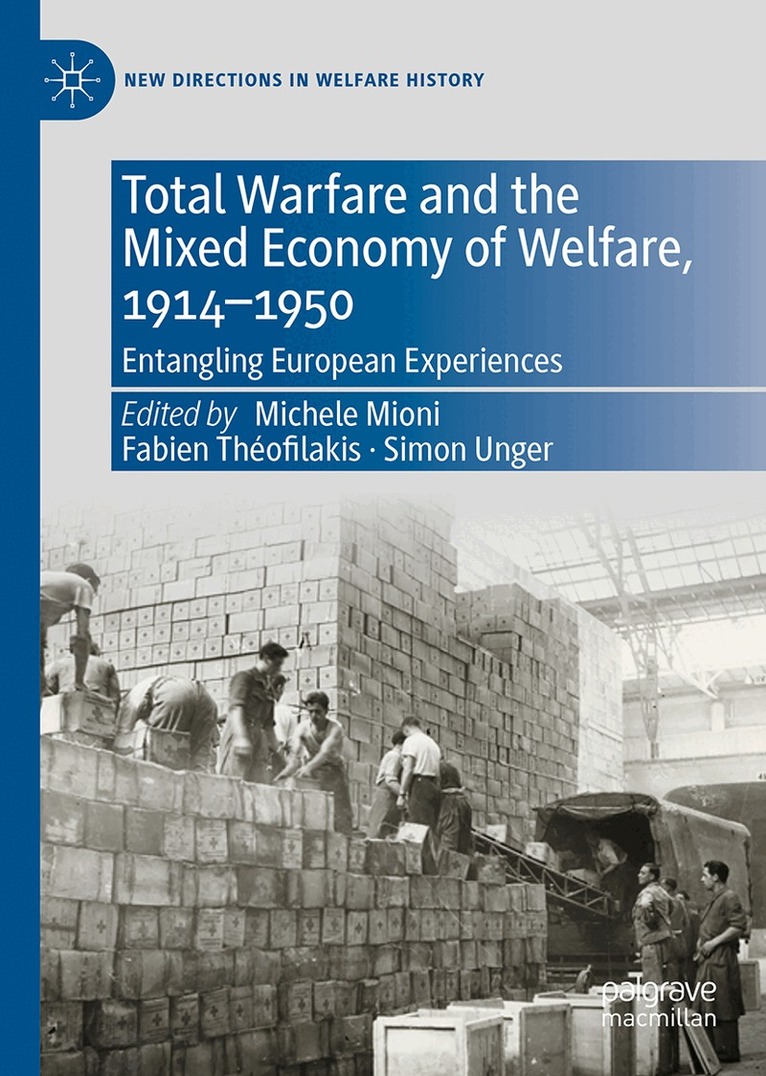
Total Warfare and the Mixed Economy of Welfare, 1914–1950
Entangling European Experiences
Av Michele Mioni, Fabien Théofilakis m. fl.
Inbunden, 2026
1795 kr
Kommande
This edited volume examines the effects of the two world wars on the welfare systems of European societies. Chapters analyse the dynamics between states and transnational social actors, including international institutions, voluntary associations, charities, foundations, non-governmental …