Miguel Zavala - Böcker
Visar alla böcker från författaren Miguel Zavala. Handla med fri frakt och snabb leverans.
5 produkter
5 produkter
366 kr
Skickas inom 7-10 vardagar
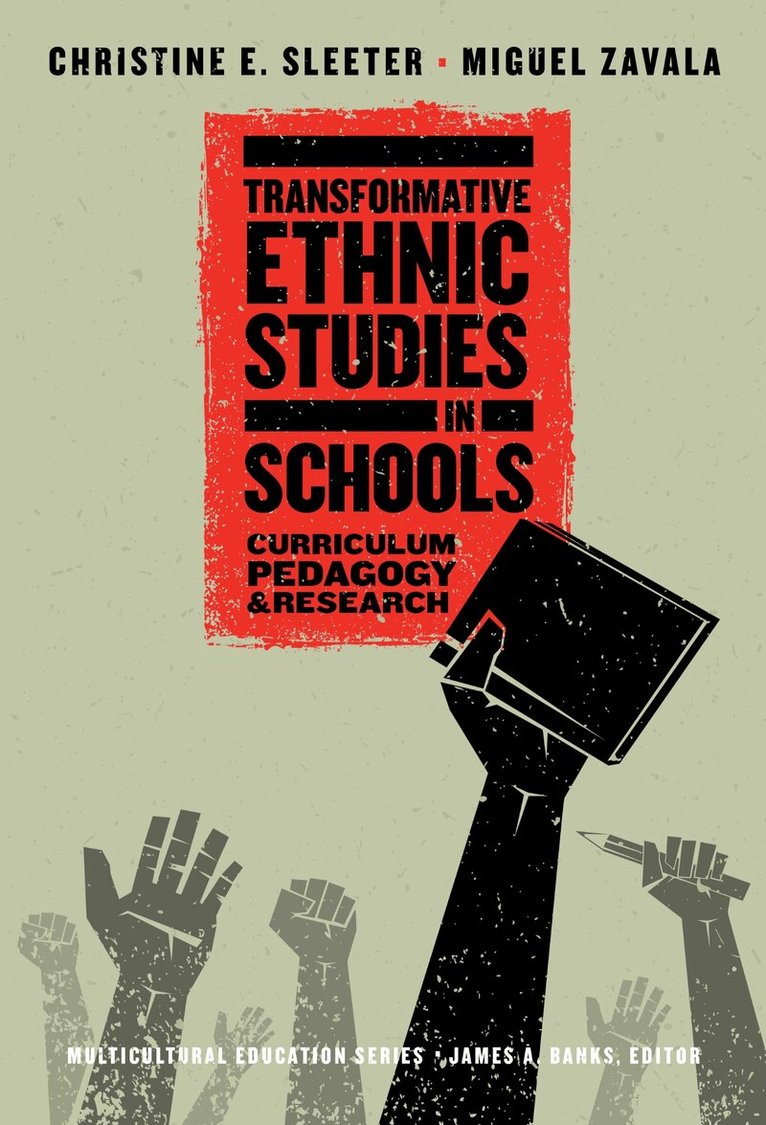
This timely and compelling book conceptualizes Ethnic Studies not only as a vehicle to transform and revitalize the school curriculum but also as a way to reinvent teaching. Drawing on Sleeter's research review on the impact of Ethnic Studies commissioned by the National Education Association (NEA), the authors show how the traditional curriculum's Eurocentric view of the world affects diverse student populations. The text highlights several contemporary exemplars of curricula—from classroom level to district or state-wide—illustrating core concepts in Ethnic Studies across a variety of disciplines and grade levels. A final chapter considers how research on P–12 ethnic studies can be conceptualized and conducted in ways that further both advocacy and program sustainability. Transformative Ethnic Studies in Schools is essential reading for educators working to transform schools by rehumanizing learning spaces for all students.Book Features:Explores how the traditional curriculum is not ideologically neutral and the effect that has on both students of color and White students.Situates Ethnic Studies within anti-racist movements to decolonize schooling.Illustrates the transformative potential of contemporary Ethnic Studies projects. Draws on the insights of Ethnic Studies teachers, researchers, and activists from across the United States.Updates and expands on NEA's synthesis of the research on the academic and social value of Ethnic Studies.
1 085 kr
Skickas inom 7-10 vardagar
This timely and compelling book conceptualizes Ethnic Studies not only as a vehicle to transform and revitalize the school curriculum but also as a way to reinvent teaching. Drawing on Sleeter's research review on the impact of Ethnic Studies commissioned by the National Education Association (NEA), the authors show how the traditional curriculum's Eurocentric view of the world affects diverse student populations. The text highlights several contemporary exemplars of curricula—from classroom level to district or state-wide—illustrating core concepts in Ethnic Studies across a variety of disciplines and grade levels. A final chapter considers how research on P–12 ethnic studies can be conceptualized and conducted in ways that further both advocacy and program sustainability. Transformative Ethnic Studies in Schools is essential reading for educators working to transform schools by rehumanizing learning spaces for all students.Book Features:Explores how the traditional curriculum is not ideologically neutral and the effect that has on both students of color and White students.Situates Ethnic Studies within anti-racist movements to decolonize schooling.Illustrates the transformative potential of contemporary Ethnic Studies projects. Draws on the insights of Ethnic Studies teachers, researchers, and activists from across the United States.Updates and expands on NEA's synthesis of the research on the academic and social value of Ethnic Studies.
1 658 kr
Kommande
What does the research say about teaching ethnic studies in K-12 schools? This expanded second edition of Transformative Ethnic Studies in Schools provides a research-based framework for dismantling racism and decolonizing curricula to rehumanize learning spaces for all students. Authors Christine E. Sleeter and Miguel Zavala dive into the current curricula, pedagogies, and activism of P–12 teachers to show how ethnic studies improves student identity, empowerment, and academic achievement. The text critiques mainstream education as "white studies" and offers a comprehensive update on the academic and social value of ethnic studies. By showcasing contemporary curriculum exemplars—from early childhood through high school—the authors illustrate how core concepts are applied across diverse disciplines and local contexts. This edition also examines the challenges with program implementation in contentious sociopolitical environments. Transformative Ethnic Studies in Schools is essential reading for teacher educators, P–12 classroom teachers, curriculum developers, and researchers working to transform schools through antiracist and culturally sustaining practice. Key Features of the Second Edition: Expanded Original Research: Reports on new interviews with ethnic studies teachers, advocates, and researchers. The Student Perspective: Includes a brand-new chapter detailing interviews with young people of diverse backgrounds who have completed high school ethnic studies coursework. Contemporary Curriculum Exemplars: Showcases P–12 curricula designed for various demographic populations, reflecting different local contexts and grade levels. Updated Research Synthesis: Provides a timely expansion of the research on the academic and social value of ethnic studies, originally commissioned by the National Education Association (NEA). Modern Challenges: Examines the challenges with program implementation in contentious sociopolitical environments. Teacher Preparation: Addresses the critical need for, and practical approaches to, preparing teachers to facilitate ethnic studies effectively in the classroom.
604 kr
Kommande
What does the research say about teaching ethnic studies in K-12 schools? This expanded second edition of Transformative Ethnic Studies in Schools provides a research-based framework for dismantling racism and decolonizing curricula to rehumanize learning spaces for all students. Authors Christine E. Sleeter and Miguel Zavala dive into the current curricula, pedagogies, and activism of P–12 teachers to show how ethnic studies improves student identity, empowerment, and academic achievement.The text critiques mainstream education as "white studies" and offers a comprehensive update on the academic and social value of ethnic studies. By showcasing contemporary curriculum exemplars—from early childhood through high school—the authors illustrate how core concepts are applied across diverse disciplines and local contexts. This edition also examines the challenges with program implementation in contentious sociopolitical environments.Transformative Ethnic Studies in Schools is essential reading for teacher educators, P–12 classroom teachers, curriculum developers, and researchers working to transform schools through antiracist and culturally sustaining practice.Key Features of the Second Edition:Expanded Original Research: Reports on new interviews with ethnic studies teachers, advocates, and researchers.The Student Perspective: Includes a brand-new chapter detailing interviews with young people of diverse backgrounds who have completed high school ethnic studies coursework.Contemporary Curriculum Exemplars: Showcases P–12 curricula designed for various demographic populations, reflecting different local contexts and grade levels.Updated Research Synthesis: Provides a timely expansion of the research on the academic and social value of ethnic studies, originally commissioned by the National Education Association (NEA).Modern Challenges: Examines the challenges with program implementation in contentious sociopolitical environments.Teacher Preparation: Addresses the critical need for, and practical approaches to, preparing teachers to facilitate ethnic studies effectively in the classroom.
Del 17 - Education and Struggle
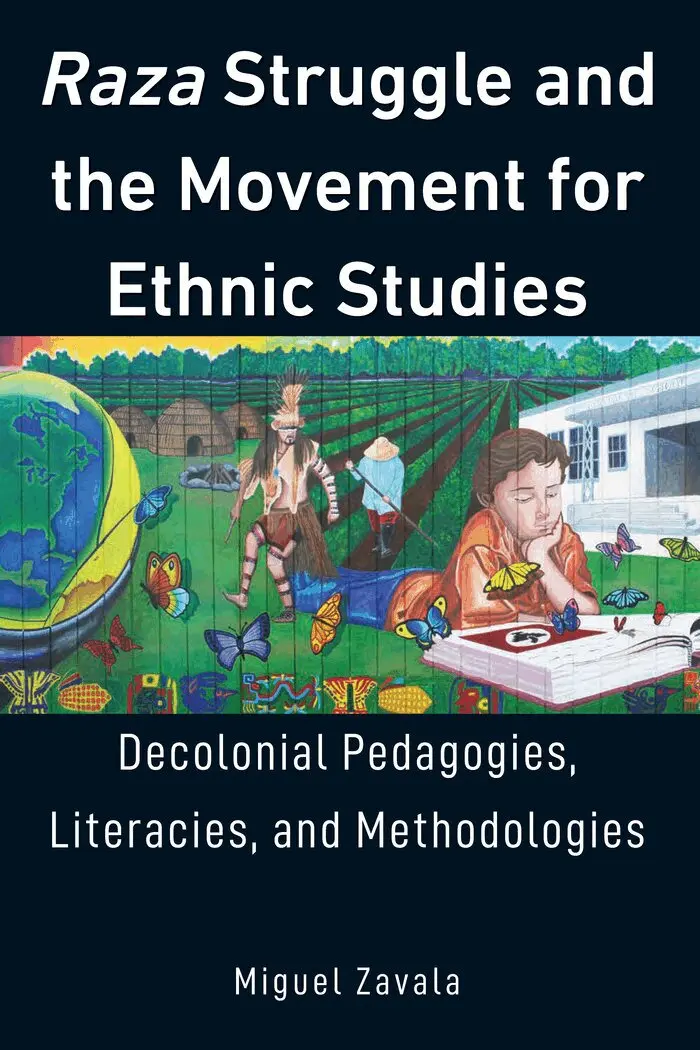
Raza Struggle and the Movement for Ethnic Studies
Decolonial Pedagogies, Literacies, and Methodologies
Inbunden, Engelska, 2018
1 018 kr
Skickas inom 5-8 vardagar
Raza Struggle and the Movement for Ethnic Studies: Decolonial Pedagogies, Literacies, and Methodologies presents an investigation of decolonization in the context of education and what this means for ethnic studies projects. It accomplishes this exploration by looking at the history of Raza communities, defined broadly as the Indigenous and mestizo working class peoples from Latin America, with a focus on the complex yet unifying Chicanx-Mexican experience in the Southwest United States. This book bridges the fields of history, pedagogy, and decolonization through a creative and interweaving methodology that includes critical historiography, dialogue, autoethnography, and qualitative inquiry. Collectively, this work opens new ground, challenging scholars and educators to rethink critical education rooted in traditional and Western frameworks. Arguing for decolonial and Indigenous approaches, the author invites educators and cultural workers to reflect on learning and community in their praxis. Raza Struggle and the Movement for Ethnic Studies will be of interest to students of ethnic studies and Latin American and Mexican history. It is also relevant to teachers, teacher educators, and scholars who are intent on creating spaces of hope and possibility rooted in Freirean, decolonial, and Indigenous frameworks.