Mike J. Gooding - Böcker
Visar alla böcker från författaren Mike J. Gooding. Handla med fri frakt och snabb leverans.
2 produkter
2 produkter
1 555 kr
Skickas inom 7-10 vardagar
The domestication of wheat, more than any other plant, has allowed food to be produced in sufficient quantities to support community settlement, cultural development and population growth. Wheat is one of the major sources of energy, protein and dietary fibre in human nutrition. This book comprehensively describes how wheat is produced and used. It begins with a consideration of how the different grain characteristics influence the subsequent utilization of the harvested wheat. A large part of the book is then devoted to advice and discussion concerning establishing, managing and harvesting a successful crop, including the control of disease, and the use of wheat as forage. There is also a thorough consideration of the storage and use of the crop post-harvest. Wheat is grown and used throughout the world and the book reflects this by containing examples from many different countries. Research on the impact of the environment on the quality of the grain is presented and discussed, and the challenges facing growers and wheat researchers in different geographical locations are examined throughout the book. This book is essential reading for all agronomy lecturers and students at universities and colleges. By bringing together recent research and practice it is also a valuable resource for researchers and advisors in this area, such as plant breeders, agronomists and pathologists.
2 066 kr
Skickas inom 7-10 vardagar
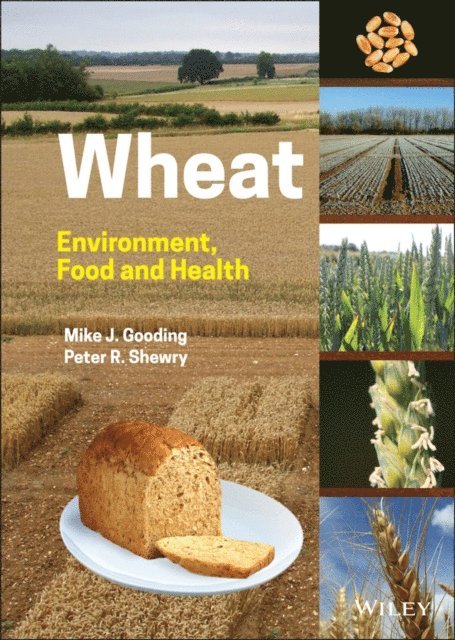
Wheat is produced on a greater area, grown over a wider geographic range, and traded internationally as a commodity more than any other arable crop. Wheat alone provides 20% of the calories and protein in the global human diet. Understanding the interactions between wheat production, the environment, and human nutrition is essential for meeting the demands of food security as we approach the middle of the 21st century.Wheat: Environment, Food and Health is written by two leading authorities in the field and offers insights into critical issues such as the sustainability of wheat production, the challenges of both mitigating and adapting to environmental change, and the effects of wheat consumption on human health. Covering a broad range of topics, the authors: Introduce the historical development and utilization of the wheat crop.Describe the factors affecting the quality and acceptability of wheat for different uses.Discuss the soil characteristics that are required for, and changed by, wheat production.Examine the water, temperature, and light requirements of wheat systems.Explore the methods and sustainability of plant breeding and farmer approaches to improving crop yields.Describe the development, structure, and composition of wheat grain.Discuss the contribution and impacts, both positive and negative, of wheat consumption on human health.• Discuss how modern technologies and new approaches are addressing the challenges of maintaining wheat production.Wheat: Environment, Food and Health is an essential resource for researchers and academics in disciplines including agriculture, plant biology, applied biology, botany, food science and nutrition, crop improvement, food security, environmental sustainability, and human health.