• Fri frakt över 249 kr
  • •
  • Snabba leveranser
  • •
  • Billiga böcker
Kundservice

Du är på sajten för privatpersoner.

Företag, bibliotek eller offentlig verksamhet?

Du handlar på classic.bokus.com, där alla dina funktioner finns intakta.
Till classic.bokus.com
Bokus logotyp. Gå till startsidan.
  • Erbjudanden
  • Nyheter
  • Student
  • Topplistor
  • Barn & ungdom
  • Bokus Play
  • E-böcker
  • Pocketböcker
  • Spel & pussel

10% rabatt på allt med kod: NYSTART10 →

Sidfot

Mina sidor

    Hjälp

    • Kundservice
    • Vanliga frågor och svar
    • Frakt och leverans
    • Retur vid ångerrätt
    • Reklamera vara
    • Betalning
    • Köpvillkor
    • Allmänna villkor
    • Information om webbplatsens tillgänglighet

    Om Bokus

    • Om oss
    • Pressrum
    • För studenter
    • För företag
    • För bibliotek och offentlig verksamhet
    • För leverantörer
    • Hållbarhet

    Populärt

    • Aktuella erbjudanden
    • Presentkort
    • Studentlitteratur
    • Nya böcker
    • Topplistor
    • Signerade böcker
    • Engelska böcker

    Inspiration

    • Boktips
    • BookTok
    • Populära bokserier
    • Barnbokskaraktärer
    • Populära författare
    Logotyp för Bokus
    Följ oss på Facebook (extern länk)Följ oss på Instagram (extern länk)Följ oss på YouTube (extern länk)Följ oss på TikTok (extern länk)
    bokus @ CookiesAnpassa cookiesIntegritetspolicyKöpvillkor
    Till Citymail hemsida (extern länk)Till Budbee hemsida (extern länk)Till Postnord hemsida (extern länk)Till Schenker hemsida (extern länk)Till Early Bird hemsida (extern länk)Till Walleys hemsida (extern länk)
    1. Naturvetenskap och teknik
    2. Teknik och industri
    3. Övrig teknik och tillämpad vetenskap

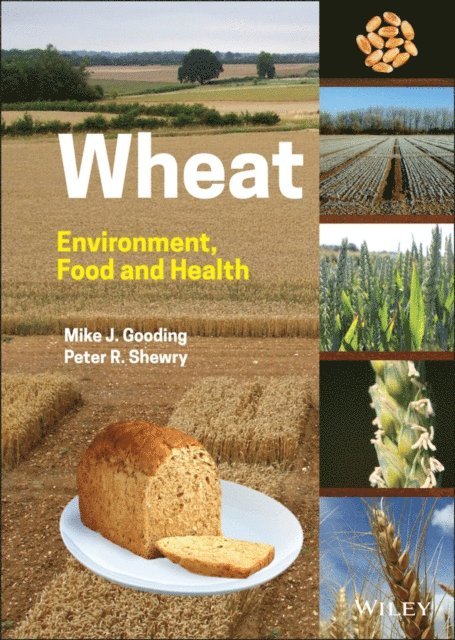
    Wheat

    Environment, Food and Health

    AvMike J. Gooding,Peter R. Shewry

    Inbunden, Engelska, 2022

    2 182 kr

    Beställningsvara. Skickas inom 5-8 vardagar. Fri frakt över 249 kr.

    Beskrivning

    Wheat is produced on a greater area, grown over a wider geographic range, and traded internationally as a commodity more than any other arable crop. Wheat alone provides 20% of the calories and protein in the global human diet. Understanding the interactions between wheat production, the environment, and human nutrition is essential for meeting the demands of food security as we approach the middle of the 21st century.Wheat: Environment, Food and Health is written by two leading authorities in the field and offers insights into critical issues such as the sustainability of wheat production, the challenges of both mitigating and adapting to environmental change, and the effects of wheat consumption on human health. Covering a broad range of topics, the authors: Introduce the historical development and utilization of the wheat crop.Describe the factors affecting the quality and acceptability of wheat for different uses.Discuss the soil characteristics that are required for, and changed by, wheat production.Examine the water, temperature, and light requirements of wheat systems.Explore the methods and sustainability of plant breeding and farmer approaches to improving crop yields.Describe the development, structure, and composition of wheat grain.Discuss the contribution and impacts, both positive and negative, of wheat consumption on human health.• Discuss how modern technologies and new approaches are addressing the challenges of maintaining wheat production.Wheat: Environment, Food and Health is an essential resource for researchers and academics in disciplines including agriculture, plant biology, applied biology, botany, food science and nutrition, crop improvement, food security, environmental sustainability, and human health.

    Produktinformation

    • Utgivningsdatum:2022-02-24
    • Mått:170 x 244 x 25 mm
    • Vikt:936 g
    • Format:Inbunden
    • Språk:Engelska
    • Antal sidor:432
    • Förlag:John Wiley & Sons Inc
    • ISBN:9781119652557

    Utforska kategorier

    • Övrig teknik och tillämpad vetenskap inom Naturvetenskap och teknik
    • Agronomi och lantbruk inom Naturvetenskap och teknik

    Mer om författaren

    Mike J. Gooding has researched extensively on wheat agronomy and science whilst also being Head of School of Agriculture, Policy and Development, University of Reading, UK, and then Director of the Institute of Biological, Environmental, and Rural Sciences at Aberystwyth University, UK. He continues at Aberystwyth as an Honorary Professor in Crop Science.Peter R. Shewry’s recognition as a global expert includes the award of the Thomas Burr Osborne Medal (American Association of Cereal Chemists), the Rank Prize for Nutrition, and the Clyde H Bailey Medal (International Association of Cereal Science and Technology). He continues his work on improving grain quality for processing and health at Rothamsted Research, UK, and as Emeritus Professor at the University of Reading, UK.

    Innehållsförteckning

    • Foreword xvAcknowledgements xvi1 Wheat and Humans: An Introduction to the Development and Utilisation of the Wheat Crop 11.1 Wheat Production in the Past and Present 11.1.1 Co-Evolution of Wheat Production and Human Societies 11.1.2 Wheat Supply and Demand 41.1.3 Wheat Adaptation 71.2 The Wheat Plant 91.2.1 Vegetative Phase 141.2.1.1 Germination 141.2.1.2 Leaves 151.2.1.3 Tillers 161.2.1.4 Roots 161.2.2 Reproductive Phase 161.2.2.1 Stem Extension 171.2.2.2 Booting and Ear Emergence 181.2.2.3 Anthesis 181.2.2.4 Grain Growth 191.3 Wheat Evolution and Migration 201.3.1 Origin in the Fertile Crescent 201.3.2 Wild Wheats 211.3.3 Domestication 221.3.4 The Spread of Wheat Cultivation 231.3.5 Increases in Harvest Index 241.4 Wheat as Food 251.4.1 The Development of Milling and Baking 251.4.2 The Cultural Significance of Bread 281.4.3 Bread Today 301.4.4 The Fall and Rise of Whole Grain Foods 311.4.5 Producing White and Wholemeal Flours by Roller Milling 331.5 Grain Quality 331.5.1 Grain Size, Shape, and Specific Weight 331.5.2 Endosperm Texture 351.5.3 Water Absorption 351.5.4 Gluten 361.5.4.1 The Origin and Properties of Gluten 361.5.4.2 Gluten and Health 371.5.4.3 Dough Properties that Determine Processing Quality 371.5.4.4 Importance of Total Protein Concentration 381.5.4.5 Importance of Protein Quality 401.5.4.6 Measurement of Dough Rheology and Quality 401.5.5 Other Factors Affecting the Acceptability of Wheat for Different End-Uses 411.5.5.1 Alpha-Amylase Activity 411.5.5.2 Seed Coat Colour 421.6 Further Chapters 42References 422 A ‘Good’ Soil 522.1 Soils for Wheat Production 532.1.1 Soil Taxonomy 532.1.2 Soil Texture 542.1.3 Soil Organic Matter 562.1.4 Soil pH and Sodicity 582.1.5 Salinity 602.1.6 Soil Structure 612.1.7 Soil Depth 632.1.8 Land Classification 632.2 The Rise of the Plough 642.3 Soil Change and Land Degradation 662.3.1 Loss of Soil 662.3.2 Organic Matter Loss and Amendment 702.3.3 Acidification and Liming 742.3.3.1 Calcium as a Nutrient 752.3.4 Depletion of Micronutrients 762.3.4.1 Boron 762.3.4.2 Chlorine 762.3.4.3 Copper 772.3.4.4 Iron 772.3.4.5 Manganese 782.3.4.6 Molybdenum 782.3.4.7 Nickel 782.3.4.8 Zinc 792.3.5 Salinisation 792.3.6 The Weed Seedbank 802.4 Systems for Protecting the Soil 822.4.1 Conservation Tillage 822.4.2 Organic Farming 842.4.3 Conservation Agriculture 852.5 Land-Use Efficiency and Soils 86References 873 Ample Water 1013.1 The Water Requirement of Wheat 1033.1.1 Germination and Seedling Emergence 1033.1.2 Transpiration 1043.1.3 Root Growth 1083.1.4 Reproductive Growth and Grain Filling 1093.2 Available Water 1133.2.1 Soil Water 1133.2.2 Rainfall 1143.2.2.1 Rainfall Shortage 1153.2.2.2 Rainfall Excess 1163.2.3 Irrigation 1173.2.3.1 Surface Irrigation 1193.2.3.2 Overhead Irrigation 1193.2.3.3 Sources of Irrigation Water 1203.3 Water Use Efficiency 1223.3.1 Reducing Evaporation Losses 1223.3.2 Increasing Rooting at Depth 1223.3.3 Deficit Irrigation 1243.3.4 Osmotic Adjustment 1243.3.5 Transpiration Efficiency 1253.3.6 Potassium 1253.4 Land-Use Efficiency and Water 127References 1284 Mild Temperatures 1394.1 The Temperature Requirement for Wheat 1404.2 ‘Waiting for Fine Times’ (Snape et al. 2001) 1424.2.1 Dormancy 1424.2.2 Cold Acclimation 1434.2.3 Vernalisation 1444.2.4 Photoperiodism 1454.2.5 Earliness per se 1474.3 Vegetative Growth and Development 1474.3.1 Germination and Emergence 1474.3.2 Leaves 1484.3.3 Tillers 1504.3.4 Roots 1504.4 Reproductive Growth and Development 1514.4.1 Spikelet Formation and Stem Extension 1514.4.2 Meiosis and Anthesis 1514.4.2.1 Heat Stress 1514.4.2.2 Cold Stress 1544.4.3 Grain Filling and Quality 1544.5 Global Warming 156References 1575 Sunshine 1665.1 The Light Requirement of Wheat 1705.1.1 Light Quantity 1705.1.2 Light Quality 1755.2 Light Interception 1765.3 Improving Radiation Use for Increased Land-Use Efficiency 179References 1816 Canopy Management 1866.1 Crop Establishment 1866.1.1 Sowing Date 1866.1.2 Plant Populations and Sowing Rate 1886.2 Crop Nutrition 1936.2.1 Nitrogen 1946.2.1.1 The Requirement for Nitrogen 1946.2.1.2 Nitrogen Fixation 2016.2.1.3 Nitrogen Efficiencies and Losses 2056.2.1.4 Recovering and Recycling Fixed Nitrogen 2116.2.1.5 Optimising Nitrogen Application 2146.2.2 Phosphorus 2186.2.3 Sulphur 2216.2.4 Magnesium 2246.3 Diseases and their Control 2246.3.1 The Rusts 2266.3.1.1 Yellow Rust 2266.3.1.2 Leaf Rust 2276.3.1.3 Stem Rust 2276.3.2 The Blotch Diseases 2286.3.2.1 Septoria tritici Blotch 2286.3.2.2 Septoria nodorum Blotch 2296.3.2.3 Tan Spot 2306.3.3 Diseases Contributing to Mycotoxins in the Grain 2306.3.3.1 Ergot 2306.3.3.2 Fusarium Head Blight (FHB) 2316.3.4 Fungicides and Fungicide Use 2326.4 Land-use Efficiency and Canopy Management 238References 2407 The Structure and Composition of the Wheat Grain 2637.1 Grain Development 2637.1.1 Fertilisation 2637.1.2 Post-fertilisation 2657.1.3 Endosperm Development 2657.1.4 Embryo Development 2677.2 Structure of the Mature Grain 2687.3 Major Components of the Mature Grain 2717.3.1 Carbohydrates 2727.3.1.1 Monosaccharides, Disaccharides, and Oligosaccharides 2727.3.1.2 Starch 2727.3.1.3 Cell Wall Polysaccharides 2747.3.1.4 Arabinogalactan Peptide (AGP) 2767.3.2 Proteins 2777.3.2.1 Grain Protein Content (GPC) 2777.3.2.2 Grain Protein Deviation 2777.3.2.3 Essential Amino Acid Composition 2787.3.2.4 Wheat Grain Proteins 2797.3.2.5 Gluten Proteins: Gliadins and Glutenins 2807.3.2.6 Other Proteins of the Prolamin Superfamily 2877.3.2.7 Other Storage Proteins 2917.3.2.8 Other Inhibitors and Putative Defensive Proteins 2927.3.2.9 Xylanases and Xylanase Inhibitors 2937.3.3 Lipids 2937.3.4 Minor Components: Minerals, Vitamins, and Phytochemicals 2947.4 Gradients in Composition within the Starchy Endosperm 295References 2968 Components and Mechanisms that Determine Grain Processing Properties 3018.1 Grain Hardness and Vitreousness 3018.1.1 Friabilin and Puroindolines 3028.1.2 Other Proteins that Affect Grain Hardness 3038.1.3 Role of Lipids 3048.1.4 When and How is Grain Softness Established? 3048.1.5 Vitreousness 3058.2 Dough Viscoelasticity 3058.2.1 Wheat Gluten and Dough Viscoelasticity 3058.2.2 HMW Subunits, Dough Strength, and Breadmaking Quality 3078.2.3 Effects of Other Gluten Proteins on Dough Quality 3088.2.4 Molecular Basis for the Role of the HMW Subunits in Gluten Structure and Properties 3088.3 Functional Properties of Starch 3098.3.1 Starch Gelatinisation 3108.3.2 Starch Damage 3108.3.3 Starch Retrogradation and Staling 3118.3.4 Waxy and High Amylose Starches 3118.4 Other Functional Components 3118.4.1 Arabinoxylan 3118.4.2 Functional Properties of Lipids in Dough 3128.4.3 Water Absorption: Effects of Starch, Protein, and Fibre 3128.5 Effects of Crop Nutrition and Environmental Factors on Grain Composition and Quality 3138.5.1 Nitrogen Fertilisation 3138.5.2 Sulphur Availability 3148.5.2.1 Sulphur Nutrition, Asparagine Content, and Acrylamide Formation 3158.5.3 Temperature and Water Availability 3168.5.4 Carbon Dioxide Concentration 317References 3189 The Role of Wheat in Diet and Health 3219.1 Contribution of Wheat to the Human Diet 3219.2 Dietary Fibre 3219.2.1 Proposed and Approved Benefits of Dietary Fibre 3219.2.2 Wheat Grain Fibre 3249.2.2.1 Cell Wall Polysaccharides 3249.2.2.2 Fructans 3259.2.2.3 Resistant Starch 3259.2.2.4 High Amylose Starch 3259.2.3 Mechanism of Action of Dietary Fibre 3269.2.3.1 Role of Food Structure and Breakdown 3269.2.3.2 Role of Luminal Viscosity 3279.2.3.3 Role of Prebiotic Activity 3279.3 Micronutrients and Phytochemicals 3279.3.1 Iron and Zinc 3279.3.2 Selenium 3309.3.3 B Vitamins 3309.3.4 Phytochemicals 3319.3.4.1 Phenolics 3319.3.4.2 Terpenoids 3339.3.5 Betaine and Choline 3339.3.6 Health Benefits of Phytochemicals 3359.3.7 Environmental Effects on the Concentrations of Phytochemicals and Minerals 3379.4 Adverse Effects of Wheat on Health 3389.4.1 Wheat as Part of the Western Diet 3389.4.2 Allergy and Intolerance to Wheat 3389.4.3 Allergy 3389.4.4 Coeliac Disease and Related Intolerances 3409.4.5 Other Adverse Reactions to Wheat 3419.4.6 FODMAPs and Gastro-Intestinal Disorders 3419.4.7 Bloating 3429.5 Producing Healthier Wheat Products by Processing 3429.5.1 Debranning 3429.5.2 Flour Particle Size 3429.5.3 Fermentation 3439.5.4 Sprouting 3449.5.5 Enzyme Treatments 3449.5.6 Conclusions: Processing for Improved Health Benefits 3449.6 Fungal Toxins in Wheat 3459.6.1 Ergot 3459.6.2 Fusarium Mycotoxins 3459.6.3 Mycotoxins from Storage Fungi 3479.6.4 Removing Fungal Toxins by Processing 347References 34810 Wheat Genetics and Improvement 35710.1 Genetic Background to Wheat Breeding 35710.2 Technologies for Wheat Genetics and Breeding 35810.2.1 Aneuploid Lines 35810.2.2 Doubled Haploid Lines, Recombinant Inbred Lines, and Near-Isogenic Lines 35910.2.3 Marker-Assisted Selection (MAS) 36010.2.4 Genome-Wide Association Genetics (GWAS) and Genomic Selection (GS) 36010.2.5 Intermated Populations (MAGIC and NAM) 36110.2.6 Hybrid Wheat 36110.2.7 Perennial Wheat 36210.3 Sources and Exploitation of Genetic Diversity 36310.3.1 Gene Banks 36310.3.2 Land Races 36310.3.3 Wild Relatives 36410.3.4 Rye Translocations 36510.3.5 Synthetic Wheats 36610.3.6 Ancient Wheats 36610.3.7 Tritordeum: A Novel Cereal Derived from Wheat 36710.3.8 Mutagenesis and TILLING 36710.4 Impact of Breeding on Genetic Diversity in Wheat 36910.4.1 Minerals 36910.4.2 Protein Content 37010.4.3 Wheat Proteins that Trigger Adverse Reactions 37110.4.4 Dietary Fibre 37110.4.5 Other Components 37210.5 Are Ancient Wheats More Healthy than Modern Wheats? 37210.5.1 Wheat Proteins that Trigger Adverse Reactions 37310.5.2 Other Components 37310.6 Wheat Biotechnology 37410.6.1 Genetic Transformation 37410.6.1.1 DNA Delivery 37510.6.1.2 Selection of Transformed Plants 37510.6.1.3 Targeting and Regulating Gene Expression 37610.6.1.4 Gene Editing 37610.6.2 Regulation, Impact and Consumer Acceptance of Genetic Transformation and Genome Editing in Wheat and Other Crops 37710.7 Applications of Biotechnology to Wheat Improvement 37810.7.1 Input Traits 37910.7.1.1 Potential Yield 37910.7.1.2 Improving Nitrogen-Use Efficiency (NUE) 37910.7.1.3 Resistance to Abiotic Stresses 38010.7.1.4 Resistance to Pests and Pathogens 38010.7.2 Output Traits: Grain Quality 38010.7.2.1 Dough Strength 38010.7.2.2 Grain Texture 38210.7.2.3 Increasing Mineral Micronutrients 38210.7.2.4 Reducing Adverse Effects 38310.7.2.5 ‘Improving’ Grain Polysaccharides 384References 38511 Epilogue: Wheat in Conflict and in Peace 394Reference 396Index 397