Milena Tripkovic - Böcker
Visar alla böcker från författaren Milena Tripkovic. Handla med fri frakt och snabb leverans.
2 produkter
2 produkter
863 kr
Skickas inom 5-8 vardagar
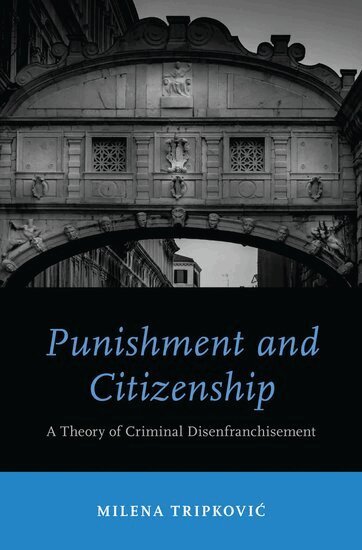
Criminal disenfranchisement-the practice of restricting electoral rights following criminal conviction-is the only surviving electoral restriction of adult, mentally competent citizens in contemporary democracies. Despite the strong devotion to the principle of universal suffrage, criminal offenders are still routinely deprived of active and passive franchise, while the justifications for such limitations remain elusive and incoherent. In Punishment and Citizenship, Milena Tripkovic develops an empirical and normative account of criminal disenfranchisement. Starting from historical precedents of such restrictions and examining the current policies of a number of European countries, Tripkovic argues that while criminal disenfranchisement is considered a form of punishment, it should instead be viewed as a citizenship sanction imposed when a citizen fails to perform their role as a member of a political community. In order to determine the justifications of disenfranchisement, Tripkovic explores various citizenship ideals and examines whether criminal offenders comply with the expectations that are posed before them. After developing a theoretical framework of citizenship duties, Tripkovic concludes that very few criminal offenders fail to satisfy fundamental citizenship conditions and exhaustive voting restrictions cannot ultimately be justified.A comprehensive assessment of criminal disenfranchisement, Punishment and Citizenship offers concrete policy suggestions to determine the limited circumstances under which electoral rights could justifiably be withheld from criminal offenders.
1 944 kr
Skickas inom 10-15 vardagar
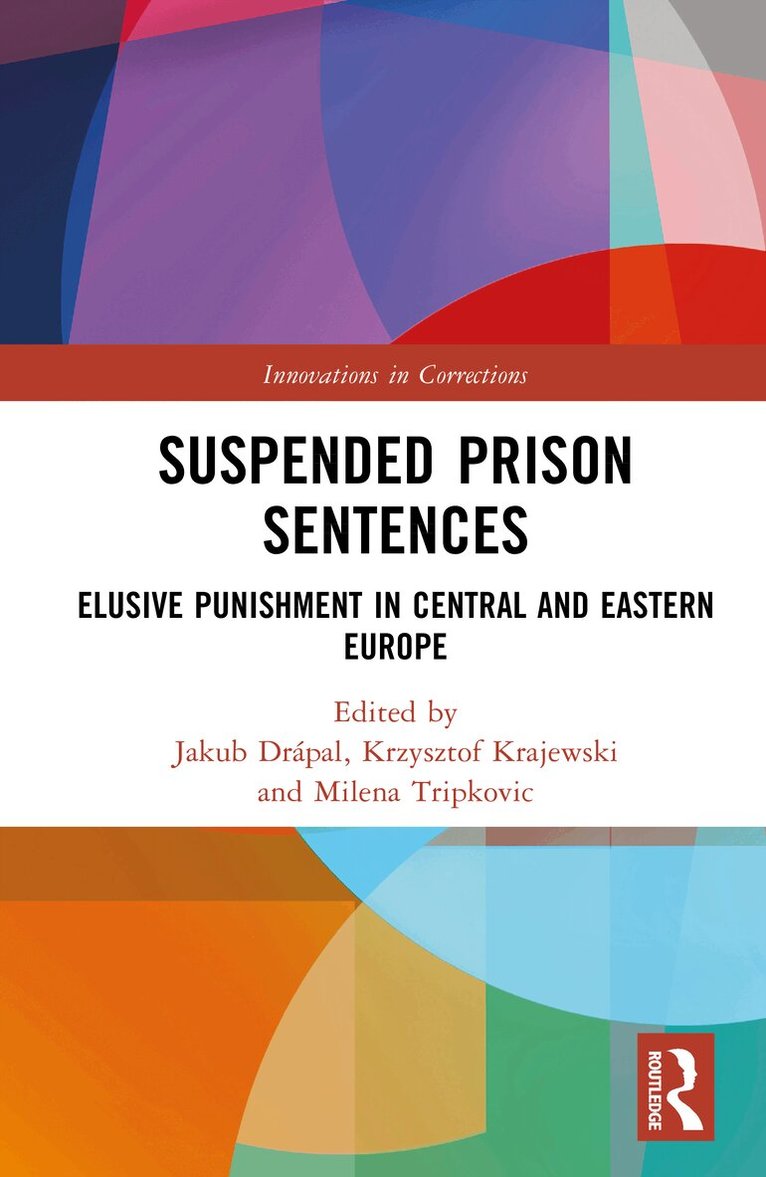
This book uncovers the controversies around the suspended prison sentence, its main aims and features, and the role that it occupies within the wider criminal justice context. Suspended prison sentences were introduced in Central and Eastern European (CEE) states as alternatives to short prison sentences: although they were initially generally conceived of as exceptional penal tools, over time, they became the most imposed and dominant penal sanctions and, in that sense, a defining feature of criminal justice systems in the region.The book provides a rich source of information about the development and features of suspended sentences in eight CEE countries, a topic that, although of great importance due to their frequency, has received only scant academic attention. Employing a legal, socio-legal, and criminological approach, it achieves this goal through individual chapters on eight countries (Czechia, Estonia, Hungary, Poland, Romania, the Russian Federation, Serbia, and Slovenia), and also through three general chapters, which outline the main specificity of the region as a whole but also present nuances between different countries.The book will be of interest to a wide variety of academic researchers who study crime, punishment, and the penal system, and especially to those interested in sentencing. Given the huge discrepancy in the frequency of use of this sanction in CEE countries and the frequency of use of parole in contemporary practice, the work provides unique insights into the potential and desirability of its wider use, particularly due to the minimal supervision that it requires in examined countries. The book therefore seeks to critically inform current thinking on the value and appropriateness of particular forms of sanctions in responding to crime.