Miles A. Kimball – författare
Visar alla böcker från författaren Miles A. Kimball. Handla med fri frakt och snabb leverans.
5 produkter
5 produkter
715 kr
Skickas inom 10-15 vardagar
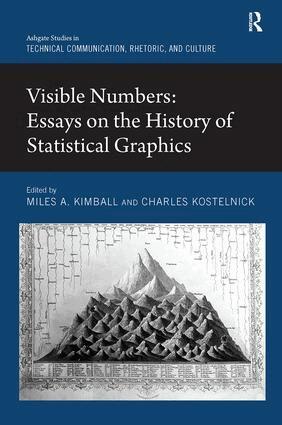
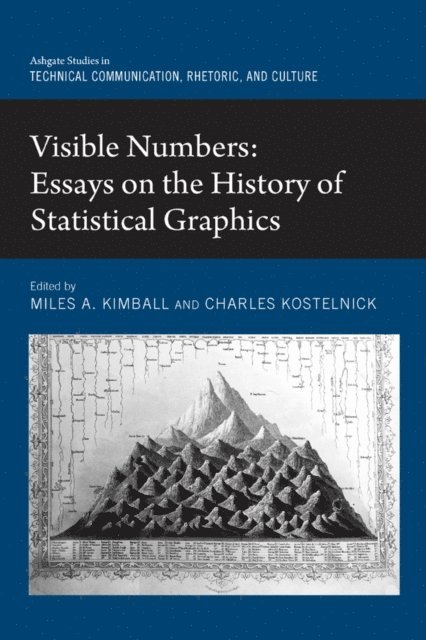
Bringing together scholars from around the world, this collection examines many of the historical developments in making data visible through charts, graphs, thematic maps, and now interactive displays. Today, we are used to seeing data portrayed in a dizzying array of graphic forms. Virtually any quantified knowledge, from social and physical science to engineering and medicine, as well as business, government, or personal activity, has been visualized. Yet the methods of making data visible are relatively new innovations, most stemming from eighteenth- and nineteenth-century innovations that arose as a logical response to a growing desire to quantify everything-from science, economics, and industry to population, health, and crime. Innovators such as Playfair, Alexander von Humboldt, Heinrich Berghaus, John Snow, Florence Nightingale, Francis Galton, and Charles Minard began to develop graphical methods to make data and their relations more visible. In the twentieth century, data design became both increasingly specialized within new and existing disciplines-science, engineering, social science, and medicine-and at the same time became further democratized, with new forms that make statistical, business, and government data more accessible to the public. At the close of the twentieth century and the beginning of the twenty-first, an explosion in interactive digital data design has exponentially increased our access to data. The contributors analyze this fascinating history through a variety of critical approaches, including visual rhetoric, visual culture, genre theory, and fully contextualized historical scholarship.
2 255 kr
Skickas inom 10-15 vardagar
Bringing together scholars from around the world, this collection examines many of the historical developments in making data visible through charts, graphs, thematic maps, and now interactive displays. Today, we are used to seeing data portrayed in a dizzying array of graphic forms. Virtually any quantified knowledge, from social and physical science to engineering and medicine, as well as business, government, or personal activity, has been visualized. Yet the methods of making data visible are relatively new innovations, most stemming from eighteenth- and nineteenth-century innovations that arose as a logical response to a growing desire to quantify everything-from science, economics, and industry to population, health, and crime. Innovators such as Playfair, Alexander von Humboldt, Heinrich Berghaus, John Snow, Florence Nightingale, Francis Galton, and Charles Minard began to develop graphical methods to make data and their relations more visible. In the twentieth century, data design became both increasingly specialized within new and existing disciplines-science, engineering, social science, and medicine-and at the same time became further democratized, with new forms that make statistical, business, and government data more accessible to the public. At the close of the twentieth century and the beginning of the twenty-first, an explosion in interactive digital data design has exponentially increased our access to data. The contributors analyze this fascinating history through a variety of critical approaches, including visual rhetoric, visual culture, genre theory, and fully contextualized historical scholarship.
637 kr
Skickas inom 5-8 vardagar
Introduces students to the basic principles and theories of design, combining practical advice about the design process with a foundation in visual rhetoric and usability.Document Design introduces students to the basic principles and theories of design, combining practical advice about the design process with a foundation in visual rhetoric and usability. Most books on document design lean toward either theory or practice. This book offers a balanced approach-theoretically informed practice-that introduces a working vocabulary to help students become reflective practitioners, able not only to create effective designs but also to explain why and how they made their design choices. Derek G. Ross and Miles A. Kimball hope to give students the foundation they need to make design decisions in any rhetorical situation. Students will learn to negotiate between the needs of both users and clients to consider the nuances of audience, purpose, and context.
Tactical Approaches to Technical Communication
Reimagining Institutions, Transforming Society
Häftad, Engelska, 2025
378 kr
Skickas
Delves into how individuals tactically exist within communicative systems, carving out spaces for themselves in places they don't necessarily fit.In 1984, Michel de Certeau described the terms "strategies" as how institutions communicate their wants/demands/desires and "tactics" as how individuals navigate these potentially hostile, unwelcoming systems. A little over two decades later, Miles A. Kimball solidified the idea of tactical technical communication, laying the foundations for a new area of inquiry and scholarship. Today, many academics and researchers have imbued the concept of tactical technical communication with their own ideas and perspectives. This essay collection spotlights a meaningful diversity of tactical technical communication scholarship, exploring topics like the feminist punk magazine BIKINI KILL, the phenomenon of copwatching, the usage of fictional narratives in technical writing courses, and the challenges of LBGTQ+ visibility in local libraries. In many ways, the contributors are partaking in their own forms of tactical communication as they carve out spaces for themselves and their ideas within the academic discourse.
Tactical Approaches to Technical Communication
Reimagining Institutions, Transforming Society
Inbunden, Engelska, 2025
1 578 kr
Skickas inom 5-8 vardagar
Delves into how individuals tactically exist within communicative systems, carving out spaces for themselves in places they don't necessarily fit.In 1984, Michel de Certeau described the terms "strategies" as how institutions communicate their wants/demands/desires and "tactics" as how individuals navigate these potentially hostile, unwelcoming systems. A little over two decades later, Miles A. Kimball solidified the idea of tactical technical communication, laying the foundations for a new area of inquiry and scholarship. Today, many academics and researchers have imbued the concept of tactical technical communication with their own ideas and perspectives. This essay collection spotlights a meaningful diversity of tactical technical communication scholarship, exploring topics like the feminist punk magazine BIKINI KILL, the phenomenon of copwatching, the usage of fictional narratives in technical writing courses, and the challenges of LBGTQ+ visibility in local libraries. In many ways, the contributors are partaking in their own forms of tactical communication as they carve out spaces for themselves and their ideas within the academic discourse.