Miles Larmer - Böcker
Visar alla böcker från författaren Miles Larmer. Handla med fri frakt och snabb leverans.
9 produkter
9 produkter
941 kr
Skickas inom 10-15 vardagar
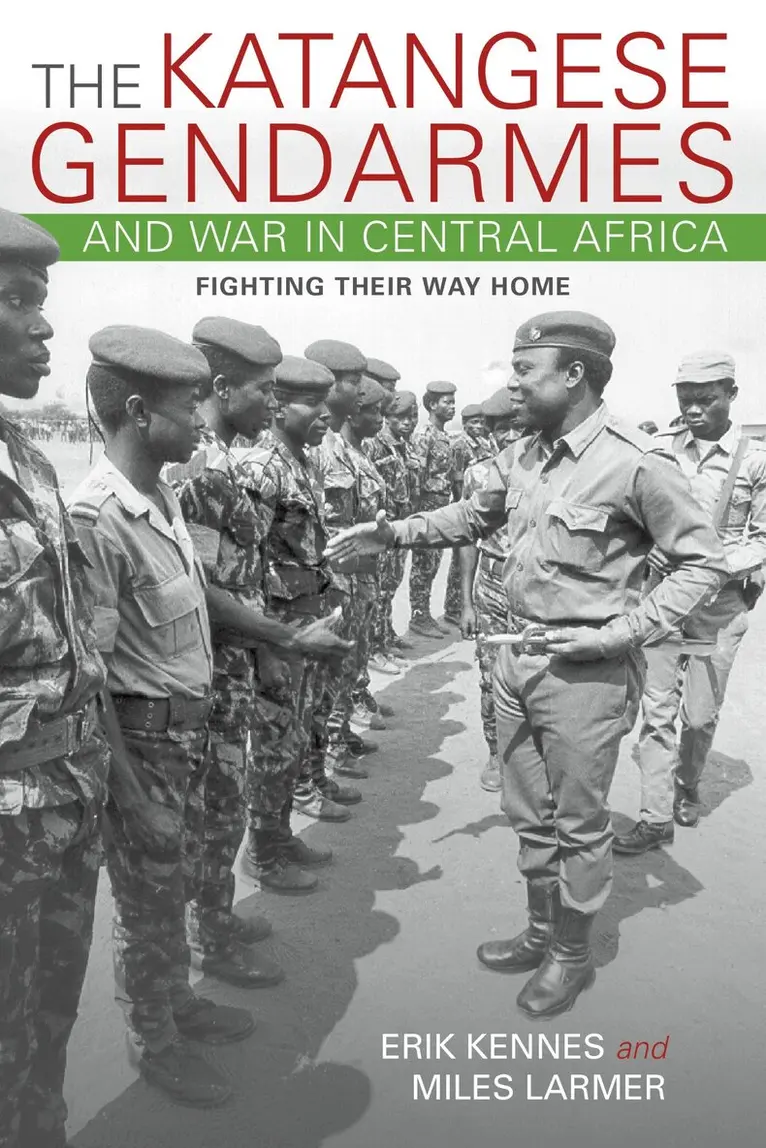
Erik Kennes and Miles Larmer provide a history of the Katangese gendarmes and their largely undocumented role in many of the most important political and military conflicts in Central Africa. Katanga, located in today's Democratic Republic of Congo, seceded in 1960 as Congo achieved independence and the gendarmes fought as the unrecognized state's army during the Congo crisis. Kennes and Larmer explain how the ex-gendarmes, then exiled in Angola, struggled to maintain their national identity and return "home." They take readers through the complex history of the Katangese and their engagement in regional conflicts and Africa's Cold War. Kennes and Larmer show how the paths not taken at Africa's independence persist in contemporary political and military movements and bring new understandings to the challenges that personal and collective identities pose to the relationship between African nation-states and their citizens and subjects.
378 kr
Skickas inom 10-15 vardagar
Erik Kennes and Miles Larmer provide a history of the Katangese gendarmes and their largely undocumented role in many of the most important political and military conflicts in Central Africa. Katanga, located in today's Democratic Republic of Congo, seceded in 1960 as Congo achieved independence and the gendarmes fought as the unrecognized state's army during the Congo crisis. Kennes and Larmer explain how the ex-gendarmes, then exiled in Angola, struggled to maintain their national identity and return "home." They take readers through the complex history of the Katangese and their engagement in regional conflicts and Africa's Cold War. Kennes and Larmer show how the paths not taken at Africa's independence persist in contemporary political and military movements and bring new understandings to the challenges that personal and collective identities pose to the relationship between African nation-states and their citizens and subjects.
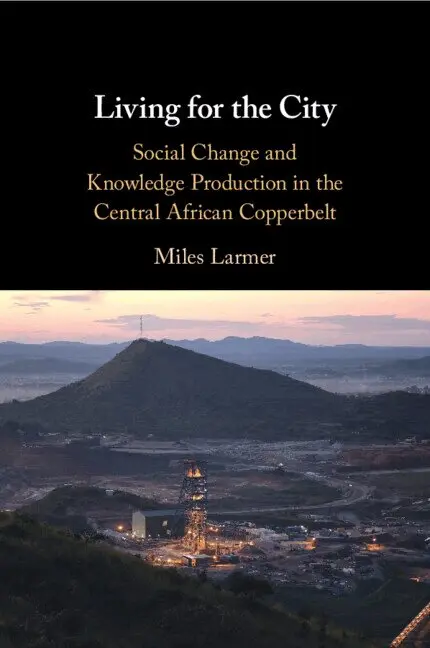
Living for the City
Social Change and Knowledge Production in the Central African Copperbelt
Inbunden, Engelska, 2021
1 282 kr
Skickas inom 7-10 vardagar
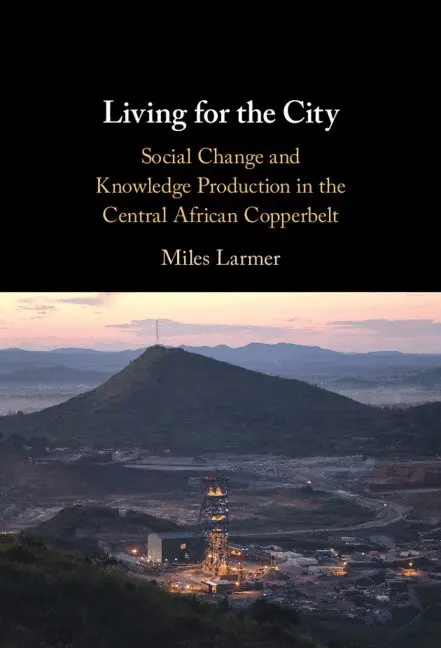
Living for the City is a social history of the Central African Copperbelt, considered as a single region encompassing the neighbouring mining regions of Zambia and the Democratic Republic of Congo. The Haut Katanga and Zambian Copperbelt mine towns have been understood as the vanguard of urban 'modernity' in Africa. Observers found in these towns new African communities that were experiencing what they wrongly understood as a transition from rural 'traditional' society - stable, superstitious and agricultural - to an urban existence characterised by industrial work discipline, the money economy and conspicuous consumption, Christianity, and nuclear families headed by male breadwinners supported by domesticated housewives. Miles Larmer challenges this representation of Copperbelt society, presenting an original analysis which integrates the region's social history with the production of knowledge about it, shaped by both changing political and intellectual contexts and by Copperbelt communities themselves. This title is available as Open Access on Cambridge Core.
Living for the City
Social Change and Knowledge Production in the Central African Copperbelt
Häftad, Engelska, 2024
414 kr
Skickas inom 7-10 vardagar
Living for the City is a social history of the Central African Copperbelt, considered as a single region encompassing the neighbouring mining regions of Zambia and the Democratic Republic of Congo. The Haut Katanga and Zambian Copperbelt mine towns have been understood as the vanguard of urban 'modernity' in Africa. Observers found in these towns new African communities that were experiencing what they wrongly understood as a transition from rural 'traditional' society - stable, superstitious and agricultural - to an urban existence characterised by industrial work discipline, the money economy and conspicuous consumption, Christianity, and nuclear families headed by male breadwinners supported by domesticated housewives. Miles Larmer challenges this representation of Copperbelt society, presenting an original analysis which integrates the region's social history with the production of knowledge about it, shaped by both changing political and intellectual contexts and by Copperbelt communities themselves. This title is available as Open Access on Cambridge Core.
766 kr
Skickas inom 10-15 vardagar
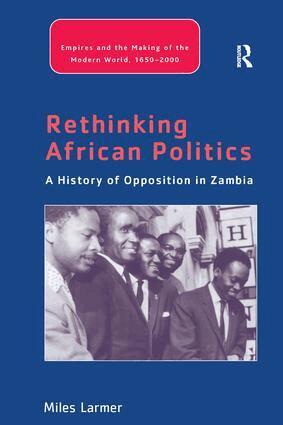
In 1964 Kenneth Kaunda and his United National Independence Party (UNIP) government established the nation of Zambia in the former British colony of Northern Rhodesia. In parallel with many other newly independent countries in Africa this process of decolonisation created a wave of optimism regarding humanity's capacity to overcome oppression and poverty. Yet, as this study shows, in Zambia as in many other countries, the legacy of colonialism created obstacles that proved difficult to overcome. Within a short space of time democratisation and development was replaced by economic stagnation, political authoritarianism, corruption and ethnic and political conflict. To better understand this process, Dr Larmer explores UNIP's political ideology and the strategies it employed to retain a grip on government. He shows that despite the party's claim that it adhered to an authentically African model of consensual and communitarian decision-making, it was never a truly nationally representative body. Whereas in long-established Western societies unevenness in support was accepted as a legitimate basis for party political difference, in Zambia this was regarded as a threat to the fragile bindings of the young nation state, and as such had to be denied and repressed. This led to the declaration of a one-party state, presented as the logical expression of UNIP supremacy but it was in fact a reflection of its weakening grip on power. Through case studies of opposition political and social movements rooted in these differences, the book demonstrates that UNIP's control of the new nation-state was partial, uneven and consistently prone to challenge. Alongside this, the study also re-examines Zambia's role in the regional liberation struggles, providing valuable new evidence of the country's complex relations with Apartheid-era South Africa and the relationship between internal and external opposition, shaped by the context of regional liberation movements and the Cold War. Drawing on extensive archival research and interviews, Dr Larmer offers a ground-breaking analysis of post-colonial political history which helps explain the challenges facing contemporary African polities.
461 kr
Skickas inom 10-15 vardagar
2 220 kr
Skickas inom 10-15 vardagar
In 1964 Kenneth Kaunda and his United National Independence Party (UNIP) government established the nation of Zambia in the former British colony of Northern Rhodesia. In parallel with many other newly independent countries in Africa this process of decolonisation created a wave of optimism regarding humanity's capacity to overcome oppression and poverty. Yet, as this study shows, in Zambia as in many other countries, the legacy of colonialism created obstacles that proved difficult to overcome. Within a short space of time democratisation and development was replaced by economic stagnation, political authoritarianism, corruption and ethnic and political conflict. To better understand this process, Dr Larmer explores UNIP's political ideology and the strategies it employed to retain a grip on government. He shows that despite the party's claim that it adhered to an authentically African model of consensual and communitarian decision-making, it was never a truly nationally representative body. Whereas in long-established Western societies unevenness in support was accepted as a legitimate basis for party political difference, in Zambia this was regarded as a threat to the fragile bindings of the young nation state, and as such had to be denied and repressed. This led to the declaration of a one-party state, presented as the logical expression of UNIP supremacy but it was in fact a reflection of its weakening grip on power. Through case studies of opposition political and social movements rooted in these differences, the book demonstrates that UNIP's control of the new nation-state was partial, uneven and consistently prone to challenge. Alongside this, the study also re-examines Zambia's role in the regional liberation struggles, providing valuable new evidence of the country's complex relations with Apartheid-era South Africa and the relationship between internal and external opposition, shaped by the context of regional liberation movements and the Cold War. Drawing on extensive archival research and interviews, Dr Larmer offers a ground-breaking analysis of post-colonial political history which helps explain the challenges facing contemporary African polities.
225 kr
Skickas inom 3-6 vardagar
A groundbreaking analysis examining the gains, contradictions and frustrations of 21st century pre-democracy struggles across Southern Africa.
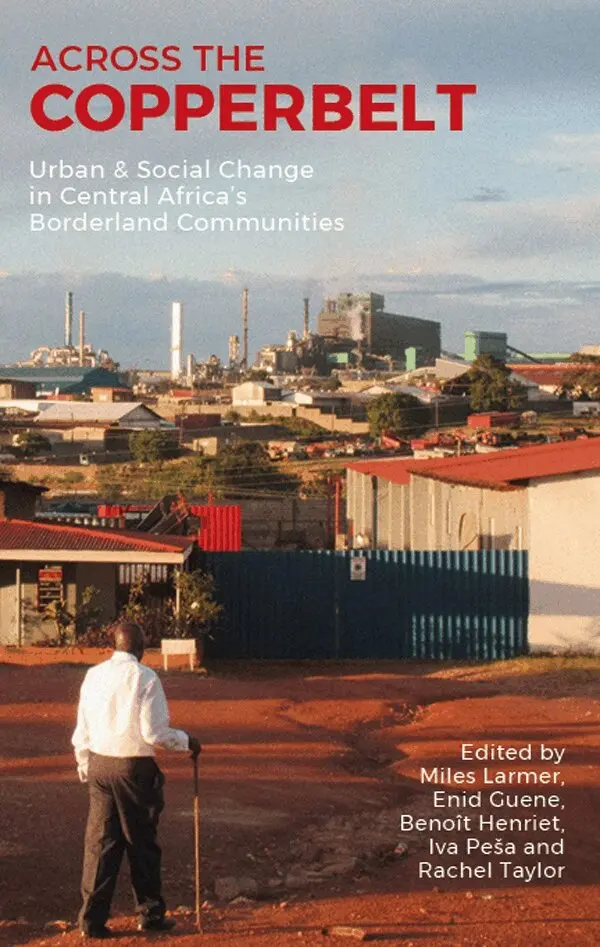
Across the Copperbelt
Urban & Social Change in Central Africa's Borderland Communities
Häftad, Engelska, 2021
377 kr
Skickas inom 7-10 vardagar
The first comparative historical analysis - local, national and transnational - of the cross-border Central African copperbelt; a key work in studies of labour, urbanisation and African studies.The Central African Copperbelt, encompassing the mining communities of Katanga (DR Congo) and Zambia, has been central to the study of modernisation and rapid social and political change in urban Africa. This volume expands upon earlier studies of industrial mining, male-dominated formal labour organisation and political change by examining both sides of the border from pre-colonial history to the present and encompassing a wide range of economic, social and cultural identities and activities. Bringing together scholars from a range of disciplines, the contributors explore copperbelt communities' sense of identity - expressed in comic strips and football matches, their precarious and inventive ways of living, their involvement in church and education, and the processes and impact of urbanisation and development, environmental degradation and changing gender relations. A major contribution to borderland studies, in showing how the meaning and relevance of the border to the copperbelt's mixed and mobile population has changed constantly over time, the book's engagement with communities at the nexus of social, economic and political change makes it a key study for those working in global urban development.This book is available under the Creative Commons license CC-BY-NC. It is based on research that is part of a project that has received funding from the European Research Council (ERC) under the European Union's Horizon 2020 research and innovation program (grant agreement no: 681657): 'Comparing the Copperbelt: Political Culture and Knowledge Production in Central Africa'.