Miles Russell - Böcker
Visar alla böcker från författaren Miles Russell. Handla med fri frakt och snabb leverans.
10 produkter
10 produkter
214 kr
Skickas
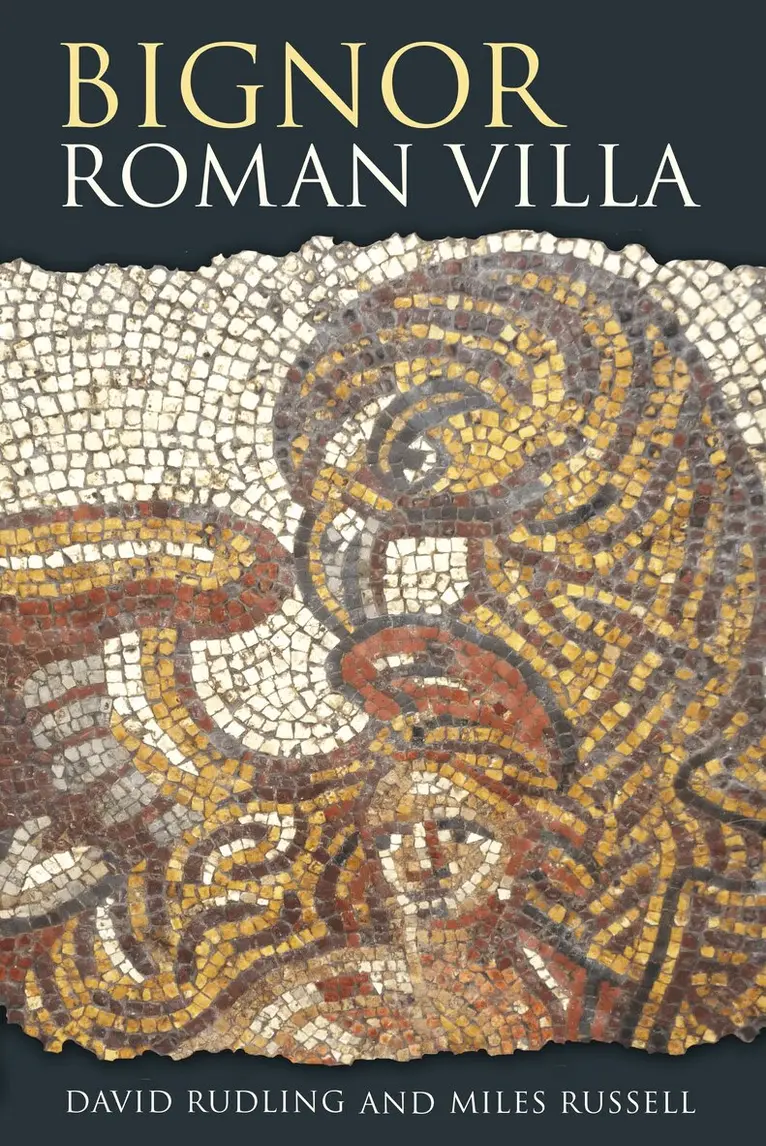
Discovered in 1811, Bignor is one of the richest and most impressive villas in Britain, its mosaics ranking among the finest in north-western Europe. Opened to the public for the first time in 1814, the site also represents one of Britain’s earliest tourist attractions, remaining in the hands of the same family, the Tuppers, to this day. This book sets out to explain the villa, who built it, when, how it would have been used and what it meant within the context of the Roman province of Britannia. It also sets out to interpret the remains, as they appear today, explaining in detail the meaning of the fine mosaic pavements and describing how the villa was first found and explored and the conservation problems facing the site in the twenty-first century. Now, after 200 years, the remarkable story of Bignor Roman Villa is told in full in this beautifully illustrated book.
175 kr
Skickas
Roman Britain is usually thought of as a land full of togas, towns and baths with Britons happily going about their Roman lives under the benign gaze of Rome. This is, to a great extent, a myth that developed after Roman control of Britain came to an end, in particular when the British Empire was at its height in the late nineteenth and early twentieth centuries.In fact, Britain was one of the least enthusiastic elements of the Roman Empire. The northern part of Britain was never conquered at all despite repeated attempts. Some Britons adopted Roman ways in order to advance themselves and become part of the new order, or just because they liked the new range of products available. However, many failed to acknowledge the Roman lifestyle at all, while many others were only outwardly Romanised, clinging to their own identities under the occupation. Britain never fully embraced the Empire and was itself never fully accepted by the rest of the Roman world. Even the Roman army inBritain became chronically rebellious and a source of instability that ultimately affected the whole Empire. As Roman power weakened, the Britons abandoned both Rome and almost all Roman culture, and the island became a land of warring kingdoms, as it had been before.
214 kr
Tillfälligt slut
194 kr
Tillfälligt slut
292 kr
Skickas
In this, the first detailed examination of Roman Sussex, Dr Miles Russell explores some of the earliest and most imposing Roman remains to be found anywhere in the British Isles. Sussex was a rich and prosperous area, its leaders such as Tiberius Claudius Togidubnus (Great King of Britain) and Gaius Sallustius Lucullus (later Governor of the Province) benefiting from direct links with the emperors Augustus, Caligula, Claudius, Nero and Domitian.Separate chapters examine the Roman palaces of Sussex, which copied the architecture of the imperial residences in Rome, as well as the religion, social life, rural settlement and industry of the Romano-Britons, looking at sites such as the internationally famous Fishbourne palace, Bignor villa, Pevensey castle and Chichester. The book ends with the arrival of the first Saxon overlord of Britain, Aelle, King of Sussex, and a fully annotated gazetteer of the best examples of Roman archaeology visible in the county.
175 kr
Skickas
Piltdown. Even today the name sends a shiver down the collective spine of the scientific community, for this was the most dramatic and daring fraud ever perpetrated upon the world of science and academia. Between 1908 and 1912, a series of amazing discoveries relating to what appeared to be the earliest human were made close to the little village of Piltdown in Sussex. These remains belonged to the developmental ‘missing link’ between man and ape. The basic principles of evolution, first propounded by Charles Darwin some fifty years before, now appeared as indisputable fact. The Manchester Guardian ran the first headline: ‘THE EARLIEST MAN?: REMARKABLE DISCOVERY IN SUSSEX. A SKULL MILLIONS OF YEARS OLD’ it screamed, adding that the discovery was ‘one of the most important of our time’. The news spread quickly around the world, with many voicing their eagerness to examine the find. Few archaeological discoveries have the capacity to be front-page news twice over, but ‘Piltdown Man’ is a rare exception. Forty-one years after he first became famous, the ‘Earliest Englishman’ was again hot news. It was late November 1953, and the world was about to discover that Piltdown Man had been a hoax. Not just any hoax mind, the London Star declared it to be ‘THE BIGGEST SCIENTIFIC HOAX OF THE CENTURY’.
214 kr
Skickas inom 11-20 vardagar
Written in 1136 by Geoffrey of Monmouth, the Historia Regum Britanniae (History of the Kings of Britain) purported to chronicle the British monarchy from the arrival of the Trojan Brutus, grandson of Aeneas, through to the seventh century AD when the Anglo-Saxons had taken control of the land. The Historia was a medieval bestseller, and copies spread across the whole of western Europe. It went on to influence great works of art and literature, being the first to outline the story of King Arthur as well as laying the foundations for King Lear and Cymbeline, both later immortalised by Shakespeare.Although it claimed to be history, the Historia has long been dismissed as an unreliable piece of medieval propaganda and national mythmaking. A new examination of the text, however, shows that it is very much more than that. In this ground-breaking new book, Miles Russell explains how individual elements of the Historia can be traced back to the first century BC, a time when Britain was making first contact with Rome. Geoffrey of Monmouth’s skill was to weave these early traditions together with folklore and material culled from post-Roman sources, in order to create a national epic. In doing so, he also created King Arthur, a composite character whose real origins and context are explained here.This important new work establishes Geoffrey of Monmouth as no mere peddler of historical fiction, but as the man who preserved the earliest foundation myths of Britain. It is time to re-evaluate the Historia Regum Britanniae and shine a new light into the so-called ‘Dark Ages’.
146 kr
Skickas
Written in 1136 by Geoffrey of Monmouth, the Historia Regum Britanniae (History of the Kings of Britain) purported to chronicle the British monarchy from the arrival of the Trojan Brutus, grandson of Aeneas, through to the seventh century AD. The Historia was a medieval best-seller, and copies spread across the whole of western Europe. It was the first work to outline the story of King Arthur.The Historia has long been dismissed as an unreliable piece of medieval propaganda. A new examination of the text, however, shows that it is very much more than that. Miles Russell explains how individual elements can be traced back to the first century BC, a time when Britain was making first contact with Rome. Geoffrey of Monmouth’s skill was to weave these early traditions together with material culled from post-Roman sources in order to create a national epic. In doing so, he also created King Arthur, a composite character whose real origins and context are explained here.This important work establishes Geoffrey of Monmouth as no mere peddler of historical fiction, but as the man who preserved the earliest foundation myths of Britain. It is time to re-evaluate the Historia Regum Britanniaeand shine a new light into the so-called ‘Dark Ages’.
531 kr
Skickas
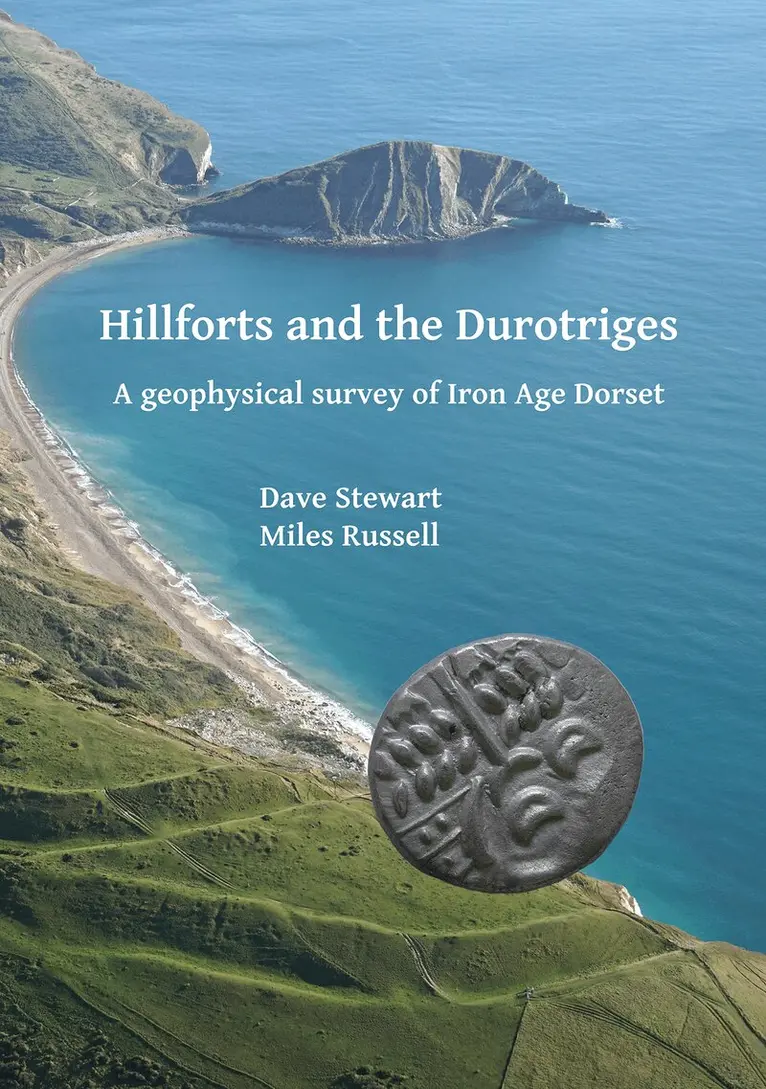
Hillforts are among the most dramatic and visually striking of prehistoric monuments in the British Isles. Dorset, in southern England, is particularly rich in these Iron Age earthwork enclosures, with over 30 examples being so far recorded, including the internationally famous sites of Maiden Castle, Hod Hill, Badbury Rings and Hambledon Hill. Many have been the subject of archaeological investigation, such as the excavations conducted at Maiden Castle in the 1930s by Tessa and Mortimer Wheeler, but few have, to date, been intensively examined. This volume sets out the results of a detailed programme of non-intrusive geophysical survey conducted across the Dorset hillforts, generating detailed subsurface maps of archaeological features, in the hope of better resolving the phasing, form and internal structure of these iconic sites. The dataset presented here not only helps to change our perception of what hillforts were, how they functioned and what went on within them, but also provides a way of assessing their longevity, reconsidering how they were perceived and reused in subsequent periods. Given the oft-cited association between the Dorset enclosures and the Durotriges tribe, who are thought to have occupied the area in the Later Iron Age, serious consideration is also for the first time given to the belief that hillforts formed the focus of conflict between the native tribes and the armies of imperial Rome in the first century AD.
765 kr
Skickas inom 5-8 vardagar