Minxin Pei - Böcker
Visar alla böcker från författaren Minxin Pei. Handla med fri frakt och snabb leverans.
6 produkter
6 produkter
283 kr
Skickas inom 7-10 vardagar
Countering recent hype around technology, a leading expert argues that the endurance of dictatorship in China owes less to facial recognition AI and GPS tracking than to the human resources of the Leninist surveillance state.For decades China watchers argued that economic liberalization and increasing prosperity would bring democracy to the world’s most populous country. Instead, the Communist Party’s grip on power has only strengthened. Why? The answer, Minxin Pei argues, lies in the effectiveness of the Chinese surveillance state. And the source of that effectiveness is not just advanced technology like facial recognition AI and mobile phone tracking. These are important, but what matters more is China’s vast, labor-intensive infrastructure of domestic spying.Central government data on Chinese surveillance is confidential, so Pei turned to local reports, police gazettes, leaked documents, and interviews with exiled dissidents to provide a detailed look at the evolution, organization, and tactics of the surveillance state. Following the 1989 Tiananmen uprising, the Chinese Communist Party invested immense resources in a coercive apparatus operated by a relatively small number of secret police officers capable of mobilizing millions of citizen informants to spy on those suspected of disloyalty. The CCP’s Leninist bureaucratic structure—whereby officials and party activists penetrate every sector of society and the economy, from universities and village committees to delivery companies, telecommunication firms, and Tibetan monasteries—ensures that Beijing’s eyes and ears are truly everywhere.While today’s system is far more robust than that of years past, it is modeled after mass surveillance implemented under Mao Zedong and Chinese emperors centuries ago. Rigorously empirical and rich in historical insight, The Sentinel State is a singular contribution to our knowledge about coercion in the Chinese state and, more generally, the survival strategies of authoritarian regimes.
306 kr
Skickas inom 10-15 vardagar
The rise of China as a great power is one of the most important developments in the twenty-first century. But despite dramatic economic progress, China’s prospects remain uncertain. In a book sure to provoke debate, Minxin Pei examines the sustainability of the Chinese Communist Party’s reform strategy—pursuing pro-market economic policies under one-party rule.Pei casts doubt on three central explanations for why China’s strategy works: sustained economic development will lead to political liberalization and democratization; gradualist economic transition is a strategy superior to the “shock therapy” prescribed for the former Soviet Union; and a neo-authoritarian developmental state is essential to economic take-off. Pei argues that because the Communist Party must retain significant economic control to ensure its political survival, gradualism will ultimately fail.The lack of democratic reforms in China has led to pervasive corruption and a breakdown in political accountability. What has emerged is a decentralized predatory state in which local party bosses have effectively privatized the state’s authority. Collusive corruption is widespread and governance is deteriorating. Instead of evolving toward a full market economy, China is trapped in partial economic and political reforms.Combining powerful insights with empirical research, China’s Trapped Transition offers a provocative assessment of China’s future as a great power.
204 kr
Skickas inom 7-10 vardagar
Countering recent hype around technology, a leading expert argues that the endurance of dictatorship in China owes less to facial recognition AI and GPS tracking than to the human resources of the Leninist surveillance state.China watchers long argued that economic liberalization and prosperity would be harbingers of democracy. Instead, the Communist Party’s grip has strengthened. How? The answer lies in the effectiveness of the surveillance state. And the source of that effectiveness is not just facial recognition AI and phone tracking. Technology is important, but what matters more is China’s vast army of domestic spies.Central government surveillance data is confidential, so Minxin Pei turned to local reports, police gazettes, leaked documents, and interviews with exiled dissidents to provide a detailed look at the evolution, organization, and tactics of the surveillance state. Following the 1989 Tiananmen uprising, the Party invested in a coercive apparatus operated by a small number of secret police capable of mobilizing millions of citizen informants. The Party’s Leninist bureaucratic structure—whereby officials and activists penetrate every sector of the economy and civil society, from universities to delivery companies to monasteries—ensures that Beijing’s eyes and ears are everywhere.Rigorously empirical and rich in historical insight, The Sentinel State is a singular contribution to our knowledge about Chinese state coercion and, more generally, the survival strategies of authoritarian regimes.
From Reform to Revolution
The Demise of Communism in China and the Soviet Union
Häftad, Engelska, 1998
340 kr
Skickas inom 10-15 vardagar
The demise of communism in the former Soviet Union and the massive political and economic changes in China are the stunning transformations of our century. Two central questions are emerging: Why did different communist systems experience different patterns of transition? Why did partial reforms in the Soviet Union and China turn into revolutions?
383 kr
Skickas inom 10-15 vardagar
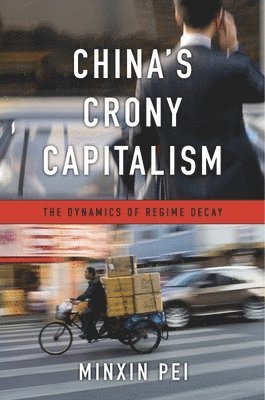
When Deng Xiaoping launched China on the path to economic reform in the late 1970s, he vowed to build “socialism with Chinese characteristics.” More than three decades later, China’s efforts to modernize have yielded something very different from the working people’s paradise Deng envisioned: an incipient kleptocracy, characterized by endemic corruption, soaring income inequality, and growing social tensions. China’s Crony Capitalism traces the origins of China’s present-day troubles to the series of incomplete reforms from the post-Tiananmen era that decentralized the control of public property without clarifying its ownership.Beginning in the 1990s, changes in the control and ownership rights of state-owned assets allowed well-connected government officials and businessmen to amass huge fortunes through the systematic looting of state-owned property—in particular land, natural resources, and assets in state-run enterprises. Mustering compelling evidence from over two hundred corruption cases involving government and law enforcement officials, private businessmen, and organized crime members, Minxin Pei shows how collusion among elites has spawned an illicit market for power inside the party-state, in which bribes and official appointments are surreptitiously but routinely traded. This system of crony capitalism has created a legacy of criminality and entrenched privilege that will make any movement toward democracy difficult and disorderly.Rejecting conventional platitudes about the resilience of Chinese Communist Party rule, Pei gathers unambiguous evidence that beneath China’s facade of ever-expanding prosperity and power lies a Leninist state in an advanced stage of decay.
317 kr
Skickas inom 7-10 vardagar
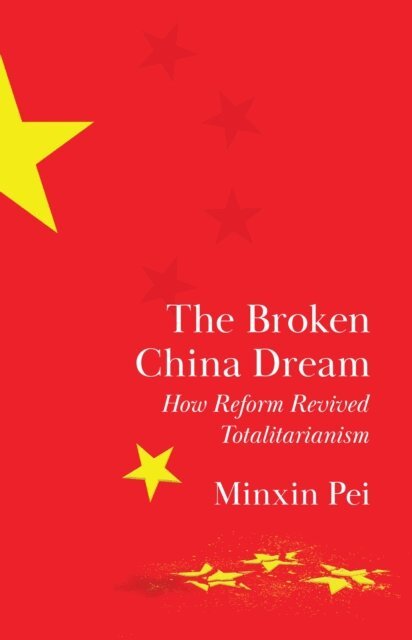
A provocative book that demystifies China’s great democratic leap backward under Xi Jinping, revealing why the country’s embrace of capitalism has given rise to hard authoritarianism, mass surveillance, and one-man rule instead of democracy as many in the West had hopedWhen China embarked on its transformative journey of modernization in 1979, many believed the country’s turn toward capitalism would put its totalitarian past to rest and mark the birth of a democratic, open society. Instead, China reverted to a neo-totalitarian state, one backed by one of the fastest-growing, most formidable economies on earth. The Broken China Dream pulls back the curtain on the regime of strongman Xi Jinping, revealing why the reforms of the post-Mao era have been reversed on nearly every front—and why the world failed to see it coming.Exposing the truth behind China’s economic ascendency after the Cultural Revolution, Minxin Pei shows how, following Mao’s death in 1976, Deng Xiaoping strategically deployed the tools of capitalism to preserve the Chinese Communist Party. Deng kept intact the institutional foundations of totalitarianism even as he unleashed private entrepreneurship and courted foreign investment, giving China’s one-party state control of a vast repressive apparatus and the most critical sectors of the economy. Only a fragile balance of power among dueling factions prevented the rise of a totalitarian leader in the two decades after the Tiananmen crackdown in 1989—but this temporary equilibrium collapsed.Essential to understanding today’s China, this meticulously researched book is a sobering account of why the country’s reformers and institutions could not stop a shrewd and ruthless politician like Xi from resurrecting dormant totalitarian practices that, for the foreseeable future, have spelled the end of the dream of a free and prosperous China.