
Mitchell Greenberg – författare
Visar alla böcker från författaren Mitchell Greenberg. Handla med fri frakt och snabb leverans.
6 produkter
6 produkter
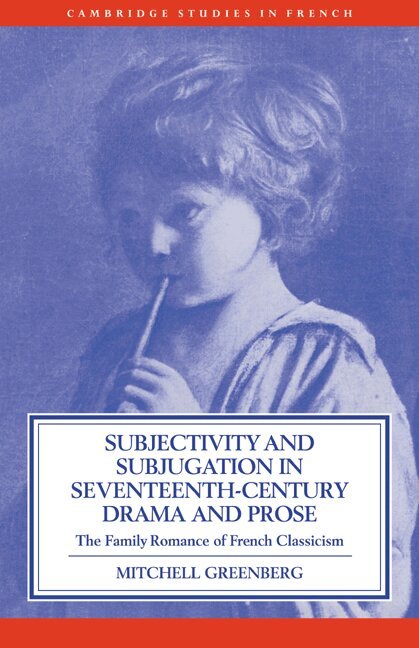
Del 36 - Cambridge Studies in French
Subjectivity and Subjugation in Seventeenth-Century Drama and Prose
The Family Romance of French Classicism
Häftad, Engelska, 2006
545 kr
Skickas inom 7-10 vardagar
This 1992 book analyses the relation between an emergent modern subjectivity in seventeenth-century French literature, particularly in dramatic works, and the contemporaneous evolution of the absolutist state. It shows how major writers of the Classical period (Corneille, Racine, Moliere, Lafayette) elaborate a new subject in and through their representations of the family, and argues that the family serves as the mediating locus of a patriarchal ideology of sexual and political containment. Most importantly, it asks why the theatre became the privileged form of representation in this state, and why this theatre concentrates almost exclusively on family conflict. Professor Greenberg argues that the narrative of oedipal sexuality and subjugation central to this new literary canon reflected the conflicting social, political and economic forces that were shifting European society away from the universe of the Renaissance and guiding it towards the 'transparency' of Classical representation.
Del 17 - Cambridge Studies in French
Corneille, Classicism and the Ruses of Symmetry
Häftad, Engelska, 2009
516 kr
Skickas inom 7-10 vardagar
Professor Greenberg's lucid study examines the themes of authority, power and sexuality in Corneille's major plays, drawing on the work of Foucault, and Freudian and feminist critics. He begins by considering the question of myth and of a 'pre-historical' cultural memory in Médée, and proceeds to a detailed analysis of each of the four best-known tragedies: Le Cid, Horace, Cinna, and Polyeucte. A concluding chapter discusses two middle-period plays and Suréna, Corneille's last tragedy. Professor Greenberg argues that the formal symmetries of classical tragedy reflect a desire for control in the realm of both politics and sexuality. He also seeks to show how these principles of symmetry are challenged or undermined in various ways by the plays themselves. The result is an exacerbation of sexual and political desire which invests Cornelian tragedy with its peculiar power and involves us so deeply in its world.
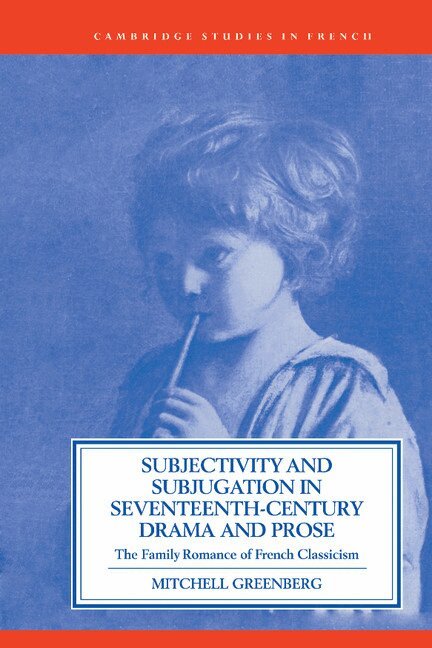
Del 36 - Cambridge Studies in French
Subjectivity and Subjugation in Seventeenth-Century Drama and Prose
The Family Romance of French Classicism
Inbunden, Engelska, 1992
1 545 kr
Skickas inom 7-10 vardagar
This 1992 book analyses the relation between an emergent modern subjectivity in seventeenth-century French literature, particularly in dramatic works, and the contemporaneous evolution of the absolutist state. It shows how major writers of the Classical period (Corneille, Racine, Moliere, Lafayette) elaborate a new subject in and through their representations of the family, and argues that the family serves as the mediating locus of a patriarchal ideology of sexual and political containment. Most importantly, it asks why the theatre became the privileged form of representation in this state, and why this theatre concentrates almost exclusively on family conflict. Professor Greenberg argues that the narrative of oedipal sexuality and subjugation central to this new literary canon reflected the conflicting social, political and economic forces that were shifting European society away from the universe of the Renaissance and guiding it towards the 'transparency' of Classical representation.
Häftad, Engelska, 1994
597 kr
Skickas inom 5-8 vardagar
Canonical States, Canonical Stages was first published in 1994. Minnesota Archive Editions uses digital technology to make long-unavailable books once again accessible, and are published unaltered from the original University of Minnesota Press editions.In the crucible of seventeenth-century Europe, a new kind of subjectivity formed, private and interior. Perversely, the new private subject made its most spectacular appearance on the public stage-an appearance that, as Mitchell Greenberg amply demonstrates, also marked the emergence of absolutism in Europe. What these two phenomena had to do with one another, and how they were elaborated in the theater of the seventeenth century, is the subject of Greenberg's book, a masterful critical work that relates the dramatic construction of modern subjectivity and absolutist culture to the formation of the Western literary canon.In particular, Canonical States, Canonical Stages shows how the Oedipus myth, reinterpreted on various stages at the end of the Renaissance, served the purposes of the emerging culture by replaying the founding moment of absolute rule. Working with models of genealogical criticism, psychoanalysis, and a certain Continental feminism, Greenberg reads plays by Shakespeare, Lope de Vega, Calderón, Corneille, and Racine to show how, as symptomatic texts staged within the confines of familial scenarios, they combine a dynamics of politics with a conflicting "private" desire shown to be inimical to the dominant ideology. This analysis reveals how scenarios of sacrifice and transcendence are brought into play to normalize and naturalize inchoate and threatening forces of social change by appealing to preexisting cultural models such as the myth of Oedipus. A fascinating integration of texts from political theory, psychoanalysis, history, and literature, Canonical States, Canonical Stages offers a powerful interpretation of the interrelated representation of subjectivity and absolutism on the seventeenth-century stage. Winner of the 1995 MLA Aldo and Jeanne Scaglione Prize for Comparative Literary StudiesMitchell Greenberg is chair of the Department of French and Italian at Miami University in Ohio. He is the author of, among other books, Subjectivity and Subjugation in Seventeenth-Century Drama and Prose: The Family Romance of French Classicism (1992).
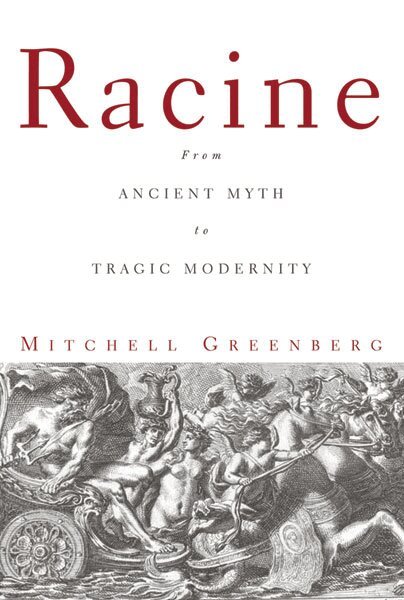
Häftad, Engelska, 2010
338 kr
Skickas inom 10-15 vardagar
A study of all of the major tragedies of Jean Racine, France's preeminent dramatist-and, according to many, its greatest and most representative author-Mitchell Greenberg's work offers an exploration of Racinian tragedy to explain the enigma of the plays' continued fascination.Greenberg shows how Racine uses myth, in particular the legend of Oedipus, to achieve his emotional power. In the seventeenth-century tragedies of Racine, almost all references to physical activity were banned from the stage. Yet contemporary accounts of the performances describe vivid emotional reactions of the audiences, who were often reduced to tears. Greenberg demonstrates how Racinian tragedy is ideologically linked to Absolutist France's attempt to impose the "order of the One" on its subjects. Racine's tragedies are spaces where the family and the state are one and the same, with the result that sexual desire becomes trapped in a closed, incestuous, and highly formalized universe.Greenberg ultimately suggests that the politics and sexuality associated with the legend of Oedipus account for our attraction to charismatic leaders and that this confusion of the state with desire explains our continued fascination with these timeless tragedies.
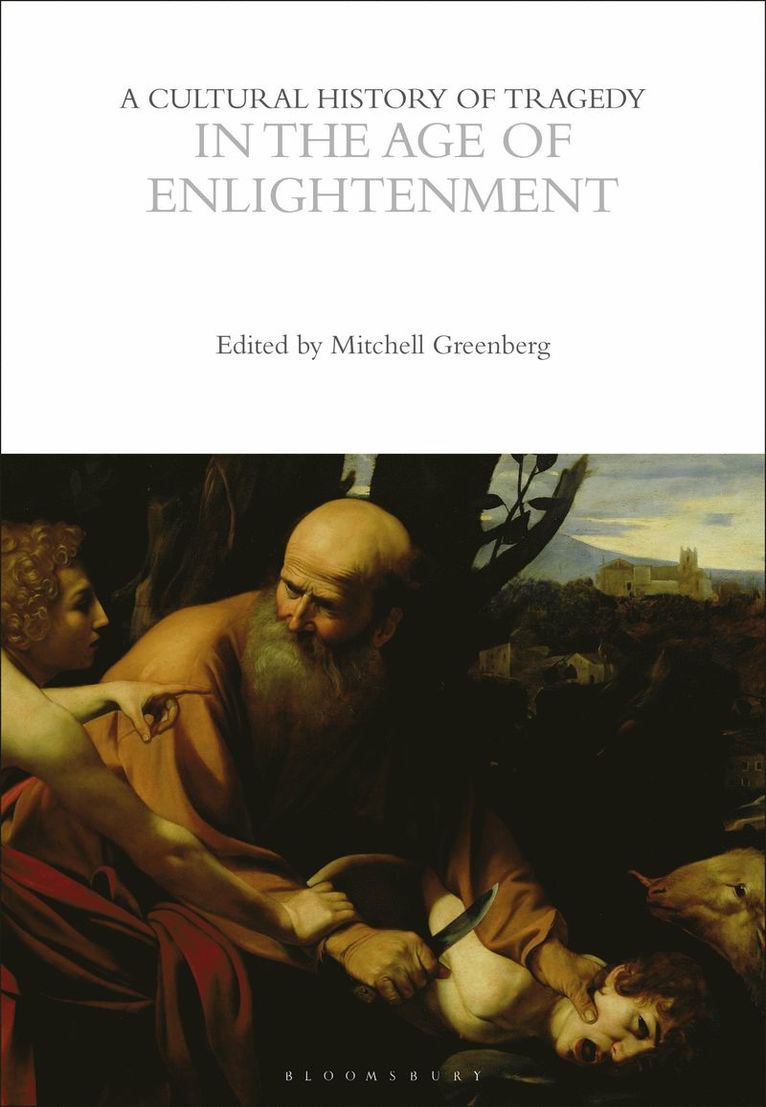
Häftad, Engelska, 2023
426 kr
Skickas inom 5-8 vardagar
The period covered by this volume in the Cultural History of Tragedy set is bookended by two shockingly similar historical events: the beheading of a king, Charles I of England in 1649 and Louis XIV of France in 1793. The period between these two dates saw enormous political, social and economic changes that altered European society’s cultural life. Tragedy, which had dominated the European stage at the beginning of this period, gradually saw itself replaced by new literary forms, culminating in the gradual decline of theatrical tragedy from the heights it had reached in the 1660s. The dominance of France’s military and cultural prestige during this period is reflected in the important, almost exclusive, space dedicated in this volume to the French stage. This book covers the tragedies of France’s two greatest playwrights — Pierre Corneille (1606-84) and Jean Racine (1639-99) — which would dominate not only the French stage but, through translations and adaptations, became the model of tragic theater across Europe, finding imitators in England (Dryden), Italy (Alfieri) and as far afield as Russia. This dominance continued well into the 18th century with the triumph of Voltaire’s tragedies. This volume also examines how the writings of Diderot and Lessing changed the direction of theatre and how after the Revolution, in the writings of Goethe, Shiller, Hegel, tragedy and the tragic were reimagined and became the sign of European modernity.Each chapter takes a different theme as its focus: forms and media; sites of performance and circulation; communities of production and consumption; philosophy and social theory; religion, ritual and myth; politics of city and nation; society and family, and gender and sexuality.