Mohammed Gamal Abdelnour – författare
Visar alla böcker från författaren Mohammed Gamal Abdelnour. Handla med fri frakt och snabb leverans.
4 produkter
4 produkter
Inbunden, Engelska, 2022
1 049 kr
Skickas inom 5-8 vardagar
In the Islamic tradition, fiqh (Islamic law) is generally regarded as the science of furū'al-dīn (matters complementary to the Islamic faith), as opposed to kalām (Islamic theology) which is known as the science of uṣūl al-dīn (matters primary to the Islamic faith). Over time, however, fiqh has significantly surpassed Kalām in terms of cognitive maturation and epistemic development. In The Higher Objectives of Islamic Theology, Mohammed Gamal Abdelnour argues that far too little attention has been paid to parallel developments in Islamic theology. Consequently, the theological project in the Islamic tradition has largely become limited to definitions and deliberations about the nature and qualities of the transcendent God, and has barely developed as a systematic discipline devoted to the higher objectives of Islamic theology, similar to those of Maqāṣid al-Sharī?a (higher objectives of Islamic law).Addressing this gap and drawing on the full-fledged genre of Maqāṣid al-Sharī?a, this study aims to develop a genre of Maqāṣid al-?Aqīda (higher objectives of Islamic theology) based on a scheme of core values (Truth, Justice, Beauty), instead of a scheme of ḥudūd (penalties). Arguing that the tradition's current overemphasis on law (Justice) has relegated both theology (Truth) and Sufism (Beauty) to the periphery of the tradition, Abdelnour illustrates how this marginalisation of theology and Sufism leaves less room for an "ethical Islam" and instead prioritises "legal" and "political Islam." In shifting the focus from law to theology, the book thereby grapples with such questions as: why did Islamic theology fail to develop a systemic genre of Maqāṣid al-?Aqīda? How do we chart out a map to guide the process of founding such an area? In what ways can the emerging Maqāṣid al-?Aqīda benefit from the well-established Maqāṣid al-Sharī?a? What are the ramifications of having an underdeveloped theology?
E-bok
PDF, Engelska, 2022825 kr
Läs direkt efter köp
In the Islamic tradition, fiqh (Islamic law) is generally regarded as the science of fur?''al-d?n (matters complementary to the Islamic faith), as opposed to kal?m (Islamic theology) which is known as the science of u??l al-d?n (matters primary to the Islamic faith). Over time, however, fiqh has significantly surpassed Kal?m in terms of cognitive maturation and epistemic development. In The Higher Objectives of Islamic Theology, Mohammed Gamal Abdelnour argues that far too little attention has been paid to parallel developments in Islamic theology. Consequently, the theological project in the Islamic tradition has largely become limited to definitions and deliberations about the nature and qualities of the transcendent God, and has barely developed as a systematic discipline devoted to the higher objectives of Islamic theology, similar to those of Maq??id al-Shar??a (higher objectives of Islamic law).Addressing this gap and drawing on the full-fledged genre of Maq??id al-Shar??a, this study aims to develop a genre of Maq??id al-?Aq?da (higher objectives of Islamic theology) based on a scheme of core values (Truth, Justice, Beauty), instead of a scheme of ?ud?d (penalties). Arguing that the tradition''s current overemphasis on law (Justice) has relegated both theology (Truth) and Sufism (Beauty) to the periphery of the tradition, Abdelnour illustrates how this marginalisation of theology and Sufism leaves less room for an "ethical Islam" and instead prioritises "legal" and "political Islam." In shifting the focus from law to theology, the book thereby grapples with such questions as: why did Islamic theology fail to develop a systemic genre of Maq??id al-?Aq?da? How do we chart out a map to guide the process of founding such an area? In what ways can the emerging Maq??id al-?Aq?da benefit from the well-established Maq??id al-Shar??a? What are the ramifications of having an underdeveloped theology?
E-bok
Engelska, 2022825 kr
Läs direkt efter köp
In the Islamic tradition, fiqh (Islamic law) is generally regarded as the science of fur?''al-d?n (matters complementary to the Islamic faith), as opposed to kal?m (Islamic theology) which is known as the science of u??l al-d?n (matters primary to the Islamic faith). Over time, however, fiqh has significantly surpassed Kal?m in terms of cognitive maturation and epistemic development. In The Higher Objectives of Islamic Theology, Mohammed Gamal Abdelnour argues that far too little attention has been paid to parallel developments in Islamic theology. Consequently, the theological project in the Islamic tradition has largely become limited to definitions and deliberations about the nature and qualities of the transcendent God, and has barely developed as a systematic discipline devoted to the higher objectives of Islamic theology, similar to those of Maq??id al-Shar??a (higher objectives of Islamic law).Addressing this gap and drawing on the full-fledged genre of Maq??id al-Shar??a, this study aims to develop a genre of Maq??id al-?Aq?da (higher objectives of Islamic theology) based on a scheme of core values (Truth, Justice, Beauty), instead of a scheme of ?ud?d (penalties). Arguing that the tradition''s current overemphasis on law (Justice) has relegated both theology (Truth) and Sufism (Beauty) to the periphery of the tradition, Abdelnour illustrates how this marginalisation of theology and Sufism leaves less room for an "ethical Islam" and instead prioritises "legal" and "political Islam." In shifting the focus from law to theology, the book thereby grapples with such questions as: why did Islamic theology fail to develop a systemic genre of Maq??id al-?Aq?da? How do we chart out a map to guide the process of founding such an area? In what ways can the emerging Maq??id al-?Aq?da benefit from the well-established Maq??id al-Shar??a? What are the ramifications of having an underdeveloped theology?
Del 66 - Currents of Encounter
Comparative History of Catholic and Aš‘arī Theologies of Truth and Salvation
Inclusive Minorities, Exclusive Majorities
Häftad, Engelska, 2021
821 kr
Skickas inom 5-8 vardagar
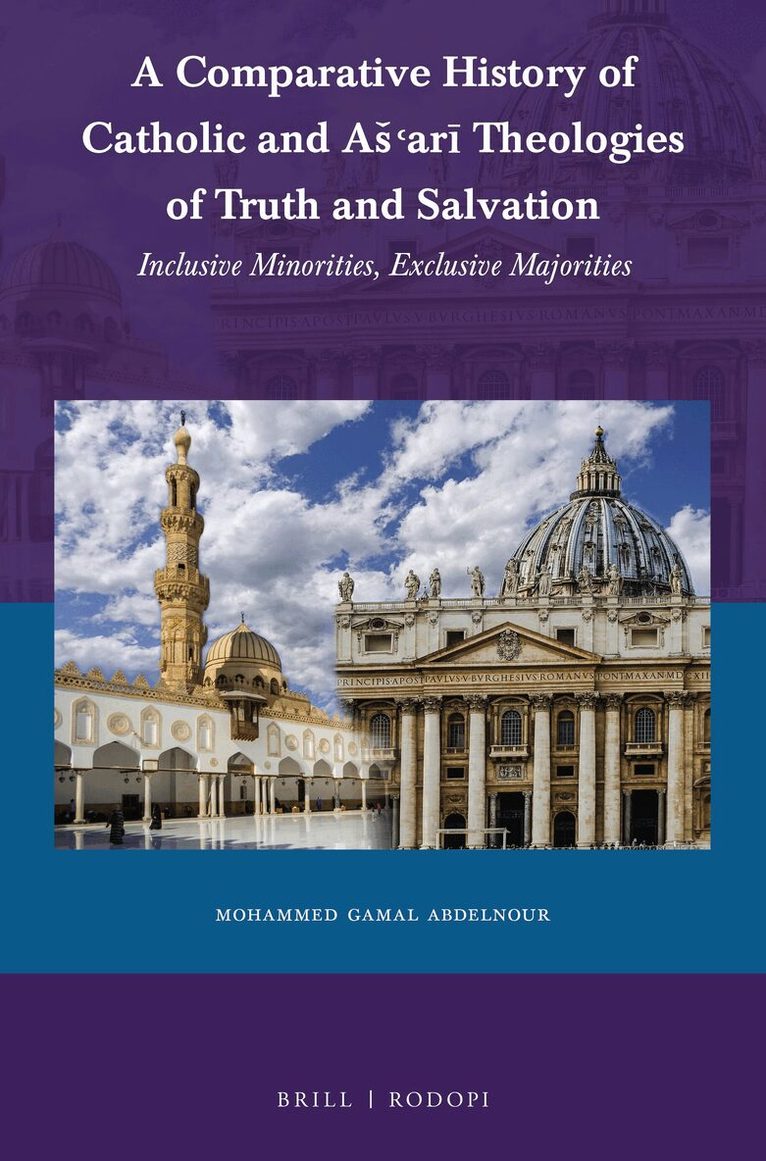
In A Comparative History of Catholic and Aš‘arī Theologies of Truth and Salvation Mohammed Gamal Abdelnour analytically and critically compares the historical development of the Catholic theologies of truth and salvation with those of its Islamic counterpart, Ašʿarism. The monograph moves the discussion from individual theologians to theological schools with a view to helping consolidate the young field of Comparative Theology. It serves two types of readers. First, the specialist who wants to dig deeper into the two traditions parallelly. Second, the generalist who may not have the time to become thoroughly familiar with every aspect of Christian-Muslim theologies. Both readers will come out with a holistic understanding of the development of Christian and Muslim theologies of truth and salvation; a holistic understanding that increases the appetite of the former and quenches that of the latter. Despite the holistic nature of the monograph, attention is duly paid to the specificities of each tradition in a deep and profound manner.