Monika Florczak-Wątor - Böcker
Visar alla böcker från författaren Monika Florczak-Wątor. Handla med fri frakt och snabb leverans.
8 produkter
8 produkter
1 932 kr
Skickas inom 10-15 vardagar
This book analyses the specificity of the law-making activity of European constitutional courts. The main hypothesis is that currently constitutional courts are positive legislators whose position in the system of State organs needs to be redefined.The book covers the analysis of the law-making activity of four constitutional courts in Western countries: Germany, Italy, Spain, and France; and six constitutional courts in Central–East European countries: Poland, Hungary, the Czech Republic, Slovak Republic, Latvia, and Bulgaria; as well as two international courts: the European Court of Human Rights (ECtHR) and the Court of Justice of the European Union (CJEU). The work thus identifies the mutual interactions between national constitutional courts and international tribunals in terms of their law-making activity. The chosen countries include constitutional courts which have been recently captured by populist governments and subordinated to political powers. Therefore, one of the purposes of the book is to identify the change in the law-making activity of those courts and to compare it with the activity of constitutional courts from countries in which democracy is not viewed as being under threat. Written by national experts, each chapter addresses a series of set questions allowing accessible and meaningful comparison.The book will be a valuable resource for students, academics, and policy-makers working in the areas of constitutional law and politics.
565 kr
Skickas inom 10-15 vardagar
This book analyses the specificity of the law-making activity of European constitutional courts. The main hypothesis is that currently constitutional courts are positive legislators whose position in the system of State organs needs to be redefined.The book covers the analysis of the law-making activity of four constitutional courts in Western countries: Germany, Italy, Spain, and France; and six constitutional courts in Central–East European countries: Poland, Hungary, the Czech Republic, Slovak Republic, Latvia, and Bulgaria; as well as two international courts: the European Court of Human Rights (ECtHR) and the Court of Justice of the European Union (CJEU). The work thus identifies the mutual interactions between national constitutional courts and international tribunals in terms of their law-making activity. The chosen countries include constitutional courts which have been recently captured by populist governments and subordinated to political powers. Therefore, one of the purposes of the book is to identify the change in the law-making activity of those courts and to compare it with the activity of constitutional courts from countries in which democracy is not viewed as being under threat. Written by national experts, each chapter addresses a series of set questions allowing accessible and meaningful comparison.The book will be a valuable resource for students, academics, and policy-makers working in the areas of constitutional law and politics.
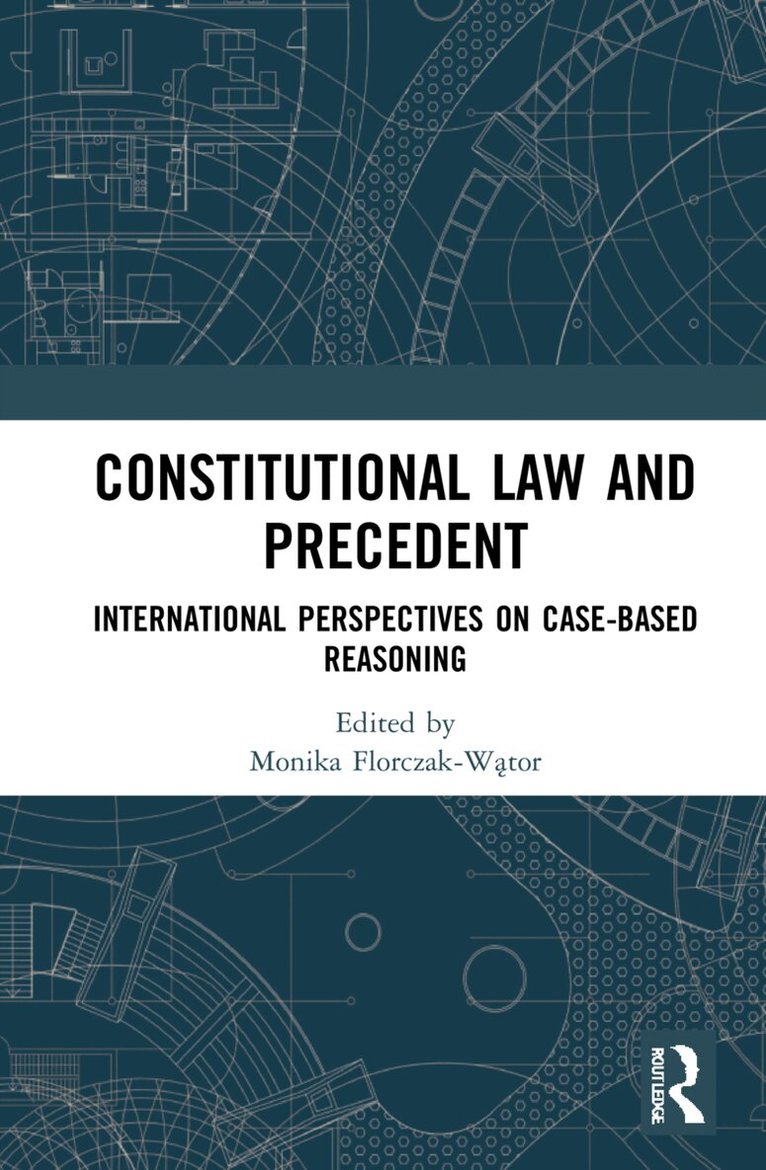
Constitutional Law and Precedent
International Perspectives on Case-Based Reasoning
Inbunden, Engelska, 2022
1 932 kr
Skickas inom 10-15 vardagar
This collection examines case-based reasoning in constitutional adjudication; that is, how courts decide on constitutional cases by referring to their own prior case law and the case law of other national, foreign, and international courts.Argumentation based on judicial authority is now fundamental to the resolution of constitutional disputes. At the same time, it is the most common form of reasoning used by courts. This volume shows not only the strengths and weaknesses of such argumentation, but also its serious methodological shortcomings. The book is comparative in nature, with individual chapters examining similar problems that different courts have resolved in different ways. The research covers three types of courts; namely the civil law constitutional courts of Germany, Italy, Poland, Lithuania, and Hungary; the common law supreme courts of the United States, Canada, and Australia; and the European international courts represented by the European Court of Human Rights and the Court of Justice of the European Union. The authors are distinguished scholars from various countries who specialise in constitutional justice issues.This book will be of interest to legal theorists and practitioners, and will be especially insightful for constitutional court judges. The Open Access version of this book, available at www.taylorfrancis.com, has been made available under a Creative Commons Attribution-Non Commercial-No Derivatives 4.0 license.
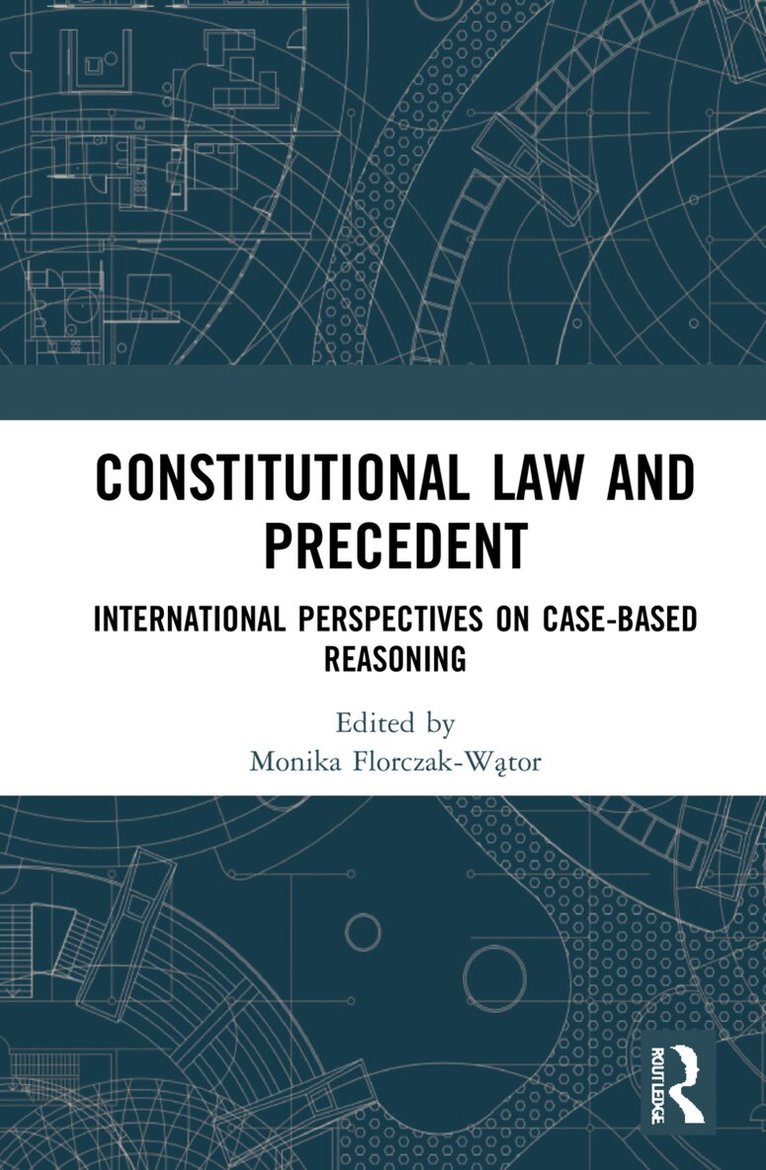
Constitutional Law and Precedent
International Perspectives on Case-Based Reasoning
Häftad, Engelska, 2023
565 kr
Skickas inom 10-15 vardagar
This collection examines case-based reasoning in constitutional adjudication; that is, how courts decide on constitutional cases by referring to their own prior case law and the case law of other national, foreign, and international courts.Argumentation based on judicial authority is now fundamental to the resolution of constitutional disputes. At the same time, it is the most common form of reasoning used by courts. This volume shows not only the strengths and weaknesses of such argumentation, but also its serious methodological shortcomings. The book is comparative in nature, with individual chapters examining similar problems that different courts have resolved in different ways. The research covers three types of courts; namely the civil law constitutional courts of Germany, Italy, Poland, Lithuania, and Hungary; the common law supreme courts of the United States, Canada, and Australia; and the European international courts represented by the European Court of Human Rights and the Court of Justice of the European Union. The authors are distinguished scholars from various countries who specialise in constitutional justice issues.This book will be of interest to legal theorists and practitioners, and will be especially insightful for constitutional court judges. The Open Access version of this book, available at www.taylorfrancis.com, has been made available under a Creative Commons Attribution-Non Commercial-No Derivatives 4.0 license.
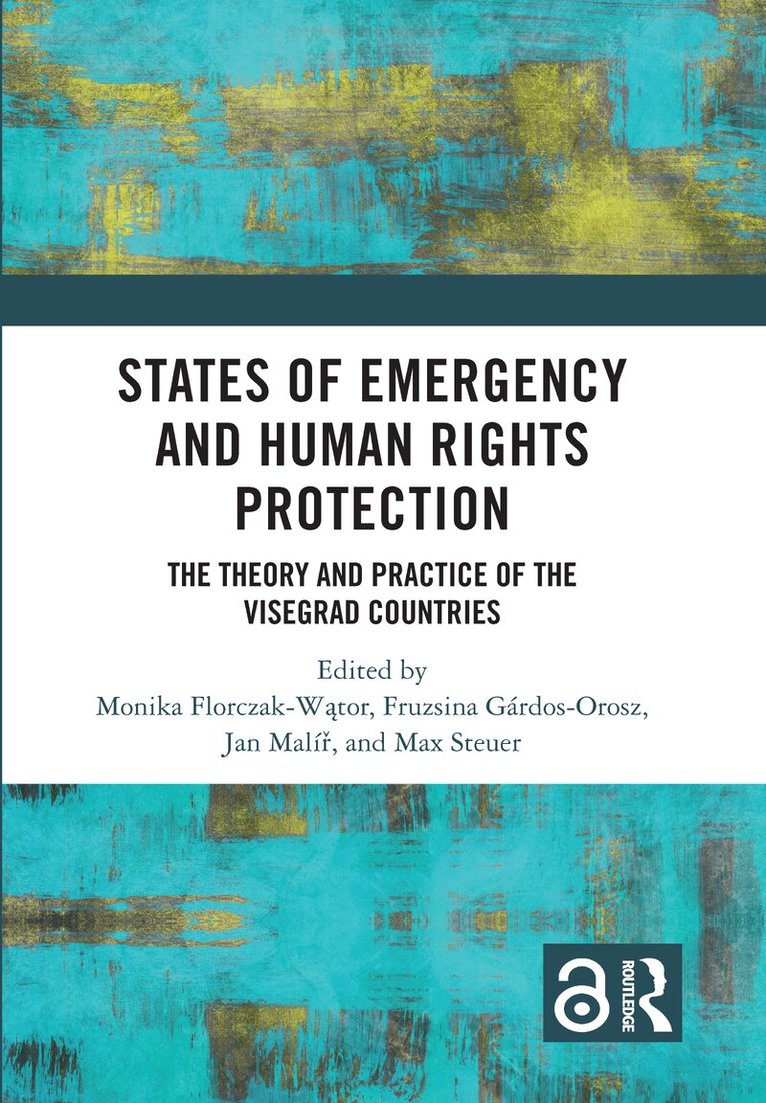
States of Emergency and Human Rights Protection
The Theory and Practice of the Visegrad Countries
Inbunden, Engelska, 2024
2 103 kr
Skickas inom 10-15 vardagar
Emergencies are ubiquitous in 21st-century societal discourses. From the rise of emergency pronouncements in the United States since 9/11 accompanied by the associated violations of fundamental rights, through talks of ‘crises’ in the EU in relation to the economy, Putin’s occupation of Crimea (as recently amplified by the full-scale invasion of Ukraine) or refugees, to the long-neglected looming climate catastrophe, emergency discourses have been catapulted to the centre of attention by the critical juncture of the COVID-19 pandemic.This volume presents and compares the existing regulations and practices of emergencies and human rights protection in the Visegrad (V4) countries. As such, the analysis covers Czech Republic, Hungary, Poland, and Slovakia. Although these European countries share a common historical experience and are now members of the EU and NATO, they differ in some of their constitutional traditions and, also, in the dynamics of their political regimes. Divided into three parts, the first two comprehensively discuss the constitutional models of emergency and human rights protection in each of the V4 countries, while the third part illustrates how these models and the general framework of rights protection materialised in the limitations of the selected human rights during the COVID-19 pandemic.The volume provides a compass for more in-depth, comparative, and interdisciplinary inquiries into the forms and practices of emergencies in one of the EU regions that faces illiberalisation and the consequences of the ongoing invasion of Ukraine by the Russian Federation on its eastern borders. It will be a valuable resource for academics, researchers, and policymakers working in the areas of Constitutional Law and Politics.The Introduction, Chapter 7 and Chapter 10 of this book are freely available as a downloadable Open Access PDF at http://www.taylorfrancis.com under a Creative Commons Attribution-Non Commercial-No Derivatives (CC-BY-NC-ND) 4.0 license.
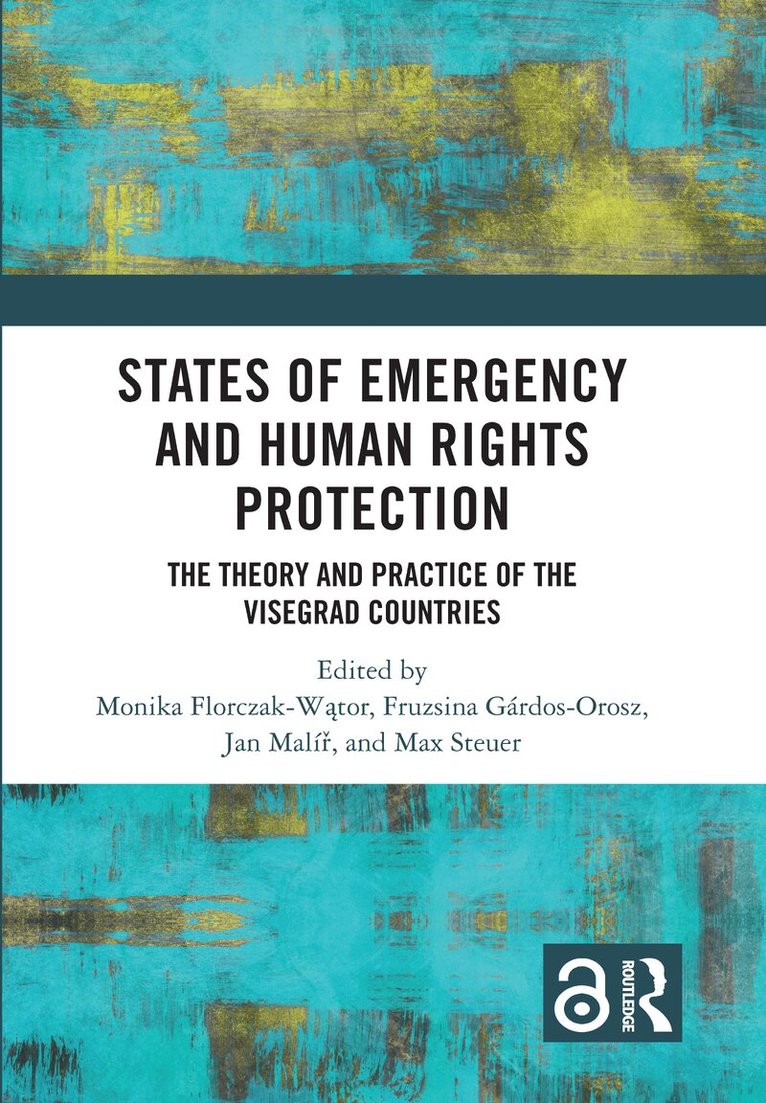
States of Emergency and Human Rights Protection
The Theory and Practice of the Visegrad Countries
Häftad, Engelska, 2025
578 kr
Skickas inom 10-15 vardagar
Emergencies are ubiquitous in 21st-century societal discourses. From the rise of emergency pronouncements in the United States since 9/11 accompanied by the associated violations of fundamental rights, through talks of ‘crises’ in the EU in relation to the economy, Putin’s occupation of Crimea (as recently amplified by the full-scale invasion of Ukraine) or refugees, to the long-neglected looming climate catastrophe, emergency discourses have been catapulted to the centre of attention by the critical juncture of the COVID-19 pandemic.This volume presents and compares the existing regulations and practices of emergencies and human rights protection in the Visegrad (V4) countries. As such, the analysis covers Czech Republic, Hungary, Poland, and Slovakia. Although these European countries share a common historical experience and are now members of the EU and NATO, they differ in some of their constitutional traditions and, also, in the dynamics of their political regimes. Divided into three parts, the first two comprehensively discuss the constitutional models of emergency and human rights protection in each of the V4 countries, while the third part illustrates how these models and the general framework of rights protection materialised in the limitations of the selected human rights during the COVID-19 pandemic.The volume provides a compass for more in-depth, comparative, and interdisciplinary inquiries into the forms and practices of emergencies in one of the EU regions that faces illiberalisation and the consequences of the ongoing invasion of Ukraine by the Russian Federation on its eastern borders. It will be a valuable resource for academics, researchers, and policymakers working in the areas of Constitutional Law and Politics.The Introduction, Chapter 7 and Chapter 10 of this book are freely available as a downloadable Open Access PDF at http://www.taylorfrancis.com under a Creative Commons Attribution-Non Commercial-No Derivatives (CC-BY-NC-ND) 4.0 license.
1 697 kr
Skickas inom 7-10 vardagar
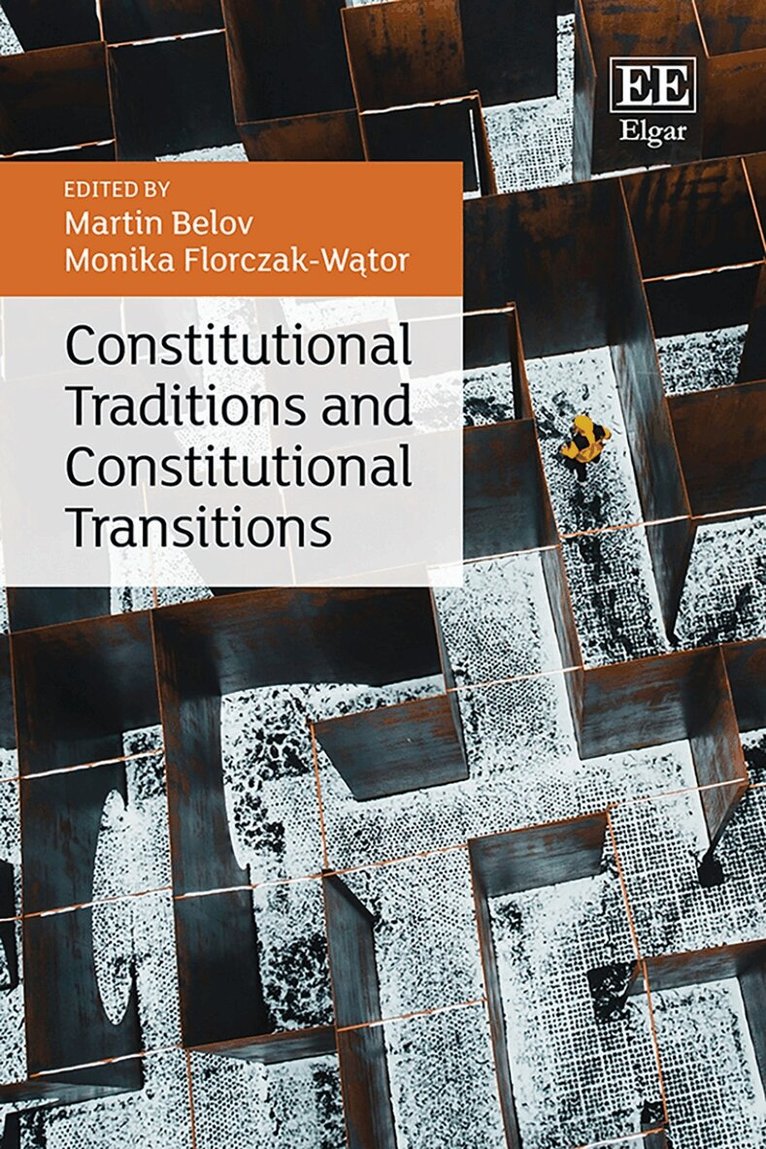
This comprehensive book offers conceptual, legal and socio-legal insights into the relationship between constitutional traditions and constitutional transitions, as well as a comparative assessment of the two. It explores their impact on national constitutional orders and their implications for the multilevel constitutionalism of the EU.Presenting extensive analysis of the role of constitutional traditions in the complex constitutional order of the EU, the book draws parallels between the conceptual arguments and the legal realist exploration of the judicial approach to constitutional traditions. Martin Belov and Monika Florczak-Wątor, along with their expert contributors, explore these transitory imaginaries as bridges between the constitutional past, present and future, and expand on the fragility of arbitrary constitutional concepts in times of crisis and transition. The book addresses significant issues related to constitutional traditions and constitutional transitions in post-authoritarian societies by employing conceptual analysis, comparative research and case studies.Constitutional Traditions and Constitutional Transitions is an essential resource for academics and researchers in the fields of European law, comparative constitutional law and administrative law. This book is also beneficial for policymakers and practitioners.
296 kr
Skickas inom 7-10 vardagar
?This book tackles the issue of individual rights within the Polish constitutional system. It begins by asking why the horizontal effect of individual rights was not contemplated in Polish jurisprudence until the 1980s, and why it is not expressly addressed in the Polish Constitution despite the proposal of a relevant clause during the drafting process. Through extensive research, the author finds that the decision to abandon this clause was done on purpose, therefore nothing stands in the way of incorporating the horizontal application of constitutional rights into the framework of the Polish Constitution.The author then analyzes the regulation of individual rights and freedoms in Poland's constitution to determine whether the document covers rights or freedoms that may have a horizontal dimension. Further chapters then seek to determine what practical form the direct application of the constitution may take when examining the horizontal dimension of constitutional rights; the scope of the horizontal application of constitutional rights and the related issue of the collision of constitutional rights; and the three basic models for the horizontal operation of individual rights to determine their applicability within the Polish constitutional system. In different countries, these models are applied in a parallel and complementary manner. This book makes available to English-speaking readers the inner workings of Polish jurisprudence and their effect on individual rights legislation beyond the boundaries of Poland.