Morris Silver - Böcker
Visar alla böcker från författaren Morris Silver. Handla med fri frakt och snabb leverans.
5 produkter
5 produkter
1 039 kr
Skickas inom 10-15 vardagar
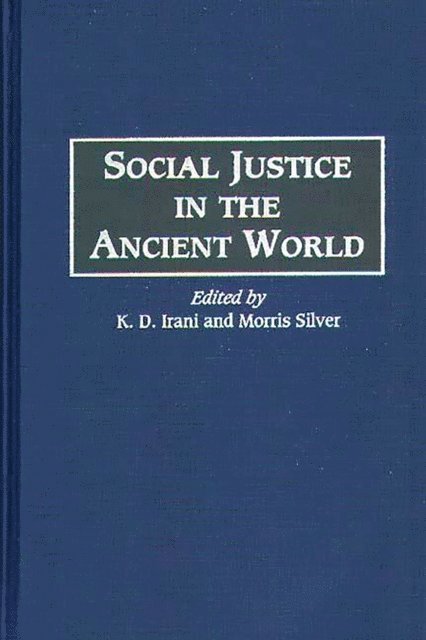
This edited collection focuses on the problem of social justice, or, more particularly, how the demand for social justice was articulated and implemented in ancient civilizations, including, from east to west, the Chinese, Indian, Iranian, Babylonian, Assyrian, Israelite, Egyptian, Greek, and Roman. These essays are supplemented by discussions of the functioning of social justice in early and medieval Islam and in the postmedieval Anglo-Saxon world.The volume contains extended discussions of specific legal regulations, royal edicts, and socioeconomic practices in the various civilizations, and examinations of their social, political, and economic consequences. Written by leading scholars in their respective fields, this volume will be of great interest to researchers dealing with the ancient world and the evolution of political philosophy and legal and economic rights.
1 520 kr
Skickas inom 10-15 vardagar
The economy of the ancient Middle East and Greece is reinterpreted by Morris Silver in this provocative new synthesis. Silver finds that the ancient economy emerges as a class of economies with its own laws of motion shaped by transaction costs (the resources used up in exchanging ownership rights). The analysis of transaction costs provides insights into many characteristics of the ancient economy, such as the important role of the sacred and symbolic gestures in making contracts, magical technology, the entrepreneurial role of high-born women, the elevation of familial ties and other departures from impersonal economics, reliance on slavery and adoption, and the insatiable drive to accumulate trust-capital. The peculiar behavior patterns and mindsets of ancient economic man are shown to be facilitators of economic growth.In recent years, our view of the economy of the ancient world has been shaped by the theories of Karl Polanyi. Silver confronts Polanyi's empirical propositions with the available evidence and demonstrates that antiquity knew active and sophisticated markets. In the course of providing an alternative analytical framework for studying the ancient economy, Silver gives critical attention to the economic views of the Assyriologists I.M. Diakonoff, W.F. Leemans, Mario Liverani, and J.N. Postgate; of the Egyptologists Jacob J. Janssen and Wolfgang Helck; and of the numerous followers of Moses Finley. Silver convincingly demonstrates that the ancient world was not static: periods of pervasive economic regulation by the state are interspersed with lengthy periods of relatively unfettered market activity, and the economies of Sumer, Babylonia, and archaic Greece were capable of transforming themselves in order to take advantage of new opportunities. This new synthesis is essential reading for economic historians and researchers of the ancient Near East and Greece.
Del 92 - Hellenic Studies Series
Purpled World
Marketing Haute Couture in the Aegean Bronze Age
Häftad, Engelska, 2023
319 kr
Skickas inom 7-10 vardagar
During the Aegean Bronze Age (ca. 3000–1500 BCE), the spread of woolen textiles triggered an increased demand for color. The dyes included those made from the labor-intensive processing of crocus stamens for saffron dye and even more costly dyes made from certain sea snails (the Muricidae/Murex). Minoan and Mycenaean textile producers (the palaces) operated mainly in the Black Sea region, rich in gold. "Purpled world" is Morris Silver's term for this emergent ideology. In Part I of The Purpled World, Silver demonstrates how the palaces embedded commercial motivation into traditional rituals, played out in purpose-built textile exhibition spaces, including labyrinths. In Part II, he mines textual, archaeological, and iconographic evidence to reveal the international textile trade. In Parts III and IV, Homer's Trojan War is seen as a trade war, and Homeric heroes have roles as traders and/or agents for Poseidon. In Part V, Silver considers the before-and-after of this "purpled world": Jason and the Argonauts, and the so-called collapse of the Mycenaean Palaces as a manifestation of vertical disintegration in the Aegean textile industry. The Purpled World integrates all these forms of evidence with interpretative insights from Maslovian psychology, as well as the disciplines of fashion studies, marketing, and economics.
1 354 kr
Skickas inom 10-15 vardagar
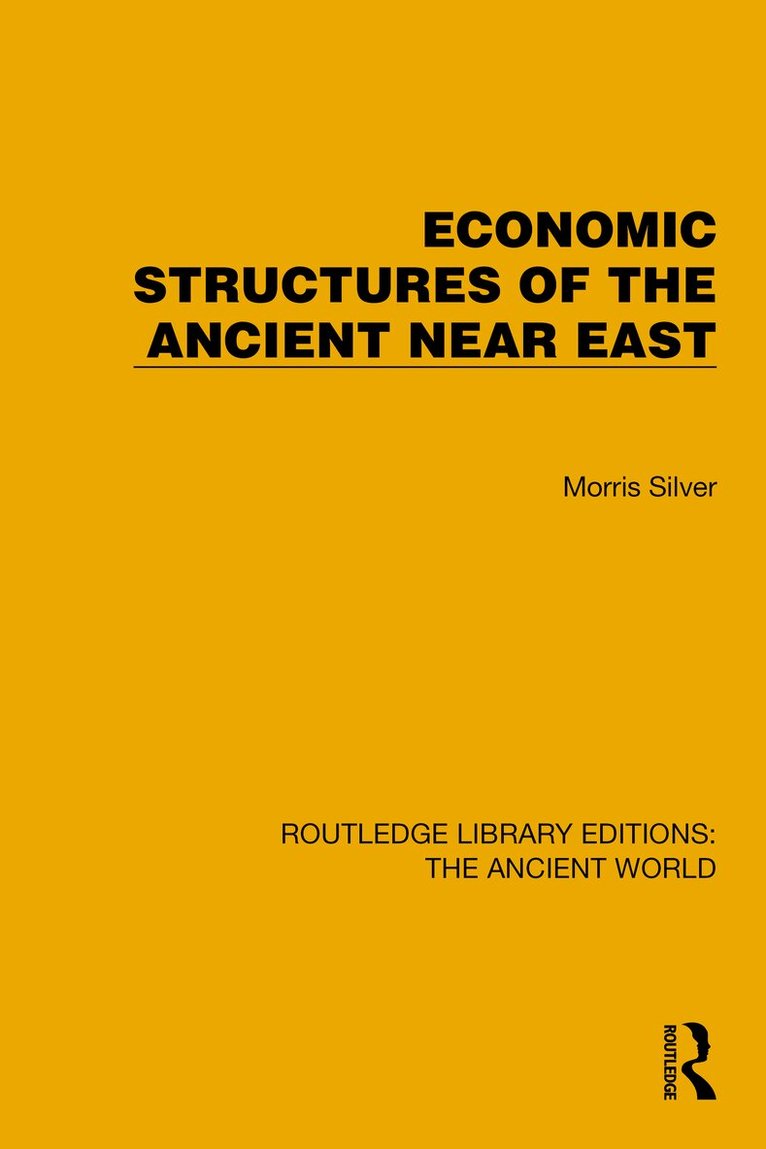
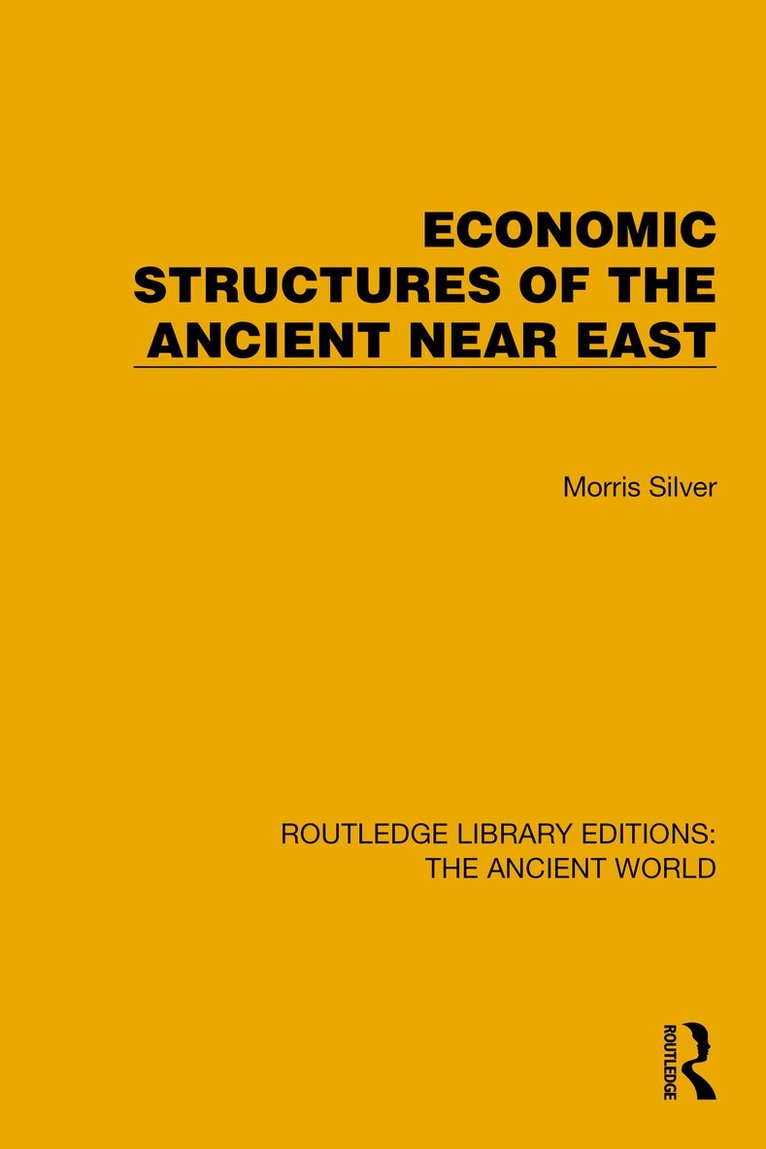
Economic Structures of the Ancient Near East (1985) is a political economy of antiquity which applies the universal conclusions of theoretical economics to the interpretation of economic life. The first part of the book shows that the analysis of transaction costs – that is, the resources used up in exchanging ownership rights including costs of communication and of designing and enforcing contracts – provides numerous insights into the structure of the ancient economy. The role of temples as centres of commerce, inculcation of professional standards by gods, elevation of technology to the status of divine gift, religious syncretism and fetishism and many more seemingly exotic practices are comprehended as elements in a strategy to cope with high transaction costs by increasing the stock of what might be called trust capital. It is shown that similar considerations lie behind the ubiquity of diversified, multinational family firms, the prominent entrepreneurial role of high-born women, the prominence within the contractual process of publicly performed conventional gestures and recitations, and the intrusion of gifts, friendship, and other manifestations of personal economics into exchange relationships. The book goes on to examine carefully, and then reject, the view of economic historian Karl Polanyi and others that the ancient Near East lacked true markets for consumer goods and productive factors. The direct evidence of market exchange (local and long distance), occupational specialisation, supply-demand determined prices, investment in material and human capital, production for the market, and other ‘modern’ traits is uneven with respect to place and time, but nevertheless abundant. The requisite market functions demanded by Polanyi, including a market for labour (slave and free) and elaborate credit and investment markets, can be seen plainly from very early times. Finally, the book deals with the impact on the ancient Near Eastern economy of changes in economic incentives and of changes in economic policy. It becomes evident that ancient economies were capable of making profound alterations in order to take advantage of new economic opportunities. It is also shown that the ancient Near East was not static, as is usually asserted: periods of pervasive economic regulation by the state are interspersed with lengthy periods of relatively unfettered market activity and growth.
411 kr
Skickas inom 10-15 vardagar
Economic Structures of the Ancient Near East (1985) is a political economy of antiquity which applies the universal conclusions of theoretical economics to the interpretation of economic life. The first part of the book shows that the analysis of transaction costs – that is, the resources used up in exchanging ownership rights including costs of communication and of designing and enforcing contracts – provides numerous insights into the structure of the ancient economy. The role of temples as centres of commerce, inculcation of professional standards by gods, elevation of technology to the status of divine gift, religious syncretism and fetishism and many more seemingly exotic practices are comprehended as elements in a strategy to cope with high transaction costs by increasing the stock of what might be called trust capital. It is shown that similar considerations lie behind the ubiquity of diversified, multinational family firms, the prominent entrepreneurial role of high-born women, the prominence within the contractual process of publicly performed conventional gestures and recitations, and the intrusion of gifts, friendship, and other manifestations of personal economics into exchange relationships. The book goes on to examine carefully, and then reject, the view of economic historian Karl Polanyi and others that the ancient Near East lacked true markets for consumer goods and productive factors. The direct evidence of market exchange (local and long distance), occupational specialisation, supply-demand determined prices, investment in material and human capital, production for the market, and other ‘modern’ traits is uneven with respect to place and time, but nevertheless abundant. The requisite market functions demanded by Polanyi, including a market for labour (slave and free) and elaborate credit and investment markets, can be seen plainly from very early times. Finally, the book deals with the impact on the ancient Near Eastern economy of changes in economic incentives and of changes in economic policy. It becomes evident that ancient economies were capable of making profound alterations in order to take advantage of new economic opportunities. It is also shown that the ancient Near East was not static, as is usually asserted: periods of pervasive economic regulation by the state are interspersed with lengthy periods of relatively unfettered market activity and growth.