Morten Kjaerum - Böcker
Visar alla böcker från författaren Morten Kjaerum. Handla med fri frakt och snabb leverans.
6 produkter
6 produkter
563 kr
Skickas inom 10-15 vardagar
This timely collection brings together original explorations of the COVID-19 pandemic and its wide-ranging, global effects on human rights.The contributors argue that a human rights perspective is necessary to understand the pervasive consequences of the crisis, while focusing attention on those being left behind and providing a necessary framework for the effort to 'build back better'. Expert contributors to this volume address interconnections between the COVID-19 crisis and human rights to equality and non-discrimination, including historical responses to pandemics, populism and authoritarianism, and the rights to health, information, water and the environment. Highlighting the dangerous potential for derogations from human rights, authors further scrutinize the human rights compliance of new legislation and policies in relation to issues such as privacy, protection of persons with disabilities, freedom of expression, and access to medicines. Acknowledging the pandemic as a defining moment for human rights, the volume proposes a post-crisis human rights agenda to engage civil society and government at all levels in concrete measures to roll back increasing inequality.With rich examples, new thinking, and provocative analyses of human rights, COVID-19, pandemics, crises, and inequality, this book will be of key interest to scholars, students, and practitioners in all areas of human rights, global governance, and public health, as well as others who are ready to embark on an exploration of these complex challenges.The Open Access version of this book, available at http://www.taylorfrancis.com, has been made available under a Creative Commons Attribution (CC-BY) 4.0 license.
2 088 kr
Skickas inom 10-15 vardagar
This timely collection brings together original explorations of the COVID-19 pandemic and its wide-ranging, global effects on human rights.The contributors argue that a human rights perspective is necessary to understand the pervasive consequences of the crisis, while focusing attention on those being left behind and providing a necessary framework for the effort to 'build back better'. Expert contributors to this volume address interconnections between the COVID-19 crisis and human rights to equality and non-discrimination, including historical responses to pandemics, populism and authoritarianism, and the rights to health, information, water and the environment. Highlighting the dangerous potential for derogations from human rights, authors further scrutinize the human rights compliance of new legislation and policies in relation to issues such as privacy, protection of persons with disabilities, freedom of expression, and access to medicines. Acknowledging the pandemic as a defining moment for human rights, the volume proposes a post-crisis human rights agenda to engage civil society and government at all levels in concrete measures to roll back increasing inequality.With rich examples, new thinking, and provocative analyses of human rights, COVID-19, pandemics, crises, and inequality, this book will be of key interest to scholars, students, and practitioners in all areas of human rights, global governance, and public health, as well as others who are ready to embark on an exploration of these complex challenges.The Open Access version of this book, available at http://www.taylorfrancis.com, has been made available under a Creative Commons Attribution (CC-BY) 4.0 license.
2 088 kr
Skickas inom 10-15 vardagar
This book examines the understudied area of subnational human rights and the human rights economy.Against the context of increasing economic and political power of local level governments – both cities and subnational regions – this interdisciplinary volume provides a crucial examination of economic policies that are grounded in human rights principles and obligations while being implemented in the places people live. Policies which promote economic justice and prosperity present many opportunities and challenges, and this book proposes ways in which local economic policies can respect, protect, and fulfil human rights, with positive multiplier effects at the national and global levels.This book will be of keen interest to scholars, students, and practitioners in human rights, economics, law, development, and urban studies; as well as professionals and policymakers involved in local economic development planning and the implementation of human rights norms.
722 kr
Skickas inom 7-10 vardagar
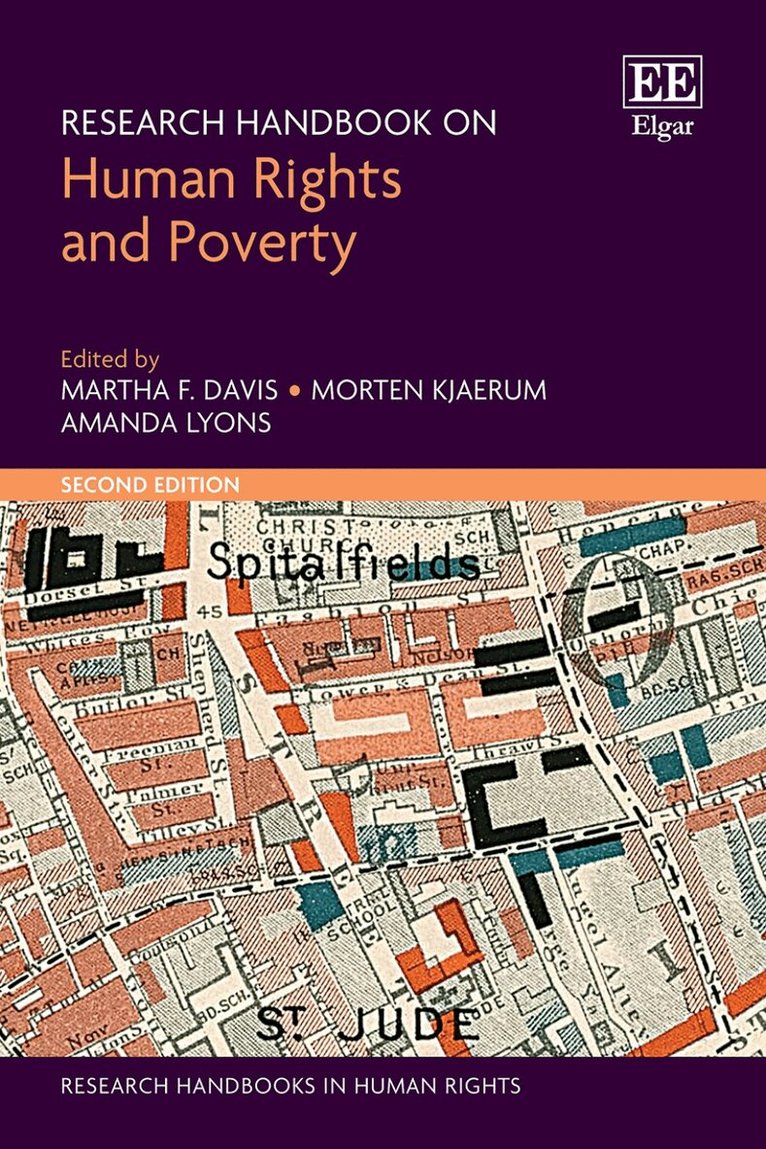
This important Research Handbook explores the nexus between human rights, poverty and inequality as a critical lens for understanding and addressing key challenges of the coming decades, including the objectives set out in the Sustainable Development Goals. The Research Handbook starts from the premise that poverty is not solely an issue of minimum income and explores the profound ways that deprivation and distributive inequality of power and capability relate to economic, social, cultural, civil and political rights.Leading experts in the human rights field representing a range of disciplines outline a future research agenda to address poverty and inequality head on. Beginning with an interrogation of the definition of poverty, subsequent chapters analyse the dynamics of poverty and inequality in relation to matters such as race, gender, age, disability, sexual orientation, geography and migration status. The rights to housing, land, health, work, education, protest and access to justice are also explored, with a recognition of the challenges posed by corruption, climate change and new technologies.The Research Handbook on Human Rights and Poverty is an essential reference guide for those who teach in these areas and for scholars and students developing future research agendas of their own. This will also be a much-needed resource for people working practically to address poverty in both the Global North and Global South.
3 687 kr
Skickas inom 7-10 vardagar
This important Research Handbook explores the nexus between human rights, poverty and inequality as a critical lens for understanding and addressing key challenges of the coming decades, including the objectives set out in the Sustainable Development Goals. The Research Handbook starts from the premise that poverty is not solely an issue of minimum income and explores the profound ways that deprivation and distributive inequality of power and capability relate to economic, social, cultural, civil and political rights.Leading experts in the human rights field representing a range of disciplines outline a future research agenda to address poverty and inequality head on. Beginning with an interrogation of the definition of poverty, subsequent chapters analyse the dynamics of poverty and inequality in relation to matters such as race, gender, age, disability, sexual orientation, geography and migration status. The rights to housing, land, health, work, education, protest and access to justice are also explored, with a recognition of the challenges posed by corruption, climate change and new technologies.The Research Handbook on Human Rights and Poverty is an essential reference guide for those who teach in these areas and for scholars and students developing future research agendas of their own. This will also be a much-needed resource for people working practically to address poverty in both the Global North and Global South.
388 kr
Skickas
Mänskliga rättigheter i det offentliga Sverige tar ett helhetsgrepp om det ansvar som det allmänna har för att säkerställa respekten för de mänskliga rättigheterna. Ledande forskare och specialister förklarar och diskuterar frågan om vad de mänskliga rättigheterna innebär rättsligt, politiskt och etiskt. Flera grundläggande rättighetsperspektiv relateras till konkreta former av det offentliga uppdraget. Både internationella åtaganden och svensk rättslig reglering presenteras i ljuset av det ansvar som legitim förvaltning av demokratin innebär.Vad kräver respekten för de mänskliga rättigheterna av det offentliga Sverige? Hur arbetar vi i praktiken så att de mänskliga rättigheterna skyddar individer och stärker demokratin och rättsstaten? Vilka rättsliga, politiska och moraliska normer gäller, och hur ska dessa tolkas och implementeras? Författarna diskuterar dessa och andra frågor i relation till nutida forskning och svensk förvaltningspraxis.Denna andra upplaga har uppdaterats genomgående med hänsyn till den rättsliga utvecklingen.”Vi behöver göra de mänskliga rättigheterna till våra, låta dem genomsyra alla våra beslut och handlingar. Demokrati och mänskliga rättigheter är inget som erövrats en gång för alla och sedan bara finns där. Mänskliga rättigheter måste ständigt utvecklas och det är vi, medborgare och offentligt anställda, som är ansvariga för att det görs.”Ur förordet av Elisabet Fura