Moshe Halbertal - Böcker
Visar alla böcker från författaren Moshe Halbertal. Handla med fri frakt och snabb leverans.
13 produkter
13 produkter
512 kr
Skickas inom 7-10 vardagar
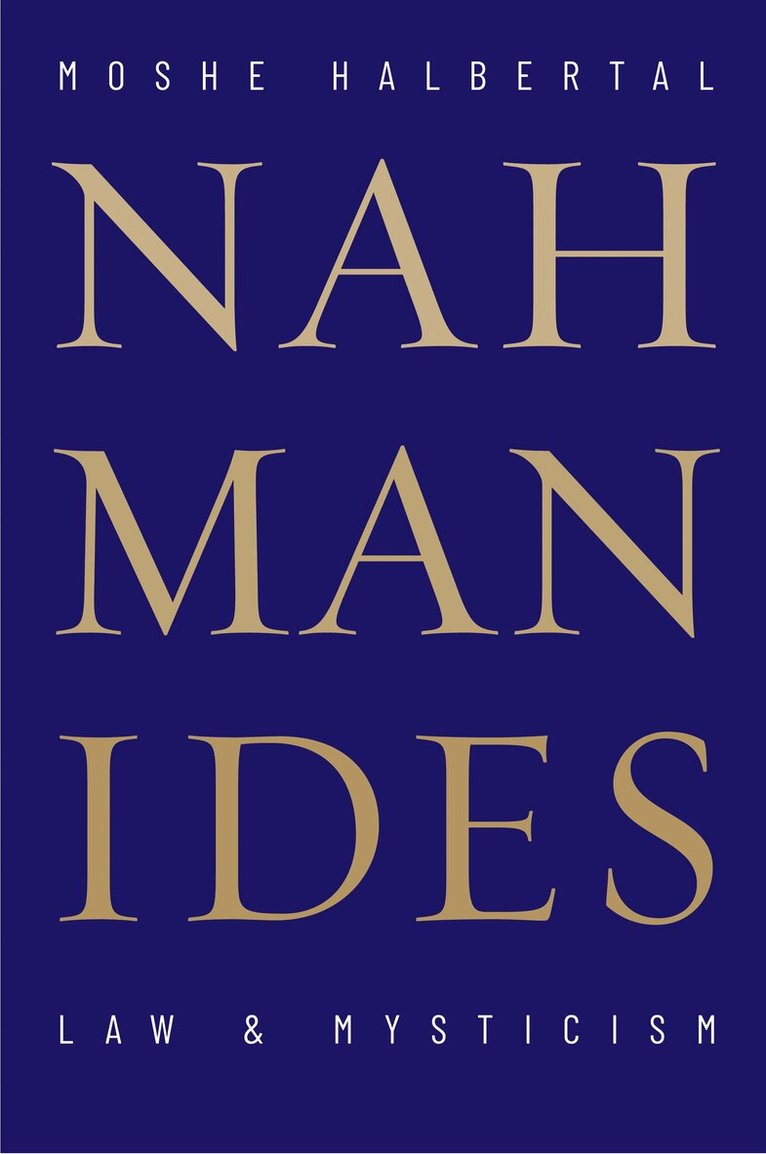
A finalist for the 2020 National Jewish Book Award for scholarship--a broad, systematic account of one of the most original and creative kabbalists, biblical interpreters, and Talmudic scholars the Jewish tradition has ever produced“Beautifully written, Moshe Halbertal’s groundbreaking book is exceptional in its capability to penetrate to the heart of Nahmanides’s thinking and worldview. An admirable achievement.”—Adam Afterman, Tel Aviv University“Magisterial. . . . Halbertal displays here his well-established talent for making abstruse ideas accessible to a non-specialist readership.”—Los Angeles Review of Books' Marginalia Rabbi Moses b. Nahman (1194–1270), known in English as Nahmanides, was the greatest Talmudic scholar of the thirteenth century and one of the deepest and most original biblical interpreters. Beyond his monumental scholastic achievements, Nahmanides was a distinguished kabbalist and mystic, and in his commentary on the Torah he dispensed esoteric kabbalistic teachings that he termed “By Way of Truth.” This broad, systematic account of Nahmanides’s thought explores his conception of halakhah and his approach to the central concerns of medieval Jewish thought, including notions of God, history, revelation, and the reasons for the commandments. The relationship between Nahmanides’s kabbalah and mysticism and the existential religious drive that nourishes them, as well as the legal and exoteric aspects of his thinking, are at the center of Moshe Halbertal’s portrayal of Nahmanides as a complex and transformative thinker.
356 kr
Skickas inom 7-10 vardagar
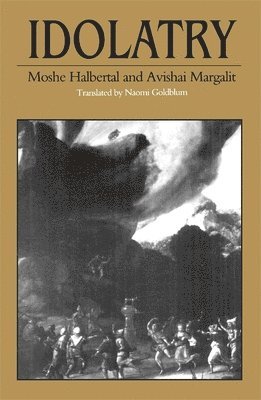
“You shall have no other gods besides Me.” This injunction, handed down through Moses three thousand years ago, marks one of the most decisive shifts in Western culture: away from polytheism toward monotheism. Despite the momentous implications of such a turn, the role of idolatry in giving it direction and impetus is little understood. This book examines the meaning and nature of idolatry—and, in doing so, reveals much about the monotheistic tradition that defines itself against this sin.The authors consider Christianity and Islam, but focus primarily on Judaism. They explore competing claims about the concept of idolatry that emerges in the Hebrew Bible as a “whoring after false gods.” Does such a description, grounded in an analogy of sexual relations, presuppose the actual existence of other gods with whom someone might sin? Or are false gods the product of “men’s hands,” simply a matter of misguided belief? The authors show how this debate, over idolatry as practice or error, has taken shape and has in turn shaped the course of Western thought—from the differentiation between Jewish and Christian conceptions of God to the distinctions between true and false belief that inform the tradition of religious enlightenment.Ranging with authority from the Talmud to Maimonides, from Marx to Nietzsche and on to G.E. Moore, this brilliant account of a subject central to our culture also has much to say about metaphor, myth, and the application of philosophical analysis to religious concepts and sensibilities. Its insights into pluralism and intolerance, into the logic and illogic of the arguments religions aim at each other, make Idolatry especially timely and valuable in these days of dark and implacable religious difference.
333 kr
Skickas inom 7-10 vardagar
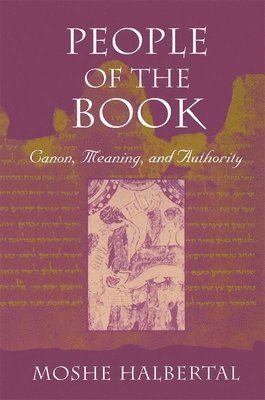
While Scripture is at the center of many religions, among them Islam and Christianity, this book inquires into the function, development, and implications of the centrality of text upon the Jewish community, and by extension on the larger question of canonization and the text-centered community. It is a commonplace to note how the landless and scattered Jewish communities have, from the time of the destruction of the Temple in Jerusalem in 70 A.D. until the founding of modern Israel in 1948, cleaved to the text and derived their identity from it. But the story is far more complex. The shift from the Bible to the Torah, from biblical religion to rabbinic Judaism mediated by the Sages, and the sealing of the canon together with its continuing interpretive work demanded from the community, amount to what could be called an unparalleled obsession with textuality. Halbertal gives us insights into the history of this obsession, in a philosophically sophisticated yet straightforward narrative.People of the Book offers the best introduction available to Jewish hermeneutics, a book capable of conveying the importance of the tradition to a wide audience of both academic and general readers. Halbertal provides a panoramic survey of Jewish attitudes toward Scripture, provocatively organized around problems of normative and formative authority, with an emphasis on the changing status and functions of Mishnah, Talmud, and Kabbalah. With a gift for weaving complex issues of interpretation into his own plot, he animates ancient texts by assigning them roles in his own highly persuasive narrative.
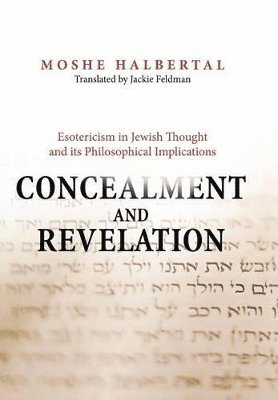
Concealment and Revelation
Esotericism in Jewish Thought and its Philosophical Implications
Inbunden, Engelska, 2007
555 kr
Skickas inom 7-10 vardagar
During the twelfth and thirteenth centuries, great new trends of Jewish thought emerged whose widely varied representatives--Kabbalists, philosophers, and astrologers--each claimed that their particular understanding revealed the actual secret of the Torah. They presented their own readings in a coded fashion that has come to be regarded by many as the very essence of esotericism. Concealment and Revelation takes us on a fascinating journey to the depths of the esoteric imagination. Carefully tracing the rise of esotericism and its function in medieval Jewish thought, Moshe Halbertal's richly detailed historical and cultural analysis gradually builds conceptual-philosophical force to culminate in a masterful phenomenological taxonomy of esotericism and its paradoxes. Among the questions addressed: What are the internal justifications that esoteric traditions provide for their own existence, especially in the Jewish world, in which the spread of knowledge was of great importance? How do esoteric teachings coexist with the revealed tradition, and what is the relationship between the various esoteric teachings that compete with that revealed tradition?Halbertal concludes that, through the medium of the concealed, Jewish thinkers integrated into the heart of the Jewish tradition diverse cultural influences such as Aristotelianism, Neoplatonism, and Hermeticisims. And the creation of an added concealed layer, unregulated and open-ended, became the source of the most daring and radical interpretations of the tradition.
885 kr
Skickas inom 3-6 vardagar
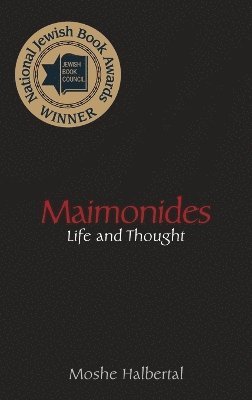
Maimonides was the greatest Jewish philosopher and legal scholar of the medieval period, a towering figure who has had a profound and lasting influence on Jewish law, philosophy, and religious consciousness. This book provides a comprehensive and accessible introduction to his life and work, revealing how his philosophical sensibility and outlook informed his interpretation of Jewish tradition. Moshe Halbertal vividly describes Maimonides's childhood in Muslim Spain, his family's flight to North Africa to escape persecution, and their eventual resettling in Egypt. He draws on Maimonides's letters and the testimonies of his contemporaries, both Muslims and Jews, to offer new insights into his personality and the circumstances that shaped his thinking. Halbertal then turns to Maimonides's legal and philosophical work, analyzing his three great books--Commentary on the Mishnah, the Mishneh Torah, and the Guide of the Perplexed.He discusses Maimonides's battle against all attempts to personify God, his conviction that God's presence in the world is mediated through the natural order rather than through miracles, and his locating of philosophy and science at the summit of the religious life of Torah. Halbertal examines Maimonides's philosophical positions on fundamental questions such as the nature and limits of religious language, creation and nature, prophecy, providence, the problem of evil, and the meaning of the commandments. A stunning achievement, Maimonides offers an unparalleled look at the life and thought of this important Jewish philosopher, scholar, and theologian.
181 kr
Skickas inom 7-10 vardagar
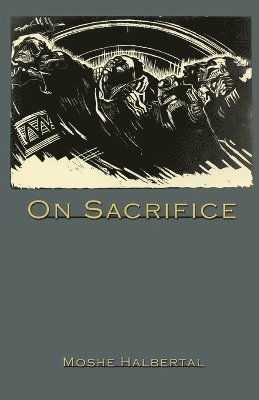
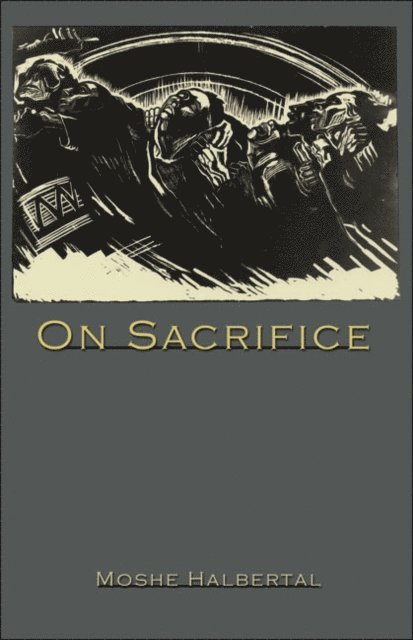
The idea and practice of sacrifice play a profound role in religion, ethics, and politics. In this brief book, philosopher Moshe Halbertal explores the meaning and implications of sacrifice, developing a theory of sacrifice as an offering and examining the relationship between sacrifice, ritual, violence, and love. On Sacrifice also looks at the place of self-sacrifice within ethical life and at the complex role of sacrifice as both a noble and destructive political ideal. In the religious domain, Halbertal argues, sacrifice is an offering, a gift given in the context of a hierarchical relationship. As such it is vulnerable to rejection, a trauma at the root of both ritual and violence. An offering is also an ambiguous gesture torn between a genuine expression of gratitude and love and an instrument of exchange, a tension that haunts the practice of sacrifice. In the moral and political domains, sacrifice is tied to the idea of self-transcendence, in which an individual sacrifices his or her self-interest for the sake of higher values and commitments. While self-sacrifice has great potential moral value, it can also be used to justify the most brutal acts.Halbertal attempts to unravel the relationship between self-sacrifice and violence, arguing that misguided self-sacrifice is far more problematic than exaggerated self-love. In his exploration of the positive and negative dimensions of self-sacrifice, Halbertal also addresses the role of past sacrifice in obligating future generations and in creating a bond for political associations, and considers the function of the modern state as a sacrificial community.
339 kr
Skickas inom 7-10 vardagar
Maimonides was the greatest Jewish philosopher and legal scholar of the medieval period, a towering figure who has had a profound and lasting influence on Jewish law, philosophy, and religious consciousness. This book provides a comprehensive and accessible introduction to his life and work, revealing how his philosophical sensibility and outlook informed his interpretation of Jewish tradition. Moshe Halbertal vividly describes Maimonides's childhood in Muslim Spain, his family's flight to North Africa to escape persecution, and their eventual resettling in Egypt. He draws on Maimonides's letters and the testimonies of his contemporaries, both Muslims and Jews, to offer new insights into his personality and the circumstances that shaped his thinking. Halbertal then turns to Maimonides's legal and philosophical work, analyzing his three great books--Commentary on the Mishnah, the Mishneh Torah, and the Guide of the Perplexed.He discusses Maimonides's battle against all attempts to personify God, his conviction that God's presence in the world is mediated through the natural order rather than through miracles, and his locating of philosophy and science at the summit of the religious life of Torah. Halbertal examines Maimonides's philosophical positions on fundamental questions such as the nature and limits of religious language, creation and nature, prophecy, providence, the problem of evil, and the meaning of the commandments. A stunning achievement, Maimonides offers an unparalleled look at the life and thought of this important Jewish philosopher, scholar, and theologian.
340 kr
Skickas inom 7-10 vardagar
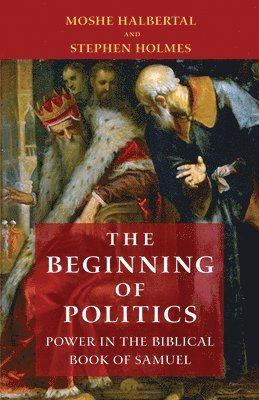
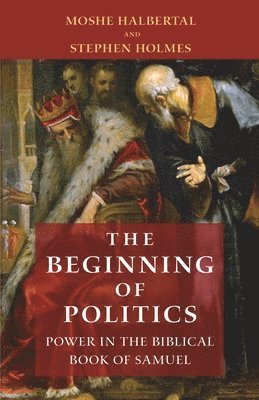
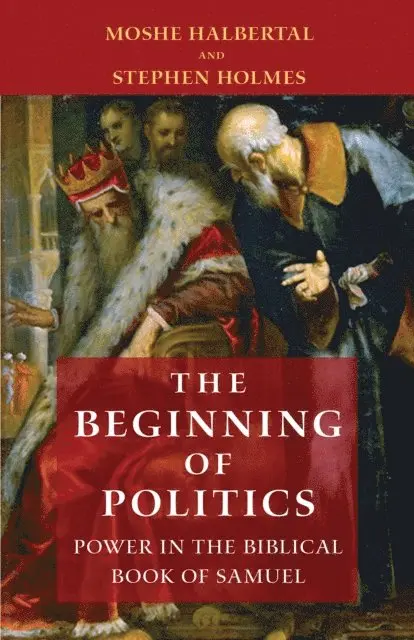
New insights into how the Book of Samuel offers a timeless meditation on the dilemmas of statecraft The Book of Samuel is universally acknowledged as one of the supreme achievements of biblical literature. Yet the book's anonymous author was more than an inspired storyteller. The author was also an uncannily astute observer of political life and the moral compromises and contradictions that the struggle for power inevitably entails. The Beginning of Politics mines the story of Israel's first two kings to unearth a natural history of power, providing a forceful new reading of what is arguably the first and greatest work of Western political thought. Moshe Halbertal and Stephen Holmes show how the beautifully crafted narratives of Saul and David cut to the core of politics, exploring themes that resonate wherever political power is at stake. Through stories such as Saul's madness, David's murder of Uriah, the rape of Tamar, and the rebellion of Absalom, the book's author deepens our understanding not only of the necessity of sovereign rule but also of its costs--to the people it is intended to protect and to those who wield it.What emerges from the meticulous analysis of these narratives includes such themes as the corrosive grip of power on those who hold and compete for power; the ways in which political violence unleashed by the sovereign on his own subjects is rooted in the paranoia of the isolated ruler and the deniability fostered by hierarchical action through proxies; and the intensity with which the tragic conflict between political loyalty and family loyalty explodes when the ruler's bloodline is made into the guarantor of the all-important continuity of sovereign power. The Beginning of Politics is a timely meditation on the dark side of sovereign power and the enduring dilemmas of statecraft.
181 kr
Skickas inom 7-10 vardagar
How the book of Samuel offers a timeless meditation on the dilemmas of statecraftThe book of Samuel is universally acknowledged as one of the supreme achievements of biblical literature. Yet the book’s anonymous author was more than an inspired storyteller. The author was also an uncannily astute observer of political life and the moral compromises and contradictions that the struggle for power inevitably entails. The Beginning of Politics mines the story of Israel’s first two kings to unearth a natural history of power, providing a forceful new reading of what is arguably the first and greatest work of Western political thought.Through stories such as Saul’s madness, David’s murder of Uriah, the rape of Tamar, and the rebellion of Absalom, the author of Samuel deepens our understanding not only of the necessity of sovereign rule but also of its costs—to the people it is intended to protect and to those who wield it. Moshe Halbertal and Stephen Holmes show how these beautifully crafted narratives cut to the core of politics, offering a timely meditation on the dark side of sovereign power and the enduring dilemmas of statecraft.
1 964 kr
Skickas inom 10-15 vardagar
Much more than a particular period in world history, modernity has fundamentally transformed how we think and live, and especially how we understand and relate to religious traditions. As the 'ghetto walls' have fallen, both empirically and metaphorically, Judaism is compelled to compete in an open marketplace of ideas. Jews can no longer count on an assumedly necessary Jewish identity or commitment, nor on the rallying force of anti-Semitism to ensure an individual and collective sense of belonging. Rather Jewish moral, spiritual and historical values and ideas must be read with new eyes and challenged to address modernity's proliferating array of questions and realities. The pertinent questions modern Jewry faces are how to embrace modernity as Jews and what such an embrace means for the meaning and future of Jewish life. This collection of essays, authored by scholars of the Shalom Hartman Institute, addresses three critical challenges posed to Judaism by modernity: the challenge of ideas, the challenge of diversity, and the challenge of statehood, and provides insights and ideas for the future direction of Judaism.Providing readers with new insights into Judaism and the Jewish people in contemporary times, the collection explores a wide range of issues that includes: the significance of Israel for the future of Judaism; the Jewish people as a people; the relationship between monotheism and violence; revelation and ethics; Judaism and the feminist challenge; and Judaism and homosexuality.
461 kr
Skickas inom 10-15 vardagar
Much more than a particular period in world history, modernity has fundamentally transformed how we think and live, and especially how we understand and relate to religious traditions. As the 'ghetto walls' have fallen, both empirically and metaphorically, Judaism is compelled to compete in an open marketplace of ideas. Jews can no longer count on an assumedly necessary Jewish identity or commitment, nor on the rallying force of anti-Semitism to ensure an individual and collective sense of belonging. Rather Jewish moral, spiritual and historical values and ideas must be read with new eyes and challenged to address modernity's proliferating array of questions and realities. The pertinent questions modern Jewry faces are how to embrace modernity as Jews and what such an embrace means for the meaning and future of Jewish life. This collection of essays, authored by scholars of the Shalom Hartman Institute, addresses three critical challenges posed to Judaism by modernity: the challenge of ideas, the challenge of diversity, and the challenge of statehood, and provides insights and ideas for the future direction of Judaism.Providing readers with new insights into Judaism and the Jewish people in contemporary times, the collection explores a wide range of issues that includes: the significance of Israel for the future of Judaism; the Jewish people as a people; the relationship between monotheism and violence; revelation and ethics; Judaism and the feminist challenge; and Judaism and homosexuality.
327 kr
Skickas inom 5-8 vardagar
866 kr
Skickas inom 5-8 vardagar