Donniel Hartman – författare
Visar alla böcker från författaren . Handla med fri frakt och snabb leverans.
8 produkter
8 produkter
E-bok
Engelska, 2016221 kr
Läs direkt efter köp
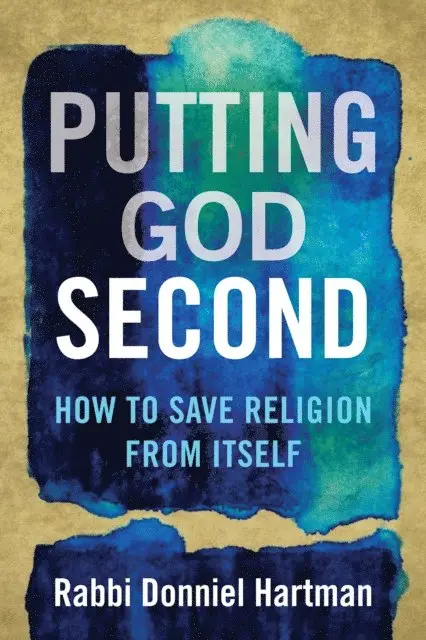
Why have the monotheistic religions failed to produce societies that live up to their ethical ideals? A prominent rabbi answers this question by looking at his own faith and offering a way for religion to heal itself.In Putting God Second, Rabbi Donniel Hartman tackles one of modern life’s most urgent and vexing questions: Why are the great monotheistic faiths—Judaism, Christianity, and Islam—chronically unable to fulfill their own self-professed goal of creating individuals infused with moral sensitivity and societies governed by the highest ethical standards?To answer this question, Hartman takes a sober look at the moral peaks and valleys of his own tradition, Judaism, and diagnoses it with clarity, creativity, and erudition. He rejects both the sweeping denouncements of those who view religion as an inherent impediment to moral progress and the apologetics of fundamentalists who proclaim religion’s moral perfection against all evidence to the contrary.Hartman identifies the primary source of religion’s moral failure in what he terms its “autoimmune disease,” or the way religions so often undermine their own deepest values. While God obligates the good and calls us into its service, Hartman argues, God simultaneously and inadvertently makes us morally blind. The nature of this self-defeating condition is that the human religious desire to live in relationship with God often distracts religious believers from their traditions’ core moral truths.The answer Hartman offers is this: put God second. In order to fulfill religion’s true vision for humanity—an uncompromising focus on the ethical treatment of others—religious believers must hold their traditions accountable to the highest independent moral standards. Decency toward one’s neighbor must always take precedence over acts of religious devotion, and ethical piety must trump ritual piety. For as long as devotion to God comes first, responsibility to other people will trail far, far behind.In this book, Judaism serves as a template for how the challenge might be addressed by those of other faiths, whose sacred scriptures similarly evoke both the sublime heights of human aspiration and the depths of narcissistic moral blindness. In Putting God Second, Rabbi Hartman offers a lucid analysis of religion’s flaws, as well as a compelling resource, and vision, for its repair.
Inbunden, Engelska, 2007
2 091 kr
Skickas inom 10-15 vardagar
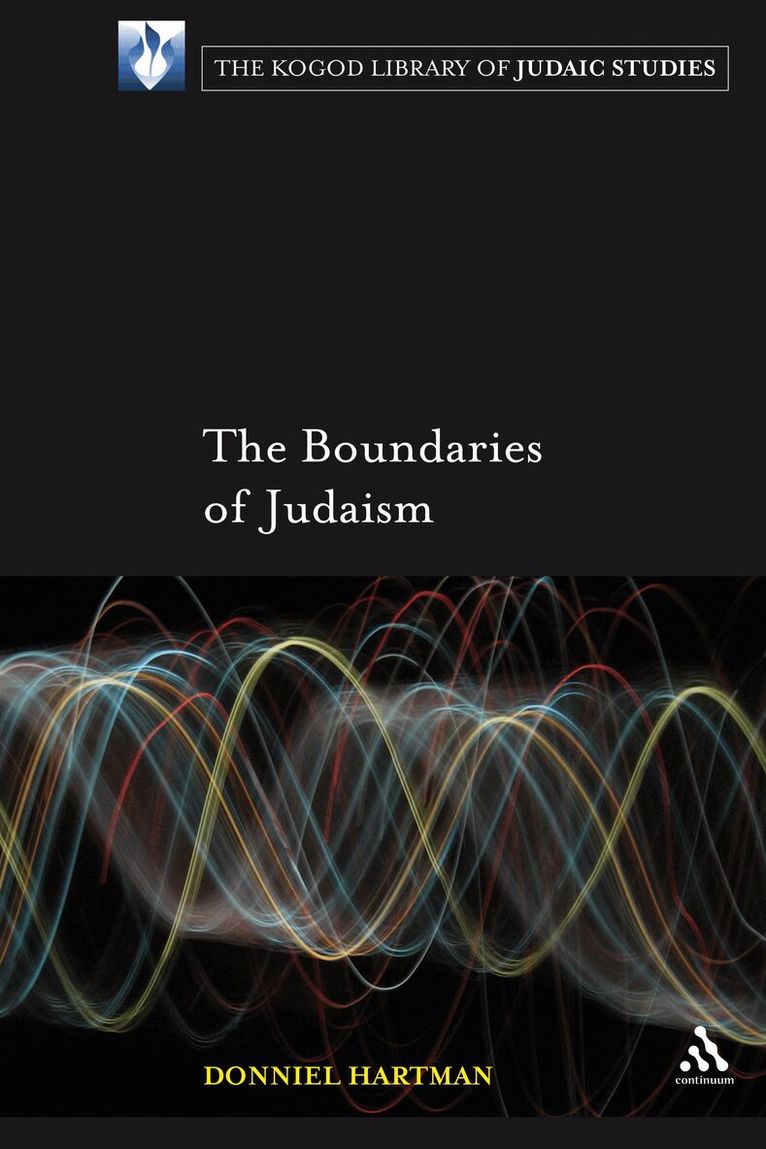
The factionalism and denominationalism of modern Jewry makes it supremely difficult to create a definition of the Jewish people. Instead of serving as a uniting force around which community is formed, Judaism has itself become a source of divisions. Consequently, attempts to identify beliefs or practices essential for membership in the Jewish people are almost doomed to failure.Aiming to take readers beyond the divisions that characterize modern Jewry, this book explores the ever contentious question of who is a Jew. Through a historical survey of the shifting boundaries of Jewish identity and deviance over time, the book provides new insights into how Jewish law over the centuries has erected boundaries to govern and maintain the collective identity of the Jewish people. Drawing on these historical strategies the book identifies the causes and reasons that underlie them, and employs these in order to help construct a guide for creating a structure of boundaries relevant for contemporary Jewish existence.
Häftad, Engelska, 2007
563 kr
Skickas inom 10-15 vardagar
The factionalism and denominationalism of modern Jewry makes it supremely difficult to create a definition of the Jewish people. Instead of serving as a uniting force around which community is formed, Judaism has itself become a source of divisions. Consequently, attempts to identify beliefs or practices essential for membership in the Jewish people are almost doomed to failure. Aiming to take readers beyond the divisions that characterize modern Jewry, this book explores the ever contentious question of "who is a Jew." Through a historical survey of the shifting boundaries of Jewish identity and deviance over time, the book provides new insights into how Jewish law over the centuries has erected boundaries to govern and maintain the collective identity of the Jewish people. Drawing on these historical strategies the book identifies the causes and reasons that underlie them, and employs these in order to help construct a guide for creating a structure of boundaries relevant for contemporary Jewish existence.
Inbunden, Engelska, 2007
2 091 kr
Skickas inom 10-15 vardagar
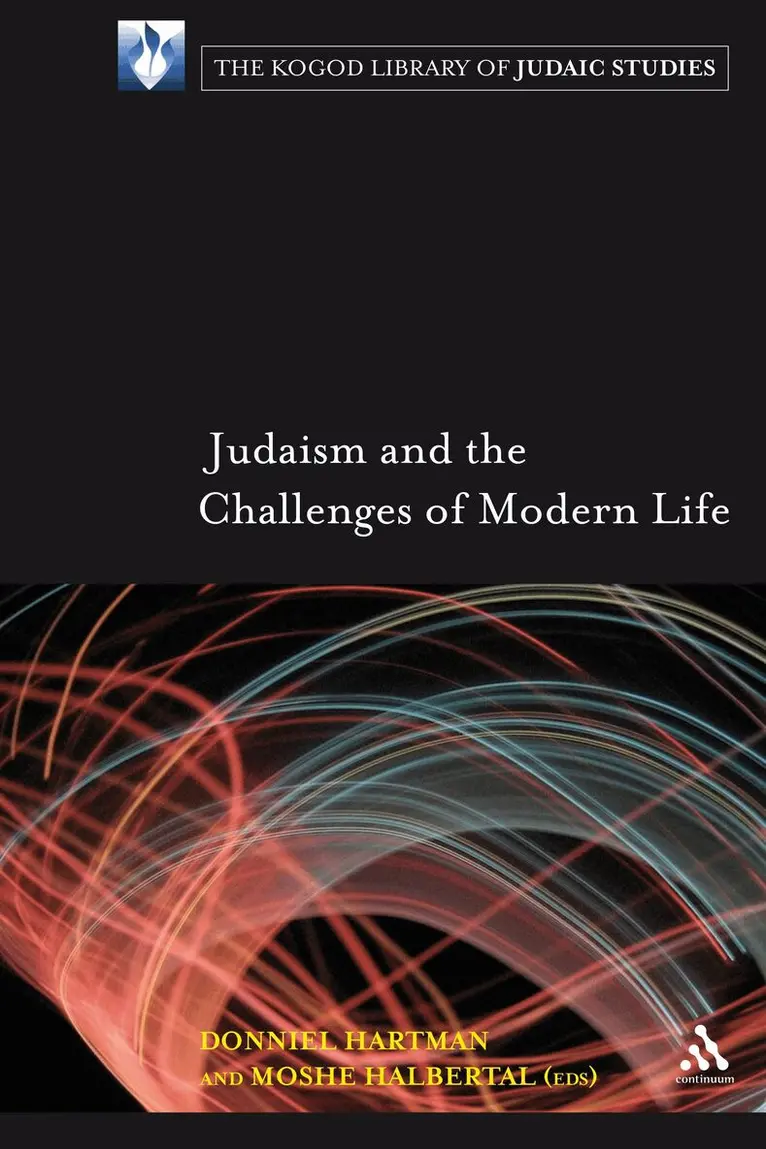
Much more than a particular period in world history, modernity has fundamentally transformed how we think and live, and especially how we understand and relate to religious traditions. As the 'ghetto walls' have fallen, both empirically and metaphorically, Judaism is compelled to compete in an open marketplace of ideas. Jews can no longer count on an assumedly necessary Jewish identity or commitment, nor on the rallying force of anti-Semitism to ensure an individual and collective sense of belonging. Rather Jewish moral, spiritual and historical values and ideas must be read with new eyes and challenged to address modernity's proliferating array of questions and realities. The pertinent questions modern Jewry faces are how to embrace modernity as Jews and what such an embrace means for the meaning and future of Jewish life. This collection of essays, authored by scholars of the Shalom Hartman Institute, addresses three critical challenges posed to Judaism by modernity: the challenge of ideas, the challenge of diversity, and the challenge of statehood, and provides insights and ideas for the future direction of Judaism.Providing readers with new insights into Judaism and the Jewish people in contemporary times, the collection explores a wide range of issues that includes: the significance of Israel for the future of Judaism; the Jewish people as a people; the relationship between monotheism and violence; revelation and ethics; Judaism and the feminist challenge; and Judaism and homosexuality.
Häftad, Engelska, 2007
479 kr
Skickas inom 10-15 vardagar
Much more than a particular period in world history, modernity has fundamentally transformed how we think and live, and especially how we understand and relate to religious traditions. As the 'ghetto walls' have fallen, both empirically and metaphorically, Judaism is compelled to compete in an open marketplace of ideas. Jews can no longer count on an assumedly necessary Jewish identity or commitment, nor on the rallying force of anti-Semitism to ensure an individual and collective sense of belonging. Rather Jewish moral, spiritual and historical values and ideas must be read with new eyes and challenged to address modernity's proliferating array of questions and realities. The pertinent questions modern Jewry faces are how to embrace modernity as Jews and what such an embrace means for the meaning and future of Jewish life. This collection of essays, authored by scholars of the Shalom Hartman Institute, addresses three critical challenges posed to Judaism by modernity: the challenge of ideas, the challenge of diversity, and the challenge of statehood, and provides insights and ideas for the future direction of Judaism.Providing readers with new insights into Judaism and the Jewish people in contemporary times, the collection explores a wide range of issues that includes: the significance of Israel for the future of Judaism; the Jewish people as a people; the relationship between monotheism and violence; revelation and ethics; Judaism and the feminist challenge; and Judaism and homosexuality.
Häftad, Engelska, 2023
327 kr
Skickas inom 10-15 vardagar
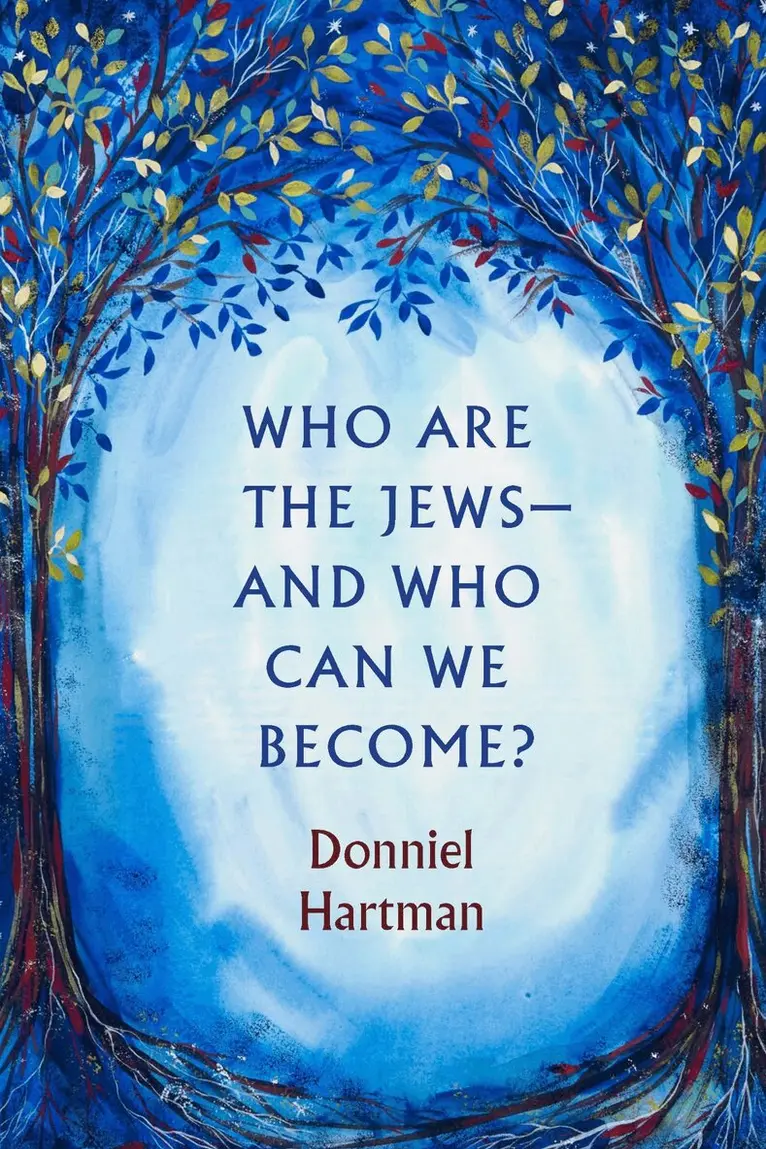
Finalist for the 2023 National Jewish Book Award in Modern Jewish Thought and ExperienceWho Are the Jews-And Who Can We Become? tackles perhaps the most urgent question facing the Jewish people today: Given unprecedented denominational tribalism, how can we Jews speak of ourselves in collective terms?Crucially, the way each of us tells our “shared” story is putting our collective identity at risk, Donniel Hartman argues. We need a new story, built on Judaism’s foundations and poised to inspire a majority of Jews to listen, discuss, and retell it. This book is that story.Since our beginnings, Hartman explains, the Jewish identity meta-narrative has been a living synthesis of two competing religious covenants: Genesis Judaism, which defines Jewishness in terms of who one is and the group to which one belongs, independent of what one does or believes; and Exodus Judaism, which grounds identity in terms of one’s relationship with an aspirational system of values, ideals, beliefs, commandments, and behaviors. When one narrative becomes too dominant, Jewish collective identity becomes distorted. Conversely, when Genesis and Exodus interplay, the sparks of a rich, compelling identity are found.Hartman deftly applies this Genesis-Exodus meta-narrative as a roadmap to addressing contemporary challenges, including Diaspora Jewry’s eroding relationship with Israel, the “othering” of Israeli Palestinians, interfaith marriage, the Israeli-Palestinian conflict, and-collectively-who we Jews can become.
E-bok
PDF, Engelska, 2007605 kr
Läs direkt efter köp
The factionalism and denominationalism of modern Jewry makes it supremely difficult to create a definition of the Jewish people. Instead of serving as a uniting force around which community is formed, Judaism has itself become a source of divisions. Consequently, attempts to identify beliefs or practices essential for membership in the Jewish people are almost doomed to failure.Aiming to take readers beyond the divisions that characterize modern Jewry, this book explores the ever contentious question of "who is a Jew." Through a historical survey of the shifting boundaries of Jewish identity and deviance over time, the book provides new insights into how Jewish law over the centuries has erected boundaries to govern and maintain the collective identity of the Jewish people. Drawing on these historical strategies the book identifies the causes and reasons that underlie them, and employs these in order to help construct a guide for creating a structure of boundaries relevant for contemporary Jewish existence.
E-bok
PDF, Engelska, 2007515 kr
Läs direkt efter köp
Much more than a particular period in world history, modernity has fundamentally transformed how we think and live, and especially how we understand and relate to religious traditions. As the 'ghetto walls' have fallen, both empirically and metaphorically, Judaism is compelled to compete in an open marketplace of ideas. Jews can no longer count on an assumedly necessary Jewish identity or commitment, nor on the rallying force of anti-Semitism to ensure an individual and collective sense of belonging. Rather Jewish moral, spiritual and historical values and ideas must be read with new eyes and challenged to address modernity's proliferating array of questions and realities. The pertinent questions modern Jewry faces are how to embrace modernity as Jews and what such an embrace means for the meaning and future of Jewish life. This collection of essays, authored by scholars of the Shalom Hartman Institute, addresses three critical challenges posed to Judaism by modernity: the challenge of ideas, the challenge of diversity, and the challenge of statehood, and provides insights and ideas for the future direction of Judaism. Providing readers with new insights into Judaism and the Jewish people in contemporary times, the collection explores a wide range of issues that includes: the significance of Israel for the future of Judaism; the Jewish people as a people; the relationship between monotheism and violence; revelation and ethics; Judaism and the feminist challenge; and Judaism and homosexuality.