Moshe Shachak - Böcker
Visar alla böcker från författaren Moshe Shachak. Handla med fri frakt och snabb leverans.
3 produkter
3 produkter
1 932 kr
Skickas inom 5-8 vardagar
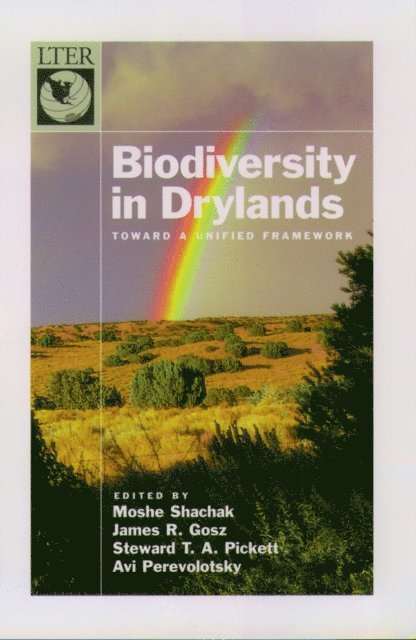
This is the first international volume in the Long Term Ecological Research Network series. The book summarizes the state of knowledge about biodiversity in drylands, and seek to identify questions and strategies for future research and to lay out guidelines for management of biodiversity in desert and semidesert regions. The continuing sensitivity of drylands to desertification, the fact that they occupy 40% of the world's terrestrial area, and the increasing human populations in these regions, make the understanding of their biodiversity and its changes over time of central importance. Drylands also provide a natural laboratory to address general questions about biodiversity, ecological succession, etc., because the relative spareness of the landscape allows one to isolate all the variables more effectively than can be done in biologically "richer" terrains. This book brings together leading workers, primarily from the U.S. and Israel, with some European scientists, to develop an integrative synthesis of perspectives on biodiversity in drylands, considering work from multiple regions and investigations focussing on multiple levels of ecological analysis. Each chapter was written by a small team of investigators from different institutions and having experience in different systems. Each chapter team combines at least two ecological perspectives, for instance, population and ecosystem, or species and landscape.
1 585 kr
Skickas inom 10-15 vardagar
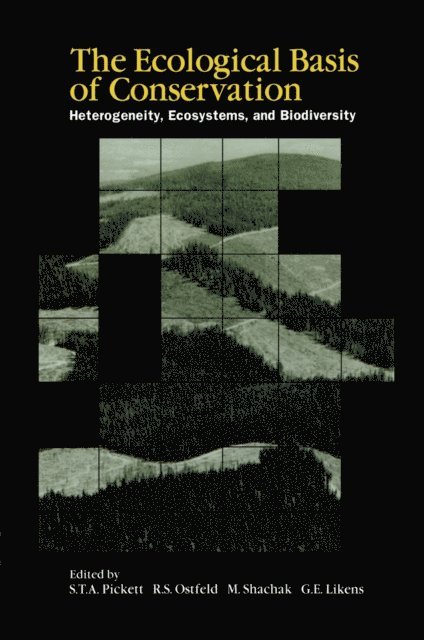
The conservation and management of wild natural resources stand at a junction. Currently conservation policy is shifting away from the preservation of single endangered species toward conservation and management of the interactive networks and large-scale ecosystems on which species depend. This text offers a scientific framework for this new approach, providing a solid basis for future research and the development of stronger links between ecology and public policy. Leaders in the field evaluate the role of theory, including both familiar and novel types of models, indicating how these tools can be employed over the range of scales and processes that conservation must now address. The book also contains diverse practical examples and case studies of how the new thinking in ecology, and the new partnership required for more successful conservation can work and be Improved. Examples span from freshwater to arid, and from subtropical to boreal. In addition, this highly integrated text provides links between ecology and policy and between ecology and management.
1 690 kr
Skickas inom 10-15 vardagar
From its inception, the U.S. Department of the Interior has been charged with a conflicting mission. One set of statutes demands that the department must develop America's lands, that it get our trees, water, oil, and minerals out into the marketplace. Yet an opposing set of laws orders us to conserve these same resources, to preserve them for the long term and to consider the noncommodity values of our public landscape. That dichotomy, between rapid exploitation and long-term protection, demands what I see as the most significant policy departure of my tenure in office: the use of science-interdisciplinary science-as the primary basis for land management decisions. For more than a century, that has not been the case. Instead, we have managed this dichotomy by compartmentalizing the American landscape. Congress and my predecessors handled resource conflicts by drawing enclosures: "We'll create a national park here," they said, "and we'll put a wildlife refuge over there." Simple enough, as far as protection goes. And outside those protected areas, the message was equally simplistic: "Y'all come and get it. Have at it." The nature and the pace of the resource extraction was not at issue; if you could find it, it was yours.