
M.T. Belongia – författare
Visar alla böcker från författaren M.T. Belongia. Handla med fri frakt och snabb leverans.
4 produkter
4 produkter
Inbunden, Engelska, 1990
1 115 kr
Skickas inom 10-15 vardagar
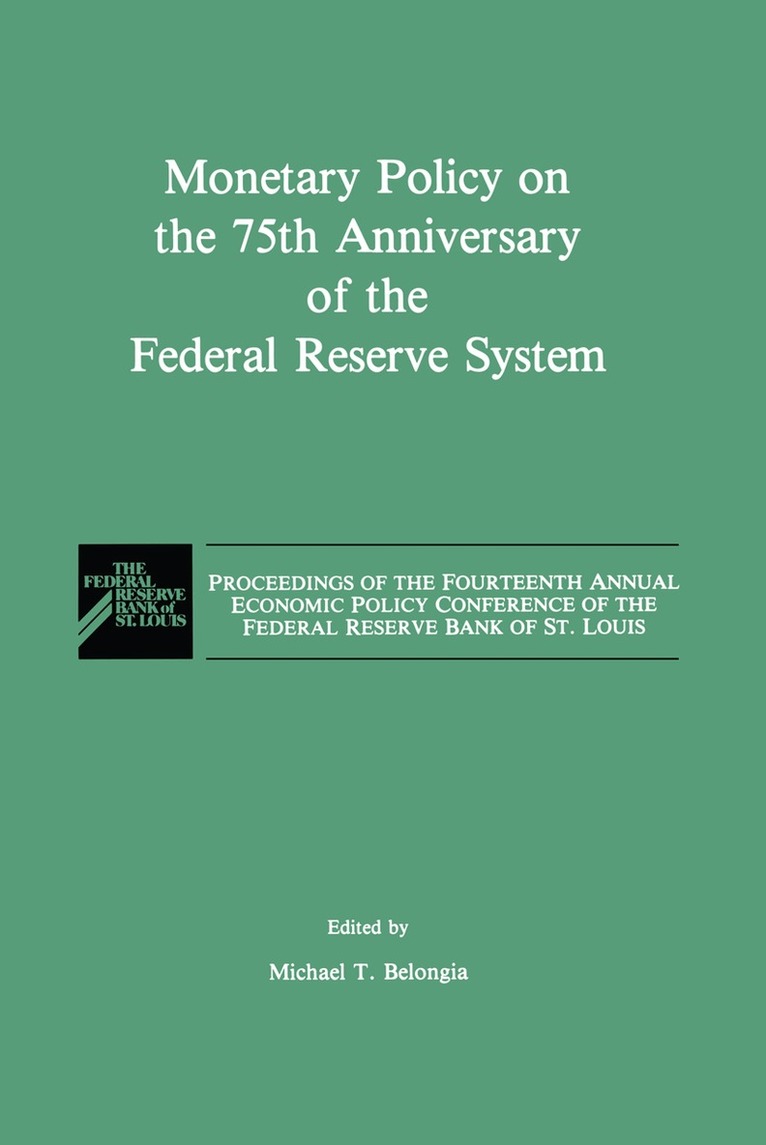
When the 12 District Banks of the Federal Reserve System opened their doors for business on November 16, 1914, few observers could have foreseen the Fed's present role as a major, if not dominant, player in U. S. and world economic policymaking. After all, two previous attempts to create a central bank in this country had ended in failure. Moreover, much of the economic theory and institutional structure that have given rise to monetary policy's influence in recent years were not yet in place. Indeed, it would take the Fed more than 20 years to learn (by accident!) the power of open market operations. Clearly, the modern Federal Reserve System has found itself with powers and responsibilities that were not envisioned by its founders. These proceedings from a conference held at the Federal Reserve Bank of St. Louis on October 19-20, 1989, examine U. S. monetary policy from a variety of perspectives: a historical review of how it has affected aggregate economic performance; a positive analysis of why the Federal Reserve has chosen particular policy strategies; a review of normative arguments about what the Fed should pursue as its policy objective; a critique of how the Fed's "output"-the flow of monetary services in the U. S. economy-is measured; and, finally, a debate over the Fed's ability to influence real economic activity by changing the nominal quantity of money in circulation.
Inbunden, Engelska, 1992
1 115 kr
Skickas inom 10-15 vardagar
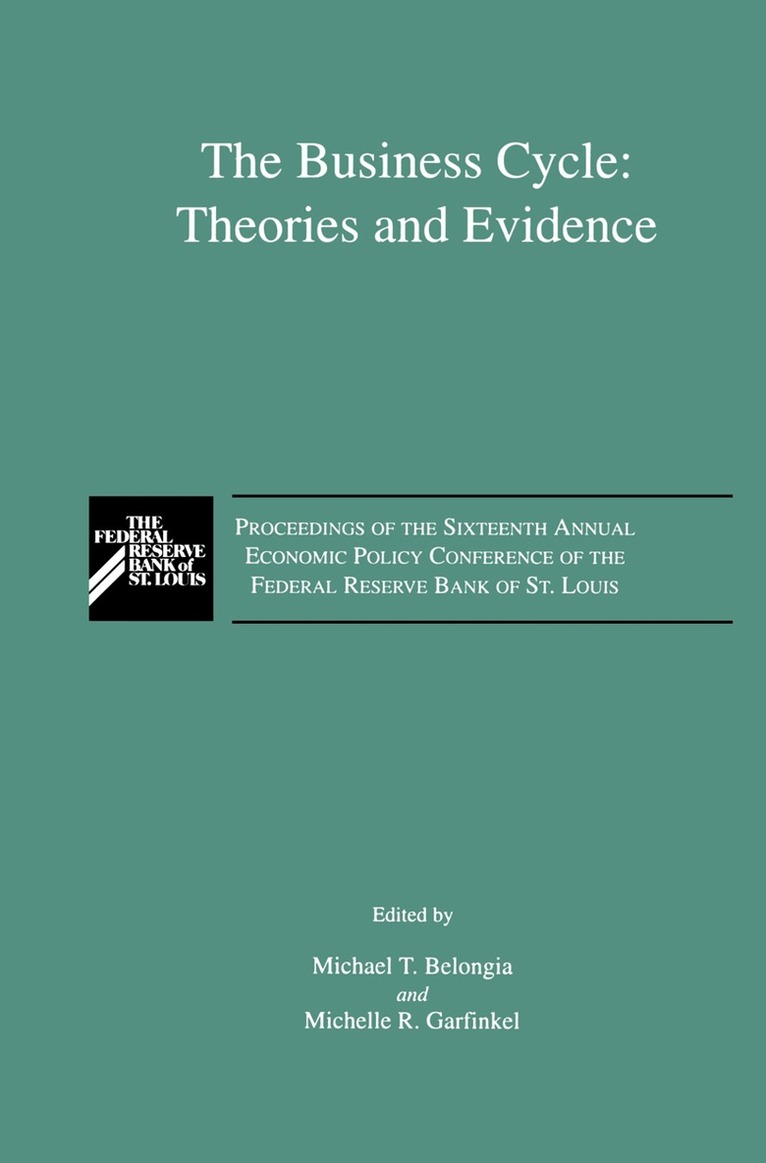
Presenting current knowledge on aggregate economic fluctuations - business cycles, this work begins with an empirical definition of the "business cycle". After outlining the historical development and key features of the current theories, these theories are evaluated on the basis of their ability to explain the facts. Included in this evaluation is a review of whether and how the competing theories could be distinguished empirically. The book concludes by highlighting important theoretical and empirical issues for future business-cycle research.
Häftad, Engelska, 2012
1 115 kr
Skickas inom 10-15 vardagar
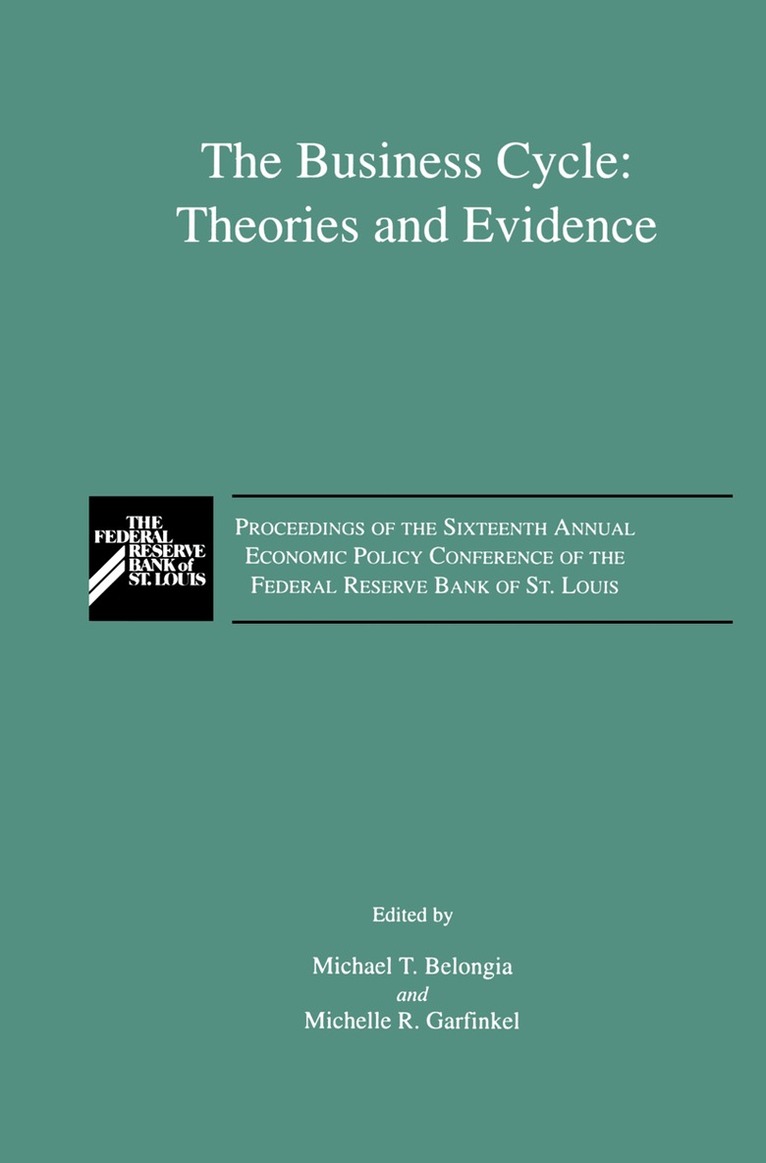
These proceedings, from a conference held at the Federal Reserve Bank of St. Louis on October 17-18, 1991, attempted to layout what we currently know about aggregate economic fluctuations. Identifying what we know inevitably reveals what we do not know about such fluctuations as well. From the vantage point of where the conference's participants view our current understanding to be, these proceedings can be seen as suggesting an agenda for further research. The conference was divided into five sections. It began with the formu lation of an empirical definition of the "business cycle" and a recitation of the stylized facts that must be explained by any theory that purports to capture the business cycle's essence. After outlining the historical develop ment and key features of the current "theories" of business cycles, the conference evaluated these theories on the basis of their ability to explain the facts. Included in this evaluation was a discussion of whether (and how) the competing theories could be distinguished empirically. The conference then examined the implications for policy of what is known and not known about business cycles. A panel discussion closed the conference, high lighting important unresolved theoretical and empirical issues that should be taken up in future business cycle research. What Is a Business Cycle? Before gaining a genuine understanding of business cycles, economists must agree and be clear about what they mean when they refer to the cycle.
Häftad, Engelska, 2012
1 115 kr
Skickas inom 10-15 vardagar
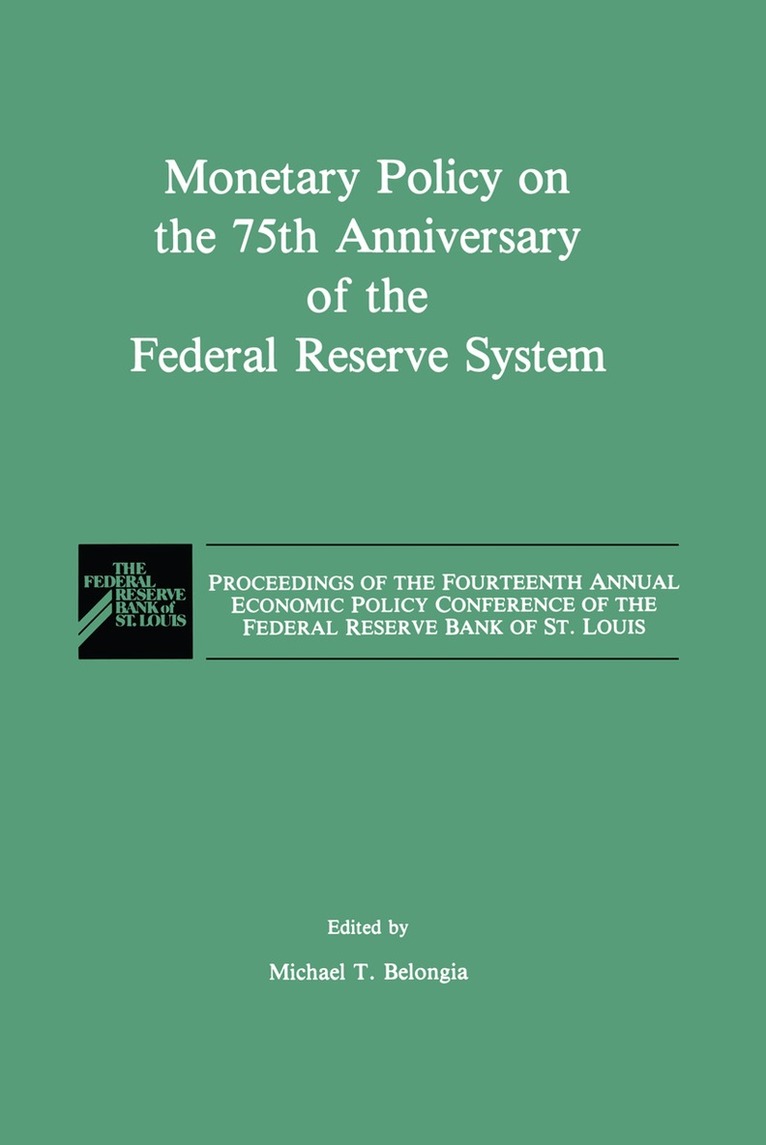
When the 12 District Banks of the Federal Reserve System opened their doors for business on November 16, 1914, few observers could have foreseen the Fed's present role as a major, if not dominant, player in U. S. and world economic policymaking. After all, two previous attempts to create a central bank in this country had ended in failure. Moreover, much of the economic theory and institutional structure that have given rise to monetary policy's influence in recent years were not yet in place. Indeed, it would take the Fed more than 20 years to learn (by accident!) the power of open market operations. Clearly, the modern Federal Reserve System has found itself with powers and responsibilities that were not envisioned by its founders. These proceedings from a conference held at the Federal Reserve Bank of St. Louis on October 19-20, 1989, examine U. S. monetary policy from a variety of perspectives: a historical review of how it has affected aggregate economic performance; a positive analysis of why the Federal Reserve has chosen particular policy strategies; a review of normative arguments about what the Fed should pursue as its policy objective; a critique of how the Fed's "output"-the flow of monetary services in the U. S. economy-is measured; and, finally, a debate over the Fed's ability to influence real economic activity by changing the nominal quantity of money in circulation.