Muḥammad ibn Maḥfūẓ al-Sanhūrī - Böcker
Visar alla böcker från författaren Muḥammad ibn Maḥfūẓ al-Sanhūrī. Handla med fri frakt och snabb leverans.
3 produkter
3 produkter
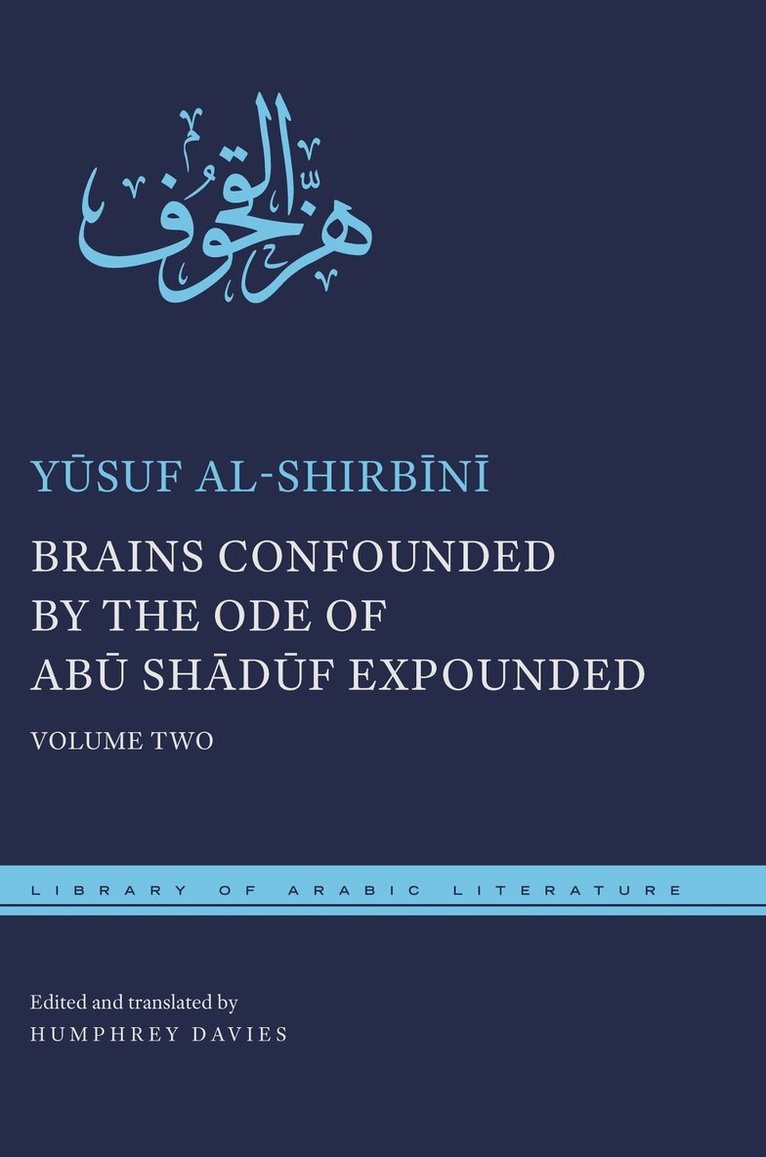
Brains Confounded by the Ode of Abū Shādūf Expounded, with Risible Rhymes
Volume Two
Häftad, Engelska, 2019
219 kr
Skickas inom 7-10 vardagar
Witty, bawdy, and vicious, Yūsuf al-Shirbīnī's Brains Confounded pits the "coarse" rural masses against the "refined" urban population. In Volume One, al-Shirbīnī describes the three rural "types"—peasant cultivator, village man-of-religion, and rural dervish—offering anecdotes testifying to the ignorance, dirtiness, and criminality of each. In Volume Two, he presents a hilarious parody of the verse-and-commentary genre so beloved by scholars of his day, with a 47-line poem supposedly written by a peasant named Abū Shādūf, who charts the rise and fall of his fortunes. Wielding the scholarly tools of elite literature, al-Shirbīnī responds to the poem with derision and ridicule, dotting his satire with digressions into love, food, and flatulence. Volume Two of Brains Confounded is followed by Risible Rhymes, a concise text that includes a comic disquisition on "rural" verse, mocking the pretensions of uneducated poets from Egypt's countryside. Risible Rhymes also examines various kinds of puzzle poems, which were another popular genre of the day, and presents a debate between scholars over a line of verse by the fourth/tenth-century poet al-Mutanabbī. Together, Brains Confounded and Risible Rhymes offer intriguing insight into the intellectual concerns of Ottoman Egypt, showcasing the intense preoccupation with wordplay, grammar, and stylistics and shedding light on the literature of the era.An English-only edition.
Brains Confounded by the Ode of Abū Shādūf Expounded, with Risible Rhymes
Volume Two
Inbunden, Engelska, 2016
559 kr
Skickas inom 10-15 vardagar
Witty, bawdy, and vicious, Yūsuf al-Shirbīnī's Brains Confounded pits the "coarse" rural masses against the "refined" urban population. In Volume One, al-Shirbīnī describes the three rural "types"—peasant cultivator, village man-of-religion, and rural dervish—offering anecdotes testifying to the ignorance, dirtiness, and criminality of each. In Volume Two, he presents a hilarious parody of the verse-and-commentary genre so beloved by scholars of his day, with a 47-line poem supposedly written by a peasant named Abū Shādūf, who charts the rise and fall of his fortunes. Wielding the scholarly tools of elite literature, al-Shirbīnī responds to the poem with derision and ridicule, dotting his satire with digressions into love, food, and flatulence. Volume Two of Brains Confounded is followed by Risible Rhymes, a concise text that includes a comic disquisition on "rural" verse, mocking the pretensions of uneducated poets from Egypt's countryside. Risible Rhymes also examines various kinds of puzzle poems, which were another popular genre of the day, and presents a debate between scholars over a line of verse by the fourth/tenth-century poet al-Mutanabbī. Together, Brains Confounded and Risible Rhymes offer intriguing insight into the intellectual concerns of Ottoman Egypt, showcasing the intense preoccupation with wordplay, grammar, and stylistics and shedding light on the literature of the era.An English-only edition.
406 kr
Skickas inom 10-15 vardagar
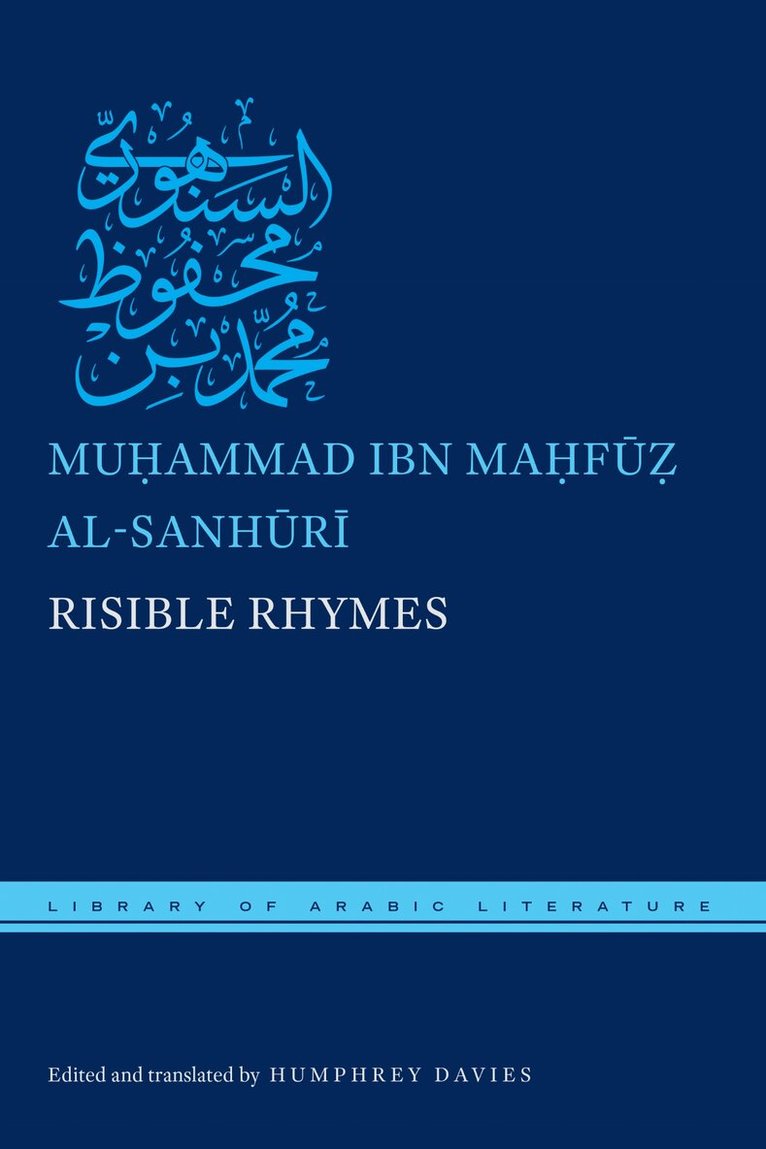
Written in mid-seventeenth-century Egypt, Risible Rhymes is in part a short, comic disquisition on "rural" verse, mocking the pretensions and absurdities of uneducated poets from Egypt's countryside.The interest in the countryside as a cultural, social, economic, and religious locus in its own right that is hinted at in this work may be unique in pre-twentieth-century Arabic literature. As such, the work provides a companion piece to its slightly younger contemporary, Yūsuf al-Shirbīnī's Brains Confounded by the Ode of Abū Shādūf Expounded, which also takes examples of mock-rural poems and subjects them to grammatical analysis. The overlap between the two texts may indicate that they both emanate from a common corpus of pseudo-rural verse that circulated in Ottoman Egypt. Risible Rhymes also examines various kinds of puzzle poems—another popular genre of the day—and presents a debate between scholars over a line of verse by the fourth/tenth-century poet al-Mutanabbī. Taken as a whole, Risible Rhymes offers intriguing insight into the critical concerns of mid-Ottoman Egypt, showcasing the intense preoccupation with wordplay, grammar, and stylistics that dominated discussions of poetry in al-Sanhūrī's day and shedding light on the literature of this understudied era.A bilingual Arabic-English edition.