Mustafa Djamgoz – författare
Visar alla böcker från författaren Mustafa Djamgoz. Handla med fri frakt och snabb leverans.
5 produkter
5 produkter
Häftad, Engelska, 2014
225 kr
Skickas
If you or someone you love has been diagnosed with cancer, you want to do everything possible to beat the disease. But with so much conflicting advice and so many options available, how do you decide on the best treatment plan for you?In this major new book, Professor Jane Plant and Professor Mustafa Djamgoz present a clear and scientifically sound 10-step programme to help you beat cancer. At a time when you may be feeling helpless and confused, this book provides the essential guidance you need to take control of your life and regain your health with targeted advice for specific cancers.Included in the 10-step plan:· Inform yourself: understand what cancer is, what causes it and how to avoid carcinogens· Choosing the right treatment: evidence-based advice on conventional and complementary therapies, including chemotherapy, radiotherapy, surgery and medication· Change your lifestyle: guidance on diet, exercise, reducing stress, relationships and other lifestyle factors that have a proven link with cancerBeat Cancer will help you prevent cancer, tackle your diagnosis and stay in remission.
Inbunden, Engelska, 1995
890 kr
Skickas inom 10-15 vardagar
This comprehensive work reviews the neurobiological organization of the vertebrate outer retina with an emphasis on mammalian systems. An international team of contributors discuss the ways in which outer retinal neurones and their interconnections are disrupted in clinical conditions.
E-bok
Engelska, 2014166 kr
Läs direkt efter köp
If you or someone you love has been diagnosed with cancer, you want to do everything possible to beat the disease. But with so much conflicting advice and so many options available, how do you decide on the best treatment plan for you?In this major new book, Professor Jane Plant and Professor Mustafa Djamgoz present a clear and scientifically sound 10-step programme to help you beat cancer. At a time when you may be feeling helpless and confused, this book provides the essential guidance you need to take control of your life and regain your health with targeted advice for specific cancers.Included in the 10-step plan:· Inform yourself: understand what cancer is, what causes it and how to avoid carcinogens· Choosing the right treatment: evidence-based advice on conventional and complementary therapies, including chemotherapy, radiotherapy, surgery and medication· Change your lifestyle: guidance on diet, exercise, reducing stress, relationships and other lifestyle factors that have a proven link with cancerBeat Cancer will help you prevent cancer, tackle your diagnosis and stay in remission.
E-bok
PDF, Engelska, 20121 396 kr
Läs direkt efter köp
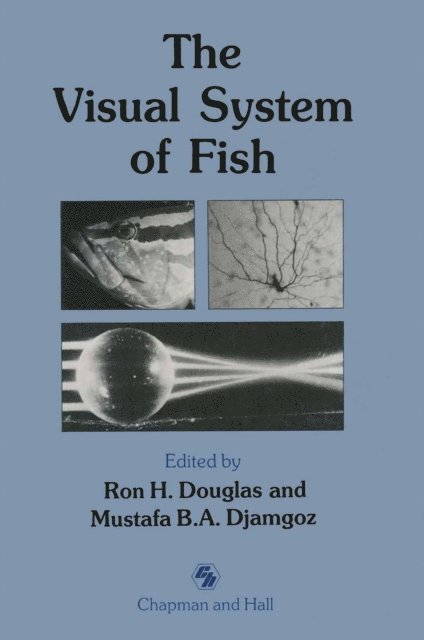
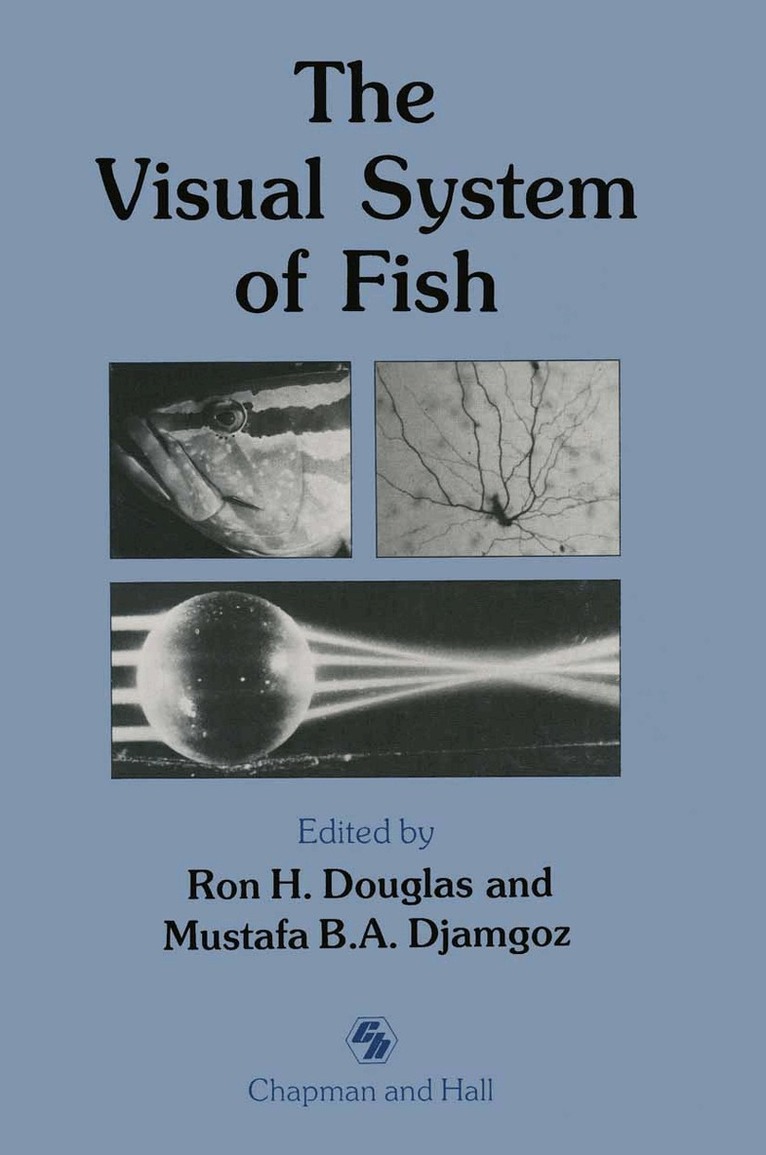
A question often asked of those of us who work in the seemingly esoteric field of fish vision is, why? To some of us the answer seems obvious - how many other visual scientists get to dive in a tropical lagoon in the name of science and then are able to eat their subjects for dinner? However, there are better, or at least scientifically more acceptable, reasons for working on the visual system of fish. First, in terms of numbers, fish are by far the most important of all vertebrate classes, probably accounting for over half (c. 22 000 species) of all recognized vertebrate species (Nelson, 1984). Furthermore, many of these are of commercial importance. Secondly, if one of the research aims is to understand the human visual system, animals such as fish can tell us a great deal, since in many ways their visual systems, and specifically their eyes, are similar to our own. This is fortunate, since there are several techniques, such as intracellular retinal recording, which are vital to our understanding of the visual process, that cannot be performed routinely on primates. The cold blooded fish, on the other hand, is an ideal subject for such studies and much of what we know about, for example, the fundamentals of information processing in the retina is based on work carried out on fish (e. g. Svaetichin, 1953).
Häftad, Engelska, 2011
1 079 kr
Skickas inom 10-15 vardagar
A question often asked of those of us who work in the seemingly esoteric field of fish vision is, why? To some of us the answer seems obvious - how many other visual scientists get to dive in a tropical lagoon in the name of science and then are able to eat their subjects for dinner? However, there are better, or at least scientifically more acceptable, reasons for working on the visual system of fish. First, in terms of numbers, fish are by far the most important of all vertebrate classes, probably accounting for over half (c. 22 000 species) of all recognized vertebrate species (Nelson, 1984). Furthermore, many of these are of commercial importance. Secondly, if one of the research aims is to understand the human visual system, animals such as fish can tell us a great deal, since in many ways their visual systems, and specifically their eyes, are similar to our own. This is fortunate, since there are several techniques, such as intracellular retinal recording, which are vital to our understanding of the visual process, that cannot be performed routinely on primates. The cold blooded fish, on the other hand, is an ideal subject for such studies and much of what we know about, for example, the fundamentals of information processing in the retina is based on work carried out on fish (e. g. Svaetichin, 1953).