Muzaffar Alam - Böcker
Visar alla böcker från författaren Muzaffar Alam. Handla med fri frakt och snabb leverans.
9 produkter
9 produkter
665 kr
Skickas inom 3-6 vardagar
1 011 kr
Tillfälligt slut
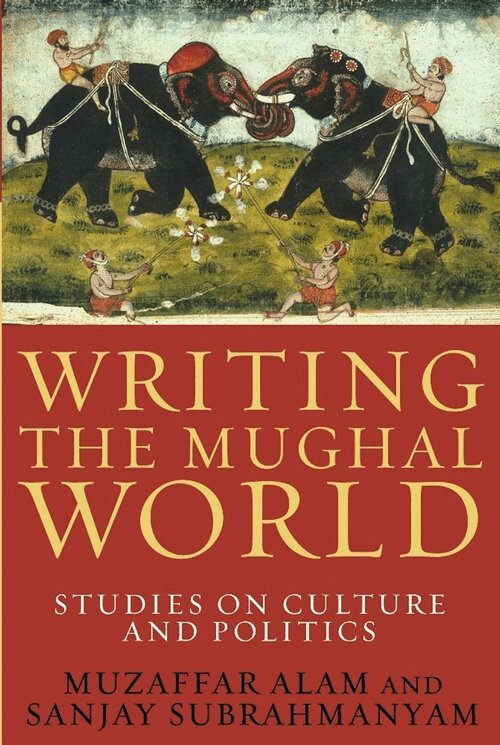
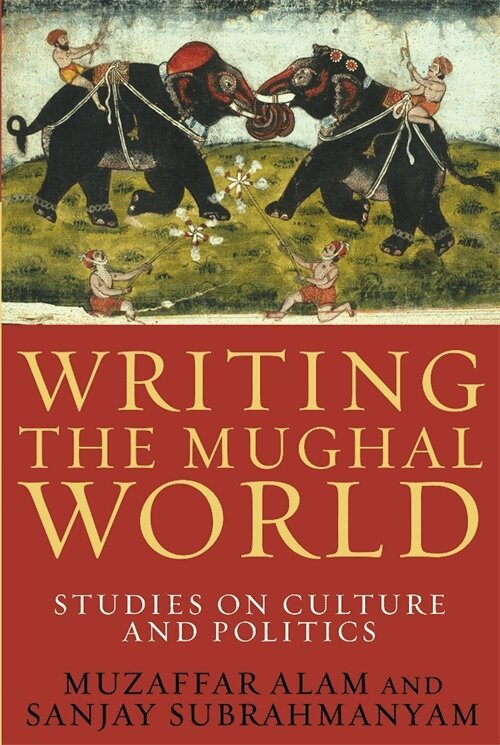
Between the mid-sixteenth and early nineteenth century, the Mughal Empire was an Indo-Islamic dynasty that ruled as far as Bengal in the east and Kabul in the west, as high as Kashmir in the north and the Kaveri basin in the south. The Mughals constructed a sophisticated, complex system of government that facilitated an era of profound artistic and architectural achievement. They promoted the place of Persian culture in Indian society and set the groundwork for South Asia's future development. In this volume, two leading historians of early modern South Asia present nine major joint essays on the Mughal Empire, framed by an essential introductory reflection. Making creative use of materials written in Persian, Indian vernacular languages, and a variety of European languages, their chapters accomplish the most significant innovations in Mughal historiography in decades, intertwining political, cultural, and commercial themes while exploring diplomacy, state-formation, history-writing, religious debate, and political thought.Muzaffar Alam and Sanjay Subrahmanyam center on confrontations between different source materials that they then reconcile, enabling readers to participate in both the debate and resolution of competing claims. Their introduction discusses the comparative and historiographical approach of their work and its place within the literature on Mughal rule. Interdisciplinary and cutting-edge, this volume richly expands research on the Mughal state, early modern South Asia, and the comparative history of the Mughal, Ottoman, Safavid, and other early modern empires.
412 kr
Skickas inom 7-10 vardagar
Between the mid-sixteenth and early nineteenth century, the Mughal Empire was an Indo-Islamic dynasty that ruled as far as Bengal in the east and Kabul in the west, as high as Kashmir in the north and the Kaveri basin in the south. The Mughals constructed a sophisticated, complex system of government that facilitated an era of profound artistic and architectural achievement. They promoted the place of Persian culture in Indian society and set the groundwork for South Asia's future development. In this volume, two leading historians of early modern South Asia present nine major joint essays on the Mughal Empire, framed by an essential introductory reflection. Making creative use of materials written in Persian, Indian vernacular languages, and a variety of European languages, their chapters accomplish the most significant innovations in Mughal historiography in decades, intertwining political, cultural, and commercial themes while exploring diplomacy, state-formation, history-writing, religious debate, and political thought.Muzaffar Alam and Sanjay Subrahmanyam center on confrontations between different source materials that they then reconcile, enabling readers to participate in both the debate and resolution of competing claims. Their introduction discusses the comparative and historiographical approach of their work and its place within the literature on Mughal rule. Interdisciplinary and cutting-edge, this volume richly expands research on the Mughal state, early modern South Asia, and the comparative history of the Mughal, Ottoman, Safavid, and other early modern empires.
631 kr
Skickas inom 7-10 vardagar
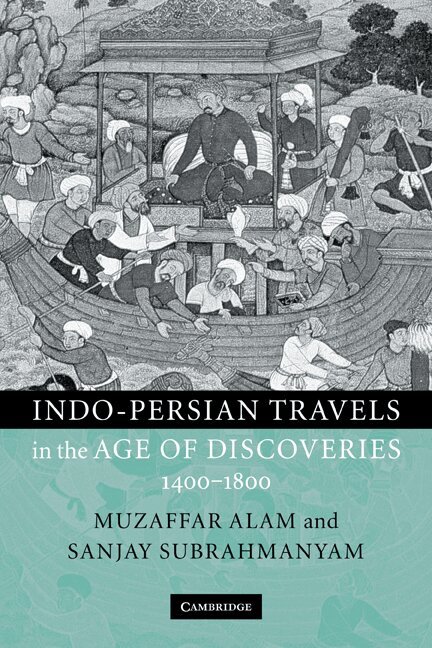
Originally published in 2007, this fascinating work is based on detailed and sensitive readings of travel accounts in Persian, dealing with India, Iran and Central Asia between around 1400 and 1800. The first comprehensive treatment of this neglected genre of literature (safar nama), it links the Mughals, Safavids and Central Asia in a crucial period of transformation and cultural contact. The authors' close reading of these travel accounts help us enter the mental and moral worlds of the Muslim and non-Muslim literati who produced these valuable narratives. These accounts are presented in a comparative framework, which sets them side by side with other Asian accounts, as well as early modern European travel narratives, and opens up a rich and unsuspected vista of cultural and material history. This book can be read for a better understanding of the nature of early modern encounters, but also for the sheer pleasure of entering a new world.
1 485 kr
Skickas inom 7-10 vardagar
Originally published in 2007, this fascinating work is based on detailed and sensitive readings of travel accounts in Persian, dealing with India, Iran and Central Asia between around 1400 and 1800. The first comprehensive treatment of this neglected genre of literature (safar nama), it links the Mughals, Safavids and Central Asia in a crucial period of transformation and cultural contact. The authors' close reading of these travel accounts help us enter the mental and moral worlds of the Muslim and non-Muslim literati who produced these valuable narratives. These accounts are presented in a comparative framework, which sets them side by side with other Asian accounts, as well as early modern European travel narratives, and opens up a rich and unsuspected vista of cultural and material history. This book can be read for a better understanding of the nature of early modern encounters, but also for the sheer pleasure of entering a new world.
480 kr
Skickas inom 5-8 vardagar
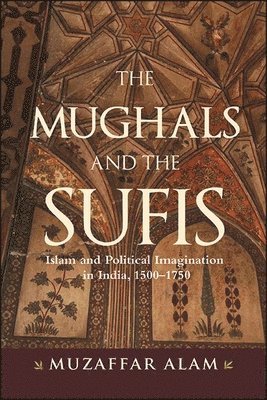
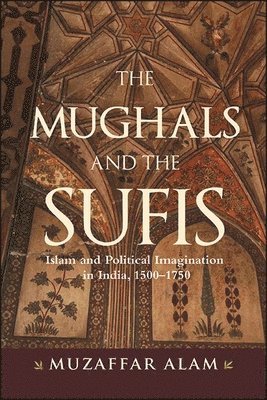
Examines the relationship between Mughal political culture and the two dominant strains of Islam's Sufi traditions in South Asia: one centered around orthodoxy, the other focusing on a more accommodating and mystical spirituality.Based on a critical study of a large number of contemporary Persian texts, court chronicles, epistolary collections, and biographies of sufi mystics, The Mughals and the Sufis examines the complexities in the relationship between Mughal political culture and the two dominant strains of Islam's Sufi traditions in South Asia: one centered around orthodoxy, the other focusing on a more accommodating and mystical spirituality. Muzaffar Alam analyses the interplay of these elements, their negotiation and struggle for resolution via conflict and coordination, and their longer-term outcomes as the empire followed its own political and cultural trajectory as it shifted from the more liberal outlook of Emperor Akbar "The Great" (r. 1556–1605) to the more rigid attitudes of his great-grandson, Aurangzeb 'Alamgir (r. 1658–1701). Alam brings to light many new and underutilized sources relevant to the religious and cultural history of the Mughals and reinterprets well-known sources from a new perspective to provide one of the most detailed and nuanced portraits of Indian Islam under the Mughal Empire available today.
1 456 kr
Skickas inom 3-6 vardagar
Examines the relationship between Mughal political culture and the two dominant strains of Islam's Sufi traditions in South Asia: one centered around orthodoxy, the other focusing on a more accommodating and mystical spirituality.Based on a critical study of a large number of contemporary Persian texts, court chronicles, epistolary collections, and biographies of sufi mystics, The Mughals and the Sufis examines the complexities in the relationship between Mughal political culture and the two dominant strains of Islam's Sufi traditions in South Asia: one centered around orthodoxy, the other focusing on a more accommodating and mystical spirituality. Muzaffar Alam analyses the interplay of these elements, their negotiation and struggle for resolution via conflict and coordination, and their longer-term outcomes as the empire followed its own political and cultural trajectory as it shifted from the more liberal outlook of Emperor Akbar "The Great" (r. 1556–1605) to the more rigid attitudes of his great-grandson, Aurangzeb 'Alamgir (r. 1658–1701). Alam brings to light many new and underutilized sources relevant to the religious and cultural history of the Mughals and reinterprets well-known sources from a new perspective to provide one of the most detailed and nuanced portraits of Indian Islam under the Mughal Empire available today.
1 059 kr
Skickas inom 7-10 vardagar
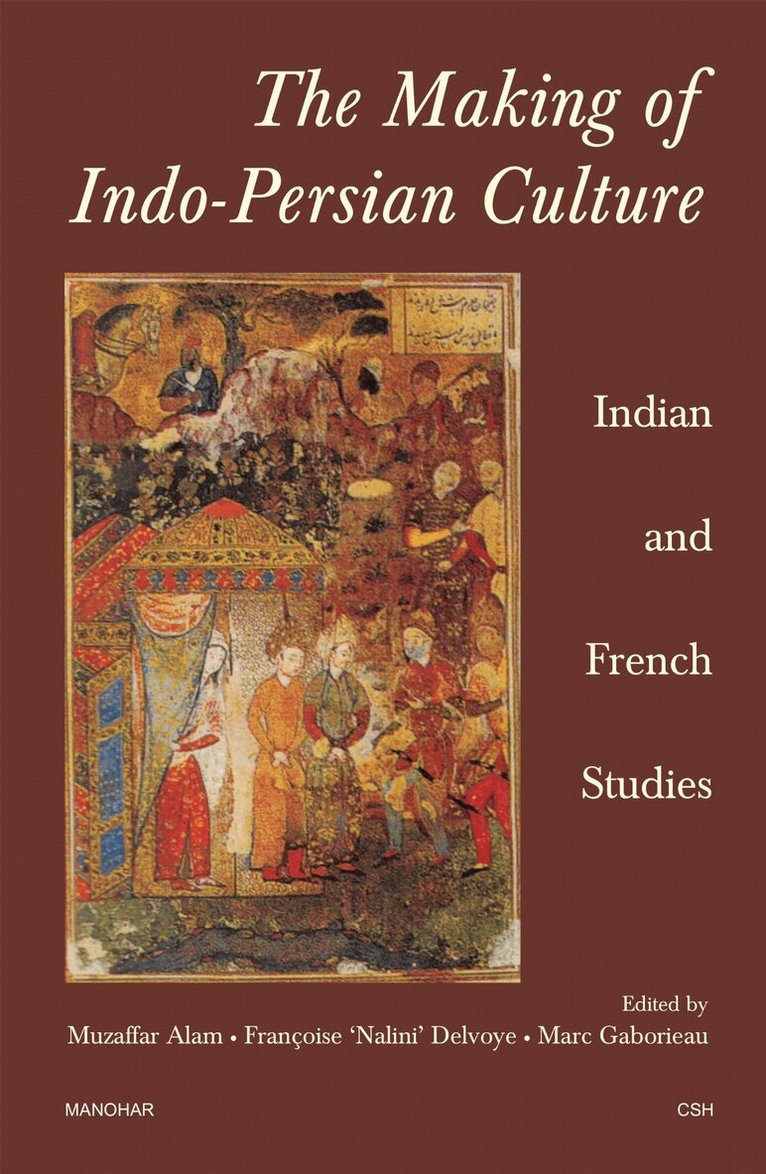
The sixteen essays that make up this volume were originally presented at a seminar ‘The Evolution of Medieval Indian Culture: The Indo-Persian Context’, held at Jawaharlal Nehru University, New Delhi on 14-16 February 1994. The papers in this collection have been classified thematically into five parts, each one arranged broadly in chronological order.The first part on 'Political Institutions and Ideas', is a reflection on the political ideology of Indo-Persian empires. From the two papers it contains, it is clear that the political theory of the Muslims of India seldom limited itself to a narrow interpretation of the Shar?ca: pre-lslamic ideas, rational traditions of Islam, as well as Sufi inspiration gave it its specific shape.The second part of the book on ‘Religious Traditions’, is devoted to this Sufi dimension. It contains four papers which cover diverse aspects of Indian Sufism from its formative phase down to its recent developments.The third part on ‘Painting’ contains three papers on the formative phase of Mughal painting and book-illustration, with examples of Mughal narratives and illustrated Persian manuscripts from the Deccan.Two papers on ‘Music’ examine the contribution of Indo-Persian texts to the history of art-music in the Sultanate of Gujarat and at the Awadh court.The five articles in the fifth and final part of the volume on ‘Literature, Historiography and Archives’, analyse some Indo-Persian texts, survey sources and also endeavour to examine issues relating to Persian literary culture in India.The present volume highlights the emerging trends representative of current Indo-Persian studies in India and abroad and underlines the richness and the vitality of this field of research.
1 475 kr
Skickas
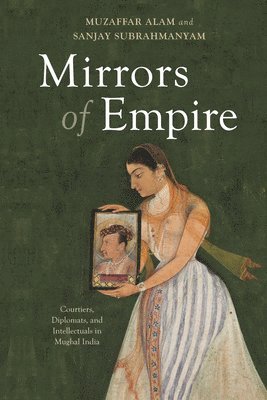
Approaches the history of the Mughal Empire at the level of human experience, through a diverse group of autobiographical narratives.Starting from 1526, the Mughals ruled over much of India for three centuries, perhaps the most important Islamic empire in the early modern world. This period saw the production of a fascinating variety of memoirs and autobiographies in which residents of the empire reflected on their own lives, on Islam in a Hindu context, and on the relationship of individual subjects to their new rulers. Those written by Mughal royalty—especially Babur and Jahangir—are well known. This book considers the less well-known writings of diverse others, from the poet laureate Faizi to those who were not part of elite society but a few notches below it, such as the lowly envoy Asad Beg and characters like Mirza Nathan and Abdul Latif, who lived dangerously on the Bengal frontier. Also considered are prolific Hindu writers, such as Bhimsen Saksena and the witty Anand Ram Mukhlis, who lived in Delhi through the turbulent 1730s and 1740s. Together, they offer an original and differently critical perspective on the empire—its religious, social, and political tensions, as well as its strategies for overcoming them.Covering over two centuries of such materials, Mirrors of Empire is a work of cultural history that is also firmly rooted in social history. It incorporates extensive translations from Persian, including materials that are little-known even to historians and specialists, and shows the transformation of the empire from its difficult emergence, to its expansive height, to its phase of disintegration in the middle of the eighteenth century. Gracefully written, the book approaches the Mughal Empire at the level of human experience, rendering it accessible and not a mere abstraction.