N. Scott Arnold - Böcker
Visar alla böcker från författaren N. Scott Arnold. Handla med fri frakt och snabb leverans.
4 produkter
4 produkter
1 594 kr
Skickas inom 5-8 vardagar
N. Scott Arnold argues that the most defensible version of a market socialist economic system would be unable to realize widely held socialist ideals and values. In particular, it would be responsible for widespread and systematic exploitation. The charge of exploitation, which is really a charge of injustice, has typically been made against capitalist systems by socialists. This book argues that it is market socialism--the only remaining viable form of socialism--that is systematically exploitative. Recent work on the economics of contracts and organizations is used to show that the characteristic organizations of a free enterprise system, the classical capitalist firm and the modern corporation, are structured in such a way that opportunities for exploitation among economic actors (e.g., managers, workers, providers of capital, customers) are minimized. By contrast, Arnold argues, in a market socialist regime of worker cooperatives, opportunities for exploitation would abound. Arnold locates his comparative analysis of market socialism and the free enterprise system in the larger context of the capitalism/socialism debate. In his account of this debate, he offers a distinctive and compelling vision of the relationship between the social sciences and political philosophy.
1 217 kr
Skickas inom 5-8 vardagar
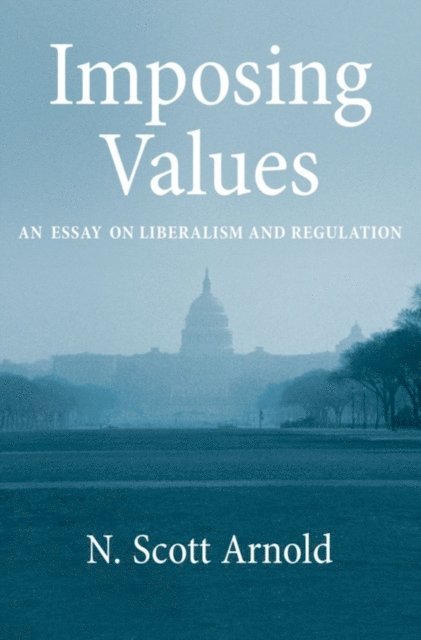
A major question for liberal politics and liberal political theory concerns the proper scope of government. Liberalism has always favored limited government, but there has been wide-ranging dispute among liberals about just how extensive the scope of government should be. Included in this dispute are questions about the extent of state ownership of the means of production, redistribution of wealth and income through the tax code and transfer programs, and the extent of government regulation. One of N. Scott Arnold's goals is to give an accurate characterization of both modern liberalism and classical liberalism, explaining along the way why libertarianism is not the only form that classical liberalism can take. The main focus of Arnold's book, however, concerns regulation--specifically, the modern liberal regulatory agenda as it has taken shape in contemporary American society. This is the set of regulatory regimes favored by all modern liberals and opposed by all classical liberals. It includes contemporary employment law in all its manifestations, health and safety regulation, and land use regulation. The heart of the book consists of a systematic evaluation of arguments for and against all the items on this agenda. It turns out that there are good arguments on both sides for most of these regulatory regimes. Because of this, and because someone's vision of the proper scope of government will ultimately prevail, some procedural requirements that all liberals could agree to must be satisfied for one side to impose legitimately its values on the polity at large. These procedural requirements are identified, argued for, and then applied to the elements of the modern liberal regulatory agenda. Arnold argues that many, though not all, of these elements have been illegitimately imposed on American society.
495 kr
Skickas inom 5-8 vardagar
A major question for liberal politics and liberal political theory concerns the proper scope of government. Liberalism has always favored limited government, but there has been wide-ranging dispute among liberals about just how extensive the scope of government should be. Included in this dispute are questions about the extent of state ownership of the means of production, redistribution of wealth and income through the tax code and transfer programs, and the extent of government regulation. One of N. Scott Arnold's goals is to give an accurate characterization of both modern liberalism and classical liberalism, explaining along the way why libertarianism is not the only form that classical liberalism can take. The main focus of Arnold's book, however, concerns regulation--specifically, the modern liberal regulatory agenda as it has taken shape in contemporary American society. This is the set of regulatory regimes favored by all modern liberals and opposed by all classical liberals. It includes contemporary employment law in all its manifestations, health and safety regulation, and land use regulation. The heart of the book consists of a systematic evaluation of arguments for and against all the items on this agenda. It turns out that there are good arguments on both sides for most of these regulatory regimes. Because of this, and because someone's vision of the proper scope of government will ultimately prevail, some procedural requirements that all liberals could agree to must be satisfied for one side to impose legitimately its values on the polity at large. These procedural requirements are identified, argued for, and then applied to the elements of the modern liberal regulatory agenda. Arnold argues that many, though not all, of these elements have been illegitimately imposed on American society.
690 kr
Skickas inom 7-10 vardagar
Philosophy Then and Now provides an innovative and engaging blend of introductory text with classic and contemporary readings. Each of the eight parts begins with an introductory section on the major ideas associated with a seminal figure from the history of philosophy. This is followed by key selections from the essential writings of that philosopher, as well as influential selections from contemporary figures. Key figures covered include: Socrates, Aquinas, Locke, Descartes, Mill, Nietzsche, Marx, and Sartre. By focusing on the core themes, issues and problems of philosophy, the volume motivates student interest in the subject, and represents a distinctive text for all introductory courses in philosophy.