Nadezhda Goncharova - Böcker
Visar alla böcker från författaren Nadezhda Goncharova. Handla med fri frakt och snabb leverans.
6 produkter
6 produkter
3 149 kr
Skickas inom 10-15 vardagar
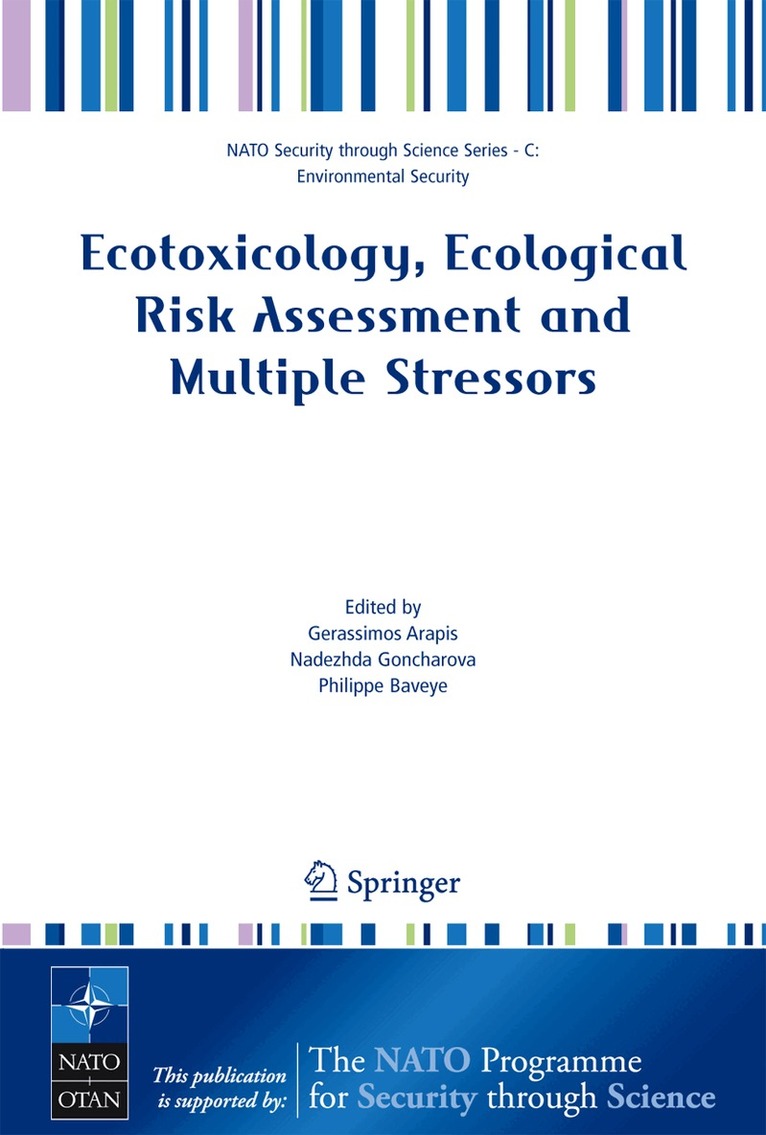
The science of ecotoxicology and the practice of ecological risk assessment are evolving rapidly. Ecotoxicology as a subject area came into prominence in the 1960s after the publication of Rachel Carson's book on the impact of pesticides on the environment. The rise of public and scientific concern for the effects of chemical pollutants on the environment in the 1960s and 1970s led to the development of the discipline of ecotoxicology, a science that takes into account the effects of chemicals in the context of ecology. Until the early 1980s, in spite of public concern and interest among scientists, the assessment of ecological risks associated with natural or synthetic pollutants was not considered a priority issue by most government. However, as the years passed, a better understanding of the importance of ecotoxicology emerged and with it, in some countries, the progressive formalization of an ecological risk assessment process. Ecological risk assessment is a conceptual tool for organizing and analyzing data and information to evaluate the likelihood that one or more stressors are causing or will cause adverse ecological effects. Ecological risk assessment allows risk managers to consider available scientific information when selecting a course of action, in addition to other factors that may affect their decision (e. g. , social, legal, political, or economic). Ecological risk assessment includes three phases (problem formulation, analysis, and risk characterization).
3 149 kr
Skickas inom 10-15 vardagar
The science of ecotoxicology and the practice of ecological risk assessment are evolving rapidly. Ecotoxicology as a subject area came into prominence in the 1960s after the publication of Rachel Carson's book on the impact of pesticides on the environment. The rise of public and scientific concern for the effects of chemical pollutants on the environment in the 1960s and 1970s led to the development of the discipline of ecotoxicology, a science that takes into account the effects of chemicals in the context of ecology. Until the early 1980s, in spite of public concern and interest among scientists, the assessment of ecological risks associated with natural or synthetic pollutants was not considered a priority issue by most government. However, as the years passed, a better understanding of the importance of ecotoxicology emerged and with it, in some countries, the progressive formalization of an ecological risk assessment process. Ecological risk assessment is a conceptual tool for organizing and analyzing data and information to evaluate the likelihood that one or more stressors are causing or will cause adverse ecological effects. Ecological risk assessment allows risk managers to consider available scientific information when selecting a course of action, in addition to other factors that may affect their decision (e. g. , social, legal, political, or economic). Ecological risk assessment includes three phases (problem formulation, analysis, and risk characterization).
Del 68 - NATO Science Series: IV:
Phytoremediation of Metal-Contaminated Soils
Inbunden, Engelska, 2006
2 101 kr
Skickas inom 10-15 vardagar
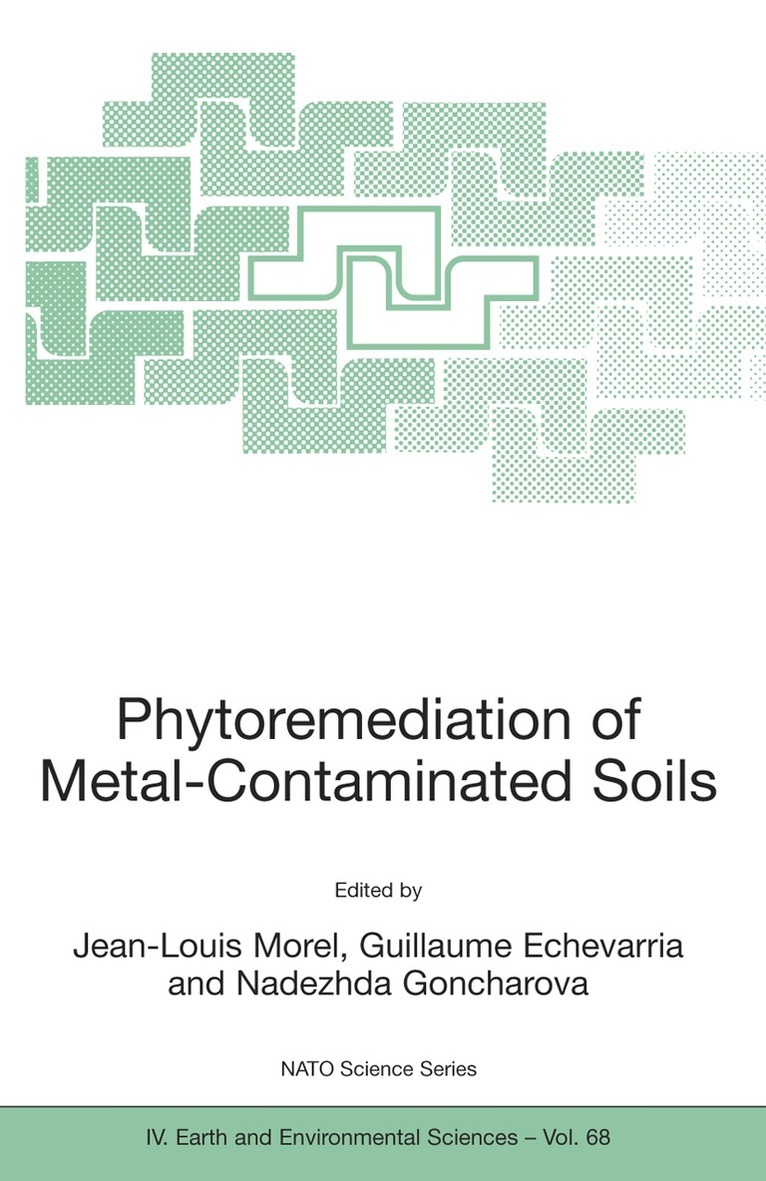
Phytoremediation, the use of plants to remediate environmental media, is being pursued as a new approach for the cleanup of contaminated soils and waters, including groundwater. Plant-assisted bioremediation, sometimes referred to as a type of phytoremediation, involves the interaction of plant roots and the microorganisms associated with these root systems to re- diate soils containing elevated concentrations of organic compounds. These techniques could provide cost-effective methods of remediating soils and groundwater contaminated with metals, radionuclides, and various types of organics, with fewer secondary wastes and less environmental impact than would be generated using traditional remediation methods. All plants extract necessary nutrients, including metals, from their soil and water environments. Some plants, called hyperaccumulators, have the ability to store large amounts of metals, even some metals that do not appear to be required for plant functioning. In addition, plants can take up various organic chemicals from environmental media and degrade or otherwise process them for use in their physiological processes. Phytoremediation technologies are in the early stages of development, with laboratory research and limited field trials being conducted to determine processes and refine methods. Additional research, including genetic engineering, is being conducted to improve the natural capabilities of plants to perform remediation functions and to investigate other plants with potential phytoremediation applications. Large areas in Western and Eastern countries are polluted with heavy metals and radionuclides in natural, rural, urban or industrial areas.
2 101 kr
Skickas inom 10-15 vardagar
Phytoremediation, the use of plants to remediate environmental media, is being pursued as a new approach for the cleanup of contaminated soils and waters, including groundwater. Plant-assisted bioremediation, sometimes referred to as a type of phytoremediation, involves the interaction of plant roots and the microorganisms associated with these root systems to re- diate soils containing elevated concentrations of organic compounds. These techniques could provide cost-effective methods of remediating soils and groundwater contaminated with metals, radionuclides, and various types of organics, with fewer secondary wastes and less environmental impact than would be generated using traditional remediation methods. All plants extract necessary nutrients, including metals, from their soil and water environments. Some plants, called hyperaccumulators, have the ability to store large amounts of metals, even some metals that do not appear to be required for plant functioning. In addition, plants can take up various organic chemicals from environmental media and degrade or otherwise process them for use in their physiological processes. Phytoremediation technologies are in the early stages of development, with laboratory research and limited field trials being conducted to determine processes and refine methods. Additional research, including genetic engineering, is being conducted to improve the natural capabilities of plants to perform remediation functions and to investigate other plants with potential phytoremediation applications. Large areas in Western and Eastern countries are polluted with heavy metals and radionuclides in natural, rural, urban or industrial areas.
1 064 kr
Skickas inom 10-15 vardagar
It is the goal of environmental security to protect people from the short- and long-term ravages of nature, man-made threats and deterioration of the natural environment. Environmental security includes activities related to pollution prevention, environmental conservation, compliance with regulations and environmental restoration. It is a challenge for transition countries to support all of these activities, due to limited resources, competing priorities and the fact that most environmental regulations, assessment methods and procedures, and restoration techniques were developed in countries where resources were not limited. This volume presents the main environmental security challenges facing transition countries, as well as practical methods and approaches for addressing them. These approaches are equally applicable to all countries. The four basic topics this volume addresses are (I) Introduction to Environmental Security Challenges (II) Strategies, Methods and Approaches for Addressing these Challenges (III) Lessons Learned as Illustrated via Research and Case Studies (IV) Issues Related to Metals in the Environment. The final chapter of the book is a summary of the discussions and working group sessions, entitled "Environmental Security in Transition Countries: Knowledge Gaps, Hurdles and Effective Strategies to Address Them".
1 064 kr
Skickas inom 10-15 vardagar
It is the goal of environmental security to protect people from the short- and long-term ravages of nature, man-made threats and deterioration of the natural environment. Environmental security includes activities related to pollution prevention, environmental conservation, compliance with regulations and environmental restoration. It is a challenge for transition countries to support all of these activities, due to limited resources, competing priorities and the fact that most environmental regulations, assessment methods and procedures, and restoration techniques were developed in countries where resources were not limited. This volume presents the main environmental security challenges facing transition countries, as well as practical methods and approaches for addressing them. These approaches are equally applicable to all countries. The four basic topics this volume addresses are (I) Introduction to Environmental Security Challenges (II) Strategies, Methods and Approaches for Addressing these Challenges (III) Lessons Learned as Illustrated via Research and Case Studies (IV) Issues Related to Metals in the Environment. The final chapter of the book is a summary of the discussions and working group sessions, entitled "Environmental Security in Transition Countries: Knowledge Gaps, Hurdles and Effective Strategies to Address Them".