Nadieszda Kizenko - Böcker
Visar alla böcker från författaren Nadieszda Kizenko. Handla med fri frakt och snabb leverans.
5 produkter
5 produkter
581 kr
Skickas inom 5-8 vardagar
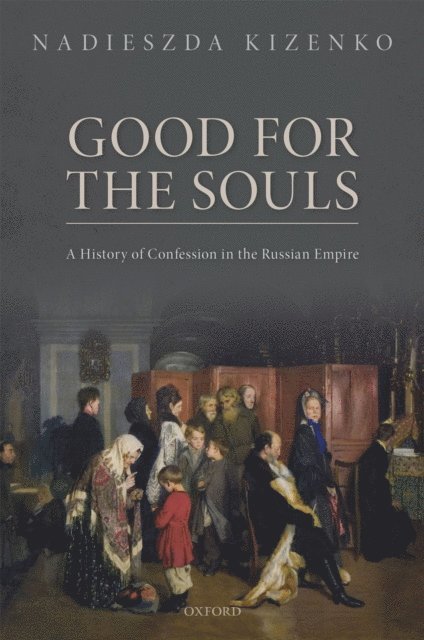
From the moment that Tsars as well as hierarchs realized that having their subjects go to confession could make them better citizens as well as better Christians, the sacrament of penance in the Russian empire became a political tool, a devotional exercise, a means of education, and a literary genre. It defined who was Orthodox, and who was 'other.' First encouraging Russian subjects to participate in confession to improve them and to integrate them into a reforming Church and State, authorities then turned to confession to integrate converts of other nationalities. But the sacrament was not only something that state and religious authorities sought to impose on an unwilling populace. Confession could provide an opportunity for carefully crafted complaint. What state and church authorities initially imagined as a way of controlling an unruly population could be used by the same population as a way of telling their own story, or simply getting time off to attend to their inner lives. Good for the Souls brings Russia into the rich scholarly and popular literature on confession, penance, discipline, and gender in the modern world, and in doing so opens a key window onto church, state, and society. It draws on state laws, Synodal decrees, archives, manuscript repositories, clerical guides, sermons, saints' lives, works of literature, and visual depictions of the sacrament in those books and on church iconostases. Russia, Ukraine, and Orthodox Christianity emerge both as part of the European, transatlantic religious continuum-and, in crucial ways, distinct from it.
Religion and the Russian Revolution
Conflicts, Encounters, and Transformations
Inbunden, Engelska, 2026
1 140 kr
Kommande
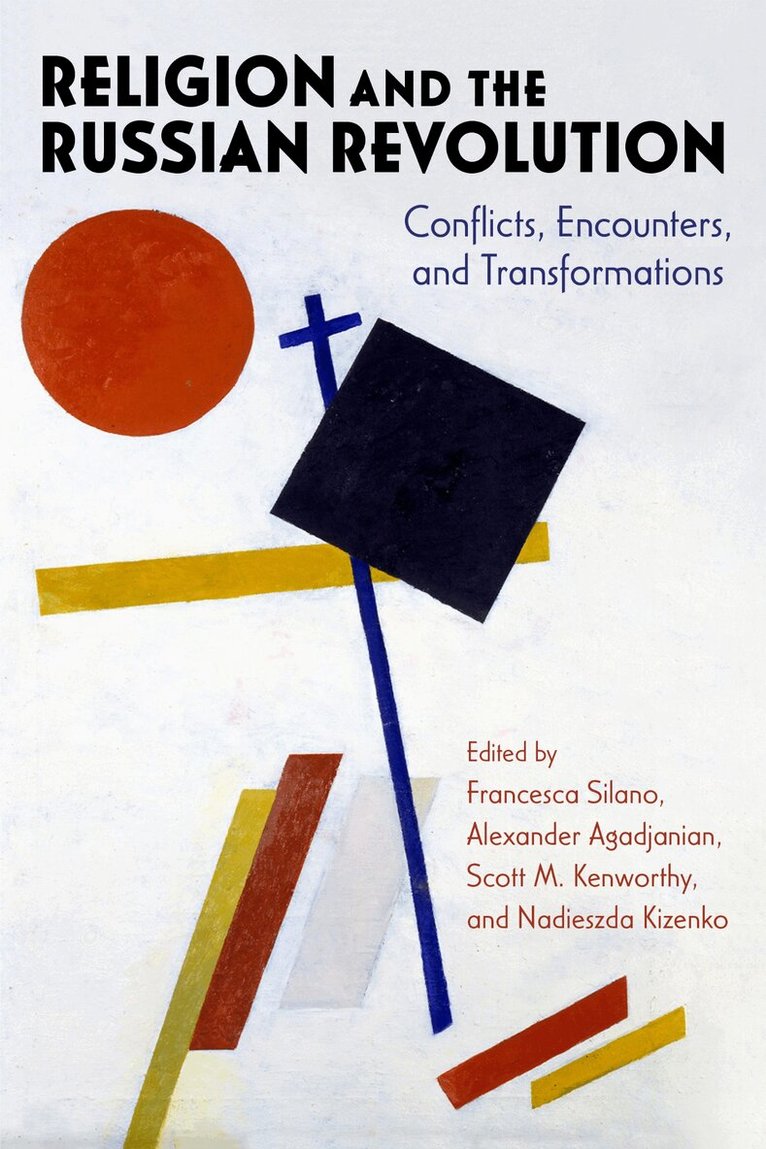
On the eve of World War I, the Russian Empire was among the most diverse in the world, and religious identity was the single most important factor for determining a subject's relation to the imperial state. The revolutions of 1917 overturned the Empire's religious world. The Provisional Government sought to disentangle the state from its long-standing ties to the Orthodox Church; minority religious groups looked forward to greater freedom of practice; and, with the Communist Revolution of October 1917, Bolshevik anti-religious activists looked to bring about the death of God and the birth of the New Soviet Person.Drawing on archives, periodicals, ego-documents, visual imagery, and other key sources, Religion and the Russian Revolution examines not only how diverse religious groups and individual actors were affected by revolutionary politics, but also the critical role religious discourses and practices played in shaping revolutionary imagery and action. The chapters dive into the rich and varied landscape of personal and collective religious experiences before, during, and after the 1917 Revolutions. In so doing, the contributions gathered in this volume document perceptions of violence, everyday religious practices, visual imaginaries, and new definitions of "religion" and "the sacred" across Russia.By rethinking the religious implications and consequences of this radical era, Religion and the Russian Revolution forcefully illustrates that the Revolutions of 1917 cannot be fully understood without exploring the ways in which the sacred and the revolutionary overlapped and informed each other.
586 kr
Kommande
On the eve of World War I, the Russian Empire was among the most diverse in the world, and religious identity was the single most important factor for determining a subject's relation to the imperial state. The revolutions of 1917 overturned the Empire's religious world. The Provisional Government sought to disentangle the state from its long-standing ties to the Orthodox Church; minority religious groups looked forward to greater freedom of practice; and, with the Communist Revolution of October 1917, Bolshevik anti-religious activists looked to bring about the death of God and the birth of the New Soviet Person.Drawing on archives, periodicals, ego-documents, visual imagery, and other key sources, Religion and the Russian Revolution examines not only how diverse religious groups and individual actors were affected by revolutionary politics, but also the critical role religious discourses and practices played in shaping revolutionary imagery and action. The chapters dive into the rich and varied landscape of personal and collective religious experiences before, during, and after the 1917 Revolutions. In so doing, the contributions gathered in this volume document perceptions of violence, everyday religious practices, visual imaginaries, and new definitions of "religion" and "the sacred" across Russia.By rethinking the religious implications and consequences of this radical era, Religion and the Russian Revolution forcefully illustrates that the Revolutions of 1917 cannot be fully understood without exploring the ways in which the sacred and the revolutionary overlapped and informed each other.
396 kr
Skickas
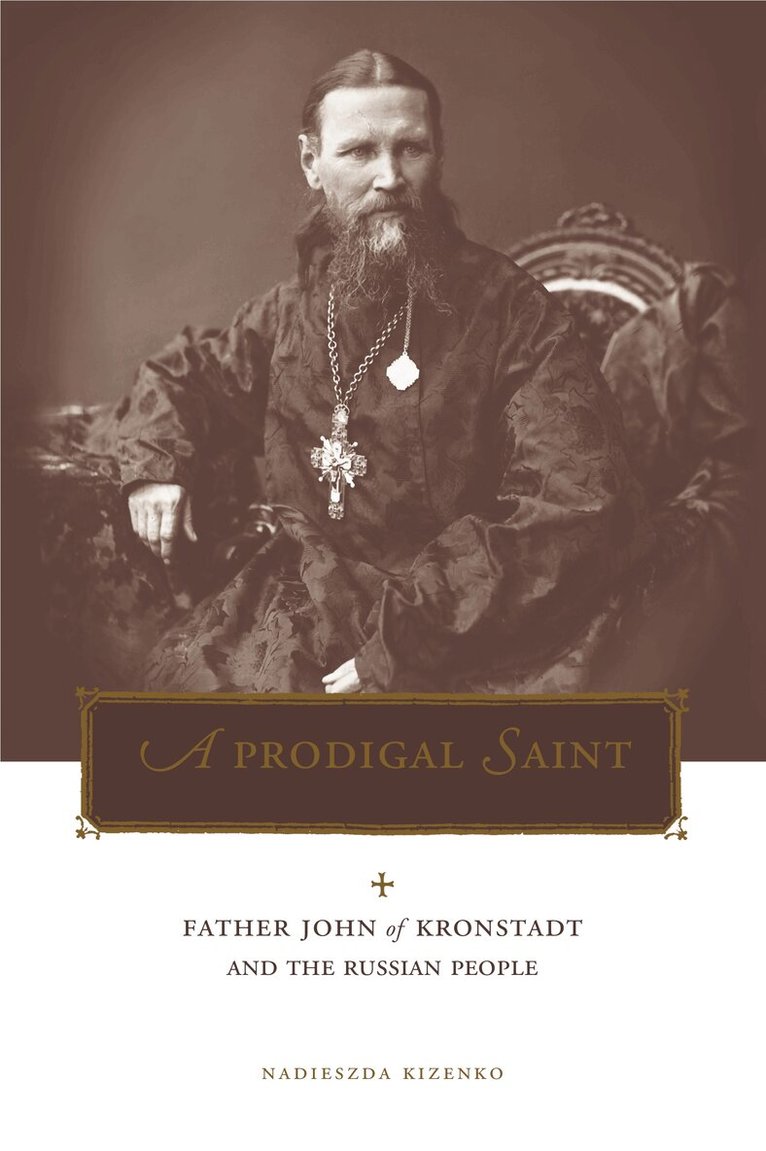
Rarely are we privileged to see the making of a saint, but it is just what this book gives us for John of Kronstadt (1829–1908), a major figure in the religious life of Late Imperial Russia. So popular was Father John during his years of ministry that Kronstadt became a pilgrimage site replete with peddlers selling souvenir photographs, postcards, and commemorative mugs. A Prodigal Saint follows Father John’s development from activist priest to venerated spiritual leader and, after his death, to his elevation to sainthood in 1990. We see both the inner life of an aspiring saint and the symbiotic relationship between a living icon and his followers. Father John represented a fundamentally new type of religious behavior and a new standard of sanctity in Late Imperial Russia. He ministered to the poor of Kronstadt, creating shelters and employment programs and participating in the temperance movement. In the process he acquired a reputation for prayerful intercession that soon spread beyond Kronstadt. When he was asked to minister to the dying Alexander III in 1894, his fame became international as he attracted correspondents from the United States and Europe. In his later years he allied himself increasingly with the radical right, which has had momentous implications for the Russian Orthodox Church in the twentieth century.Kizenko draws upon rich and virtually unknown documents from the Russian archives, including Father John’s diaries, thousands of letters he received from his followers, and the police reports on the sect that formed around him. John’s diaries are a truly unique source, for they document the making of a modern saint: his struggles with doubt, his ascetic practices, and his growing realization that others saw him as a saint. Kizenko explores the extent to which Father John collaborated in the formation of his own cult and how he himself was influenced by the expectations and desires of his audience. In the final chapter she follows Father John’s posthumous reputation (and the struggles over how to use that reputation) in Russia, the Soviet Union, and throughout the world. A Prodigal Saint is published in collaboration with the Harriman Institute at Columbia University as part of its Studies of the Harriman Institute series. It is a pioneering study that contributes to our understanding of lived religion, saints’ cults, and modern Russian history.
Del 21 - Erfurter Studien zur Kulturgeschichte des Orthodoxen Christentums
Orthodoxy in Two Manifestations?
The Conflict in Ukraine as Expression of a Fault Line in World Orthodoxy
Inbunden, Engelska, 2022
814 kr
Skickas inom 5-8 vardagar
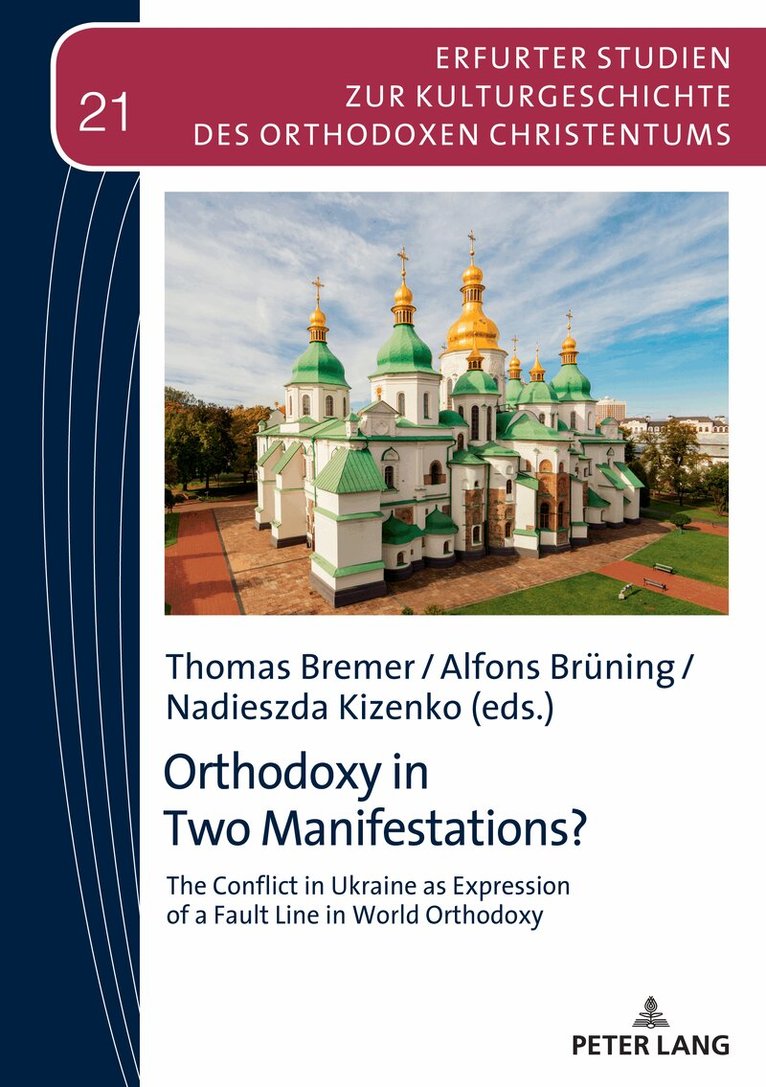
In 2018/19, the Ecumenical Patriarch of Constantinople initiated the establishment of an autocephalous (independent) Orthodox Church in Ukraine. This process was met with harsh criticism by the Russian Orthodox Church and eventually led to a split in the entire Orthodox world. The contributions to this volume examine this conflict and discuss the underlying causes for it in a broader perspective. They deal with several aspects of Orthodox theology, history, church life and culture, and show the existence of a serious rift in the broader Orthodox world. This became visible most recently in the conflict over the Ukrainian Church autocephaly, yet it has a longer, and more complex historical background.